
DOWNLOAD THE APP


Customer Services
Copyright © 2025 Desertcart Holdings Limited
DOWNLOAD THE APP
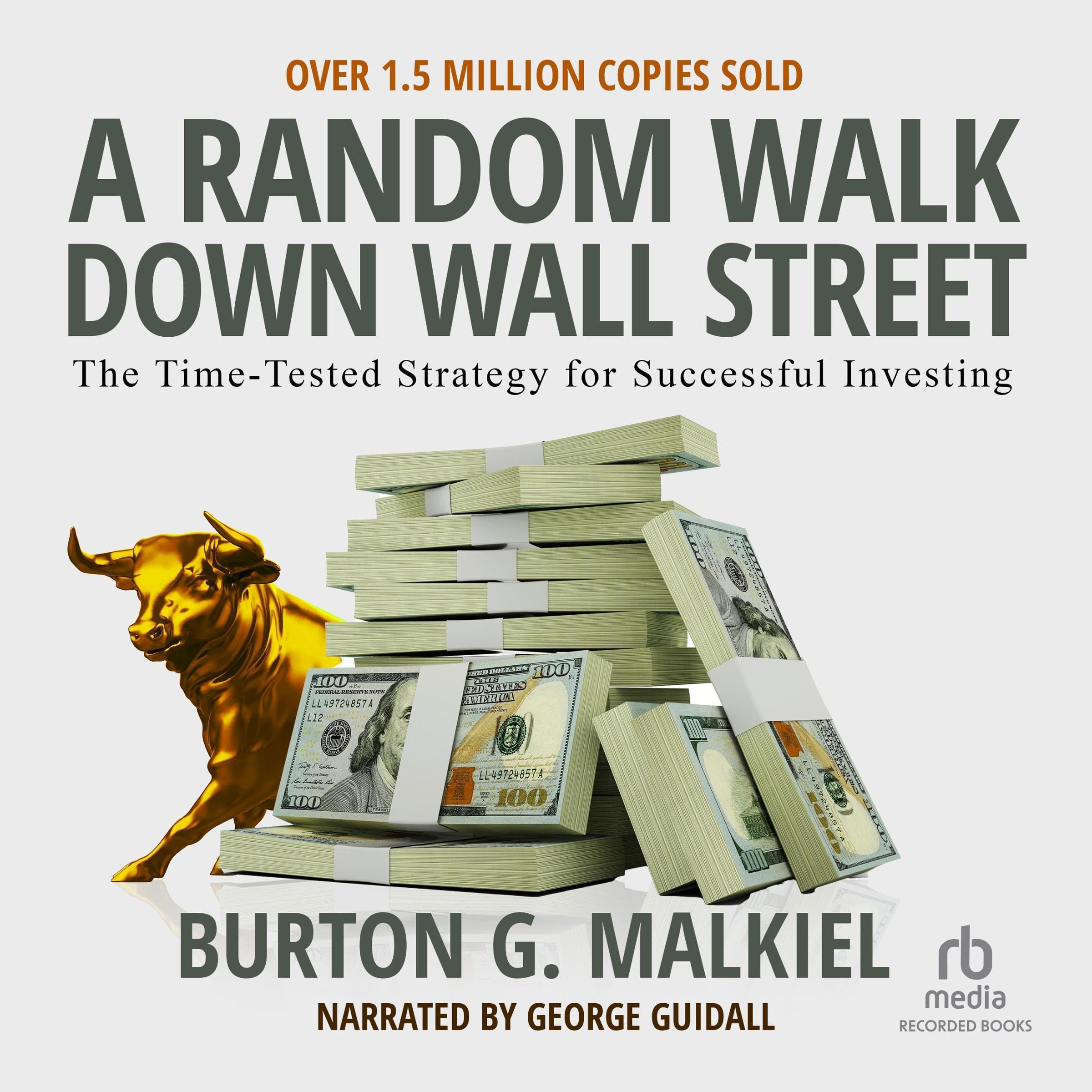
desertcart.com: A Random Walk Down Wall Street: A Time-Tested Strategy for Successful Investing (Eleventh Edition) (Audible Audio Edition): Burton G. Malkiel, George Guidall, Recorded Books: Audible Books & Originals Review: My mind is blown - I read quite a few books 10 to 15 on investing in about a month time frame 300 plus pages each. Years of reading articles online and in magazines. And a few bad experiences in The stock market and a few good ones. I even read the intelligent investor, and security analysis among other great books. I recently decided I needed to take investing more seriously and decided to finally read this book. I bought the Kindle edition since I'm overseas, but after reading this I'm buying a hard copy as well. This blows every other book I've read on the topic of investing away. I was allready a strong believer in indexing as it was after this my mind expanded and there is so much to gain from this book. If you care about yourself, and your families future buy this book. Words do it no justice. With that said the material can at times be a little dry. The first few chapters are a bit interesting at times but boring as can get most of the time. Great knowledge but boring knowledge. The rest of the book is great especially the views of the author on bonds and the various investment strategies that people have e used in the past. My only critiques are on the part about futures or derivatives, as well as Treasury bills. I've had bad experiences dealing with the Treasury and I don't trust them so this portion although small annoyed me I just had no interest in reading it. The futures/ derivatives last portion of the book just didn't appeal to me. I had no interest in these types of investments and after reading about them in more detail have even less Interest In them. The portfolio diversification suggestions could have been more detailed. Otherwise great book, I will be reading a few other books just to get different views or strategies. Review: Beware of the Paradox - So, here is the thing. If you’re looking into this book, it is because you’re probably interested in managing your own money. Also, because this is a very basic book, you are probably on the early stages of your investing education. Which means you still have a lot to learn from the theory and, especially, from the practice. Now, because you still have a lot to learn from the practice, you will probably be making most of the mistakes this book warns against. Hence the paradox. So, you are starting your journey here, attempting to formalize what until now it’s only been an intuitive understanding (if that). After finishing this book, you feel good about it, confident that you can do this. So, you then delve into Value Investing, in an attempt to use some fundamental analysis to pick a group of stocks that make up a portfolio that is stronger than the S&P. You soon realize that this is not that easy, as there are too many variables to take into account and then, even if your fundamental analysis is correct, the market for some reason does not validate your views. You feel tired, but not enough to give up. After all, this is really cool stuff and makes you sound smart at social gatherings. So, you decide to change your approach. You still feel like it is possible to create a basket of stocks that can beat the market. You see names like desertcart, Netflix, Nvidia, and think you can easily get on a sweet ride by investing in those market leaders. You do well. But you think you can do better. Because the market decided to take a break with Netflix, your results are not as great as you thought they would be. In the meantime, you’ve been reading Peter Lynch, learned about those 10 baggers, and started looking around you for those places where you usually shop at. You love going to Shake Shack. So you look up its stock symbol and realize it had a tremendous run since its IPO. At a family meeting, you hear your fresh-out-of-college nephew talk about how much he likes his job as a data scientist at Hello Fresh, where they use an incredible tool called Tableau. So, you decide to invest in all of these companies. Initially, you do well in Shake Shack. But then the market decides it had a very long run and it’s time to take some profits off the table. So, you end up with average results. Tableau does great and you keep hearing good things about it. Then it tumbles 50% overnight on disappointing earnings. Hello Fresh has an amazing business model but for some reason the stock has been trading in ranges for ever. Now, a year has gone by and you realize you got the same results the index had. Except that you spent all that time and money trying to build and maintain your portfolio when you could have easily bought and held the SPY. Even worse, you now have to pay taxes on all those trades that you exited just so you could feel good by pocketing some profits. Well, my friend, those are the type of lessons this book tries to teach. The problem is that you will not listen at first and will eventually learn the hard way, just to end up here again (probably re-reading this review). But that’s good. You learned your lesson and are wiser now. Good luck!
P**L
My mind is blown
I read quite a few books 10 to 15 on investing in about a month time frame 300 plus pages each. Years of reading articles online and in magazines. And a few bad experiences in The stock market and a few good ones. I even read the intelligent investor, and security analysis among other great books. I recently decided I needed to take investing more seriously and decided to finally read this book. I bought the Kindle edition since I'm overseas, but after reading this I'm buying a hard copy as well. This blows every other book I've read on the topic of investing away. I was allready a strong believer in indexing as it was after this my mind expanded and there is so much to gain from this book. If you care about yourself, and your families future buy this book. Words do it no justice. With that said the material can at times be a little dry. The first few chapters are a bit interesting at times but boring as can get most of the time. Great knowledge but boring knowledge. The rest of the book is great especially the views of the author on bonds and the various investment strategies that people have e used in the past. My only critiques are on the part about futures or derivatives, as well as Treasury bills. I've had bad experiences dealing with the Treasury and I don't trust them so this portion although small annoyed me I just had no interest in reading it. The futures/ derivatives last portion of the book just didn't appeal to me. I had no interest in these types of investments and after reading about them in more detail have even less Interest In them. The portfolio diversification suggestions could have been more detailed. Otherwise great book, I will be reading a few other books just to get different views or strategies.
E**O
Beware of the Paradox
So, here is the thing. If you’re looking into this book, it is because you’re probably interested in managing your own money. Also, because this is a very basic book, you are probably on the early stages of your investing education. Which means you still have a lot to learn from the theory and, especially, from the practice. Now, because you still have a lot to learn from the practice, you will probably be making most of the mistakes this book warns against. Hence the paradox. So, you are starting your journey here, attempting to formalize what until now it’s only been an intuitive understanding (if that). After finishing this book, you feel good about it, confident that you can do this. So, you then delve into Value Investing, in an attempt to use some fundamental analysis to pick a group of stocks that make up a portfolio that is stronger than the S&P. You soon realize that this is not that easy, as there are too many variables to take into account and then, even if your fundamental analysis is correct, the market for some reason does not validate your views. You feel tired, but not enough to give up. After all, this is really cool stuff and makes you sound smart at social gatherings. So, you decide to change your approach. You still feel like it is possible to create a basket of stocks that can beat the market. You see names like Amazon, Netflix, Nvidia, and think you can easily get on a sweet ride by investing in those market leaders. You do well. But you think you can do better. Because the market decided to take a break with Netflix, your results are not as great as you thought they would be. In the meantime, you’ve been reading Peter Lynch, learned about those 10 baggers, and started looking around you for those places where you usually shop at. You love going to Shake Shack. So you look up its stock symbol and realize it had a tremendous run since its IPO. At a family meeting, you hear your fresh-out-of-college nephew talk about how much he likes his job as a data scientist at Hello Fresh, where they use an incredible tool called Tableau. So, you decide to invest in all of these companies. Initially, you do well in Shake Shack. But then the market decides it had a very long run and it’s time to take some profits off the table. So, you end up with average results. Tableau does great and you keep hearing good things about it. Then it tumbles 50% overnight on disappointing earnings. Hello Fresh has an amazing business model but for some reason the stock has been trading in ranges for ever. Now, a year has gone by and you realize you got the same results the index had. Except that you spent all that time and money trying to build and maintain your portfolio when you could have easily bought and held the SPY. Even worse, you now have to pay taxes on all those trades that you exited just so you could feel good by pocketing some profits. Well, my friend, those are the type of lessons this book tries to teach. The problem is that you will not listen at first and will eventually learn the hard way, just to end up here again (probably re-reading this review). But that’s good. You learned your lesson and are wiser now. Good luck!
M**.
An Excellent Book.
I purchased this book, as it was needed for a course for my Master's program; it wasn't a required book, but decided to purchase it anyway. I read the entire book cover-to-cover over the course of a weekend and it was a quick and easy read. The content wasn't dry, difficult to understand, or boring; it felt like a story (which is something I personally enjoyed) and was well written. I would recommend purchasing this book regardless of whether or not you need the book (for a course, for life, for fun). The book came packaged well and the the book in brand-new excellent quality! Definitely worth the money.
J**N
Important Financial Insight ...
In my opinion this book is one of the most important guides for the average person seeking an education on managing their financial well being. An excellent book for the person that is weary of needing to rely too much on so-called 'professionals' to look out for your best interest first and foremost. It is well written, revised over the years and is a pleasant read, especially for those of us who have a short attention span when it comes to financial talk. It will give the reader a better overall understanding of the financial process and therefore will help with the choices for wise investing by the novice.
J**R
Thank God for Active Traders
I have no beef against the active traders. Maybe I have a little pity for them, since half of them have to lose money if the market’s a zero-sum game. That’s more than half, once you start to factor in fees. I have long ago realized that though I am interested in the workings of the market, I am not going to delve to the minutiae of companies and different trades and try to be smarter than someone else on the other side who thinks he’s doing the same thing. Nope. Malkiel and Bogle figured out a way I could get away with making the most return possible with the least effort possible - indexing. Basically this book is a defense of the efficient market hypotheses, or at least part of it. As I understand it, there are two parts to the EMF. One is that the price is always right. So that there’s no such thing as a bubble ever because all the valuations of the market price of securities are representative of their underlying value. The other part is that there’s no free lunch. Or basically arbitrage opportunities may exist, but they are not predictable nor do they persist. I think that the second part is more true than the first, and that’s what this book really digs into, showing you that there are no persistent ways to beat the market. If that’s true, then the best way to consistently make money is to just buy the market. Thankfully there are financial instruments that make that possible - and they’re where I have my money. Cards on the table, this book is just a giant exercise in confirmation bias for me, but it is confirmation bias well done in clear writing with a well-organized structure. I read this burning through the pages on a long holiday weekend, and I wanted to send it to my parents. I thought again about that. It might be too late for them since I don’t know their financial positions. Maybe I’ll send it to my siblings. A final note, though. Even though Malkiel shows convincingly that there is no way to beat the the market, there is an odd paradox. For the market to work, it needs people out there who think that they can beat the market. Even if the best strategy is to buy and hold a low cost index fund, if everyone did that liquidity and price discovery would drop. What someone following Malkiel needs is people who think he is wrong and that they can generate “alpha” (returns above the market). This goes against the second part of the EMF, where arbitrage opportunities can’t exist because if you have a way to beat the market, then everyone has a way to beat the market and then once everyone is in, no one has a way to beat the market.
K**4
Best investment strategy book to date!
Oh boy! If you are investing or planning to invest, or you want to learn about trading, markets, economy, dividends, mutual funds, banking...I mean this book covers it all and it is not boring! Some investment, Wallstreet books get really boring and complicated full of technical terms. This guy strikes a great balance between being too technical (and no one understand anything) and just enough technical for you to understand how investment world works. I strongly suggest buying and reading it. There are many editions so try to obtain latest edition of the book since investment tools evolve and they update the book accordingly! It is well worth the price here at Amazon. Either order the book or download it on your Kindle. Both prices were fair at time I ordered it.
E**C
Great for beginners
I am about half way through the book. I've learned a lot from the book and gained a lot of confidence is on how the stock market works in general. The summary of the book is already explained by the author right off the bat. There's no way to predict the future of the market. The best way is to invest int he S&P 500 long time over 10 years. The book kind of goes into all tools and strategies used in the market to predict the market's future and how none of them works. That covers about 2/3rds of what I've read so far. Its definitely a great read for beginners even though some of the how-these-strategies-dont-work gets a little repetitive. Goes into a bit of history to demonstrate an idea which are helpful.
M**B
One of the better books on investing that I have read
One of the better books on investing that I have read. The first section describing speculative bubbles since 1600 and the parade of folly and stupidity on Wall Street is especially insightful. Very readable for people without a deep knowledge of high finance. I was initially skeptical of Malkiel's adherence to the efficient market hypothesis and indexing, but I am more convinced after reading this book that it is the correct approach for most investors. He grudgingly acknowledges that certain individuals such as Warren Buffett have unusual ability, so his philosophy doesn't totally preclude the possibility of outliers. Keep in mind that this book presents some aspects of modern financial theory for the layman and simple investing strategies; it is not a book on "how to pick stocks," as Malkiel does not believe that this is a feasible approach.
Trustpilot
2 weeks ago
2 months ago