
DOWNLOAD THE APP


Customer Services
Copyright © 2025 Desertcart Holdings Limited
DOWNLOAD THE APP

🎶 Elevate your sound game — hear every detail like a pro!
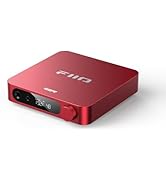
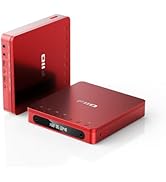
The FiiO K3 Type-C USB DAC Headphone Amp is a compact, high-performance audio upgrade for professionals and audiophiles alike. Featuring a 384kHz/32-bit PCM and native DSD256 decoding capability, it uses premium AKM and TI components to deliver clean, balanced, and powerful headphone output. Its USB-C interface ensures reliable power and data transfer with built-in protection circuits, while dual crystal oscillators minimize jitter for superior sound fidelity. Ideal for enhancing your desktop audio experience with a sleek, portable design.












| ASIN | B07KR3RF4H |
| Best Sellers Rank | 336 in Headphone Amplifiers |
| Guaranteed software updates until | unknown |
| Item model number | 8486 |
| Language | English |
| Manufacturer | FiiO |
| Product Dimensions | 7 x 5.8 x 2.2 cm; 82 g |
S**E
GREAT PRODUCT | PRICE WENT WAY UP, THOUGH
I got this to power my 250Ohm Beyerdynamic DT990 Premium headphones, and this device does a fantastic job! The bass boost settings are great (as these headphones don’t have good bass by themselves). The audio is crystal clear and allows me to mix and do my music production in FL. The gain switch is also neat, but I haven’t had to use the extra gain yet. This provides plenty of clean sound to my headphones. The volume knob is buttery smooth, and feels well made and secure. USB C is also a nice addition. I can’t comment on the extra ports at the back, but this product is great if you want something to power your headphones. IMPORTANT!- I got this for around £80!!! The price has since gone up to £450, which is absurd! I have no idea why the price has sky rocketed, but Fiio, sort it out
J**K
Great little DAC/Amp but with a Windows 10 issue
Took a bit of a risk with there being very few reviews of this new FiiO amp and bought it to power my recently aquired Sennheiser HD598's. Initial impressions are very good. It's very compact (see photo for scale) and feels extremely well built. The volume wheel has a nice smooth action and it was recognised immediately by Windows 10 and drivers installed. It has no problem driving my Sennhesier's to a decent volume and the sound quality is excellent too. A noticeable improvement over my motherboards own output with no background noise, and just a really nice clean natural sound. Now for the small downside. When I next rebooted my PC, the DAC was not recognised. Strange I thought - unplug and replug - all back to normal. Then it happened again.... and again. It turns out that there is a bug in the firmware which means that you cannot just leave it turned on and connected to your PC (with Windows 10). You need to turn it off and then on once windows has booted. Not a major issue but certainly something to be aware of. Another user is reporting the same issue on the FiiO support forums, so it's not just me. Incidentally I tried it on my Windows 7 laptop and it worked perfectly there, so the issue seems to be confined to Windows 10. Hopefully FiiO address the bug with a firmware update because otherwise this is a great piece of kit for the money! I'll update this review should a fix get released. *UPDATE* Having been in contact with FiiO support they suggested using an alternative USB port. It turns out that the issue I described above only occurs on my USB 2.0 ports. Plug it into a USB 3.0 and all is well. Still would be nice to get a firmware fix though as Windows 7 doesn't have the same problem.
M**S
Simple.... buy it.
Plug this in via USB 2.0, get yourself an optical cable to hook it up to some Edifier speakers (or something more expensive if you have to). Oh, and find the K3 drivers from the FiiO website. Then... sit back and enjoy an incredible DAC for very little money. The quality of the sound is absolute ecstasy, and I have a complete Linn set-up to compare. I was always very sceptical of anything a PC could produce but this little box of tricks produces some of the purest sounds to come from streaming audio. I did plug it into my laptop and drove it from the Linn set-up via coax optical. The sound staging, dynamics and energy was incredible. It's very neutral but can be adjusted for bass (don't) or the gain can be amped up (which seems distortion free). In short for sub-£100, it's an absolutely steal.
F**K
Great Sound
I'd become increasingly unhappy with the sound from my AKG 712 Pro headphones. They were expensive. But I was shopping around for a replacement because they just didn't sound great. And then I realised the problem wasn't the headphones buy the headphone output of my SMSL AD18 amplifier. The AD18 drives speakers well but the headphone output is lacking in low end. So I set about looking for another option. I settled on the Fiio K3 and I'm glad I did. I have it connected to my PC via USB. The audio quality from my AKG headphones is absolutely superb, all the low end is there now. Thanks to the volume control - which is an analogue knob connected to digital controls - there is zero channel imbalance even at the quieter end. The K3's outputs are very useful for me too. There's a 3.5mm output on the rear that is controlled by the K3 volume - so handy as a pre-amp out for owners of powered speakers. But as I retained the AD18 I wanted a fixed volume output on the rear and the K3 has that in the form of an optical output and a coax. So now I have the AKG headphones on the K3, and when I want to use speakers the K3 outputs to the AD18. Because that's a fixed output I can leave the volume on the K3 at zero and the headphones connected when I want to use the speakers.
V**E
Super versatile but lacks power.
Really nice compact dac amp , struggles to drive anything over 100ohm , hd58x for instance sound rather bad when driven by the k3 but higher impedance of 50ohm or the more common 32ohm is no problem and it sounds great with sich devices , it can just drive fostex t50rp mk3 to acceptable levels. No match for a good dedicated amp though. The dac is really nice, i use my k3 as a usb to optical and coaxial (simultanously) converter which feeds my other dacs . I only use the headphone amp to drive IEM's or my takstar pro 82 when at my desk. Buy this for its versatility not for its headphone amp capabilities unless you have really sensitive ear/headphones.
R**H
Decent audio with serious driver issues on Windows 10
Bought this thinking to upgrade from my Sabaj Da2, but after two weeks of using them with my Beyer Dynamic DT770 Pro's and Fostex TH-X00 headphones I've hardly noticed a difference between the Fiio and the cheaper Sabaj. What's worse is the driver issues on Windows 10. Leaving it plugged in overnight results in Windows not being able to find the DAC, and you have to unplug and replug it to get it back. According to the internet this only happens on certain USB ports, but it's happening on all of mine, so I'm stuck with this issue. Fiio has not been forthcoming about releasing an update for this, so I'm not impressed by their support.
A**R
Apparaat was snel stuk.
S**D
FiiO has been, for years, making audio magic in absolutely minuscule form-factors that greatly enhance the sound of any headphones, whether or not they require an amp due to high impedance. This specific DAC+Amp meets or exceeds all of the standards that I expected. It runs using both power and audio outputs from your computer (or whatever you plug the USB-A end into. I haven't tried experimenting with other sources using adapters but I'm sure a newer smartphone could easily run these.) Sound Review: Incredible. There really is no other way to describe this tiny little aluminum box. It acts as a replacement/brand new sound card for your computer (with on-board LED to show sampling rate and WORKING VOLUME/POWER KNOB). It is night and day with and without the k3 on almost any headphones over $50. I even noticed an improvement on the incredibly inexpensive and highly touted Koss KSC-75. With bass boost off, the sound stage opens and widens-for closed back headphones this is a nice touch, but for open backed cans this is absolutely game-changing. My Grados, Fidelios and AKGs all receive and absolutely marked improvement in overall soundstage size and instrument separation. Turning on the bass boost keeps these same improvements, while increasing low-end response and not sacrificing any audio quality for higher-end cans. I highly recommend pairing this with Philips Fidelio X2s, they compliment each other like dinner and wine at a high end steakhouse. I have also used all line out options (3.5mm, optical, coax) to run my 5.1 surround setup with Sony receiver and active subwoofer. I am glad to say all of the audio enhancements that the k3 brings to headphones it also brings to any low-to medium grade surround system. I use this mainly with my Grado SR125e and Philips Fidelio X2HR, and they are a bit better fit for the Fidelios. For higher demand or very high impedance cans, a dedicated amp and separate DAC are most likely required. To that point, the max impedance I would use the k3 for is around 300 ohms- it is not the loudest (even with gain on) or most powerful when returning audio to headphones. The DAC inside is, in my opinion, much better than the internal amp. All of that said, I highly recommend this little piece of magic to anyone who already has higher end audio equipment and is looking to get more out of it, or those with an underpowered stereo receiver without being forced to buy a new one. This thing is, as I mentioned, magical. I can't listen to music without it now. It also made me get a subscription to Tidal to allow hi-res, master quality streaming from my PC to take full advantage of the high sampling rates this allows. I got a 25' coax cable to be able to use this from my coffee table when running my surround system. My only complaint is the lack of on-board settings and switches, but this is all taken care of with the FiiO app for mac or windows, which will automatically detect, integrate and use the k3 as your new sound output card. If I could give more than 5 stars I would. Completely transforms headphones/speakers into an incredible listening experience for the entry-level audiophile. Make sure you have some high sample rate or lossless audio files to make it run at full potential, especially because they can run 32-bit, 384kHz sample rate (much above the resolving capability of the human ear and that of CD quality sound (16bit,44.1kHz) . It is worth the effort and small price tag. Don't let it's stature fool you, this thing is powerful and versatile.
D**H
This is my 5th DAC. I have used Audioengine D1 ( good one ), Schiit modi multibit ( hyped only ) , Maverick audio DAC d2 ( great but limited to 96khz and no DSD ) , Topping D30 ( good but no headphone amplifier ) Haven't kept all, I sold everyone after a year gap. Just got a new FiiO K3. Remember it's a desktop DAC for PCs, it has no inbuilt battery. Special note: While using lineout for speakers remove your headphone and while using headphone remove the rear lineout 3.5mm jack otherwise you might blow your headphones. In the packet: K3 DAC , Type C cable, 4 sticky pads. It's a little but fantastic and versatile DAC. Has front headphone 3.5mm and balanced 2.5mm out, gain switch ( working miraculously good ) , bass switch ( gives a subtle bass via lineout to your speakers and headphones ) Power/volume knob which is quite confident, can feel the click sound. Behind the knob it has 3 indicating light colors depending on what sample rate you are listening to. Upto 48khz it's blue, above 48khz it's yellow and for DSD it's green The rear has lineout, optical port and type C for power. Remember for power type C is considered more good than micro usb for clean and steady power. Overall it's a cute, space economic and solid device. As far as sound quality is concerned it's nice and have a good separation. I can easily say this little guy is fantastic piece of equipment from Fiio. Very portable and value for money. Support high bitrate PCM and DSD 🤘👍 If you have any queries, ask me please.
S**B
Ho acquistato questo DAC convinto dalle specifiche rappresentate dalla casa madre, Fiio, famosa per i suoi prodotti Hi-Res. Il packaging e` molto minimale, e il prodotto si presenta molto solido e dotato di cavo USB-C e gommini da incollare sotto il dispositivo per "bloccarlo". Testato con Sennheiser HD598SR e con delle Fiio F9 Pro (usando il cavo bilanciato da 2.5mm): il suono si presenta molto chiaro e limpido, notevole la funzione di bass boost che permette di avere un +5db -- ho lasciato la funzione di high gain ad 1, altrimenti gli alti sono troppo eccessivi per i miei gusti. Per utilizzare il decoding fino a 384kHz-32bit e` necessario installare i driver disponibili sul sito di Fiio. Acquisto consigliatissimo, e` davvero difficile trovare un DAC con queste specifiche a questo prezzo ragionevolissimo.
K**O
Vou tentar dar aqui a explicação mais detalhada e direto ao ponto do aparelho. # USO Uso o meu com o fone AKG K240 MkII, de 55 Ohms, conectado a computadores Linux (um deles com Ubuntu 20.04 'Focal Fossa', o outro com Mint 20.3 'Una'), e escuto áudio em 16bit 44.1kHz, às vezes em 24bit 96kHz para os poucos que tive preguiça de converter. Um desses computadores é o meu pessoal em casa, e o outro fica no trabalho, então todo dia o levo em minha mochila. Fora do meu uso, não posso avaliar o produto. Irei comprar em breve um Hifiman he400se, e com um cabo balanceado, e então (se eu me lembrar) volto aqui e amplio meu review. # PRODUTO EM MÃOS ## K3 em si O K3 em si é bem compacto, e tão leve que quando os cabos conectados a ele são movidos, o mesmo se mexe junto. Tem uma superfície bem lisa de metal em cima, embaixo e nas laterais (provavelmente para dissipar calor) e a frente e fundo são de plástico, mas parece bem feito e resistente. Extremamente fácil de carregar por aí. Já tomou apenas uma quedinha comigo, mas sem nenhum arranhão. De qualquer forma, o carrego numa bolsinha de pano dentro da minha mochila para evitar arranhar o acabamento (mas parece resistente, eu que sou paranóico). Típico de um amplificador, se deixado ligado em volume alto com pouco ou nenhum som, ele esquenta bastante. Mas isso é normal de um amplificador (e até um sinal que ele está funcionando) e mesmo bem quente, funciona normalmente, e isso não parece interferir em nada com o DAC. Só explicando pra quem não entende muito e pegue este como seu primeiro DAC/Amp. Ele esquenta bastante (uns 50ºC, eu chutaria) e isso é NORMAL. Amplificadores perdem a energia não utilizada para som em forma de calor. Recomendo desligar/abaixar o volume quando você não estiver ouvindo nada. ## Na caixa Na caixa, vem com a papelada básica de qualquer eletrônico, um cabo USB-C para USB e pés de borracha adesivos. Os pés são borrachinhas que você mesmo cola no K3 (se quiser). O cabo é curto, acho que 1 metro, e parece barato, daqueles cabos que ficam com as dobras marcadas e não esticam muito. Mas é só um cabo USB, basta comprar outro se isso te incomodar. Pra quem for usar com notebook, eu recomendaria um cabinho bem curto, de uns 10cm, só pra deixar o K3 do lado do note na mesa. ## Interface da frente Na frente, tem uma saída 2.5mm de áudio balanceado (4 polos) e um de 3.5mm sem balanceamento (3 polos), dois seletores pequenos de realce de baixo (liga/desliga) e modo de 'gain'/amplificação (baixo/alto) e o controle de volume que também serve de botão liga/desliga. Não testei a entrada balanceada, não posso usar com meu fone AKG. Só testarei quando pegar o fone da Hifiman. A entrada sem balanceamento é limpa (falo de áudio mais abaixo). As chaves seletoras são bem pequenas, mas dá pra empurrar só com o dedo mesmo, não precisa ter unhas grandes. Talvez sejam um pouco problemáticas para que tem os dedos gordos, já que ficam entre o controle de volume e o plugue do fone, principalmente se você usar a entrada de 3.5mm. O controle de volume tem um leve clique a partir da posição 'zero', para ligar o aparelho, depois disso, ele gira de forma bem macia até o máximo, e é bem responsivo. O som só começa a sair mesmo quando voçe gira pelo menos uns 80º partindo da posição de desligado, o que te impede de baixar o volume e desligar o aparelho sem querer. Só não gostei de duas coisas nela. O primeiro é que o diâmetro dela é quase igual à altura do aparelho, o que faz com que a mesa (ou a superfície onde você o colocar) te atrapalhe de virá-lo. Não é que a rodinha vá esfregar na mesa, o problema é só pouco espaço para os dedos. O segundo é que o indicador da direção que a rodinha 'aponta' (pra que vocẽ veja a posição atual) é só desenhada na unidade, não tem nenhum marcador tátil e não acende também, o que o torna levemente inconveniente no escuro ou quando vocẽ não está olhando pra ele (nada demais, só é um pequeno gatilho pro meu TOC). ## Interface do fundo O fundo tem os seguintes conectores, USB-C para se conectar com seu computador e receber energia, uma saída 'line-out', uma saída digital óptica e uma saída digital coaxial. Além deles, uma chave, igual às frontais, porém esta seleciona o modo de conexão com o PC, para o qual o K3 vira uma placa de áudio externa. Primeiro ponto, USB. Gosto da escolha do USB-C, pois fica fácil achar cabos para ele. A chave seletora do USB tem dois modos, 1.0 e 2.0. O modo 1.0 é plug-n-play, funciona de cara no Linux, e também é dita como compatível com Mac/Windows como plug-n-play também (não testei, mas deve funcionar). O modo 2.0 eu não testei, mas supostamente só funciona no Windows, com os drivers adequados instalados. A diferença é que apenas o 2.0 pode reproduzir 32bit 192kHz, se me lembro bem, mas não escuto esse tipo de arquivos e só tenho Linux, então, mais uma vez, não testei e não vou opinar. Uma coisa que não acho positiva é que ele usa a mesma porta USB para dados e energia, o que significa que ele é desenhado apenas para a corrente limitada da porta USB de um PC, então não pode ter um amplificador tão potente. Eu recomendo plugar numa porta 3.0 ou USB-C (note que aí você vai ter que comprar por fora um cabo USB-C para USB-C) só por essas portas proverem mais energia mesmo, quanto a passagem de dados, USB 2.0 já serve. Ressalto não notei nenhuma diferença de comportamento ao alternar entre portas USB 3.0 e 2.0 de ambas as máquinas da minha casa e do trabalho. Quanto a virar a própria chave do modo USB, como você tem que desconectar o K3 do computador primeiro, dessa vez os cabos não te atrapalham tanto. Não testei as saídas coaxial e óptica, mas já de cara a ideia é muito interessante. Caso no futuro você compre um DAC com mais capacidade, mas ele seja um DAC puro (sem parte de placa de áudio ou conexão com o PC), o K3 será um bom intermediário. No entanto, novamente, não testei. Note que são saídas, e não entradas! Isso é problemático para quem quiser conectar a, por exemplo, uma SmartTV, Bluray player ou console como o XBox. Por último, a line-out. Uma coisa estranha é que a line-out tem seu volume controlado pelo controle de volume da unidade, e continua tocando mesmo com um fone conectado à entrada sem balanceamento. A entrada é, no entanto, uns 15db mais alta. # Som Agora o mais importante: a qualidade sonora. É muito bom. As saídas são extremamente limpas e livres de ruídos. Pode até testar virando a unidade no volume máximo sem nenhum áudio tocando. Extremamente limpas. A resposta de frequência é bem plana, e como ele deu muito mais força ao sinal, meu AKG não ficou mais alto e limpo, como até sua presença de palco parece mais ampla, e o fone ganha mais um pouco de velocidade, algo percebo em músicas com pratos de bateria mais rápidos. Mas claro, não é tão alto assim. Em meu AKG, diria que uso o volume entre 60% e 70% (estou chutando os números pelo quanto que tenho que girar a rodinha do controle de volume). Com o modo 'high gain' ligado, a unidade ganha uns 6db. Quanto ao boost de grave, apesar de ser um homem que aprecia o som da forma mais 'plana' e pura, o boost dele parece natural e é gostoso de ouvir, apesar de parecer ter um pouco de reverberação. Acho que deve ser bom para quem gosta de graves. # Conclusão A não ser que você tenha bem mais grana pra algo muito mais caro, pela faixa de preço (salgada do Brasil) está mais do que bom.
Trustpilot
1 month ago
1 month ago