
DOWNLOAD THE APP


Customer Services
Copyright © 2025 Desertcart Holdings Limited
DOWNLOAD THE APP
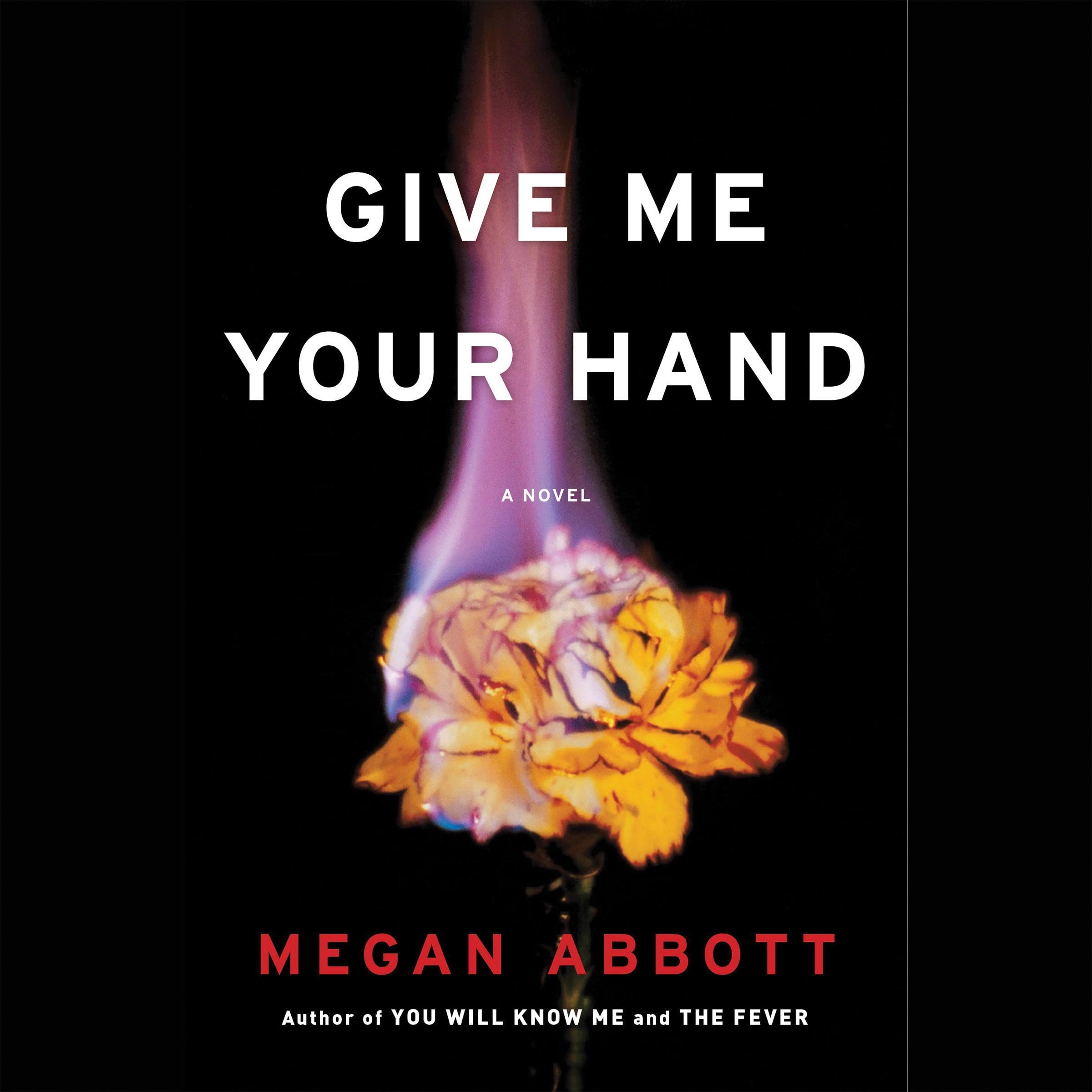
desertcart.com: Give Me Your Hand (Audible Audio Edition): Megan Abbott, Chloe Cannon, Little, Brown & Company: Audible Books & Originals Review: “The Mad Pulses of the Blood” - Megan Abbott’s delirious “Give Me Your Hand” is the story of Kit and Diane, both relentless perfectionists (it’s in Diane’s blood, and she hands off that drive to Kit). They meet in high school, share a secret, drift apart, and then--inevitably--meet again in a research lab when they’re post doctorates hoping for an el primo spot (three will be selected) in a research project under the leadership of world class scientist Dr. Lena Severin. Kit, until the reappearance of Diane, figures she’s sure to get one of the spots, as Dr. Severin is researching an extreme form of PMS and Kit is the only woman among her collection of lab rats. And now here’s Diane again (she turns up in a scarlet lab coat she copped from her last job). And Dr. Severin has especially added her to the collection--presumably to give her one of the three slots. Will Kit still be among the chosen? And what about the secret that Diane has told her back in their high school days? (We learn early that Kit knows Diane’s secret, and as the story spins on you’ll probably figure out what that secret is before the reveal, but it hardly matters). What will matter is what Kit will do about it. Thankfully, in this era of multi-unreliable narrators, the story is told by Kit, who seems to be quite reliable--as a narrator, anyway. It flicks back and forth in time for awhile, in alternating chapters between the girls as teenagers, written in the past tense, and the present, written in (duh) the present. Eventually the past chapters dwindle down, when we’re pretty much caught up. Abbott has done her homework. She stuffs the story full of information about lab procedures, and the people who work in them. It’s quite suspenseful, and it has that delicious air of Highsmithian amorality about it, as well as a touch of Hitchcock--a bit of “Strangers on a Train,” and a bit of “Rope,” of all things. Abbott is also a skillful writer, and she knows how to build suspense--so much so that your willing of suspension of disbelief will probably carry you through despite the over-the-topness of the plot and a couple of the characters. Give it a whirl. NOTES AND ASIDES. Blood, of course. Some four letter words. Drunkenness. Kindle readers note: the chapters, unnumbered, simply say THEN or NOW. Please be very careful not to lose your place, or you will regret it. Review: Opened my eyes, and scared me half to death! - A couple of years ago a friend dismissed me with words I'd never have imagined could sting so deep. Her voice, distantly glacial, informed me, "You're just like all the rest." My response was immediate, born of startled disbelief and a welling panic. "No I'm not. I am not!" I swore I would prove I was different from the others, even if I wasn't sure just what that meant. Yet I knew intuitively however wrong it must be, she'd made up her mind. There would be no dispensation. Yesterday it came to me while reading Give Me Your Hand: In certain primal, irredeemable ways beyond my capacity to mitigate or alter, I am like my brothers. Sadly, I see now with a clearer eye how justly we deserve the consequences of our behavior toward our sisters under any conceit to the contrary. I owe this long overdue insight to Megan Abbott’s piercing, unnerving new novel, which spotlights one of the darker pockets of la difference. Jarring my Paleo impulses with a 21st-century sensibility, Give Me Your Hand does bring hope a greater understanding of ourselves may at least temper the vive at both poles of its spectrum. And wouldn’t you know, to this end science is probing in a field so alien to me its density added significant weight to an academic catastrophe decades ago from which I’ve never fully recovered: chemistry. In this instance more specifically, biochemistry. The novel’s landscape of academic treachery and dangerous laboratories provides an ironic backdrop for Abbott’s masterfully dark tale of Kit and Diane, two brilliant young women vying for a shot at a highly coveted job researching the causes of premenstrual rage that drives some of their gender to self-mutilation, suicide, and murder. Kit and Diane have sort of known each other since high school, running track, sharing secrets, competing scholastically—the smartest of their peers. Yet there’s something missing, or rather something present, that keeps them emotionally at odds. The specific “thing” that’s to blame is kept from us awhile, fairly obvious tho it is, but by confirming our guess early on, Abbott hooks us and reels our curiosity into deeper, uncharted waters. The expression suspense is killing me takes on pulse-quickening authenticity as her narrative sprints toward its climax. Give Me Your Hand reads like a diary, and the intimacy of Kit's thoughts is as discomfiting as it fascinates. The sensation’s eerily akin to trespassing on someone’s privacy. Things we shouldn’t know. About them, about us. The “us” here is my gender, and we don’t come off too well. A cast of recognizable caricatures for the context, drawn with an embarrassing, Shakespearean accuracy. This motley crew of pricks, slicks, oddballs, and rogues comprise an appropriately nonsupporting cast that provides ballast for the novel’s essential theme, that the figurative historical screwing of women continues unabated. What gives the job that’s enticing Kit and Diane such precious cachet is the traditional dearth of interest in the scientific community for so vital a female mystery. “Everyone will ask you why you chose to study PMDD,” Dr. Lena Severin says in a pitch for the research team she’s assembling. “And you will tell them how underfunded research into women’s conditions is. You will tell them there are five times as many studies on erectile dysfunction as on PMS and that you’re happy to play a role in changing that.” Here’s Kit explaining PMDD to us ignoramuses, who so dearly need to know: Premenstrual dysphoric disorder, that’s the subject of the study. A set of symptoms with no agreed-upon cause. Some kind of catastrophic monthly dance between hormones and the feeling and thinking parts of the brain. Striking every month, it’s like PMS only much, much worse. Debilitating mood swings, uncontrollable rage. Abnormal signaling among cells, that’s what scientists only recently discovered. An intrinsic difference in the way these women respond to sex hormones. After decades of doubt about whether it even existed, now science has proven PMDD is not only real, it’s part of the genetic makeup. The women can’t help it, are slaves to it… At its worst, it’s led women to self-destructive acts. Or destructive ones. In the lab, we’ve all heard the horror stories: Women in its grip hitting their boyfriends over the head with frying pans, rear-ending their children’s teachers’ cars in the school parking lot. Road rage, baby shaking, worse. “Behind their hands, behind their smirks, some of the postdocs call it Hatchet PMS. Medusa Menses,” she tells us of her lab mates. “They’re all men except me, and they can’t even talk about it without twisting their mouths or ducking their heads or making Carrie or Lizzie Borden jokes.” Abbott describes in an NPR interview how she became interested in PMDD as a topic to explore in a novel. A deep, fearsome mystery science has merely scratched the surface of understanding. Educated fiction is a good place to start for the rest of us. At least it can give us a hand in stepping away from ignorance. We need more of that every day. I now know my friend was right. I was like all the rest. Still am, to some degree, though I’m not quite as dumb as then.
L**R
“The Mad Pulses of the Blood”
Megan Abbott’s delirious “Give Me Your Hand” is the story of Kit and Diane, both relentless perfectionists (it’s in Diane’s blood, and she hands off that drive to Kit). They meet in high school, share a secret, drift apart, and then--inevitably--meet again in a research lab when they’re post doctorates hoping for an el primo spot (three will be selected) in a research project under the leadership of world class scientist Dr. Lena Severin. Kit, until the reappearance of Diane, figures she’s sure to get one of the spots, as Dr. Severin is researching an extreme form of PMS and Kit is the only woman among her collection of lab rats. And now here’s Diane again (she turns up in a scarlet lab coat she copped from her last job). And Dr. Severin has especially added her to the collection--presumably to give her one of the three slots. Will Kit still be among the chosen? And what about the secret that Diane has told her back in their high school days? (We learn early that Kit knows Diane’s secret, and as the story spins on you’ll probably figure out what that secret is before the reveal, but it hardly matters). What will matter is what Kit will do about it. Thankfully, in this era of multi-unreliable narrators, the story is told by Kit, who seems to be quite reliable--as a narrator, anyway. It flicks back and forth in time for awhile, in alternating chapters between the girls as teenagers, written in the past tense, and the present, written in (duh) the present. Eventually the past chapters dwindle down, when we’re pretty much caught up. Abbott has done her homework. She stuffs the story full of information about lab procedures, and the people who work in them. It’s quite suspenseful, and it has that delicious air of Highsmithian amorality about it, as well as a touch of Hitchcock--a bit of “Strangers on a Train,” and a bit of “Rope,” of all things. Abbott is also a skillful writer, and she knows how to build suspense--so much so that your willing of suspension of disbelief will probably carry you through despite the over-the-topness of the plot and a couple of the characters. Give it a whirl. NOTES AND ASIDES. Blood, of course. Some four letter words. Drunkenness. Kindle readers note: the chapters, unnumbered, simply say THEN or NOW. Please be very careful not to lose your place, or you will regret it.
M**T
Opened my eyes, and scared me half to death!
A couple of years ago a friend dismissed me with words I'd never have imagined could sting so deep. Her voice, distantly glacial, informed me, "You're just like all the rest." My response was immediate, born of startled disbelief and a welling panic. "No I'm not. I am not!" I swore I would prove I was different from the others, even if I wasn't sure just what that meant. Yet I knew intuitively however wrong it must be, she'd made up her mind. There would be no dispensation. Yesterday it came to me while reading Give Me Your Hand: In certain primal, irredeemable ways beyond my capacity to mitigate or alter, I am like my brothers. Sadly, I see now with a clearer eye how justly we deserve the consequences of our behavior toward our sisters under any conceit to the contrary. I owe this long overdue insight to Megan Abbott’s piercing, unnerving new novel, which spotlights one of the darker pockets of la difference. Jarring my Paleo impulses with a 21st-century sensibility, Give Me Your Hand does bring hope a greater understanding of ourselves may at least temper the vive at both poles of its spectrum. And wouldn’t you know, to this end science is probing in a field so alien to me its density added significant weight to an academic catastrophe decades ago from which I’ve never fully recovered: chemistry. In this instance more specifically, biochemistry. The novel’s landscape of academic treachery and dangerous laboratories provides an ironic backdrop for Abbott’s masterfully dark tale of Kit and Diane, two brilliant young women vying for a shot at a highly coveted job researching the causes of premenstrual rage that drives some of their gender to self-mutilation, suicide, and murder. Kit and Diane have sort of known each other since high school, running track, sharing secrets, competing scholastically—the smartest of their peers. Yet there’s something missing, or rather something present, that keeps them emotionally at odds. The specific “thing” that’s to blame is kept from us awhile, fairly obvious tho it is, but by confirming our guess early on, Abbott hooks us and reels our curiosity into deeper, uncharted waters. The expression suspense is killing me takes on pulse-quickening authenticity as her narrative sprints toward its climax. Give Me Your Hand reads like a diary, and the intimacy of Kit's thoughts is as discomfiting as it fascinates. The sensation’s eerily akin to trespassing on someone’s privacy. Things we shouldn’t know. About them, about us. The “us” here is my gender, and we don’t come off too well. A cast of recognizable caricatures for the context, drawn with an embarrassing, Shakespearean accuracy. This motley crew of pricks, slicks, oddballs, and rogues comprise an appropriately nonsupporting cast that provides ballast for the novel’s essential theme, that the figurative historical screwing of women continues unabated. What gives the job that’s enticing Kit and Diane such precious cachet is the traditional dearth of interest in the scientific community for so vital a female mystery. “Everyone will ask you why you chose to study PMDD,” Dr. Lena Severin says in a pitch for the research team she’s assembling. “And you will tell them how underfunded research into women’s conditions is. You will tell them there are five times as many studies on erectile dysfunction as on PMS and that you’re happy to play a role in changing that.” Here’s Kit explaining PMDD to us ignoramuses, who so dearly need to know: Premenstrual dysphoric disorder, that’s the subject of the study. A set of symptoms with no agreed-upon cause. Some kind of catastrophic monthly dance between hormones and the feeling and thinking parts of the brain. Striking every month, it’s like PMS only much, much worse. Debilitating mood swings, uncontrollable rage. Abnormal signaling among cells, that’s what scientists only recently discovered. An intrinsic difference in the way these women respond to sex hormones. After decades of doubt about whether it even existed, now science has proven PMDD is not only real, it’s part of the genetic makeup. The women can’t help it, are slaves to it… At its worst, it’s led women to self-destructive acts. Or destructive ones. In the lab, we’ve all heard the horror stories: Women in its grip hitting their boyfriends over the head with frying pans, rear-ending their children’s teachers’ cars in the school parking lot. Road rage, baby shaking, worse. “Behind their hands, behind their smirks, some of the postdocs call it Hatchet PMS. Medusa Menses,” she tells us of her lab mates. “They’re all men except me, and they can’t even talk about it without twisting their mouths or ducking their heads or making Carrie or Lizzie Borden jokes.” Abbott describes in an NPR interview how she became interested in PMDD as a topic to explore in a novel. A deep, fearsome mystery science has merely scratched the surface of understanding. Educated fiction is a good place to start for the rest of us. At least it can give us a hand in stepping away from ignorance. We need more of that every day. I now know my friend was right. I was like all the rest. Still am, to some degree, though I’m not quite as dumb as then.
R**E
Thrilling but little to take away beyond the story.
Decent story that kept my interest. It is even more interesting considering the “true” aspects of the crime other reviewers mentioned. I read this in a book club and all members took little away of meaning from the story as was not the most thought provoking story. While being a story about female scientists I was dissapointed in the problematic “hormones make us crazy” narrative. I personally found all the period blaming and supposed female hysteria annoying and over the top. All that being said the twists and turns kept me coming and it was an enjoyable read! If your looking for a quick easy thrill you will enjoy.
P**N
Megan Abbott does it again.
Reviewing this book, filled with confessions as it is, I have one of my own: I am a huge fan of Megan Abbott. “Give Me Your Hand,” is compelling reading, perfect for Summer on the beach or a cold Winter’s night. GMYH displays Abbott’s consummate skill as a weaver of guilt and innocence, of naivety and jadedness, of then and now. And, of course, of irony and unintended consequences. I won’t try to summarize the plot, thick as it is with twists and turns and multiple meanings in so many scenes. Abbott’s brilliance is everywhere throughout this book; her stunning capture of the mysteries of human behavior adorn this story in a way most compelling. I will not lie, there is a moment when I found suspension of disbelief difficult, but the story is so urgent and captivating I just didn’t care and let it go. This is a great read, steeped in Dostoyevsky and Freud, that simply satisfies and rewards the reader.
K**Y
During her senior year in high school, Kit Owens befriends the mysterious Diane Fleming. Intelligent but aloof, Diane encourages Kit to fulfil her potential and go for a prestigious scholarship. However, Diane is harbouring a secret; a secret she shares with Kit leading to the demise of their friendship. Years later, Kit has achieved her dream of working with respected scientist Dr Serverin but the secret Diane shared still haunts her. Therefore, Diane’s unexpected re-appearance throws Kit’s life into disarray. Give Me Your Hand is the first book by Megan Abbott I have read and what a memorable read it is! Admittedly, I found the beginning a little slow but on reflection the measured pace contributed hugely to the tense and claustrophobic atmosphere prevalent throughout the book. The ‘Then’ and ‘Now’ device was used very well as Abbott takes Kit and Diane from adolescence to womanhood whilst also giving the reader vital background. As events unfold, each more bizarre than the last, I found myself thinking it was all a touch unbelievable but I was already engrossed so it didn’t detract from my overall enjoyment. A unique, intense and thoroughly compelling read. I recommend it.
S**Z
Nature vs nurture, & the interconnection between personality, pathology & psychology in women has long been a fertile ground for writers. GIVE ME YOUR HAND tackles these questions head on - literally. Set in a laboratory where the study of a disputed pre menstrual disorder is taking place at a biological / chemical level, as well as psychological. Do certain women find themselves at the mercy of their hormones once a month? Could it drive them to acts of aggression again themselves & others? Is it any less likely than the finding that brain injuries in youth can be linked to violent crime in adulthood? Or that daughters of alcoholics are more likely to suffer from recurrent bouts of depression requiring medication? And what of the scientists studying PMDD? A lone woman studying under the brilliant Dr Severin is forced to wear the robe of tokenism, amplified for this study, she IS the voice for women in her lab. Then another appears. Another woman, one she knows, one with a dark secret that almost destroyed her 12 years ago. Is she friend or foe? A walking example of the disorder they're studying? Or something darker, more simply explained? Both a feminist tale of women in academia, Abbott's latest novel confront's the tabboo that is women's blood: be it spilled in menses, murder or pooled around a victim. A read in one session book.
S**I
An entertaining and interesting read. Couldn’t put it down. Also, quite unusual which made it so worthwhile. Wouldn’t hesitate to read more of her books.
A**R
Great book : )
G**R
The author occupies a niche in contemporary writing. Her novels narrate the anxieties and ambitions of teenage girls, for whom parents and teachers offer a poor example. Her prose is as sharp and unforgiving as her young narrators. She avoids happy endings. She has set her latest partly in a high school as usual, but mainly in a university laboratory. The girls and boys are now men and women. It runs closer to the now commonplace “female psychological thriller”. Megan Abbott has strayed and this is not quite so successful. The story does begin in high school and pitches between then and now, being ten years later in a neurobiology laboratory, investigating violence in pre-menstrual syndrome. This, needless to say, is enrolled in the plot. The laboratory is a new setting for Megan Abbott. I am guessing she spent time with real scientists and probably shadowed a researcher. The details are plentiful but it simply does not feel convincing. Moreover, even in adulthood her characters seem like their younger selves – they are still searching for their identity and their place in the world. The “then” chapters are much more plausible because the author has done that many times before. The conclusion is intriguing and somewhat better than much that precedes it. So it is worth reading for that.
Trustpilot
3 weeks ago
1 month ago