![The Lobster [DVD + Digital]](https://m.media-amazon.com/images/I/71JTgehPd2L._AC_SL3840_.jpg)
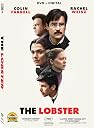
The Lobster [DVD + Digital]
Product ID: 31996671
Details
- GenreDrama
- FormatDVD NTSC
- ContributorAngeliki Labed
- Initial release date2016-05-13
- LanguageEnglish
Desertcart purchases this item on your behalf and handles shipping, customs, and support to Indonesia.
Welcome to the hilarious and far-out world of The Lobster, where singles must find their mate within forty-five days or be forever changed into an animal of their choosing. Review: Tales of ordinary dystopia. Amazing! - The film opens with thirtysomething David (Colin Farrell)—Kafka's Joseph K.’s screen double—being left by his wife for another man and subsequently taken to a fancy seaside resort. As David is subjected to peculiar check-in rituals (registration of his sexual orientation and confiscation of his personal belongings), it becomes clear that this is no ordinary Holiday Inn but a severely administered open prison. The hotel management compels its single guests to find mates during their short stay, or else be transformed into animals. David chooses to become a lobster if he doesn’t succeed: “Lobsters live over a hundred years and stay fertile all their lives,” he explains. For Lanthimos, this is not a random choice of beast: his lethargic protagonist is like a crustacean struggling to survive in rough waters. The hotel epitomizes the modern disciplinary institution, operating simultaneously as school, asylum, and hospital. Daily theatrical demonstrations in a ballroom extol the benefits of marital life to the guests, while physical experiments hinder sexual fulfillment. Navigating this dreadful routine, David encounters law and punishment, and even public torture: a lisping man (John C. Reilly) is burnt with a toaster in the middle of the cafeteria because he has repeatedly engaged in masturbation in his room. Some guests resort to lying and hide behind make-believe relationships to save their skins. David briefly adopts this strategy but, after a traumatic experience, flees into the woods where he begins to live among the Loners, a group of anarchic fugitives opposed to sex and love. Survival instincts catapult David from a community that forcibly injects emotion to another that banishes it and numbs the individual. Though their principles are at odds with each other—one is a capitalist institution that marginalizes loneliness while the other is a civic society that promotes it—their tactics are similarly despotic and both inflict atrocious punishments upon disobedient members. In each case, the only thing that’s permissible is conversation. And it is by striking up a few conversations with David that one elegant Loner (Rachel Weisz, who also delivers the film’s voiceover) steals his heart away. In this half-mythical, half-surrealistic portrait of an innocent Everyman’s confrontation with a cold-blooded system, Lanthimos achieves a level of audience identification that his previous films had failed to bring about. Alternating between melancholic and aggressive string compositions by Beethoven and Shostakovich respectively, he conveys David’s turbulent inner life and his growing sense of helplessness against power structures that want to strip him of his humanity. Lanthimos’s mise en scène is vibrant, meticulous, unsentimental, and effective. That unsentimental quality can also alienate the viewer; in the end, David remains as much a stranger to us as he does to himself and his lover. Crushed by the violently tragic predicament in which his would-be companion finds herself, he retreats to his existential bubble and becomes ghostly, un-readable, and almost devoid of emotion. Lanthimos leaves us with a feeling of cosmic loneliness, and the idea that, even between lovers, there are insurmountable rifts—a void that can never be filled. Blu-ray has good "making of" features (cast and crew) and audio commentary track. Review: The Movie Succeeds Too Well (Not A Spoiler) - The Lobster is an idiosyncratic, quirky, unconventional view of a sexual dystopia. The premise is that in a undefined future people find partners at a resort where, if they do not find a partner within a specific time, they turn into an animal of their choice. They are then released to the forest where they are hunted like any other animal. What follows is not a spoiler, because more than anything else, this movie is an experience, albeit a moody one. This movie is a terrific downer. There is a constant overcast in outside scenes (it was filmed in Ireland). The emotional aspect of meeting, finding, or courting a partner is completely absent. Sex with the maids are mandatory and is performed like a factory production line. There is no joy of sex. There is no excitement of expectation at dances. Every aspect of finding a partner is considered a chore, with a constant realization that if one is not found — ironically, the resort must consider the partnering to be “genuine” — you are going to be turned into an animal, hunted and killed. Colin Farrell’s introduction to the resort resembles being inducted into the army. It is no future I would want to be a part of. Still, every aspect of this movie is terrific. The acting, direction and every other aspect of the movie is masterful. The supporting roles are strong. John C. Reilly, especially, is good. This cannot be considered a “feel good” movie — because it definitely will NOT. This movie will not cheer you up. It will, however, make you feel grateful that you are living, for all its faults, in present times and not in the future depicted in the film.
| Contributor | Angeliki Papoulia, Ariane Labed, Ashley Jensen, Ben Whishaw, Ceci Dempsey, Colin Farrell, Ed Guiney, Jessica Barden, John Reilly, La Seydoux, Lee Magiday, Michael Smiley, Olivia Colman, Rachel Weisz, Yorgos Lanthimos Contributor Angeliki Papoulia, Ariane Labed, Ashley Jensen, Ben Whishaw, Ceci Dempsey, Colin Farrell, Ed Guiney, Jessica Barden, John Reilly, La Seydoux, Lee Magiday, Michael Smiley, Olivia Colman, Rachel Weisz, Yorgos Lanthimos See more |
| Customer Reviews | 4.2 out of 5 stars 1,158 Reviews |
| Format | DVD, NTSC, Subtitled, Widescreen |
| Genre | Drama |
| Initial release date | 2016-05-13 |
| Language | English |
A**.
Tales of ordinary dystopia. Amazing!
The film opens with thirtysomething David (Colin Farrell)—Kafka's Joseph K.’s screen double—being left by his wife for another man and subsequently taken to a fancy seaside resort. As David is subjected to peculiar check-in rituals (registration of his sexual orientation and confiscation of his personal belongings), it becomes clear that this is no ordinary Holiday Inn but a severely administered open prison. The hotel management compels its single guests to find mates during their short stay, or else be transformed into animals. David chooses to become a lobster if he doesn’t succeed: “Lobsters live over a hundred years and stay fertile all their lives,” he explains. For Lanthimos, this is not a random choice of beast: his lethargic protagonist is like a crustacean struggling to survive in rough waters. The hotel epitomizes the modern disciplinary institution, operating simultaneously as school, asylum, and hospital. Daily theatrical demonstrations in a ballroom extol the benefits of marital life to the guests, while physical experiments hinder sexual fulfillment. Navigating this dreadful routine, David encounters law and punishment, and even public torture: a lisping man (John C. Reilly) is burnt with a toaster in the middle of the cafeteria because he has repeatedly engaged in masturbation in his room. Some guests resort to lying and hide behind make-believe relationships to save their skins. David briefly adopts this strategy but, after a traumatic experience, flees into the woods where he begins to live among the Loners, a group of anarchic fugitives opposed to sex and love. Survival instincts catapult David from a community that forcibly injects emotion to another that banishes it and numbs the individual. Though their principles are at odds with each other—one is a capitalist institution that marginalizes loneliness while the other is a civic society that promotes it—their tactics are similarly despotic and both inflict atrocious punishments upon disobedient members. In each case, the only thing that’s permissible is conversation. And it is by striking up a few conversations with David that one elegant Loner (Rachel Weisz, who also delivers the film’s voiceover) steals his heart away. In this half-mythical, half-surrealistic portrait of an innocent Everyman’s confrontation with a cold-blooded system, Lanthimos achieves a level of audience identification that his previous films had failed to bring about. Alternating between melancholic and aggressive string compositions by Beethoven and Shostakovich respectively, he conveys David’s turbulent inner life and his growing sense of helplessness against power structures that want to strip him of his humanity. Lanthimos’s mise en scène is vibrant, meticulous, unsentimental, and effective. That unsentimental quality can also alienate the viewer; in the end, David remains as much a stranger to us as he does to himself and his lover. Crushed by the violently tragic predicament in which his would-be companion finds herself, he retreats to his existential bubble and becomes ghostly, un-readable, and almost devoid of emotion. Lanthimos leaves us with a feeling of cosmic loneliness, and the idea that, even between lovers, there are insurmountable rifts—a void that can never be filled. Blu-ray has good "making of" features (cast and crew) and audio commentary track.
J**R
The Movie Succeeds Too Well (Not A Spoiler)
The Lobster is an idiosyncratic, quirky, unconventional view of a sexual dystopia. The premise is that in a undefined future people find partners at a resort where, if they do not find a partner within a specific time, they turn into an animal of their choice. They are then released to the forest where they are hunted like any other animal. What follows is not a spoiler, because more than anything else, this movie is an experience, albeit a moody one. This movie is a terrific downer. There is a constant overcast in outside scenes (it was filmed in Ireland). The emotional aspect of meeting, finding, or courting a partner is completely absent. Sex with the maids are mandatory and is performed like a factory production line. There is no joy of sex. There is no excitement of expectation at dances. Every aspect of finding a partner is considered a chore, with a constant realization that if one is not found — ironically, the resort must consider the partnering to be “genuine” — you are going to be turned into an animal, hunted and killed. Colin Farrell’s introduction to the resort resembles being inducted into the army. It is no future I would want to be a part of. Still, every aspect of this movie is terrific. The acting, direction and every other aspect of the movie is masterful. The supporting roles are strong. John C. Reilly, especially, is good. This cannot be considered a “feel good” movie — because it definitely will NOT. This movie will not cheer you up. It will, however, make you feel grateful that you are living, for all its faults, in present times and not in the future depicted in the film.
P**N
Can Fascism and Love Co-Exist ?
I saw "The Lobster" when it first came out in the theatres in Washington, DC. This is not a comedy. It is not a fantasy and It is not about sex. I have not seen a more profound indictment of Fascism and Hedonism since "Animal Farm". This is an intensely sad, emotional and angry film. The Lobster is merely a metaphor, as it could have been a peacock or a wolf or a termite. The layers of metaphors and indictments of fascist behavior, inhumanity, lost meaning in love and marriage, dead interpersonal communication and a very sarcastic take on the Cowboys and Indians theme. Imagine "The Prisoner" and "Animal Farm" as done by a Greek Director. The performances were all stellar. This is Colin Farrell's finest performance to date. Rachel Weisz was incredible. The palpable feeling of loneliness, anger, frustration, injustice and lack of identity begins from the first frame. Do not see this film if you are in happy mood; it will not help. If this is Director Yorgos Lanthimos' prediction for the future of mankind, then maybe we should all be lobsters, as the joke in the end, if there is one, is on us. Watch this film as if it was the last day of your life and ask yourself, what would you do the night before. A masterpiece, a work of art, and a brilliant, but very sad, commentary on where love has gone and has not returned.
A**R
love it
one of my favorite movies
"**"
Disappointing
This movie is one of the worst movies I've forced myself to watch all the way until the end. I thought maybe there would be some aspect to the story that would be redeeming, but the story falls flat and never delivers anything worth watching. The only thing about the movie that was good was the classical music for the soundtrack.
A**.
I would choose a Porcupine
In this movie, there’s only one approved lifestyle. That is finding a partner within the context of certain narrow, socially acceptable guidelines. In order to be meaningful, dystopian fiction such as this has to speak to our own society, values, and lives, even if it does so only faintly. Otherwise, it’s just unhappy people in an impossible situation. This work is a strange but thoughtful examination of people attempting to adapt to a system that grinds the humanity out of a person and reduces finding a partner to an arbitrary set of very strange rules. I think it speaks to us, at least a little bit. People who cannot find an acceptable partner in this grim environment are changed into an animal of their choice after 45 days. The main character, David, chooses a lobster if he faces that fate, although he hopes to find someone. He makes choice partially because lobsters live over 100 years if they are not caught by fisherman or killed my other sea creatures. I would choose a porcupine. While they are not invulnerable to predators, they do have considerable protection. And at least they can climb into a tree with their quills pointing downward when it’s time to sleep. They do not have to worry about every little noise in the forest.
A**Y
Bleak, Cynical and... Oddly Charming
Offbeat, disturbing fantasy where the lonely, socially and communication awkward individuals enter a seminar that turn them into an animal of their choice if they can't find a match, even if that match is based on a petty or arbitrary commonality -incorrigible outlaw loners are hunted for sport. A bleak, incredibly cynical and awkward dark comedy is also a rather clever social allegory of mating, courtship and relationships. Plays with dystopian atmosphere (the muted color palette and melancholy, discordant string quartets is very effective) much like 1984 or Handmaid's Tale but mix in an Aristophanes play ( made revisit Aristophanes anyway). One can easily see hints of Bunuel, the Coen brothers, even Monty Python. Obviously not every viewers cup of tea. I also recommend writer/ director Giorgos Lanthimos' other films. The Killing Of A Sacred Deer is even more grim (not my imagination here- the title alone is a reference to the Greek myth of Agamemnon and Iphigenia), and his Oscar nominated The Favourite was good, but the anachronistic tone was more of a pretentious distraction than an asset to me. All recommended for an adventurous viewer.
D**N
No Lobsters Were Harmed in the Making of this Feature.
I don't get the haters on this film. Did they expect to see a man morph into a lobster courtesy of Industrial Light and Magic? Have they never heard of metaphor? This work is a dystopian Kafkaesque fantasy that shows the influence of Stanley Kubrick in its cynicism and downbeat view of humanity. Not to suggest that the film is derivative because this is a wholly personal and visionary work by writer-director Yorgos Lanthimos. The themes as I see them are that society frowns on loneliness but it's worse if it imposes it upon us and ultimately love is blind. A challenging film that demands repeat viewings. Along with "Birdman" this may be one of the best films of the decade. For the record my wife absolutely hated this film. After it was over she watched "White Chicks" on MTV, a comedy of more substance and tangibility.
Trustpilot
3 weeks ago
3 days ago