
DOWNLOAD THE APP


Customer Services
Copyright © 2025 Desertcart Holdings Limited
DOWNLOAD THE APP
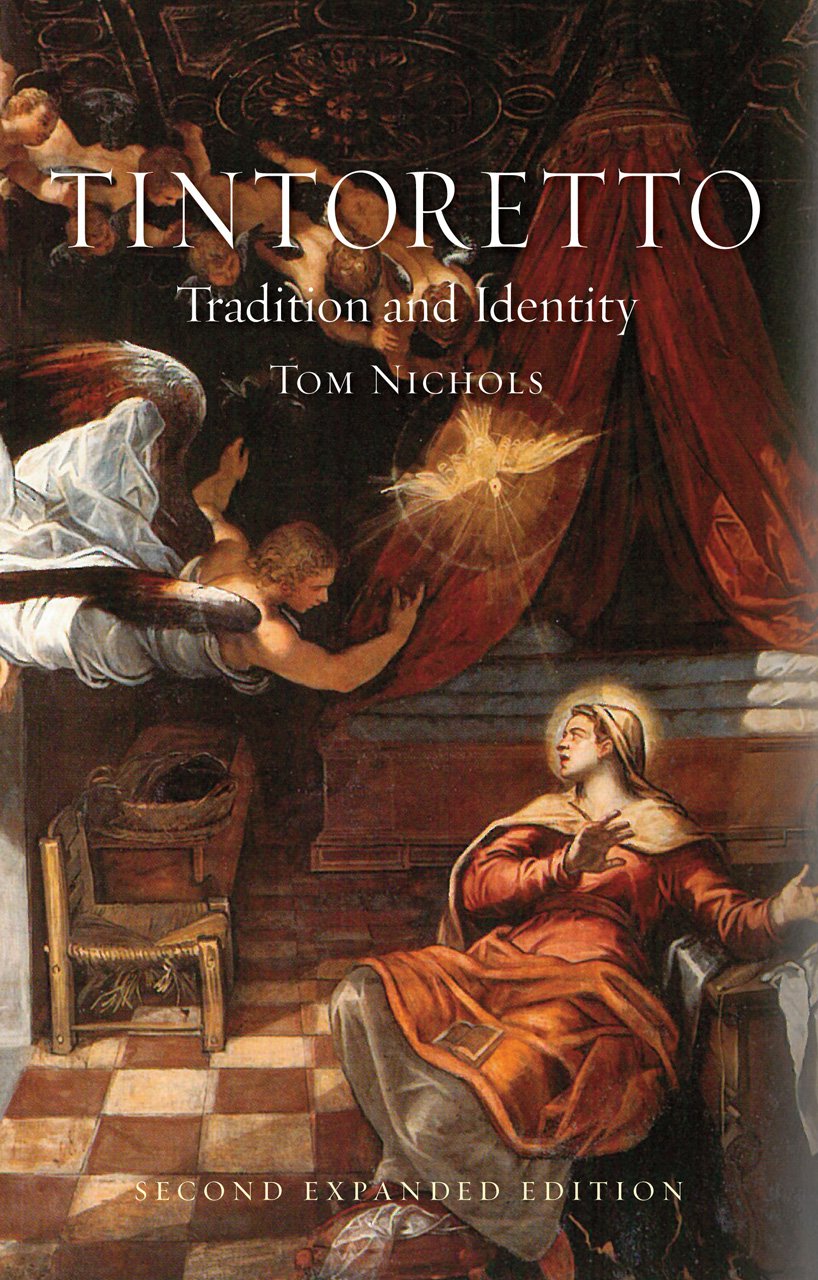
Buy Tintoretto: Tradition and Identity, Second Expanded Edition 2 by Nichols, Tom (ISBN: 9781780234502) from desertcart's Book Store. Everyday low prices and free delivery on eligible orders. Review: Great analysis of the career of Titian - I learnt a lot about Titian that I didn’t know before and will go back to view his wonderful paintings with a renewed appreciation. The book argues that Tintoretto struggled for recognition because he was developing a totally different type of art from Titian , the dominant Venetian master painter. Titian’s paintings were characterised by a high degree of finish, an immersion in classical imagery and targeted an elite, mostly aristocratic clientele. In contrast Tintoretto excuted his paintings much more rapidly, often letting the visible brush work add to the dynamism of his work. Despite immersing himself in copying classical statues and heavily influenced by Michelangelo, Tintoretto had an ambivalent attitude to the classical world, and in his San Rocco cycle classical symbols stand for the trappings of the sensual, fallen world. In contrast to Titian, Tintoretto celebrates the Christian values of humility and charity through his celebration of the every day , humble world of ordinary people, artisans or the beggars. His art is also a visionary art which rises to its high point in the San Rocco cycle. Nicols also argues at length that there is a direct analogy to the art of Tintoretto in the contemporary Poligrafi writers who wrote popular satirical works which were low cost and were able to be widely distributed due to the new printing technology. Nicols is at his best in his detailed analysis of san Rocco cycle to which he devotes two lengthy chapters. The only downside is the small reproductions. However this can be got round by googling the images which are all readily available online. Review: Not for the art lover - But rather for the scholar. Text is written in a clear, readable style and goes in depth about Tintoretto's business philosophy, his opposition to Titian and his work for the Scuola Grande de San Rocco. The reproductions of his paintings are however very small and it is hard to see anything of them. The format of the book is rather small and its stiff binding makes double-page spreads impossible, so wide paintings (and some of his paintings were very wide) get shrunk down very small. A handful of portraits can be viewed comfortably, but for the rest necessary detail disappears.
| Best Sellers Rank | 577,934 in Books ( See Top 100 in Books ) 340 in Renaissance Art 2,118 in Biographies about Artists, Architects & Photographers 2,160 in Individual Artist Monographs |
| Customer reviews | 4.7 4.7 out of 5 stars (10) |
| Dimensions | 13.97 x 2.79 x 21.59 cm |
| Edition | 2nd |
| ISBN-10 | 1780234503 |
| ISBN-13 | 978-1780234502 |
| Item weight | 454 g |
| Language | English |
| Print length | 400 pages |
| Publication date | 1 Jun. 2015 |
| Publisher | Reaktion Books |
D**N
Great analysis of the career of Titian
I learnt a lot about Titian that I didn’t know before and will go back to view his wonderful paintings with a renewed appreciation. The book argues that Tintoretto struggled for recognition because he was developing a totally different type of art from Titian , the dominant Venetian master painter. Titian’s paintings were characterised by a high degree of finish, an immersion in classical imagery and targeted an elite, mostly aristocratic clientele. In contrast Tintoretto excuted his paintings much more rapidly, often letting the visible brush work add to the dynamism of his work. Despite immersing himself in copying classical statues and heavily influenced by Michelangelo, Tintoretto had an ambivalent attitude to the classical world, and in his San Rocco cycle classical symbols stand for the trappings of the sensual, fallen world. In contrast to Titian, Tintoretto celebrates the Christian values of humility and charity through his celebration of the every day , humble world of ordinary people, artisans or the beggars. His art is also a visionary art which rises to its high point in the San Rocco cycle. Nicols also argues at length that there is a direct analogy to the art of Tintoretto in the contemporary Poligrafi writers who wrote popular satirical works which were low cost and were able to be widely distributed due to the new printing technology. Nicols is at his best in his detailed analysis of san Rocco cycle to which he devotes two lengthy chapters. The only downside is the small reproductions. However this can be got round by googling the images which are all readily available online.
S**D
Not for the art lover
But rather for the scholar. Text is written in a clear, readable style and goes in depth about Tintoretto's business philosophy, his opposition to Titian and his work for the Scuola Grande de San Rocco. The reproductions of his paintings are however very small and it is hard to see anything of them. The format of the book is rather small and its stiff binding makes double-page spreads impossible, so wide paintings (and some of his paintings were very wide) get shrunk down very small. A handful of portraits can be viewed comfortably, but for the rest necessary detail disappears.
Trustpilot
2 weeks ago
5 days ago