




🔌 Cut the cords, not the style—wireless lighting freedom at your fingertips!
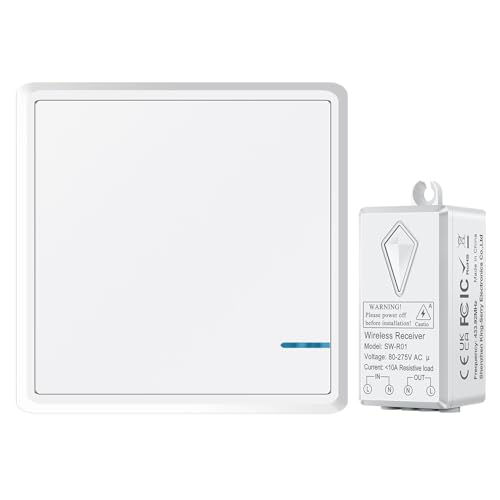
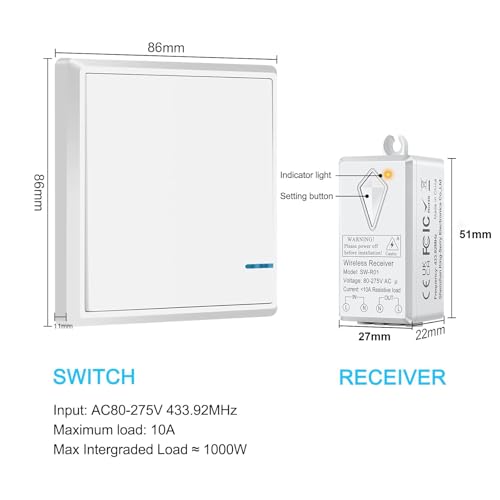
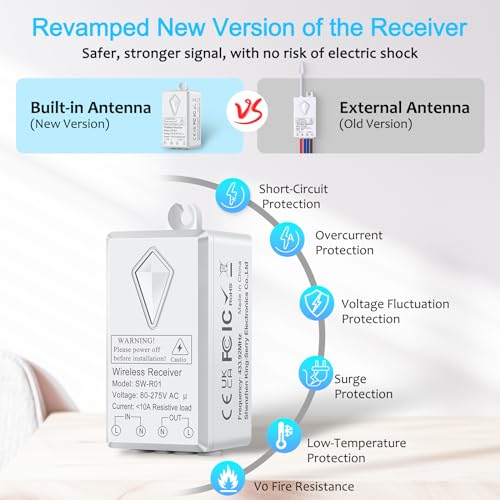
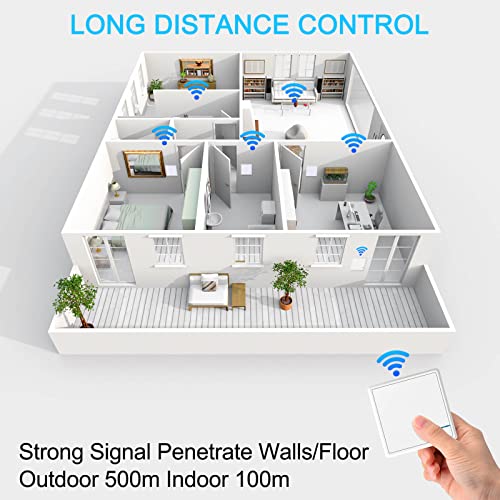
The NineLeaf Wireless Light Switch Kit offers a compact, easy-to-install remote control solution for lighting systems operating between 80-275V. Featuring a 10A receiver with hidden antenna, it supports up to 8 programmable switches with a strong, interference-free signal range of 300ft indoors and 1300ft outdoors. Certified for safety with IP66 waterproof and V0 fireproof ratings, this kit ensures reliable, silent operation with a slim switch design and a battery life lasting up to 10 years. Ideal for modern homes and commercial spaces seeking flexible, wireless lighting control without rewiring.


| ASIN | B07V5V5K3D |
| Batteries Required? | No |
| Batteries included? | No |
| Best Sellers Rank | 31,223 in DIY & Tools ( See Top 100 in DIY & Tools ) 336 in Switches & Dimmers |
| Customer Reviews | 4.4 4.4 out of 5 stars (433) |
| Date First Available | 12 July 2019 |
| Finish | Polished |
| Item Weight | 140 g |
| Item model number | SW-SK1 SW-R01 |
| Manufacturer | NineLeaf |
| Part number | RF switch |
| Power source type | Battery Powered |
| Product Dimensions | 10.5 x 10.7 x 5 cm; 140 g |
| Shape | Square |
| Size | 1 Switch and 1 Receiver |
| Style | RM Receiver |
| Switch Type | 3-way |
| Voltage | 275 Volts |
N**E
Easy to connect. Nice slim switch with readily available replacement battery
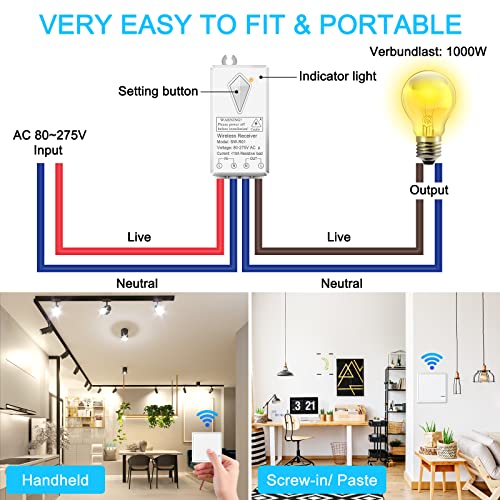
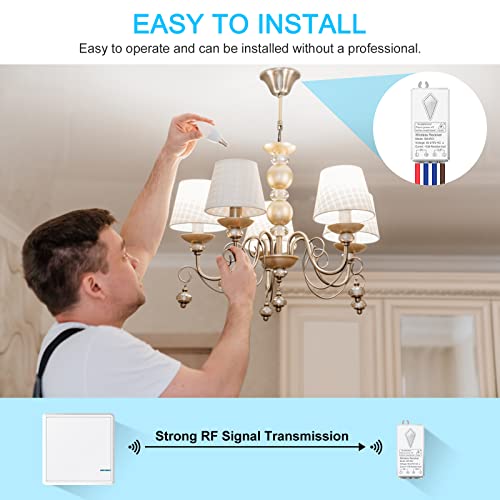
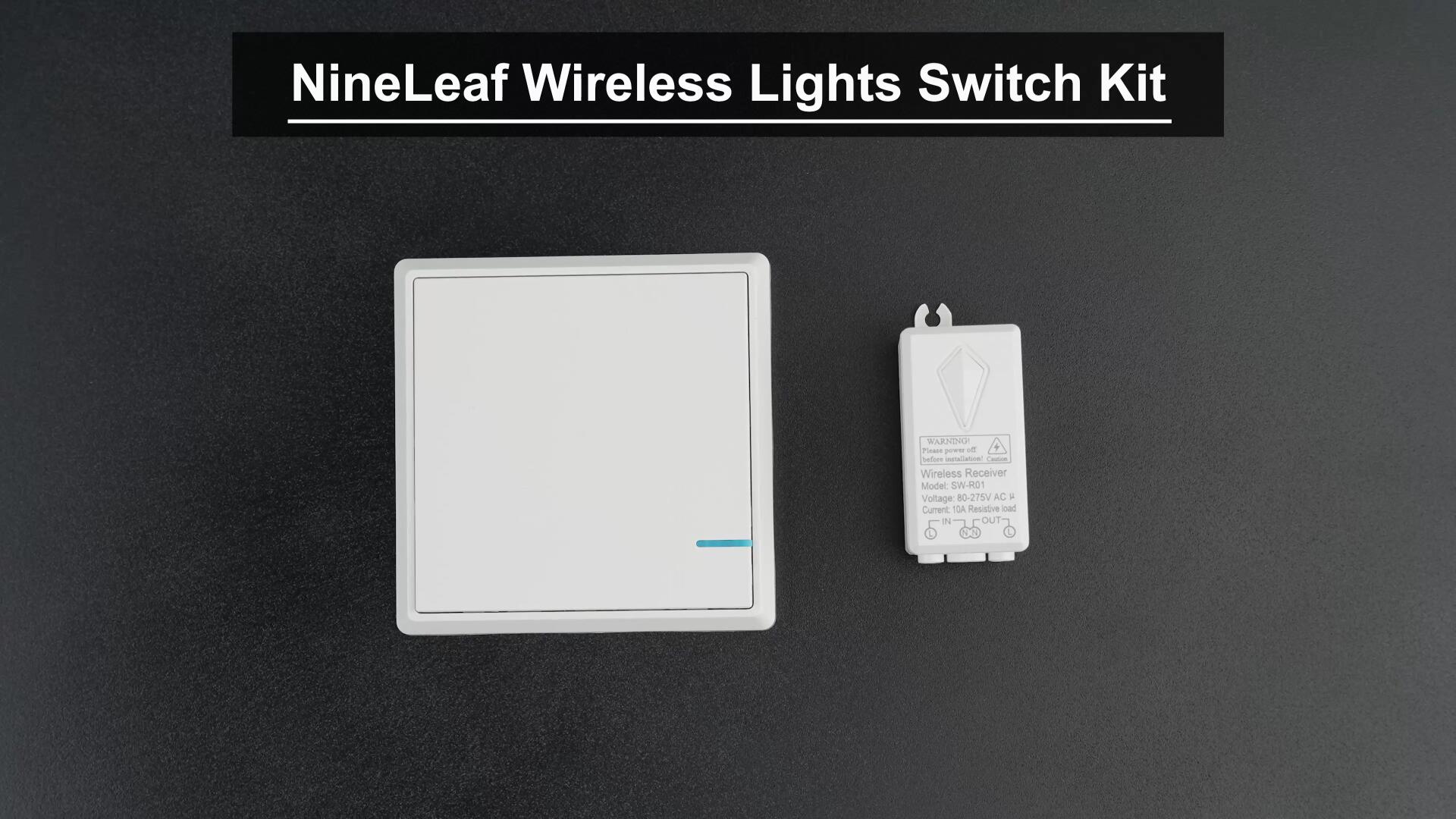
The wireless unit comes pre wired with 4 short wires each about 5cm long One pair for live in and a pair for live out. The neutrals are wired together. All of these wires are just screwed in place and easily removed and replaced There is no earth connection. Clearly labelled so easy to wire up. The unit has a button to press which allows pairing with the switch. You can pair several units with a single switch which is handy if you purchased several of them but only wanted a single switch to activate all the units. The switch itself is very slim (about 5mm) so would not look big/bulky wherever it was installed. The switch pulls off to allow the base to be screwed to a wall and is clipped back on. Didn’t check the battery, but it looked like a CR2025 or similar. So easily obtained from any supermarket shop. You can hear the click of the relay in the unit when operating.
B**S
Work very well
I've installed a couple of sets of these now, and I'm very impressed with them. Ideal for situations where you need a handy light switch, but don't want to be chasing out plaster or drilling holes to run cable to them. The switches themselves will go anywhere that you have a few spare centimetres. Sticky fixing pads are included. The "fitting" part only involves the little receiver unit, which is the size of a couple of sugar cubes. You will need a modicum of electrical knowledge to do this. I'd say that if you understand the concept of "Live" and Neutral" and have the knowledge and ability of how to wire a three-pin plug safely, you should have no problems. But I can't stress enough: IF YOU DON'T HAVE THE KNOWLEDGE, CALL AN ELECTRICIAN. If you're looking to replace or augment an existing light switch in a normal UK domestic setting, then in all likelihood you will NOT be able to simply wire the receiver into the existing switch box at the wall. This is because the receiver requires both an un-switched Live (brown/red) and Neutral (blue) connection (to draw the power it needs to operate). The Neutral wire will not normally present at the switch. AFTER TURNING OFF THE CIRCUIT AT THE CONSUMER BOX, you'll need to expose the ceiling rose, and fit the receiver there. You should familiarise yourself with how the wiring in a typical ceiling rose is configured, and relate that to your own, before diving in. There are clear instructions included with the unit, and a couple of very handy little 'tool-free' junction blocks. Pairing the receiver with the switch(es) is very simple.
B**.
Good product, a little fiddly to install but works great when its up and running.
I used these to control 3 wall lights which each had their own switch on the light itself (not wired into the main light switch). It does say in the manual that its not recommended to have one switch control multiple lights (the expected setup is single switch to single light or multiple switches to a single light). But in my case I've not had any issues controlling all three lights from a single switch. My guess is that if one of the lights doesn't receive the signal it would become out of sync with the other lights. The switches are a single push button (press at bottom of switch) and it toggles the lights on and off, so the on/off signal is likely the same regardless of current state. So I would avoid using it to control lights where the signal might be spotty (distance or wall obstructions). You can probably reset them all by turning off the breakers, but would be hassle if they regularly got out of sync. The receiver modules are small enough to fit inside the base of the wall light (2ish cm deep), but just remember to pair the module to the switch before fitting the light to the wall.
D**F
Useful and effective - hope they prove durable
As a concept these are very effective, you can put light switches wherever you want them without having to channel cables (the time saving probably justifies the cost). Installation was reasonably easy but not without issues. Pairing is done by pressing and holding a button on the receiver. What is not clear is that there is an indicator light under the surface of the receiver (not immediately obvious) that does the required flashing to tell you when it is in pairing mode. The instructions are not that clear. For instance the instructions indicate that pairing a second switch to an already paired switch & receiver can be done by pairing the two switches; in practice I found I had to pair the second switch to the receiver, which fortunately was accessible once I got the ladder out again. (If I had buried the receiver in the ceiling void, that would have been a major pain.) The switches can be stuck with adhesive strips to any flat wall (i.e. not to textured wall coverings). It is more effective to screw them either to the wall with a couple of rawl-plugs or to the electrical box to which the conventional switches had previously been fixed - the fixing holes in the back of the switches are the right distance apart. There are three cautions if screwing the switches to existing electrical boxes. 1) To get at the screw holes you have to remove the surround using a screw driver and tiny slots on the bottom edge, then pop the actual switch pads off their mountings. With two (or three way) switches you worry a bit that you might snap the switch pads 2) Once you have removed the switch pads the actual back - which you secure to the wall is much thinner than the conventional switch being replaced; therefore you have to either shorten the screws or take care not to trap the wires in the wall. 3) Because the switch back is quite thin it is quite possible to warp it if the wall is not absolutely flat or the cables in the wall box are not lying flat. If it is even slightly warped the switch action might not work. However once fitted it all all seems to work well; I have replaced my hall light with a couple of wireless switches and the landing and corridor lights with three switches. There is a possible safety issue for those who may later maintain the system without any awareness. Normally when working on a lighting unit some people just ensure that they are "switched off". With these systems of course you have a permanently live feed into the receiver unit which will in most cases be in the lighting unit or close to the ceiling rose. Before working on them you need to remove the distribution fuse (as you should when installing). My only concerns are how long the switch batteries last and how durable they will prove to be. (Some alternative systems don't require cell batteries as they are powered by the switching action.) Given that these systems are proprietary, I might be sensible to buy some spare units. It would be a pity to have to replace the entire system because I cannot replace a single part should it fail.
E**X
Gutes Produkt... Der war einfach zu installieren und funktioniert einwandfrei...danke
A**N
Qualitatif et facile à monter. Emballage carton sans trop de plastique à jeter Notice claire et demandant peu de compétences au montage. Ne pas oublier d’apairer avant de cacher le récepteur. Toucher agréable, petit « plop » supportable en guise de bruit de déclenchement La partie bleue s’allume au moment de la pression mais n’est pas phosphorescente ; elle facilitera le contrôle de la pile Pile dans l’interrupteur mais heureusement pas dans le récepteur qui sera plus difficile d'accès. En revanche celui ci consommé - moins d’un watt donc presque rien - en continu Dommage qu’il n’y ait pas d’obturateur assorti pour cacher l’ancien emplacement d’interrupteur
T**N
Funktioniert gut
R**L
Prima Anlage mit Schalter und zwei potentialfreien Funktastern. Problemlose Verbindung mit Piezo-Signal vom Dach zum Keller durch drei Stahlbetondecken.
E**O
Bon fonctionnement, le bloc de connexion n'est pas trop gros et rentre dans un boitier d'encastrement si l'on veut éviter de passer par le plafond (pour un plafonnier). Prévoir un tournevis fin pour enlever la façade, c'est en effet un peu dur avec un risque d'abîmer le plastique si l'on force trop.
Trustpilot
2 weeks ago
1 month ago