Some deliveries may take a little longer than usual due to regional shipping conditions.

DOWNLOAD THE APP


Customer Services
Copyright © 2025 Desertcart Holdings Limited
DOWNLOAD THE APP
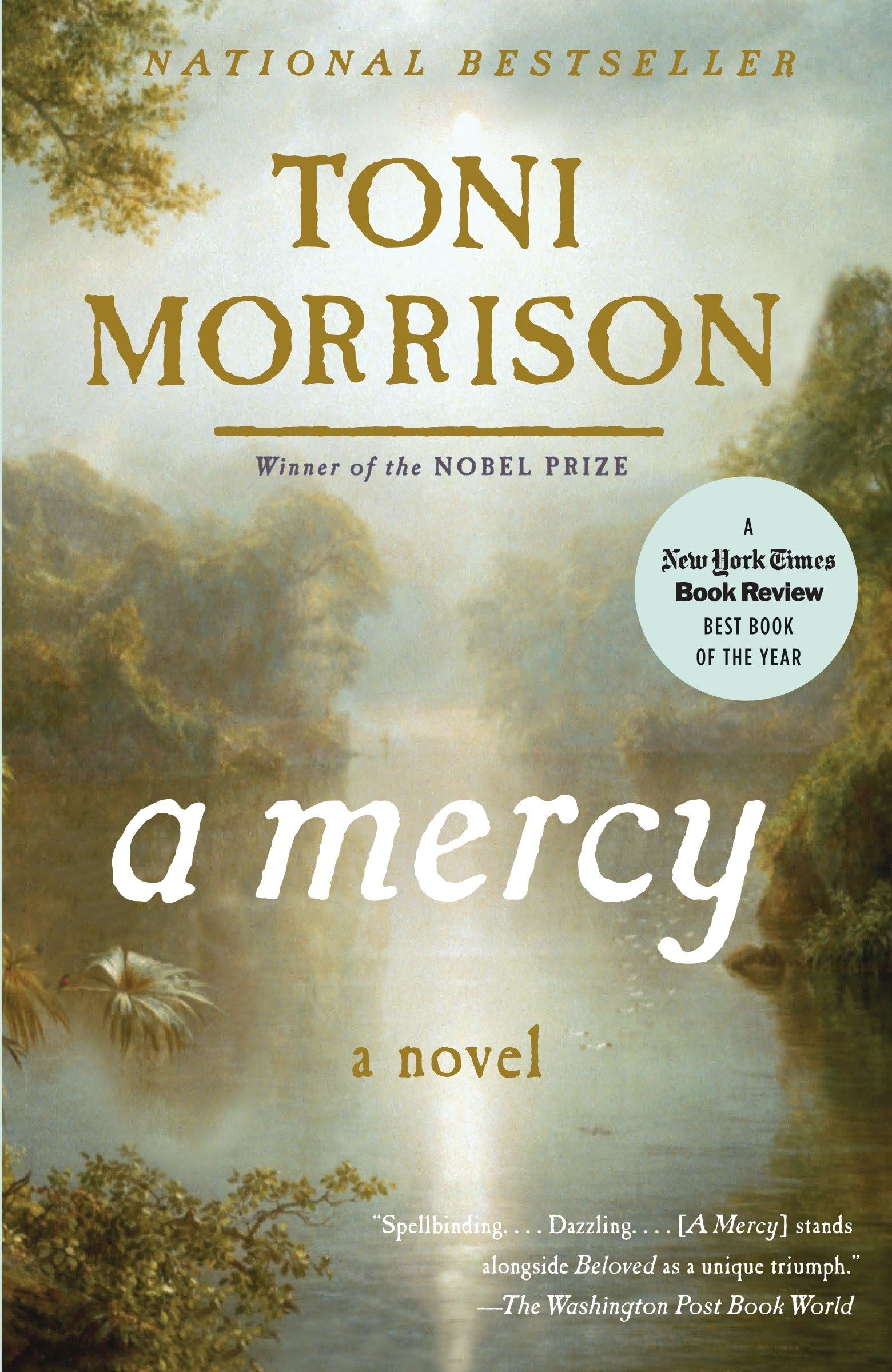
A Mercy [Morrison, Toni] on desertcart.com. *FREE* shipping on qualifying offers. A Mercy Review: Love, Loss, and a Whole Lot More - By juxtaposing the ideas of abandonment versus love, new life versus death, Toni Morrison takes any stereotype that surrounds slave narrative and throws it out the window, instead delving into the personal side of slavery; even traditional narrative style is denied in favor of rapidly changing narrators. In effect, her most recent novel A Mercy pushes the reader to places he or she may not have been before and forcing him or her to reconsider preconceived notions of gender and what is considered merciful. With a rotating narrator, A Mercy illustrates how an individual's experience shapes the story of the whole. The reader follows the Vaants, a family unified by abandonment. With each new chapter, a different voice tells a different part of the story. With this method, Morrison allows the reader to connect with each character on a more fundamental level, learning what makes each individual different and damaged. When together, the characters work to heal one another, finding, in most cases, the companionship necessary to begin healing in their new family. The patriarch and slave owner, Jacob, trades goods across the north and rum across the ocean. The title of the novel comes from his accepting of a slavegirl, Florens, as partial payment of a debt. Though Vaant sees the act as merciful, Florens can only see her mother's abandonment. As the story progresses, we are introduced to a multitude of characters, including a cast of unique females: Rebekka, Vaant's mail-order bride who has lost every child she birthed, Lina, the sole survivor of a Native American tribe purchased by Vaant to keep Rebekka company, and Sorrow, the daughter of a sea captain and the only survivor after the ship sinks. While Rebekka, Lina and Florens form a group of their own, Sorrow is ostracized for her daftness and bad luck that Lina believes she carries, and yet she finds happiness when alone with her invisible friend, Twin. The modern reader would be able to recognize many of Sorrow's traits as symptoms of schizophrenia. A unifying quality among the women is an ability to love: Florens is consumed with desire for a freed slave working as a blacksmith, Rebekka loves her new home, husband and friend she finds in Lina, Lina ultimately adopts Florens as her own daughter and tries to protect her from the dangers she will face in the world and her travels, and Sorrow loves Twin at first, and finally her daughter. In less than 200 pages, the reader sees each individual struggle with challenges they face. First, Jacob falls into the glitzy trap set by selling rum - he starts out wanting to provide for his family, but becomes addicted to lavishness, building multiple houses on his property that he will never need and has no heir to inherit. While Jacob cannot accept not having an heir, Rebekka grieves for the losses of each of her four children. After losing her husband to small pox and coming close to death herself, Rebekka eventually withdraws into herself and becomes devastatingly jealous of Sorrow and her infant. Florens is sent to find the blacksmith, who holds the cure to Rebekka's illness and the key to Florens' heart. After finding herself with blood on her hands, Florens must find a way to live with her guilt. In Florens' absence, Sorrow struggles with the many farm chores, her progressing pregnancy and ostracization within the Vaant family. With one worker gone and one unable to work due to her pregnancy, Lina struggles to keep the farm in working order while trying to keep Rebekka alive. Together, the women all face the multitude of challenges and hardships that life provides. At first a challenging read while adapting to each narrator's voice (especially Florens' vernacular, stream-of-consciousness tongue), Morrison's unique writing style will keep the reader interested and provides a multi-faceted look at each situation. Furthermore, the rotating narrator (and lack of clues in chapter titles) forces the reader to get involved in order to identify with each character more, allowing him or her to feel what the character feels, be it a lover's emotion after feeling rejected, a mother's anguish of losing a child, or a woman's joy of finding her place and finally feeling Complete. Beautifully written with lyrical descriptions and vivid imagery, A Mercy is a novel that you will not want to put down - not a word or phrase is wasted in the 196 pages of text. Fast-paced and never dull, it provides a fresh take on an old topic, illustrating the turmoil while remaining an enjoyable read. Though I would have preferred more closure in Florens' story, I would have to put this novel in the top ten percent of my all-time favorite reads. It is works like this one that prove Toni Morrison worthy of her Nobel Prize, showing her ability to write a beautiful story in such a short amount of space. Review: Toni’s Window Into Time Leaves Me Breathless Once Again - Toni has a way of guiding you to this window of peering into the past that feels so transportive and beautiful but so tragic and haunting. Her characters have a way of taking up space within you that you didn’t know you had. I will forever think of Lina, Florens and Sorrow. Although this book is very short the story itself is beyond measure. She builds upon the characters, land and history with such detail and intention that you feel the ground beneath you, you can hear the cicadas, you fear the house that houses those with smallpox, you can see the river where Lina bathed. It is so captivating and I think some of Toni’s best work truly. In my very proud opinion she is the greatest american writer ever. no matter the gender or race she is it. I miss her terribly. Thank you Toni for sharing your gift with the world.

| Best Sellers Rank | #24,992 in Books ( See Top 100 in Books ) #19 in Literary Criticism & Theory #283 in Coming of Age Fiction (Books) #1,241 in Literary Fiction (Books) |
| Customer Reviews | 4.4 4.4 out of 5 stars (1,549) |
| Dimensions | 5.13 x 0.59 x 7.94 inches |
| Edition | Reprint |
| ISBN-10 | 0307276767 |
| ISBN-13 | 978-0307276766 |
| Item Weight | 2.31 pounds |
| Language | English |
| Print length | 208 pages |
| Publication date | August 11, 2009 |
| Publisher | Vintage |
K**N
Love, Loss, and a Whole Lot More
By juxtaposing the ideas of abandonment versus love, new life versus death, Toni Morrison takes any stereotype that surrounds slave narrative and throws it out the window, instead delving into the personal side of slavery; even traditional narrative style is denied in favor of rapidly changing narrators. In effect, her most recent novel A Mercy pushes the reader to places he or she may not have been before and forcing him or her to reconsider preconceived notions of gender and what is considered merciful. With a rotating narrator, A Mercy illustrates how an individual's experience shapes the story of the whole. The reader follows the Vaants, a family unified by abandonment. With each new chapter, a different voice tells a different part of the story. With this method, Morrison allows the reader to connect with each character on a more fundamental level, learning what makes each individual different and damaged. When together, the characters work to heal one another, finding, in most cases, the companionship necessary to begin healing in their new family. The patriarch and slave owner, Jacob, trades goods across the north and rum across the ocean. The title of the novel comes from his accepting of a slavegirl, Florens, as partial payment of a debt. Though Vaant sees the act as merciful, Florens can only see her mother's abandonment. As the story progresses, we are introduced to a multitude of characters, including a cast of unique females: Rebekka, Vaant's mail-order bride who has lost every child she birthed, Lina, the sole survivor of a Native American tribe purchased by Vaant to keep Rebekka company, and Sorrow, the daughter of a sea captain and the only survivor after the ship sinks. While Rebekka, Lina and Florens form a group of their own, Sorrow is ostracized for her daftness and bad luck that Lina believes she carries, and yet she finds happiness when alone with her invisible friend, Twin. The modern reader would be able to recognize many of Sorrow's traits as symptoms of schizophrenia. A unifying quality among the women is an ability to love: Florens is consumed with desire for a freed slave working as a blacksmith, Rebekka loves her new home, husband and friend she finds in Lina, Lina ultimately adopts Florens as her own daughter and tries to protect her from the dangers she will face in the world and her travels, and Sorrow loves Twin at first, and finally her daughter. In less than 200 pages, the reader sees each individual struggle with challenges they face. First, Jacob falls into the glitzy trap set by selling rum - he starts out wanting to provide for his family, but becomes addicted to lavishness, building multiple houses on his property that he will never need and has no heir to inherit. While Jacob cannot accept not having an heir, Rebekka grieves for the losses of each of her four children. After losing her husband to small pox and coming close to death herself, Rebekka eventually withdraws into herself and becomes devastatingly jealous of Sorrow and her infant. Florens is sent to find the blacksmith, who holds the cure to Rebekka's illness and the key to Florens' heart. After finding herself with blood on her hands, Florens must find a way to live with her guilt. In Florens' absence, Sorrow struggles with the many farm chores, her progressing pregnancy and ostracization within the Vaant family. With one worker gone and one unable to work due to her pregnancy, Lina struggles to keep the farm in working order while trying to keep Rebekka alive. Together, the women all face the multitude of challenges and hardships that life provides. At first a challenging read while adapting to each narrator's voice (especially Florens' vernacular, stream-of-consciousness tongue), Morrison's unique writing style will keep the reader interested and provides a multi-faceted look at each situation. Furthermore, the rotating narrator (and lack of clues in chapter titles) forces the reader to get involved in order to identify with each character more, allowing him or her to feel what the character feels, be it a lover's emotion after feeling rejected, a mother's anguish of losing a child, or a woman's joy of finding her place and finally feeling Complete. Beautifully written with lyrical descriptions and vivid imagery, A Mercy is a novel that you will not want to put down - not a word or phrase is wasted in the 196 pages of text. Fast-paced and never dull, it provides a fresh take on an old topic, illustrating the turmoil while remaining an enjoyable read. Though I would have preferred more closure in Florens' story, I would have to put this novel in the top ten percent of my all-time favorite reads. It is works like this one that prove Toni Morrison worthy of her Nobel Prize, showing her ability to write a beautiful story in such a short amount of space.
J**H
Toni’s Window Into Time Leaves Me Breathless Once Again
Toni has a way of guiding you to this window of peering into the past that feels so transportive and beautiful but so tragic and haunting. Her characters have a way of taking up space within you that you didn’t know you had. I will forever think of Lina, Florens and Sorrow. Although this book is very short the story itself is beyond measure. She builds upon the characters, land and history with such detail and intention that you feel the ground beneath you, you can hear the cicadas, you fear the house that houses those with smallpox, you can see the river where Lina bathed. It is so captivating and I think some of Toni’s best work truly. In my very proud opinion she is the greatest american writer ever. no matter the gender or race she is it. I miss her terribly. Thank you Toni for sharing your gift with the world.
A**S
A Found Treasure
Two decades after her first novel "The Bluest Eye", had been published in 1970, Toni Morrison disclosed in an Afterword that she was dissatisfied with the book's language and its structure, and that it 'required a sophistication unavailable to me', she had confessed. Be that as it may, whether that was the case or not, I believe her first novel stands on its own merits, although, the sophistication she referred to, if you will, can be found in her newest work, "A Mercy". Without question, in my view, it is very much a contemporary classic work which resonates, not only with sophistication, but wisdom as well, after all it has been 39 years since the writing of her first novel and Morrison's insights into human nature, especially within the context of race relations, is quite profound. Morrison has certainly put to good use her fertile mind, her imaginative ideas, and her passion to tell a story, a history of slavery that to her has always been too close for comfort but always within reach--emotionally within her grasp. Certainly her rich family ancestry has passed on to Morrison, many of the stories she so vividly talks about in all her books. The many heartfelt tales her wonderful characters portray and live out throughout her novels, in one form or another, are as breathtaking as they are heart-breaking, and more so, is the story told by Florens in this story. An unknown character, who we soon learn, named Florens, opens this tale with a confession. A bloody deed. She tells of how she plans and plots her way to YOU, as she refers to the reader's conscience, as I understand it. Almost as if she wants us to be co-conspirators, or witnesses to her crime. At first, this is a confusing, albeit a necessary ploy on Morrison's part. Confusing because the narrative, its syntax that is, is somewhat unusual, because of the narrator's awkward phrasing, and necessary because Morrison knows how to involve her readers'-her audience in a partnership. She's a master at getting her readers to participate and become an active part or a willing character in her stories and I believe she succeeds brilliantly in this case. But it is after that short, poetic, first chapter. The chapter you must read twice, in order to get it, that the story opens up as Jacob Vaark, the "white-man's conscience" in the story makes his entrance and stirs things up a bit. But of course, the very astute Morrison gives Vaark a formidable handicap: He is just as human as any other white man and therefore just as greedy, despite his admonition: "His distaste for dealing in flesh". Morrison goes on and makes wise use of her invisible, sinister, narrator that opens the story, by using this narrator to begin many other chapters, slowly and methodically cluing us in on her devious plot. The task, the errand at hand she has been sent to carry out in the name of justice. In the name of her mother, a minha mae. (Meaning, "my mother" in Portuguese.) It is all very intriguing and as always, Morrison's plots are very active and take many turns and multiple points of view, which adds a wonderful texture to her writing. If I had one tiny criticism, which I've justified in my own mind, it is that the ending sounds a bit preachy and authorial. Maybe even hard-hitting to those who receive the character's (and consequently, the author's) brave message. A message that Morrison has penned in subtler ways since her first novel. A message of her pain and the long-suffering among Blacks in a predominantly White world. The injustice wrought on her and her people throughout many generations. A strong admonition that nonetheless needs to be heard, and heeded. I just don't agree that it should be delivered so transparently in a work of fiction. (Could Toni Morrison be testing the waters for her take on an upcoming non-fiction account of slavery? We'll see.) The characters in this novel are also delineated superficially, which is most likely intentional, as the plot and it's main theme, namely, injustice, are at the center of this powerful and beautifully written story. If you're a newcomer to Morrison's writing, any of her great novels is a good place to start enjoying everything she has to offer. Start with her first, as mentioned, "The Bluest Eye", and work your way up, one by one, up to "A Mercy". So far her last story, but hopefully, not her last book. Reading this novel was like discovering an old 17th century relic that contained an important message with valuable seeds inside of it. Seeds that when sown inside your heart, grow magically and eternally into something profound. Something beautiful. Thank you for the courageous words, Toni Morrison, they are well-received. I applaud you and your wonderful words. (By-the-way, I bought and read this book right after its publication and wrote this review shortly thereafter, but for some reason hesitated posting it on Amazon. I bid you peace and much love, Toni Morrison. You are one of the literary greats of our time and I love your work. I can't wait for your next one. "Beloved" is a favorite too. Toni Morrison Set: "Song of Solomon," "Jazz," "Beloved," "The Bluest Eye."
だ**?
This book is difficult to read, and by no other reason but design. TM does not introduce new characters, but writes them into the story so that it makes sense only towards the end, if at all it does (she does the same with the unfolding of events; one must be a time-traveler to keep up). The chapter where the boy Mailik was forced upon us made me feel gaslighted. Is this some kind of avant-garde literary device that only a specialist education in the discipline could afford the grasping of or am I just dumb? I’ll take my chances with her fans and side with B.R. Myers on this. The occasional grammatical errors also seem to be intentional, perhaps to conjure up an atmosphere of archaism, a zeitgeist of pre-emancipation south. Perhaps the Faulknerian approach serves to mirror a much overlooked human nature, where thoughts and memories come and go often unplanned and unexpected, like the ebb and flow of seawater (except the latter can be expected—I was referring to their physics). By page 167 I was confused if I should feel sorry for Sorrow, Florens, Lina, or any of the farm animals that kept dying (truth be told even having read the book I don’t know who is who anymore given the incongruity of the narrative). I was also confused if Scully was homosexual or not, not that it matters. To her credits, there’s a magical quality to the beauty of TM’s prose. Events are told in a matter-of-fact manner mostly, carrying with it a tone of physical and mental exhaustion, of exasperation mired in numbness. Although difficult, it is very atmospheric. I felt battered when pain was called for. Loneliness when abandonment occurred. Grief when a person’s womanhood was violated like it was just a workaday activity of men. Desperation when food was scarce and illness abound. While still confused, I feel I want to hear (not read, that’s enough) more.
S**J
This novel exhibits how Toni Morrison delves into the inaugural phase of racism.A literary discourse that rejuvenates Afro-American fiction and redefines it. A book worth reading.
T**Y
Livre reçu en très bon état et emballer avec soin! Hâte de le lire!
F**N
As Rebekka Vaark lies sick, possibly dying, of smallpox, her young slave, Florens, sets out to find and bring back the man the mistress thinks will be able to cure her. As Florens makes her difficult and dangerous journey through the still wild Virginia of 1690, where humans and beasts present different though equal threats, we will learn of the people who make up the household – how they came to be there, how they live, the relationships between them. And we will get a picture of the birth of America, built with the blood and toil of those who came voluntarily and those who were brought against their will. I’m having a bit of a rollercoaster ride with Toni Morrison. Having been stunned by the power of Beloved, I was then a little disappointed by the heavy-handed symbolism of Song of Solomon, so I didn’t quite know what to expect from this one. Having now read it, I suspect it may have layers of depth that would require further readings to fully catch, but even on this one reading I found it a wonderfully insightful and nuanced picture of the early settlers in the New World, and a beautifully told story of the human spirit battling against hardship. Jacob Vaark has inherited a piece of land and sets out to farm it, sending back to England for a woman willing to become his wife. Rebekka tells her story of sailing across the ocean to marry a man she has never met. She is lucky – he is kind and they grow to love one another. We see the overcrowded filth and poverty of the London she has left behind and her growing delight at the space, pure air, clean water of her new home. Jacob is kind in other ways, gradually collecting waifs and strays to work on the farm. Florens came to them as a child, traded as payment of a debt owed to Jacob. Lina, a Native American, survived the smallpox brought by the settlers which wiped out almost all of her village. Rootless, she too finds a home in the Vaark household. And Sorrow, turned out by her employers for the sin of being impure, is taken in by Jacob. But Jacob’s kindness is enabled by his investments in slave plantations in Barbados – the nature of America’s foundation is in the background but never forgotten. One of the things I appreciated about this is that Morrison doesn’t limit it to the story of African slaves. She shows that, while race is clearly already a dividing line, there are other factors – wealth and poverty, gender, competing religions – that define the hierarchies within this still-forming society. We hear about the indentured servants, often white, who are bought and sold much like the Africans; the women who are, if they are lucky, traded as wives; the Native Americans, their population already being ravaged by new illnesses even before they are driven from their lands. She also shows with a good deal of subtlety how kindness is easier in good times; that friendship between people wielding unequal power is fragile, perhaps too fragile to survive when times get tough. She shows how easy it is for good people to convince themselves that they have rights of ownership and control over the lives of others, and easier still to slide unthinkingly into abuse of power. In fact, in microcosm, she shows that the problems of today’s America arise from the circumstances of its conception and birth. But these characters are not merely symbols of their race or place in society. In what is a very short book, each has time to develop into a fully rounded human being, complete with vulnerabilities and flaws, not always likeable but fully empathetic. Some tell us their own stories; others we are told about in third person. Florens has a dialect and uses a kind of stream of consciousness narrative, making her sections the hardest to read but also the deepest – she is the heart of the story. We learn about the men – Jacob himself and the two indentured servants who work on the farm – but the book is centred on the women, as individuals and on their relationships with each other. Motherhood is a major theme, and a difficult one at a time when infant death was a common occurrence. There are stories of the sacrifices mothers make for their children, the jealousies of those women who are childless for others who have healthy babies, the prejudices against mothers who bear children out of wedlock, even when this is as a result of rape, and the fulfilment that some women only find through motherhood. This doesn’t have the emotional impact of Beloved, but it’s a beautifully rendered picture of womankind in all her complexities, and of inequality, be that of race or wealth or gender or power, and how it distorts the human spirit. But Morrison offers the possibility for redemption. The stories of these women are hard, often bleak, and Morrison doesn’t provide facile, happy endings; but there is a sense that the love mothers have for their children gives hope for a better future. One day, perhaps.
S**F
The book was Good quality
Trustpilot
2 weeks ago
3 weeks ago