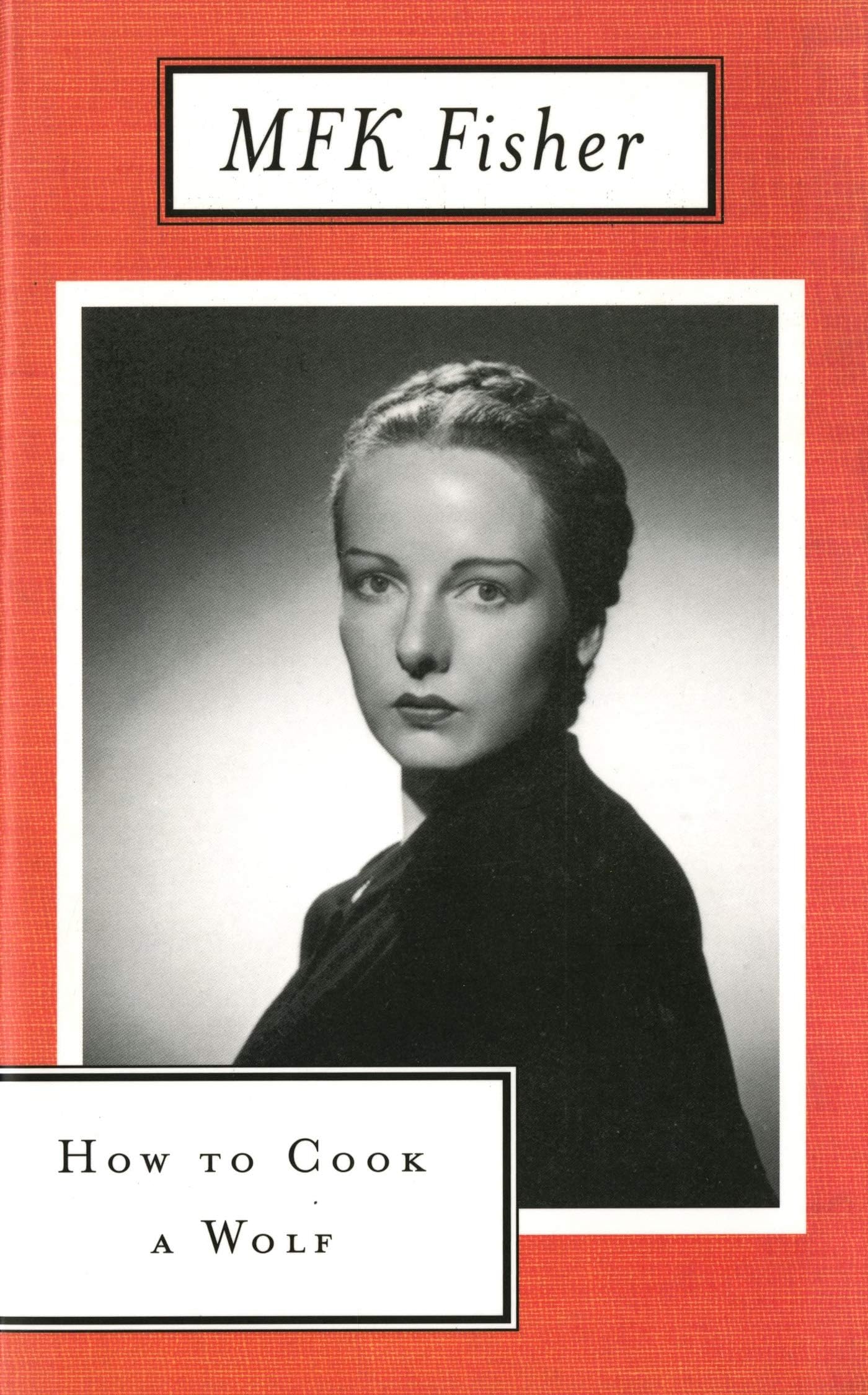
How to Cook a Wolf
Product ID: 4901192
Buy anything from 5,000+ international stores. One checkout price. No surprise fees. Join 2M+ shoppers on Desertcart.
Desertcart purchases this item on your behalf and handles shipping, customs, and support to Indonesia.
From the Publisher Review: A Culinary Classic - M.F.K. Fisher's timeless masterpiece, "How to Cook a Wolf," is a culinary classic that transcends generations, offering readers a delightful journey through the art of cooking and eating during challenging times. Originally published in 1942, this book has stood the test of time and continues to be a source of inspiration for food enthusiasts and home cooks alike. Fisher's prose is both eloquent and comforting, weaving a tapestry of words that not only teaches you how to prepare delicious meals but also nourishes your soul with her vivid storytelling. The book's title, inspired by a quote from the Roman poet Horace, serves as a metaphor for the resilience and resourcefulness required in times of scarcity. Fisher imparts invaluable lessons on making the most of limited ingredients and creating meals that are not only satisfying but also deeply satisfying. One of the standout features of "How to Cook a Wolf" is Fisher's ability to embrace frugality without compromising on flavor. Her recipes are practical, budget-friendly, and often surprisingly luxurious given the circumstances. She teaches readers to approach cooking as an art form, where creativity and resourcefulness are key ingredients. Throughout the book, Fisher's writing is infused with a sense of humor and a dash of whimsy, making it a pleasure to read. Her anecdotes and personal experiences add depth and personality to the recipes, making them more relatable and enticing. She also shares her insights on the role of food in our lives, exploring the emotional and psychological aspects of eating, which elevates this book beyond a mere cookbook. While "How to Cook a Wolf" is a timeless gem, it's important to note that some of the recipes may feel a bit outdated or impractical for modern cooks accustomed to the convenience of contemporary kitchen appliances and readily available ingredients. However, Fisher's principles and philosophy remain relevant, encouraging readers to adapt and improvise in their own kitchens. M.F.K. Fisher's "How to Cook a Wolf" is a must-read for anyone with a passion for both food and literature. It is a book that not only teaches you how to cook but also inspires you to approach life's challenges with creativity and resilience. Whether you're a seasoned chef or a novice in the kitchen, Fisher's words will undoubtedly leave a lasting impression and ignite your culinary imagination. This timeless classic is a treasure trove of wisdom, wit, and gastronomic delights that will continue to enchant and nourish readers for generations to come. Review: Tremendous Read - This book is relevant : Much of what she says about food and eating that contradicted the common knowledge of the time have been proven in the interim. This book gives a great slice of life look at the time it was written: Discussing food shortages, rationing and other challenges unique to the WWII period was enlightening. I wasn't born until a full generation after the war, so although I knew that rationing existed, I didn't think about what this actually meant for families until reading this book. This book is very, very funny : The author has a dry wit that I very much appreciate. While the intention of the book is not to entertain, she definitely does so while discussing things of great importance during the time it was written. This was the first book of hers I've read. I've been missing out! I'll be reading more, and I can recommend this book without reservation.


| Best Sellers Rank | #72,807 in Books ( See Top 100 in Books ) #101 in Cooking Encyclopedias #103 in Gastronomy Essays (Books) #120 in Cooking, Food & Wine Reference (Books) |
| Customer Reviews | 4.5 out of 5 stars 302 Reviews |
D**E
A Culinary Classic
M.F.K. Fisher's timeless masterpiece, "How to Cook a Wolf," is a culinary classic that transcends generations, offering readers a delightful journey through the art of cooking and eating during challenging times. Originally published in 1942, this book has stood the test of time and continues to be a source of inspiration for food enthusiasts and home cooks alike. Fisher's prose is both eloquent and comforting, weaving a tapestry of words that not only teaches you how to prepare delicious meals but also nourishes your soul with her vivid storytelling. The book's title, inspired by a quote from the Roman poet Horace, serves as a metaphor for the resilience and resourcefulness required in times of scarcity. Fisher imparts invaluable lessons on making the most of limited ingredients and creating meals that are not only satisfying but also deeply satisfying. One of the standout features of "How to Cook a Wolf" is Fisher's ability to embrace frugality without compromising on flavor. Her recipes are practical, budget-friendly, and often surprisingly luxurious given the circumstances. She teaches readers to approach cooking as an art form, where creativity and resourcefulness are key ingredients. Throughout the book, Fisher's writing is infused with a sense of humor and a dash of whimsy, making it a pleasure to read. Her anecdotes and personal experiences add depth and personality to the recipes, making them more relatable and enticing. She also shares her insights on the role of food in our lives, exploring the emotional and psychological aspects of eating, which elevates this book beyond a mere cookbook. While "How to Cook a Wolf" is a timeless gem, it's important to note that some of the recipes may feel a bit outdated or impractical for modern cooks accustomed to the convenience of contemporary kitchen appliances and readily available ingredients. However, Fisher's principles and philosophy remain relevant, encouraging readers to adapt and improvise in their own kitchens. M.F.K. Fisher's "How to Cook a Wolf" is a must-read for anyone with a passion for both food and literature. It is a book that not only teaches you how to cook but also inspires you to approach life's challenges with creativity and resilience. Whether you're a seasoned chef or a novice in the kitchen, Fisher's words will undoubtedly leave a lasting impression and ignite your culinary imagination. This timeless classic is a treasure trove of wisdom, wit, and gastronomic delights that will continue to enchant and nourish readers for generations to come.
A**E
Tremendous Read
This book is relevant : Much of what she says about food and eating that contradicted the common knowledge of the time have been proven in the interim. This book gives a great slice of life look at the time it was written: Discussing food shortages, rationing and other challenges unique to the WWII period was enlightening. I wasn't born until a full generation after the war, so although I knew that rationing existed, I didn't think about what this actually meant for families until reading this book. This book is very, very funny : The author has a dry wit that I very much appreciate. While the intention of the book is not to entertain, she definitely does so while discussing things of great importance during the time it was written. This was the first book of hers I've read. I've been missing out! I'll be reading more, and I can recommend this book without reservation.
M**L
What a read!
Ms. Fisher was writing in Europe during WW2; due to wartime rationing and shortages, the wolf seemed literally to hover near the door. Fine, she says, a wolf! Let's eat him! Ms. Fisher shows the best of the chin-up attitude one hopes we would all be disposed to display in hard times. She was in Europe during the war, and suffered the hardships thereof; she writes from a love of the food she had been exposed to before shortages, but her writing is ABOUT the food she can obtain rather than what she can't. She writes wittily, even charmingly about how to live on practically nothing and how to do it with an eye to health and nutrition, and flavor and enjoyment! Even in the 40's Ms. Fisher was aware that everybody needs to eat plenty of vegetables; even then she was aware that even sparse rations would be "better for you" if the food could look and taste appealing. The book was later edited and annotated by the author, and this edition includes those notes. One comes to see that in writing during wartime Ms. Fisher wrote from the "furnace of affliction" indeed and and that this book is as much a statement of philosophy as a guide to cooking and eating when food is sparse. One's attitude toward food, family, friends can be shaped to something resembling common sense and love of beauty whether a war is raging around one or no. The notes she added years later indicate that she still agreed with her earlier thoughts, in the main -- something had solidified, something had crystallised, in her thinking. A must for the shelf if one likes to think about food in more than a visceral and immediate way.
E**K
Great book, with a few missing words.
I love this book and it is brilliantly written, but my God, I'm not sure if it's the publisher or if MFK Fisher didn't have a proof reader; because there are words missing from sentences that you kind of have to will into existence for her. For example: '...another thing to do while the oven is going, is to put a pan of thinly sliced that is too stale anymore. It makes good Melba toast.' That one was easy because she mentioned Melba right afterwards, but there are parts in this book where a word may be missing and you kind of have to go into a brief detective mode to figure out what that word was. Has it always been this way‽
C**L
Great book!
I had to get this for my English college course. Great book!
J**Y
Kitchen tips for the antifascist
Serious read by a woman who knows ingredients some of which must be whimsy stirred with a big spoon. One can't escape the world views that take on food insecurity, want and need for style and taste in a time of rationing and then to receive an added dose of anti-fascism - masterful.
J**O
No wolf was harmed in the making of this book
I've wanted to read this for years, unfortunately it is not available on kindle so I had to buy a hard copy. Interesting, but a little disappointing. Maybe the humor is dated (although I've read a lot of books from this period, which are still bitingly funny). Not sure how many of the wartime recipes I will try. Not sure if I am disappointed or pleased to find the wolf was kept from the door, rather than cooked and eaten.
W**E
The recipes are still good
Fascinating as a look into what it was like to cook with wartime shortages - but the recipes are still delicious. And the author's dry British humor had me giggling so much in a doctor's waiting room, I wound up having to tell strangers waiting with me what I was reading. One lady pulled out her phone and ordered a copy of the book for herself!
Trustpilot
2 weeks ago
1 month ago