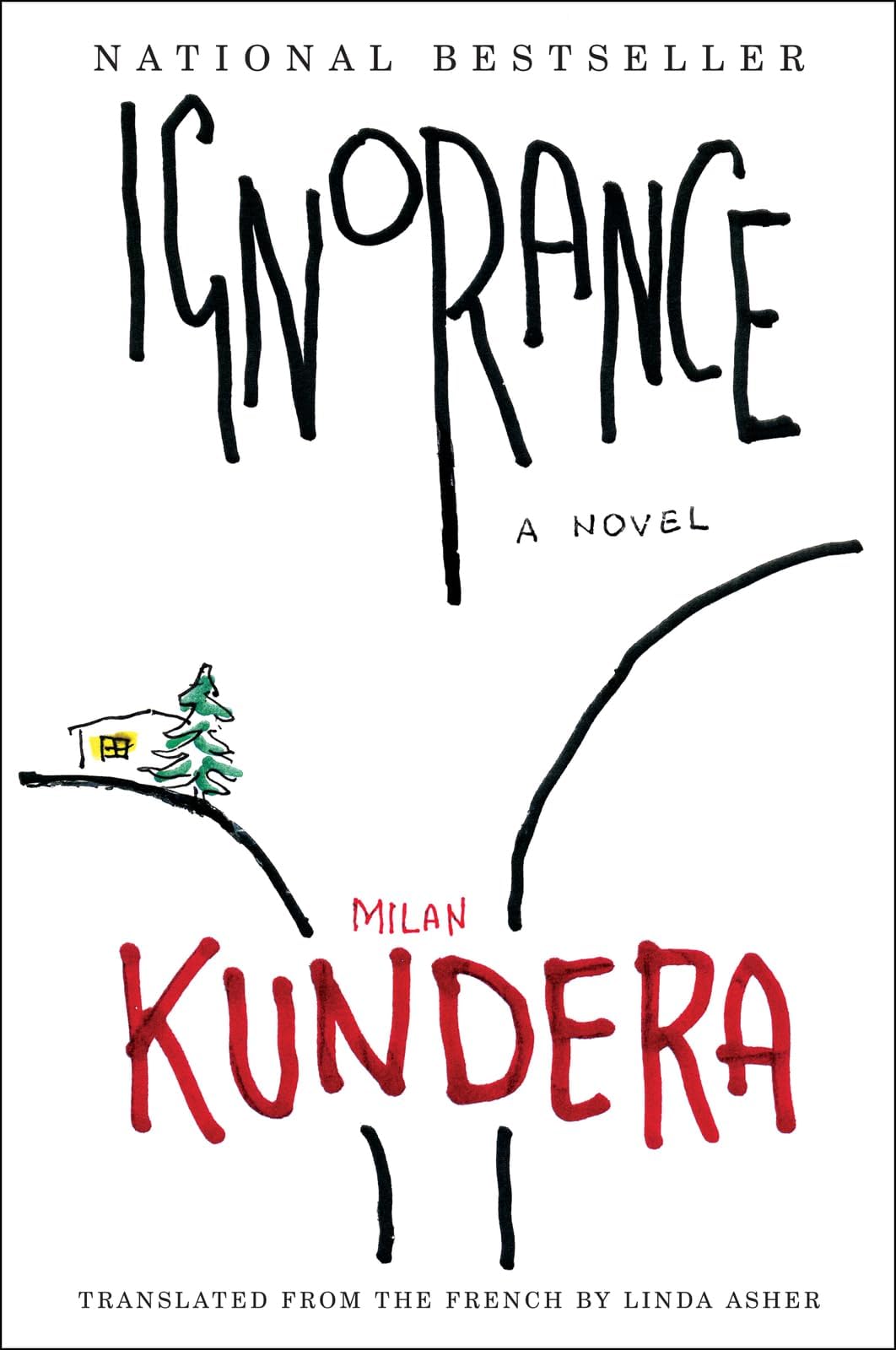
Harper Perennial Ignorance
Product ID: 267471070
Desertcart purchases this item on your behalf and handles shipping, customs, and support to Indonesia.
Buy Harper Perennial Ignorance by Kundera, Milan online on desertcart.ae at best prices. ✓ Fast and free shipping ✓ free returns ✓ cash on delivery available on eligible purchase. Review: Kundera can elevate the littlest things—a gesture, a question unasked, a look—into fertile substrates for profound philosophical exploration. Here he can and does—the result is art with a capital A. As with his other late-period works, the book’s brevity is one of its strengths. This is potent, sexy stuff. Review: Milan Kundera: Ignorance. This is a book about immigration. About the fact that one cannot enter the same river twice. The flow of time, like the flow of water, is somewhere else. We cannot leave the present life, return to it after 20 years and expect to continue where we left off. We cannot leave it even for a single minute, because something else starts to unreel, somewhere else, at some different time. The hero returns to the Czech Republic, from where he emigrated 20 years ago. He feels misunderstood, because it seems that nobody is interested in HIS fate and experience. It is not a typical émigré fate, because there are no children. It cannot be helped, an author can write only about his own experience, but in reality, nowadays, émigré writing is mostly about the émigré children, their connection, or the lack of it, with the parents’ country of origin. In 20 years, and in most cases even 30, or 40 years, the main interest is on the next generation, the happiness or sorrow of our children and grandchildren. At the beginning, the telling is philosophical with linguistic information and recalling of famous writers, Czech and foreign, contemporary and ancient. Then the story starts, and towards the end it degenerates into sexual binges, which remind me of Kundera’s early works, e.g. The Laughable Loves. Here is also that haughty attitude towards women, which was not discernible in the Unbearable Lightness of Being. Is it the eternal masculine fear of the unpredictabilityof woman’s influence? In any case, at present we are encountering more and more recapitulations of the émigré experience, by the participants themselves, or their descendants.


| Best Sellers Rank | #221,220 in Books ( See Top 100 in Books ) #1,371 in European Literature #2,276 in Contemporary Romance #2,513 in Women's Fiction |
| Customer reviews | 4.6 4.6 out of 5 stars (56) |
| Dimensions | 20.55 x 13.36 x 1.24 cm |
| Edition | Reprint |
| ISBN-10 | 0060002107 |
| ISBN-13 | 978-0060002107 |
| Item weight | 1.05 Kilograms |
| Language | English |
| Print length | 208 pages |
| Publication date | 30 September 2003 |
| Publisher | HARPER PERENNIAL |
C**.
Kundera can elevate the littlest things—a gesture, a question unasked, a look—into fertile substrates for profound philosophical exploration. Here he can and does—the result is art with a capital A. As with his other late-period works, the book’s brevity is one of its strengths. This is potent, sexy stuff.
H**A
Milan Kundera: Ignorance. This is a book about immigration. About the fact that one cannot enter the same river twice. The flow of time, like the flow of water, is somewhere else. We cannot leave the present life, return to it after 20 years and expect to continue where we left off. We cannot leave it even for a single minute, because something else starts to unreel, somewhere else, at some different time. The hero returns to the Czech Republic, from where he emigrated 20 years ago. He feels misunderstood, because it seems that nobody is interested in HIS fate and experience. It is not a typical émigré fate, because there are no children. It cannot be helped, an author can write only about his own experience, but in reality, nowadays, émigré writing is mostly about the émigré children, their connection, or the lack of it, with the parents’ country of origin. In 20 years, and in most cases even 30, or 40 years, the main interest is on the next generation, the happiness or sorrow of our children and grandchildren. At the beginning, the telling is philosophical with linguistic information and recalling of famous writers, Czech and foreign, contemporary and ancient. Then the story starts, and towards the end it degenerates into sexual binges, which remind me of Kundera’s early works, e.g. The Laughable Loves. Here is also that haughty attitude towards women, which was not discernible in the Unbearable Lightness of Being. Is it the eternal masculine fear of the unpredictabilityof woman’s influence? In any case, at present we are encountering more and more recapitulations of the émigré experience, by the participants themselves, or their descendants.
R**T
This was an account of the move from one world to another and how if affected both the person who left for a better life and those who were left behind. It is a good way to see the world through the eyes of an emigre and the deep changes such a move creates in relationships among friends and family.
P**E
One who reads this book will never see yearning in the same light. Each line of sentence in the book is full of intentional wisdom. Milan Kundera is a gifted writer and everyone who is into high literature should read this book. I give it 10/10.
A**R
This is my second Milan Kundera book and I have noticed that he has a distinct way of telling stories. I picture his narrative as cinematic, as it takes you back and forth between characters and time. This book is beautiful and it explores nostalgia, home and displacement. His origins are definitely prominent in the story and the characters are so great to connect to. This book is both philosophical and alluring, definitely recommend to read it!
Trustpilot
2 months ago
2 weeks ago