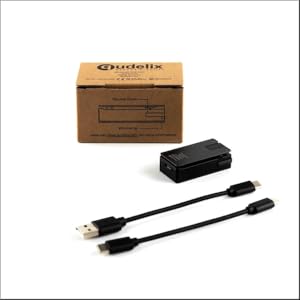
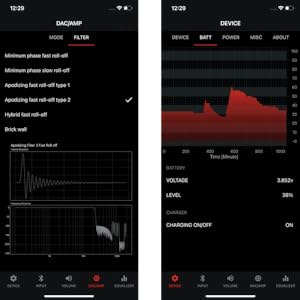
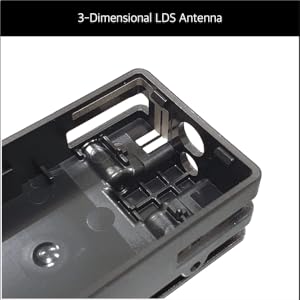
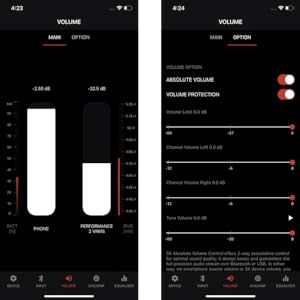
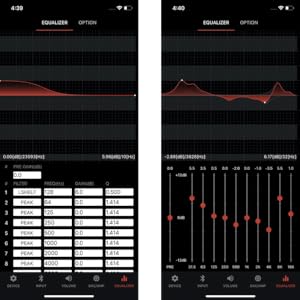
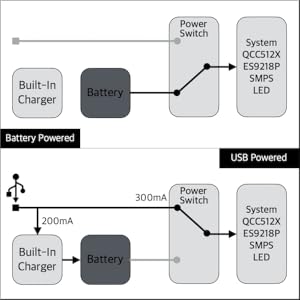
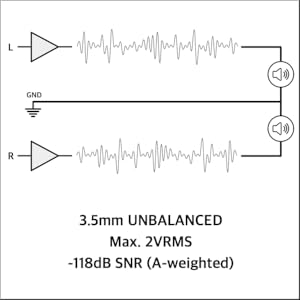
Hi.. I'd like give my view on Qudelix 5K after using it for almost 3 months. Hopefully what I share below could help others to understand better about this device. Qudelix 5K is a very sophisticated audio device. I notice it captures firstly/mostly the 'serious' audio lovers/enthusiasts. I myself like it so much and really amazed by its sound quality that I feel it necessary to introduce it to greater audience than just the audio enthusiasts. For this reason, I'm going to try explain it in a more simple than technical approach. In simplest term, device like Qudelix 5K can do two things: 1. As Bluetooth receiver (receive BT audio and send out analog audio) 2. As USB to analog audio dongle (USB-C to analog audio out) The USB-C port on 5K is dual function port. We could use it to charge the battery on 5K, or use it as interface for USB-to-analog audio dongle, or both. Qudelix 5K send out analog audio via the 3.5mm or 2.5mm jack on top of the unit. On either of this port we could connect earphones/headphones or send the output across to the external audio amplifier (i.e. home audio or car audio). (Note: the 2.5mm port is intended to operate in 'balanced' audio mode. If you have no idea what it is all about, please avoid to use it. Don't try to put in just any 2.5mm plug/cable, without proper 'balanced' wiring. 5K could be damaged by the wrong 2.5mm connector/cable.) Depend on how we like to use 5K, how deep we want to dig 5K capabilities and tinker with their accompanying mobile app, we could turn this device from sounding great to amazing. We could use Qudelix 5K just as simple BT receiver/audio dongle. The device have been pre-set up by manufacturer with optimum default settings. IMHO, the default settings on 5K is more than enough to make average/most listener to be happy with it. Enough to open them up to the world of improved audio reproduction and that while having the freedom of detached (i.e. wireless) earphone/headphone from their mobile phones. Please don't feel degraded/depreciate when I mention 'average'. By 'average' is I mean for people enjoying music more than concerning with how their audio equipment perform (that's why there's the term 'audiophile for this kind of love :) ). I myself is more of a music lover (80% of time) than audiophile, though I really love to hear my music sounding their best. Qudelix provide 5K with an accompanying mobile app (available for iOS on AppStore and Android on PlayStore). The app is intended to do many things such as: - to regularly upgrade the 'software' inside Qudelix 5K; to improve its performance and stability - to formally start the warranty of the 5K with the manufacturer - to adjust behavior when it is connected as USB dongle - to enable/disable certain Bluetooth audio codecs (note: by default all codecs are enabled) - to adjust the buttons behavior/actions - to adjust the power/battery management - to adjust it to get the maximum sound quality (remember: this one is not mandatory to get good sound out of 5K, as I mentioned above) - to set the built-in equalizer in 5K to adjust it to sound more to our flavor (note: human hearing and ear profiles are never the same person to person), or to 'correct' the imperfect characters of earphone/headphone, or compensate the room response of home/car audio system. - and few more The interesting part with the app is, the Qudelix app is actually just a user interface to set these settings on 5K. All the settings we do on the app are not saved on the app but directly on 5K and the app is no longer needed for 5K to perform. Settings on 5K will follow it everywhere regardless of the mobile phone or computer using 5K as BT receiver or USB audio dongle. So if in one occasion I used 5K with my friend's mobile phone or I used to test a mobile phone in the store, all the settings (including the sound profile) will just follow with 5K. With such capabilities of Qudelix 5K, the app then is a little bit complex to use. You'll need time to really understand and to use all the features. I myself confused on my first time using it. But don't feel too overwhelmed but the app, if you found it is too complex to understand it, just leave it. Qudelix 5K sounded already good with its all default settings. I don't want to cover all the settings and Qudelix capabilities here. Those could be found on their user guide. I'm going to list the things that I found amazing on Qudelix 5K. 1. Amazing Sound. I've repeated this many times above. It simply sound amazing. Be it used with just basic AAC/Apt-X codec, or very advanced codec like LDAC, or using as USB-audio dongle. It sounded many, many times better then my other BT receiver Maceton WM4U. It sounded two or three levels above my LG V20 phone; a phone that is highly respected for the sound quality: better resolution, better music layers, better power, more finesse. 2. Long battery life. This depend whether we want to maximize it for longer battery life or set it for best audio performance, we can get between 10 hours to 20 hours of play. 3. Powerful Driving Power Device like Qudelix 5K is technically referred to as DAC (Digital Analog Converter). DAC will receive audio in digital format and convert it into analog audio. Analog audio is then converted by the interaction of amplifier and transducer (i.e. speaker, headphones, earphones, etc.) to become audio wave so that we human can listen to it. Normally analog audio output from DAC alone is quite low and need external amplifier to sound louder. In Qudelix 5K case, it has built-in little amplifier that is powerful enough to drive various headphones/earphones load. The 3.5mm port is powerful enough to drive many headphones. But the 2.5mm balanced port would deliver double of power. In balanced, it's quite powerful to drive my very demanding Hifiman HE5LE planar magnetic headphone to sound quite loud. 4. Amazing Bluetooth range. Qudelix hype about the 5K unique BT antenna design, and they are not just hyping it up. I could get 5K play 8 meters away from my LG V20 phones, across 3 layers of brickwall (of about 6 inch each) at my home and that while I use LDAC as codec, and that streaming from my LG V20 that can only do BT4.2. 5. Amazing Equalizer Qudelix 5K come with two flavors of 10 bands equalizer; Graphic Equalizer (GEQ) and Parametric Equalizer (PEQ). Equalizer is done on digital domain with 64 bits precision calculation, which mean the EQ could adjust the level of frequency and amplitude of the sound without degrading the quality of the modified sound. GEQ is something that most people familiar with. But PEQ is a beast of equalization tool. It provides a much more flexibility for us to shape the frequency of the sound to affect the response of our earphone/headphone or room response of external audio system. Note that PEQ is usually considered as professional tool. But not necessarily professional audio equipment would have PEQ in it. Some lower/mid end even only have 3 to 5 bands PEQ. Amazingly 5K come with 10 bands very high precision PEQ in such a small package. By now, you should be able to see why I mentioned that Qudelix 5K is such a sophisticated audio device. Inside its understated appearance, Qudelix 5K is really an amazing, highly customizable and state of the art audio device. Below is the list of audio device I used with 5K this far. Earphone: Sony MH755, Blon BL-03, Fiio FH1 Headphone: Drop E-MU Purpleheart, Audeze Sine (in balanced), Hifiman HE-5LE (in balanced) Source (BT transmitter): LG V20 Music/songs: I don't limit myself with certain genre of music. I listen everything: classical/romantic/baroque/renaissance, rock (progressive, rock'n'roll, hard rock etc.), jazz (all derivatives), metal, pop, folk/country, vocal, etc. PS. Qudelix 5K has built-in microphone, which is very sensitive, but don't have noise cancellation. The voice coming out from the microphone is actually very good, but if we clipped Q5K to clothes it could easily pickup the noise of 5K rubbing the clothes and send across the sound to the other end. If we don't like this, and our earphone has built-in microphone, we can turn the 5K microphone off and instead using the external microphone on our earphone/headphone. In the other way around of usage, if our headphone/earphone don't have microphone (or we send audio output to amplifier for example) we could use the built-in microphone on Q5K for making a call. PPS. Comparing Graphic Equalizer (GEQ) and Parametric (PEQ). In GEQ, frequency range of human hearing (20Hz to 20KHz) are divided into about factor of two frequency scale (31.5, 63, 125, 250, 500, 1K, 2K, 4K, 8K, 16K) with fixed width of frequency range 'impact' for boost or cut as peak/valley. PEQ is a much more sophisticated equalizer in that this frequency scale can be adjusted freely by us, for how wide the impact would be, and whether the impact is affecting as peak/valley or as shelfing filter. Don't be confused and overwhelmed by this PEQ. It seems complicated at first but is really not that difficult to use. What makes it complicated is to effectively use PEQ to shape a headphone for example, we would need to have the frequency response measurement of the headphone. With that we will know on which part of response the phones are the lacking or having too much of volume. Then we rectify these with the PEQ. Luckily some sites readily share their measurements such on this list: https://www.reddit.com/r/oratory1990/wiki/index/list_of_presets The PEQ sample I attach as one of picture, show my way to correct the response of my Fiio FH1 IEM. I don't follow any 'Harman' Curve but use other excellent sounding IEM for reference. Without the EQ, it sounded smooth but flat and unexciting. PEQ turn it into a lively sounding IEM I could never imagine before.