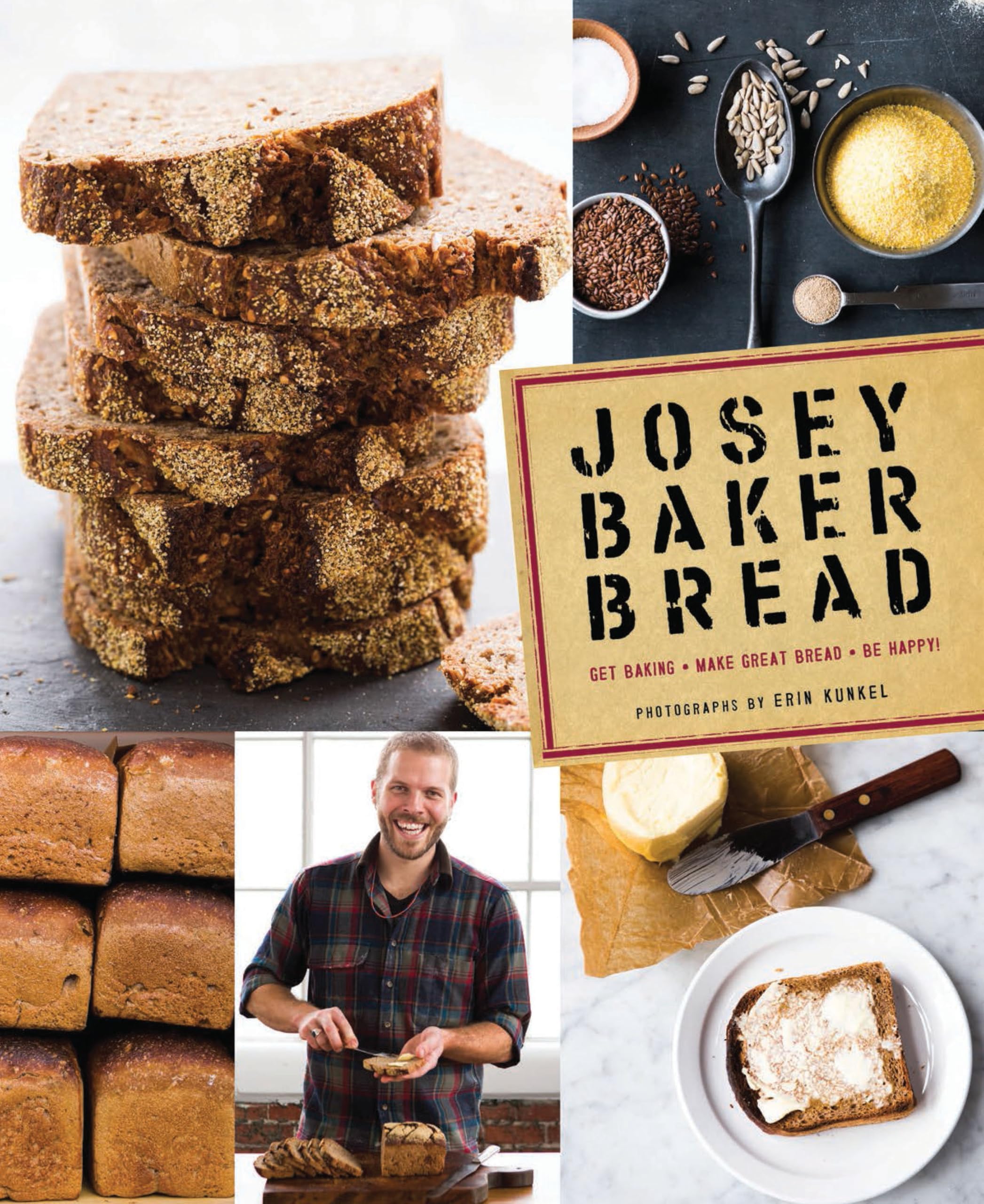
Josey Baker Bread: Get Baking • Make Great Bread • Be Happy!
Product ID: 1816222
Buy anything from 5,000+ international stores. One checkout price. No surprise fees. Join 2M+ shoppers on Desertcart.
Desertcart purchases this item on your behalf and handles shipping, customs, and support to Indonesia.
This is the first true entry-level bread-baking cookbook, from Josey Baker (that's his real name!), a former science teacher turned San Francisco baking sensation. Josey Baker Bread combines step-by-step lessons with more than 100 photographs, offering easy-to-follow guidance for aspiring bakers. Recipes start with the basic formula for making bread—requiring little more than flour, water, time, and a pan—and build in depth and detail as the user progresses to more complex loaves, including Josey's cult favorite Dark Mountain Rye. With chapters dedicated to pizza, pocketbreads, and treats, Josey's playful, encouraging tone makes for a fun read full of great advice for bakers of all levels. Review: The ESSENTIAL beginner's guide! - This is not a perfect book. But it did what no other book or YouTube channel or instagram account or online blog had been able to do before - it gave me the confidence to start baking. I can't count the number of "beginner" guides I'd read that left me feeling dumb. What makes Josey's book different is the way he structures things. Recipes are written as "lessons" in ascending order of complexity - each trying to drive home ONE basic concept so you can learn one small step at a time. And hey, if you're feeling frisky, you can just skip ahead! After reading the first two lessons, I dove straight into lesson 3. No regrets. Equally important is the fact that he writes in such an approachable way. He couches what could be intimidating concepts (baker's percentages! but I'm terrible at math!) in a simple, encouraging way. He deploys pictures expertly - as a teaching aid and not just for wow factor (although: wow!). Whenever I have doubts about my crust, I crack open this book and take a peek at his guide to browning. Early on Josey lays out several potential baking schedules, emphasizing the idea that baking is adaptable & recognizing that not everyone wants to wake up at 6am and start baking bread. This is is one of those fundamentals that nobody tells you about. Dovetailing with this, and even more important, he focuses on telling you the signs to look for when your dough is done fermenting at every step of the way, rather than giving you strict #s of hours. This is SO VITAL to baking, because times vary so much depending on ambient temperature. Once you know the signs, reading other books and knowing when you should disregard the stated number of hours results in much, much better bread. It also helps you with scheduling - knowing that you can let your dough sit 6-8 hours instead of 4 can be the difference between fitting bread into your schedule and not - (how "overnight" is "overnight"?) And finally, one small thing: he lists out the amount of ingredients needed in a grid, with different columns for different # of loaves. WHY isn't this the default way EVERY bread book works?! I am baking for 2 people, we can't go through 2 loaves of bread every week - by the time we'd get to a second loaf, it would be stale. Again - flexibility!! Now, like I said, this book isn't perfect. By the time I got to sourdough (lesson 8) I found myself having to resort more to looking things up online and asking friends for help debug my frisbee loaves. But by then I was armed with all the knowledge in this book, I knew where to start and what to ask. But there are a couple of sourdough concepts I wish he'd dived into a little deeper. He uses a 100% whole wheat starter - he doesn't really talk about flours for starters, other than to say he likes the complexity of flavor WW adds to a bread flour-based loaf. What he doesn't tell you, that I found out on my own, is that 100% whole wheat can inhibit gluten development, making it tough to get high rise with (shout out to Serious Eats' "The Best Flour for Sourdough Starters: An Investigation" article!). Once I switched to 50/50 AP/WW I saw an instant improvement in my oven spring. I've now been baking for 4 years and I still have no idea how Josey manages to get such rise out of whole wheat loaves (if you ever look at his bakery's output, it's all whole grain loaves, and I don't understand!! Teach me, Josey, teach me!!) The other small thing I wish he'd done is really, REALLY drive home how important it is to use *peaked* starter. It's something he says, but unlike his other lessons he glosses over it and it's something that makes a HUGE difference! It would have saved me weeks of debugging! And lastly, he, like many authors, claims that your dough will "double in size" in the fridge. It does not. Fridging dough retards the yeast so that it grows so, so slowly. You're not really looking for it to grow, you're just looking for it to develop flavor. It's done when it's reached the sourness you want (though leave it too long and it will deflate.) There's some other intermediate concepts he doesn't really cover, and I think a *perfect* book would. But that's okay. I would much rather have this than some hefty tome that's too overwhelming for beginners. (though, I do really wish he'd explained what an autolyse is, and why he doesn't do one. Even if you don't do one, when you move beyond his book it's something you're going to encounter a lot so it's very useful to know the theory behind it!) But again - these are nitpicks. Here's the important part: Whenever my friends ask me how they can learn to make bread, I point them to this book. No other sources. Just this. And 4 years later, I'm still making Josey's sourdough recipe every week - just with 50/50 starter ;) Review: This book will get you baking in no time! (Excellent for beginners and some good recipes for those already somewhat experienced) - Josey does a great job at getting you baking bread right away. The writing is fun and I enjoyed the little stories along the way. The information is spread out nicely throughout the book so there isn't too much information overload right at the beginning. Rather there are many different bread lessons and each one builds nicely off the last. Another facet that I don't want to overlook is how excited I get about making bread after reading in the book for a few minutes. Josey also provides various schedule options so that making bread can fit into your life and schedule rather than trying to fit your schedule around bread. I haven't finished all the bread lessons yet but I'm excited to see where it goes I've made delicious bread already! Its a great book for those who are beginning baking like myself and I imagine nice for those who've made some loafs before as well. I will continue to reference the recipes in this book in the future and even reread chapters to get a good laugh :) What this book doesn't provide is the nitty gritty details and science behind baking bread and what is going on in the process. I am very detailed oriented and enjoy science so this is something I was still looking for after reading through the bread section. I'm glad those details were not there in the beginning I feel that I would have stopped making bread. There are many many other great resources for those details and I think Josey wisely left them out of this book. Tartine Bread, Flour Water Salt Yeast, and 101 Breadmaking online at Serious Eats are all better references for the science and the details about what is going on during the various stages. I picked up the kindle version and it worked great for me; I think it may be missing some pictures that the book has or the layout may be a little off sometimes but it works for me. If you're more into physical books and recipes I'd go that route, otherwise the electronic version worked fine for me. Enjoy!




| Best Sellers Rank | #233,226 in Books ( See Top 100 in Books ) #320 in Bread Baking (Books) |
| Customer Reviews | 4.7 out of 5 stars 445 Reviews |
M**Y
The ESSENTIAL beginner's guide!
This is not a perfect book. But it did what no other book or YouTube channel or instagram account or online blog had been able to do before - it gave me the confidence to start baking. I can't count the number of "beginner" guides I'd read that left me feeling dumb. What makes Josey's book different is the way he structures things. Recipes are written as "lessons" in ascending order of complexity - each trying to drive home ONE basic concept so you can learn one small step at a time. And hey, if you're feeling frisky, you can just skip ahead! After reading the first two lessons, I dove straight into lesson 3. No regrets. Equally important is the fact that he writes in such an approachable way. He couches what could be intimidating concepts (baker's percentages! but I'm terrible at math!) in a simple, encouraging way. He deploys pictures expertly - as a teaching aid and not just for wow factor (although: wow!). Whenever I have doubts about my crust, I crack open this book and take a peek at his guide to browning. Early on Josey lays out several potential baking schedules, emphasizing the idea that baking is adaptable & recognizing that not everyone wants to wake up at 6am and start baking bread. This is is one of those fundamentals that nobody tells you about. Dovetailing with this, and even more important, he focuses on telling you the signs to look for when your dough is done fermenting at every step of the way, rather than giving you strict #s of hours. This is SO VITAL to baking, because times vary so much depending on ambient temperature. Once you know the signs, reading other books and knowing when you should disregard the stated number of hours results in much, much better bread. It also helps you with scheduling - knowing that you can let your dough sit 6-8 hours instead of 4 can be the difference between fitting bread into your schedule and not - (how "overnight" is "overnight"?) And finally, one small thing: he lists out the amount of ingredients needed in a grid, with different columns for different # of loaves. WHY isn't this the default way EVERY bread book works?! I am baking for 2 people, we can't go through 2 loaves of bread every week - by the time we'd get to a second loaf, it would be stale. Again - flexibility!! Now, like I said, this book isn't perfect. By the time I got to sourdough (lesson 8) I found myself having to resort more to looking things up online and asking friends for help debug my frisbee loaves. But by then I was armed with all the knowledge in this book, I knew where to start and what to ask. But there are a couple of sourdough concepts I wish he'd dived into a little deeper. He uses a 100% whole wheat starter - he doesn't really talk about flours for starters, other than to say he likes the complexity of flavor WW adds to a bread flour-based loaf. What he doesn't tell you, that I found out on my own, is that 100% whole wheat can inhibit gluten development, making it tough to get high rise with (shout out to Serious Eats' "The Best Flour for Sourdough Starters: An Investigation" article!). Once I switched to 50/50 AP/WW I saw an instant improvement in my oven spring. I've now been baking for 4 years and I still have no idea how Josey manages to get such rise out of whole wheat loaves (if you ever look at his bakery's output, it's all whole grain loaves, and I don't understand!! Teach me, Josey, teach me!!) The other small thing I wish he'd done is really, REALLY drive home how important it is to use *peaked* starter. It's something he says, but unlike his other lessons he glosses over it and it's something that makes a HUGE difference! It would have saved me weeks of debugging! And lastly, he, like many authors, claims that your dough will "double in size" in the fridge. It does not. Fridging dough retards the yeast so that it grows so, so slowly. You're not really looking for it to grow, you're just looking for it to develop flavor. It's done when it's reached the sourness you want (though leave it too long and it will deflate.) There's some other intermediate concepts he doesn't really cover, and I think a *perfect* book would. But that's okay. I would much rather have this than some hefty tome that's too overwhelming for beginners. (though, I do really wish he'd explained what an autolyse is, and why he doesn't do one. Even if you don't do one, when you move beyond his book it's something you're going to encounter a lot so it's very useful to know the theory behind it!) But again - these are nitpicks. Here's the important part: Whenever my friends ask me how they can learn to make bread, I point them to this book. No other sources. Just this. And 4 years later, I'm still making Josey's sourdough recipe every week - just with 50/50 starter ;)
M**E
This book will get you baking in no time! (Excellent for beginners and some good recipes for those already somewhat experienced)
Josey does a great job at getting you baking bread right away. The writing is fun and I enjoyed the little stories along the way. The information is spread out nicely throughout the book so there isn't too much information overload right at the beginning. Rather there are many different bread lessons and each one builds nicely off the last. Another facet that I don't want to overlook is how excited I get about making bread after reading in the book for a few minutes. Josey also provides various schedule options so that making bread can fit into your life and schedule rather than trying to fit your schedule around bread. I haven't finished all the bread lessons yet but I'm excited to see where it goes I've made delicious bread already! Its a great book for those who are beginning baking like myself and I imagine nice for those who've made some loafs before as well. I will continue to reference the recipes in this book in the future and even reread chapters to get a good laugh :) What this book doesn't provide is the nitty gritty details and science behind baking bread and what is going on in the process. I am very detailed oriented and enjoy science so this is something I was still looking for after reading through the bread section. I'm glad those details were not there in the beginning I feel that I would have stopped making bread. There are many many other great resources for those details and I think Josey wisely left them out of this book. Tartine Bread, Flour Water Salt Yeast, and 101 Breadmaking online at Serious Eats are all better references for the science and the details about what is going on during the various stages. I picked up the kindle version and it worked great for me; I think it may be missing some pictures that the book has or the layout may be a little off sometimes but it works for me. If you're more into physical books and recipes I'd go that route, otherwise the electronic version worked fine for me. Enjoy!
W**Q
Easy, fool-proof real bread!
I am thrilled with this book. I have had some past 'success' with a bread machine, but not anything that made me want to keep making it rather than just buying bread, especially since it tended to mold or go stale before it could be finished. But those days are in the past. I am three recipes into Josey Baker Bread and I am obsessed. The breads that I have made so far are sandwich type loaves. He walks you through every step, and so far he uses time to make the bread light and airy, rather than kneading. So you do have to plan ahead for when you want a finished loaf, but with hardly any kneading and very, very flexible amounts of time for the various stages it is ridiculously fool proof. The bread that I have made is soft and airy chewy and flavorful and it keeps well for days. I bought this book because I read that it had a successful whole wheat sourdough recipe, but honestly I don't even care if I ever get there - the loaves I am making with just the early loaves in this book. But I am so excited to keep trying to make more and more complex loaves, and I think Josey is gonna get me there. Note: if you are bothered by overly optimistic/encouraging people you will not like this book. But if you can manage to deal with the tone, the bread is well, well worth it.
R**T
Great way to learn the method of sourdough baking, not good for more experienced bakers
This is a very nicely written, stepwise book for starting to understand the sourdough bread making method with the idea of learning skills incrementally to build some confidence in baking bread. It Is also written in a friendly, approachable, supportive, fun tone with no bread jargon. Josey is so nice, it makes me think what a great Dad Josey would be, I enjoyed the read, and I smiled a lot when reading it. The start of the book encourages you to make basic breads and to start to play with a basic sourdough recipe with very small variations in the method. Then it teaches you how to incorporate extra ingredients. The first recipes are yeasted bread recipes, the next 8 are variations in method rather than recipe, the next are instructions for how to incorporate ingredients like seeds. Then you learn methods for making bread from different grains, and finally you learn how to make some sweets if you're opening a bakery and need to have something other than bread to tempt in the customers (or family members and friends). However, if you are a slightly less beginner baker, the long, wordy recipes get in the way of using this for a resource. And, if you have had Josey Baker's excellent bread at his bakery, this is NOT any kind of comprehensive recipe book for all of his great breads. I already know how to make sourdough and the basic skills (but can always improve of course), but this did not give me the access to interesting and delicious recipes I was hoping for, such as Josey Baker's wonder bread. I learned a few different ways of thinking about sourdough, but at the end of this the only "new" recipe I got that I would care to make was a rye bread recipe and some good thoughts about how to make that. Based on this, I'm not sure I'm going to take a risk with another Josey Baker bread book. Still, for an early sourdough baker, this book would be terrific.
K**C
Bread making 101 from a passionate baker - sharing the loaves!
So...I was spending the night at my baby sister's house in NOPA. In the morning, she says "we're going to walk down the street for lattes and cinnamon toast". Where we ended up was The Mill, where we had some amazing $4 toast and great coffee! I saw the book on the shelf, but passed and bought a loaf of Country Bread. Later I sampled this book on Kindle, ended up buying it, and started reading. My awesome niece bought me the hardcover, it's a beautiful book indeed... Now about the contents - it's a very well written book. I feel as if Josey is right there explaining in layman' terms what to do, what to look for, and so on. The first part of the book is broken into "lessons" and takes you from simple one-step yeast bread to pre-ferment...then to Sourdough. Ah yes, sourdough. As a lifelong Bay Area resident, as well as a Laura Ingalls Wilder fan, I've had a fascination with sourdough, but never attempted it - Laura and Ma Ingalls made it sound easy enough in "By the Shores of Silver Lake", but "The Little House Cookbook" said "Laura makes beginning a starter sound very easy, but it is not." That pretty much turned me off of even attempting it...until this book. Guess what?!? Josey and Laura are right - it IS easy. Just keep feeding it. I've delighted friends and family with my new bread making passion...bread isn't exactly on my bodybuilder diet, but fortunately it's not difficult to give away the results - I've gifted to friends, family, and brought crusty loaves when volunteering with my church. I'm attaching a photo of my whole-wheat cinnamon raisin bread that I baked last night. Thank you Josey Baker for a wonderful book!
K**R
Josey Baker Bread book
Josey Baker Bread book received in secure shipping Saturday 7 February 2026. This book will help me learn to not be afraid to bake bread that is nutritious for me health needs.
W**.
Share the loaves!
I am usually not in the habit of leaving 5-star reviews before I'm totally done with a book, but seeing how things have turned out, I am left with no choice... Josey imparts so much enthusiasm about the art of baking bread that it is no coincidence he has won accolades all over; he deserves every superlative thrown his way. He is funny, easy to follow, and the book is clearly organized with plenty of pictures to knead along. I began with an easy recipe for a simple loaf using commercial yeast and a short turnaround time. The results were good but not impressive; edible, but not something I'd be proud to share with close ones. On this Josey is clear, as his goal is to get you comfortable with the ingredients and the process before jumping into more advanced methods. From here you're introduced to the multi-step process where you prepare a pre-ferment the night before baking to allow the dough to develop flavor. As with your skills, the results start looking and tasting better. But the real reason I got the book in the first place, was to learn how to make the much sought-after sourdough bread. Like all good things, it takes time and patience, as you must first get your "sourdough starter" going which took almost two weeks of daily feeding until I was satisfied with the result. Once your starter is all bubbly and smelling of vinegar and beer, you may begin prepping your dough which begins the night before and continues in spurts of folding and kneading until you've built enough gluten to let the dough relax and proof (every hour for 4 hours). Finally, it's off to the oven after many hours of intermittent care and attention. Honest, the results are worth it not just in the flavor department, but in the knowledge that you've tamed the beast and learned a mystical skill that has largely remained unchanged for millennia. You'll also gain a brand new appreciation for bread and the people baking it.
N**E
My favorite baking book
Over the last five years since I started baking my own bread, I read at least 20 books about bread baking, I own about 10, and use about 3 to 4 of them once in a while. However 'Josie baker's Bread' is the one I bake from on a daily basis. Just reading the book is highly entertaining. It is almost as much a description on how he started his baking career as it is a recipe book, while teaching you how to bake along the way. He is starting with very simple bakes using store bought yeast and white flour, adding new tricks, techniques and ingredients with every recipe, and before you know it, you will be able to produce a wide variety healthy whole grain sourdough bread your family and friends will love. While traveling through San Fran last summer I took the opportunity to visit 'the Mill', Josie's bakery. I loved his bread, just as much as the bread bake at home from his book. He encourages you to explore and find your own path to baking, and I do many things a little bit different, shaping batard loaves instead of boules, or steaming the oven instead of using an inverted bowl, but the backbone of the recipe I take from his book. I appreciate the honesty and simplicity of the more advanced recipes, without the commercial yeast, added fat or sugars, or any lift boosters like vital wheat gluten. It's just flour, water, salt, period. Unless you want something with seeds, nuts, cheese, herbs, or dried fruit of course. The pizza and cookie recipes are awesome as well. This is a well rounded book, suitable for beginners and advanced bakers alike. Buy it, if you like to bake old school and have a healthy sense of humor, you will absolutely love it.
L**E
The best sourdough book, I know this because I own most of them
Josey took me from nearly flushing my starter down the toilet to an accomplished baker of awesome bread. He's funny and unfinicky, encouraging and easy going, and his recipes WORK. What more could you want :)
H**Ô
Ótimo para quem está começando - ou já tem prática
As receitas são muito bem explicadas, passo a passo, e vão das básicas até as mais elaboradas. A maneira de fazer pizza é fantástica, mudou nosso conceito de pizza feita em casa com forno domestico. Apenas duas ressalvas: poderia apresentar as porcentagens da massa para facilitar fornadas de tamanhos diferentes; e, muito importante, atenção ao sal. Em algumas receitas que testei, diminuí a quantidade consideravelmente. Como tenho outro livro de escritor dos Estados Unidos, talvez seja questão de paladar. Mas definitivamente é muito sal para nossos padrões
E**R
Best Bread Book Ever! Josey Baker Rocks!
As a novice bread maker, I found this to be one of the best bread making books available. It is written in an easy, relaxed manner, and makes following recipes fun. Recipes start easy and get progressively complex as you develop your baking skills. In addition to the recipes, the supporting information helps to broaden your understanding of WHY you do certain things, in addition to HOW to simply follow recipes. Excellent photos help to illustrate various stages of the bread-making process.
P**E
Excellent bouquin
Un seul reproche les quantités de sel. 24 grammes par kilos c'est trop quand les agences de santé en recommande 20 gr au maximum.
S**E
I watched quite a few YouTube videos and did some ...
I watched quite a few YouTube videos and did some online research to help me in my new interest in baking bread. I also Read some info from Nigella Lawson's 'how to eat' (which I have found expansive and informative in the past, and also Larousse Gastronomique.) I was badly informed as a result. The Josey Baker book is a revelation. It's made my baking easier, healthier (i.e. no real need for Sugar to get the yeast going , no real need for fat, if you follow Josey's guide. Not because Josey is on a health trip, but because he works very traditionally and with the yeast. Worth every penny.
Trustpilot
2 days ago
3 days ago