🔋 Power up your workspace with confidence and style!
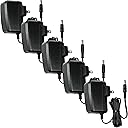
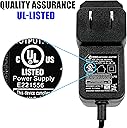
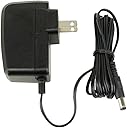
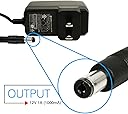
The JC TECH 12V 1A Power Supply is a UL-listed, energy-efficient adapter designed for LED strips, IP phones, CCTV cameras, and other low-voltage devices. Featuring a universal 100-240V input, a reliable 12V output with 1A current, and a 56-inch cord for flexible installation, this compact power supply combines safety, efficiency, and convenience for professional-grade performance.


| ASIN | B00FEOB4EI |
| Customer Reviews | 4.6 4.6 out of 5 stars (3,744) |
| Date First Available | September 24, 2013 |
| Is Discontinued By Manufacturer | No |
| Item Weight | 8 ounces |
| Item model number | DSA-12PFG-12/ DSA-12PFT-12 |
| Manufacturer | BV USA |
| Product Dimensions | 3.5 x 1.75 x 1.25 inches |
A**R
Buy it!!!
Use these for my camera system. They work.
T**.
This is a good purchase
These are great for the money. I really enjoy the orientation of the prongs to the body of the device. Perfect for what I need.
D**E
Pretty darn good power supplies.
I have bought a lot of these for my illuminated glass art and have only just this week have one stop working. I have some that have been working constant now for several years powering art glass. So far they have been pretty darn good. These pieces stay lit 24/7
T**E
Nice design, and good value... but doesn't fit my unusual AC receptacles
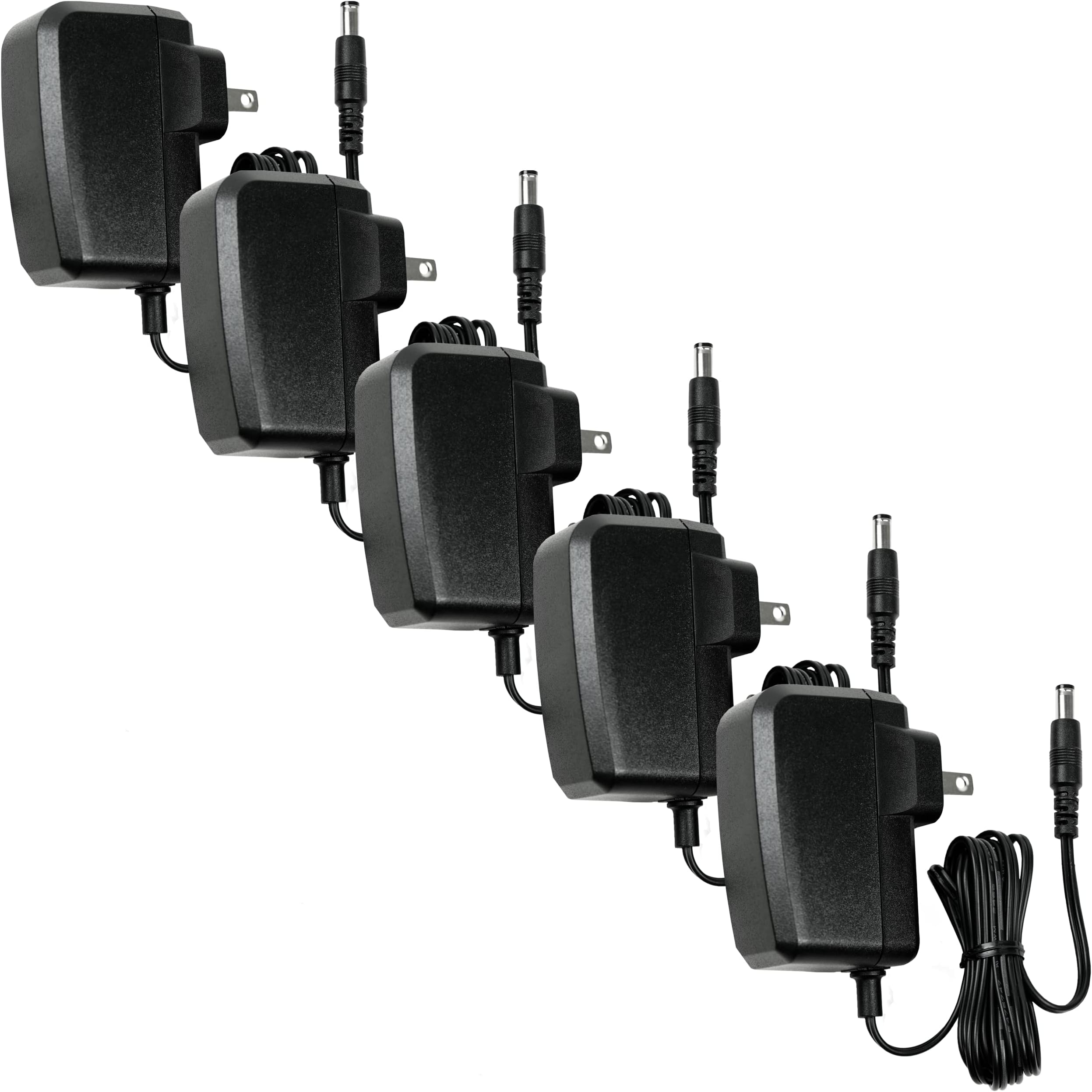
This five-pack of 1 Amp adapters seems to be a good buy, and their "90-degree" design allows them to be plugged side-by-side into duplex wall outlets or normally-spaced outlet strips. When I "bench tested" the five units on 110V AC input, I found that their no-load outputs were between 11.98 and 12.00 Vdc (they are rated for 12Vdc @ 1 Amp output); I have load devices that are 400mA (0.4 Amp) each. The output voltages of the adapters dropped to 11.92-11.94 Vdc with one load device (0.4 Amp) connected, and to 11.85-11.88 Vdc with two load devices (0.8 Amp) connected. I did not try the adapters with 220V AC input (they are rated for 100-240V AC input) because I will be using them only on 110V AC. I did not detect any problems during this brief testing. The downside (for me) is that their "90-degree" layout with fairly long length actually prevents them from fitting in the recessed outlets that I needed them for (which can accommodate only one conventionally-oriented adapter). This is a "non-standard" application, so it is not a deficiency of the adapter, but just an unfortunate artifact of the special design that allows them to work better in NORMAL applications. My average (three-star) rating comes only because my inability to use these adapters prevents me from making any assessment of their long-term behaviors, including their "life expectancy". UPDATE / UPGRADE (4/15/16): After having several of these units in actual use (in "standard" AC receptacles) with cameras or IR illuminators for a couple of months, all seem to be working well - and have survived fairly cold (near 0F) temperatures in unheated buildings. They are being used with loads that draw various currents, and I have even used some of the units with loads which draw the full rated 1 Amp, or slightly more, all without any ill effects. (In fact, the only "problem" that I've found is that one set of five units all had some unknown tacky liquid on the housings - not sure what that stuff was, nor why it was there). Because of the satisfactory performance so far, I've raised my rating to four-star. If they continue to work well over long-term, they may warrant a full five-star rating.
B**N
They work!
They work and haven't set my house on fire yet, which is a bonus!
B**S
I have bought about 50 of these
I use these in my store and have always been happy. They are very easy to use. The last a long time and fit well on the surge protector. I use these for strip lights. They do have quite a bit of heat on them but an electrician friend said that is normal. They tend to last about 2 years for me being used every day.
C**R
Spliced in the connector from my old power supply, works like a dream.
I have some light stips that took some time to put up. well, 3 of 10 of them went out because the power supply failed. I cracked open the power suppy using a vice, mostly because it was cool to do that, but also to see what was inside that failed, shure enough black blown components. Ok, so after that useless sentence, what can I say about this product? I spliced in my wires from the old powersupply and the lights lit right up. The powersupplies seam robust enought and i have 2 left over now. Bonus. NOTE: When you buy this product you need to make sure of the following. 1. The voltage must be the same, too low and you are not going to have enough power and your powered device may not work properly. To high voltage and you are going to greatly shorten the life or your device. 2. Amps of the old powers supply must be the same or it can be a lower number than this one. If the old power supply has a higher amperage this will cause the device to be power starved and it will soon overheat this new powersupply. Lastly, watch the polarity. The polarity of the AC adapter’s connector must match that of the power input or charging port on the device. There are two types of connector polarities: center positive and center negative. If your old one is center positive and this one is center negative, that may damage the powered device. You could cut the wire and flip them but I would research that. Out!
G**N
Good Value and add Flexibility For Electronic Hobbyists
I thought this lot of 5 was a good value. Even though they're advertised as 1 amp., mine were marked "1.25 amps". I did do some constant current testing. Up to and at 100 ma, the voltage was constant at about 12.1 VDC. As I increased the load up to 1.25 amps, the voltage dropped a few tenths ending up at 11.6 VDC at 1.25 amps. Pretty good regulation over a large current range. Although most of the projects I build require 5 VDC, there is some hardware, like some LED strips, that require 12 VDC. Also, I have started using these supplies even with projects that require 5 VDC. To use them, the project must, of course, have a built-in 5 VDC regulator. As is well known, many so-called "5 VDC warts" are not 5 volts at all. My experience is that they can be up to several volts over 5! Some ICs would be damaged at these levels, so prudence suggests that you still need a 5 VDC regulator even when using a 5 VDC wart. To use these warts with projects not having internal regulators, I insert a little homemade box containing a low-headroom 5 VDC regulator, an on/off switch, and an led. This way, I have control of the power and a visual indication that it's on or off. By using these 12 volt warts you can get over twice to power out, if you need it, compared to using a 5 volt wart with the same current rating.
M**X
SI, son buenos de muy buena calidad.
S**A
funcionales
Trustpilot
3 weeks ago
1 month ago