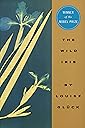
The Wild Iris: Winner of the Nobel Prize
Product ID: 82151128
Desertcart purchases this item on your behalf and handles shipping, customs, and support to Indonesia.
Winner of the Nobel Prize in LiteratureFrom Pulitzer Prize-winning poet Louise Glück, a stunningly beautiful collection of poems that encompasses the natural, human, and spiritual realmsBound together by the universal themes of time and mortality and with clarity and sureness of craft, Louise Glück's poetry questions, explores, and finally celebrates the ordeal of being alive. Review: The best I've ever read - This is a collection of poems which I would recommend to anyone and everyone. Each poem is written in everyday English like a monologue. No fancy vocabulary. But the simplicity of poem is superficial. Louise is able to convey complex ideas of pain, hope, separation and death in a manner which hits you hard. For example: Lamium (page 5) "The sun hardly touches me......Living things don't all require light in the same degree. Some of us make our own light: a silver leaf like a path no one can use, a shallow lake of silver in the darkness under the great maples." I almost cried when I read the above for the first time. Lamium is a flowering plant which grows best in shade and has leaves with silver variegation. That the poet thought of that as a metaphor for the struggle that many of us face to simply survive pain and sadness is an invaluable and unique perspective. She deserves every award including the Nobel. The book itself is a decent paperback with readable clear font and no footnotes or illustrations. You probably don't need any, it fires your imagination like anything. Review: Must read - Excellent!
| Best Sellers Rank | #92,830 in Books ( See Top 100 in Books ) #1,451 in Poetry (Books) #12,668 in Religion & Spirituality (Books) |
| Customer Reviews | 4.6 out of 5 stars 731 Reviews |
K**L
The best I've ever read
This is a collection of poems which I would recommend to anyone and everyone. Each poem is written in everyday English like a monologue. No fancy vocabulary. But the simplicity of poem is superficial. Louise is able to convey complex ideas of pain, hope, separation and death in a manner which hits you hard. For example: Lamium (page 5) "The sun hardly touches me......Living things don't all require light in the same degree. Some of us make our own light: a silver leaf like a path no one can use, a shallow lake of silver in the darkness under the great maples." I almost cried when I read the above for the first time. Lamium is a flowering plant which grows best in shade and has leaves with silver variegation. That the poet thought of that as a metaphor for the struggle that many of us face to simply survive pain and sadness is an invaluable and unique perspective. She deserves every award including the Nobel. The book itself is a decent paperback with readable clear font and no footnotes or illustrations. You probably don't need any, it fires your imagination like anything.
S**I
Must read
Excellent!
R**H
Nice
This is nice and sensible package.
E**N
Louise Glück
Schönes kleines Buch mit den Gedichten von Louise Glück
I**N
Certainly worthy of the Nobel Prize in Literature
Poetry is a form of literature that uses aesthetic and rhythmic qualities of language to evoke thinking and emotion. It differs from prose by using elements like meter, rhyme, and stanza. It captures complex human feelings in a few concise words; the musical rhythm and rhyme schemes are pleasing to hear and read; decoding metaphors and hidden meanings engages the brain; it validates personal feelings by showing that others experience the world similarly, and it often can describe an idea in a short, striking, memorable, beautiful fashion. Many poetry lovers consider Louise Glück (1943–2023) to be one of the most influential American poets of the late twentieth and early twenty-first centuries. She was born in New York City and raised on Long Island. She developed a love of literature at an early age. She suffered from anorexia nervosa as a teenager, an experience that stopped her formal education for a while, but also shaped the introspective quality of her later poetry. Later, she studied at Sarah Lawrence College and Columbia University without completing a degree, choosing instead to devote herself to writing. Her first poetry collection, Firstborn (1968), established her as a distinctive literary voice. Over the next five decades, she published many collections. These include The House on Marshland, The Triumph of Achilles, Ararat, The Wild Iris, Meadowlands, Vita Nova, Averno, A Village Life, Faithful and Virtuous Night, and Winter Recipes from the Collective. She taught poetry for many years, serving on the faculties of several universities, including Yale University. She was appointed United States Poet Laureate (2003–2004), received the Pulitzer Prize for The Wild Iris (1993), the National Book Award (2014), the National Humanities Medal (2015), and numerous other honors. In 2020, she received the Nobel Prize in Literature. The Nobel Committee praised her "unmistakable poetic voice that with austere beauty makes individual existence universal." Her poems are praised for their clarity, emotional honesty, and profound reflections on nature, mythology, family, suffering, love, and renewal. The 1992 book The Wild Iris is widely regarded as her masterpiece. The collection played a major role in establishing her international reputation. Rather than presenting unrelated poems, the book reflects on a garden over the course of a growing season. Three voices recur throughout the collection: flowers and plants, the gardener, and God. These voices engage in poetic conversations about existence, mortality, hope, faith, and renewal. The flowers sometimes speak as conscious beings that die during winter and return in spring. Their resurrection is a metaphor for human resilience. The gardener voices doubt, longing, and gratitude. God's responses are often mysterious, emphasizing both divine presence and divine silence. Gluck’s language is simple. She avoids ornate descriptions and relies on the impact of her words. Yet beneath this apparent simplicity lies philosophical depth. Every poem invites multiple interpretations. Her poems transform ordinary flowers into teachers of wisdom. The iris, poppy, snowdrops, lilies, violets, and other plants become symbols of human concerns. Readers often come away with several lasting insights. Hope often grows from hardship; flowers that survive winter symbolize the possibility of renewal after grief. Careful observation of the natural world can teach lessons about patience, endurance, wisdom, and gratitude. Profound truths are often expressed quietly rather than dramatically. Poems rarely provide final answers; instead, they encourage thoughtful reflection about God, mortality, and the purpose of life. Ordinary experiences possess extraordinary depth; a garden becomes a setting for meditations on eternity, showing that profound insight can arise from everyday life. Loss can deepen appreciation; the recurring cycle of blooming, fading, and blooming again reminds readers to cherish the fleeting beauty of each season and each human relationship. Art helps us understand ourselves. With these poems, Louise Glück combines artistic restraint with strong, deep emotional power, creating poems that speak to readers of many backgrounds, religious or secular. The collection demonstrates that the natural world is not merely scenery but a profound source of reflection on life, death, suffering, hope, and renewal. Readers who approach the book thinking about what they are reading can discover that its quiet voice speaks loudly, leaving a lasting impression and giving greater attentiveness to both nature and the inner life.
S**A
Fantastic book
Beautiful.
N**.
Excelent
All good
K**L
Mesmerizing
A masterpiece. That is all you need to know.
Trustpilot
2 weeks ago
2 days ago