Buy anything from 5,000+ international stores. One checkout price. No surprise fees. Join 2M+ shoppers on Desertcart.
Desertcart purchases this item on your behalf and handles shipping, customs, and support to Indonesia.
๐ฆ Strategize, Collaborate, Conquer โ Will You Save the World in Time?
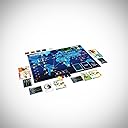
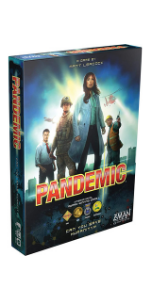
Pandemic is an award-winning cooperative board game for 2-4 players aged 8+, featuring a global map with 48 cities where players act as specialists racing against time to cure four deadly diseases. With an average 45-minute playtime, it blends strategic planning, role-based teamwork, and dynamic challenges, making it a must-have for families and strategy enthusiasts seeking immersive, high-stakes gameplay.


| ASIN | B00A2HD40E |
| Additional Features | Board Game |
| Age Range Description | Kid |
| Best Sellers Rank | #14,276 in Toys & Games ( See Top 100 in Toys & Games ) #326 in Board Games (Toys & Games) |
| Brand Name | Z-Man Games |
| CPSIA Cautionary Statement | Choking Hazard - Small Parts, No Warning Applicable |
| Color | Multi-colored |
| Customer Package Type | Standard Packaging |
| Customer Reviews | 4.8 out of 5 stars 18,824 Reviews |
| Edition | Updated Edition |
| Educational Objective | Develop critical thinking and teamwork skills |
| Estimated Playing Time | 45 Minutes |
| Game Mechanics | cooperative |
| Genre | Strategy |
| Global Trade Identification Number | 00681706711003 |
| Included Components | Toy |
| Indoor Outdoor Usage | Indoor |
| Is Assembly Required | No |
| Item Dimensions | 12 x 8.6 x 1.7 inches |
| Item Dimensions L x W | 12"L x 8.6"W |
| Item Part Number | ZMG71100 |
| Item Type Name | Pandemic Board Game |
| Item Weight | 0.91 Kilograms |
| Language | English |
| Manufacturer | Asmodee |
| Manufacturer Maximum Age (MONTHS) | 180.0 |
| Manufacturer Minimum Age (MONTHS) | 156.0 |
| Manufacturer Part Number | ZMG 71100 |
| Manufacturer Warranty Description | No Warranty |
| Material Type | Paper |
| Minimum Age Recomendation | 96 |
| Model Number | ZM7101 |
| Number of Items | 1 |
| Number of Players | 2 to 4 players |
| Operation Mode | manual |
| Rulebook Availability | Printed Included |
| Set Name | Pandemic |
| Size | 1. Standalone Game |
| Subject Character | Operation Specialist, Scientist, Medic, Researcher |
| Theme | Strategy |
| Unit Count | 1 Count |
S**T
The Greatest Cooperative Game Ever
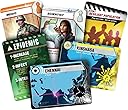
Pandemic is a 2 to 4 player cooperative strategy game about doctors fighting diseases. All around, itโs a downright amazing game whether youโre a casual board gamer or a hard core one. Anyone who believes that the life of a doctor is boring or mundane might find a brand you appreciation for them when they play this game for the first time, but I think Pandemicโs biggest contribution to gaming is the standard it set for the many other cooperative games that came after it. In Pandemic every player is given a special role-card with a nameless character on it who has a special power that will be vital to winning the game. The game board itself is a map of the world with 48 of the most important cities connected to one another by white lines to indicate paths for movement. The four diseases you are struggling to cure are represented by tiny different colored cubes that will inhabit these cities, slowly making the population sicker and sicker. The players have two objectives that are vital to winning. If the entire supply of any one disease has been distributed across the board, the players loose. So part of the gameplay involves traveling to the worldโs many cities to treat the inhabitants and removing disease cubes from those spaces. However, to overcome the diseases and win the game, players have a hand of different colored cards with the names of different cities on them. Players can travel greater distances by surrendering some of these cards, but the real goal is to visit one of the research centers on the board and surrender five cards of the same color to find a cure for one particular disease. Once the cures for all four diseases have been discovered, the players win the game. Much of the gameโs intrigue comes from your hand of cards because in almost every game players will be unsure if they want to use those cards for transportation or save them instead for finding a cure. The majority of player to player interaction involves passing and exchanging these cards around to create optimal hands, but even that will prove a challenge. One of the hardest rules for the players to follow is probably the one that wonโt let you exchange a card unless the city printed on that card matches the one youโre currently in. Having one person playing as the Researcher can be the greatest benefit to your team, since they get to ignore that rule. So on top of the playerโs gameplay being very intriguing, the diseases also have an interesting gameplay style. The gameโs difficulty is determined by how many Epidemic cards that you have shuffled into the Player Deck. The diseases themselves get a separate pile of cards called the Infection Deck. Each card from the Infection Deck has the name of a city where you will place one more disease cube at the end of each and every turn. Epidemic cards from the Player Deck are downright diabolical, because they will force you to take the discarded Infection cards and then put them back on top of the deck they came from. That means diseases will start targeting the same cities multiple times and players will be running back and forth trying to keep the diseases under control. Outbreaks are even worse, when there are already too many disease cubes on one city and the game will force you to put a cube on each connecting city instead. The mass mayhem and panic that starts to circulate around the game table is one of the most enjoyable things about Pandemic. The gameplay is a truly flawless experience, in my opinion. Turns tend to happen very quickly and each playerโs unique power will strongly encourage coordination between everyone. Pandemic also balances dumb luck with careful strategic planning, because itโs possible youโll already have the cure for a disease within the first turn of the game. However, if players donโt coordination their efforts and manage their resources wisely that is the path to certain doom. But itโs not only the balance and the coordination that makes the gameplay perfect but also the right theme. Playing as doctors and trying to do something as noble as fighting diseases is something that everybody in the world can truly admire. When the world is suffering from a pandemic it doesnโt matter what creed or nationality you are since everyone will pool their efforts to save humanity itself, hence the cooperative play. The art direction is also very complimentary of the theme. The game and the cards kind of remind me of a computer monitor thatโs tracking the progress of each person and disease. Itโs all very family friendly too, since there is no artwork portraying any gruesome pain or agony. Now, to nitpick on some of the gameโs very few shortcomings, there are probably a few people who wonโt be convinced a tiny colored cube represents a disease very well. Personally, this has never distracted me from an enjoyable game. Also, the spaces that represent each city can also be very small when trying to fit disease cubes, a research station and player pawns all together into a circle half an inch across. But once again, this has never been a problem to me if the game board isnโt shaken too much. So altogether, Pandemic is probably the single best cooperative board game that was ever created. Itโs fresh and exciting every time I play it, and I always enjoy upping the difficulty to see how much better I can do against the diseases. Winning and loosing are both very fun if you work well together as a team. But even to this day, Pandemic is an example to other game designers trying to make cooperative board games, and itโs not very hard to see why when you pick it up and play it.
S**D
Best game EVER!
Okay, to start out, I love love LOVE Pandemic! I admit it, I'm a bit competitive. I hate losing games. I'm generally fine with competitive games where the best strategist (or luckiest) wins, but I really dislike games (like Settlers of Catan) where some players can gang up on others. You pretty much don't have a chance when every other player is specifically playing against YOU. Pandemic is fantastic because you cooperative with the other players and you all win or lose together. I just absolutely love sitting at the table talking about all our options and strategizing together. My son introduced me to Pandemic several months ago, and I was hooked. We've spent several afternoons/evenings playing again--and again--and again. On many occasions when I am home alone, I play all by myself (playing two roles), and we've also played four players on several occasions. With two players and four epidemics, we win every time. With five epidemics, we win about 70% of the time. We've tried six epidemics a couple times, but have not been able to beat that game yet. Still trying! Ugh! As you increase the number of players, the game gets more difficult. With four players we've only played with four epidemics, and we win probably a little over half the time. I honestly think it would be impossible with four players and six epidemics, but someone has probably proven me wrong. We've even discovered another way to lose the game, which is not listed in the rule book! It says you can lose by having too many outbreaks, running out of disease cubes, or running out of player cards. We've lost in all those lovely ways. However, a couple of times, we've had only a few outbreaks, had plenty of cubes of each color left, and plenty of player cards. Three diseases cured, with only one to go. One of those times, we'd even gotten through all the epidemics, so there were none left in the infection deck! We've got it made, right? Uh, no. Turns out we discarded too many of the same color city cards, and there were only four left total, including in our hands and in the player deck. Neither of us was the Scientist, so that was an automatic loss. This is a danger when you get dealt a nice hand at the beginning, say two or even three of the same color. You decide to collect those, so when you discard, you are discarding the other colors. If you happen to keep drawing you "discard" color and it takes too long to collect the color(s) you want, you've now discarded too many of the other color and you don't have enough left at the end to cure the disease. Beware. We have also managed to lose the game on the very first turn. We were very unlucky drawing the infection cards when setting up the game: three on Karachi and Delhi, and two on Kolkata. Our first player did not have any way to get to that location to do even a little treating, and the first card drawn from the player deck was an epidemic. After resolving the epidemic, the first card drawn was Delhi, which caused a double outbreak (Delhi/Karachi) and put the third cube on Kolkata. The second card drawn was Kolkata, which was a triple outbreak (Kolkata/Delhi/Karachi) and lost us the game as there weren't enough disease cubes. Yep, lost on the very first player card drawn and there was not a single thing we could do about it. One slight change we sometimes make in the game is to draw 10 cards at the beginning instead of 9. The first nine infect the cities, and the tenth is where we place our player pawns and the first research station. It adds a level of difficulty to the game to not always start in Atlanta. We were noticing before that we always seemed to get in trouble with black and red, and we believe it was because all our players started so close to blue and yellow so those cities were easy to get to and treat. Now that we can start anywhere on the board, blue and yellow have become equal opportunity killers. There are a few things it is easy to get wrong. When the infection rate moves up, it's easy to forget to start drawing three cards (or four) since you're so accustomed to the lower number. It's also easy to forget to discard, not noticing that you have more than 7 cards in your hand. One scenario we've encountered a few times involves having 8 cards for literally a second. You meet another player on top of a research station, and share knowledge by pulling that city card from her. You now have 8 cards in your hand, but 5 of one color. Your very next action is going to be curing a disease, which will leave you with only 3 cards. But, before you cure that disease, you have 8 cards, so we think you have to discard one even though literally on your next action you will be discarding 5 cards. This is a little frustrating, but the rules specifically say that if you EVER (my emphasis) have more than 7 cards in your hand, you must discard (or play an event card). We were also a little confused by the role of the Researcher the first time we played. To be clear, when the Researcher shares knowledge, she and the other player must be on the same city, and the card can only go FROM the Researcher TO the other player (on either player's turn, as an action). She cannot take a card from the other player (and they cannot give one to her), unless it matches the city they are sitting on. It is also extremely easy to forget to infect cities after resolving an epidemic. You've spent a bunch of time resolving, then strategizing based on where the board stands now, and you completely forget that you still have to infect before going to the next player. Lastly, you are not supposed to choose your roles. We played with one person who had played before, and he said they always choose which roles they want. I suppose you can play that way if you want, but the game would be far less interesting because people would probably tend to choose the same roles every time. The instructions say to shuffle the role cards and deal them to each player -- that means they're supposed to be random. It's far more interesting and challenging when the roles change every time. A good part of the strategy is figuring out how to maximize the advantages that each role gives you in any given game. Pandemic is basically figuring out exactly how much effort you have to spend in each game sharing knowledge in order to cure diseases versus preventing outbreaks, all while maximizing the strategic use of whatever role you are playing. Spend too much time on one, and the other will get you. Sometimes you just have to say "oh well" and let an outbreak happen, even when you could have prevented it. It may just be more important to get to that one city in order to share knowledge than to get to the city where the outbreak is about to happen in order to prevent it. However we do try hard to prevent double outbreaks because things can get very bad very quickly when that happens. Okay I've rambled enough. If you're on the edge, buy this game! It's awesome. Every game is different and it never gets boring. It is equally fun with two or more players, although the more players, the more challenging it is. You can control the difficulty level by player with fewer or more epidemic cards. A+
C**R
Perfect for a big gamer game night
Bought this game as a gift and it has been enjoyed for many years. My family likes game nights where we work together against the game and this game does not disappoint!! Every game feels different due to the randomization of infected cities, timing of epidemics & outbreaks, players' abilities, and cards in hand. There's many moving parts to this game so it's always interesting and engaging. You can also change the difficulty based on how YOU choose to set up the deck, allowing you and friends to get familiar with the game mechanics without being overwhelmed. There's lots of small pieces but the box comes with little baggies and space for everything so you don't have to worry about playing tetris just to put pandemic away. The board is great quality and after many games and years of use it doesn't have a single flake or chip anywhere. All the pieces hold together well and nothing shows any signs of wear and tear. High quality figures and high quality game.
G**L
Diseases, Infections & Outbreaks...Oh My!!!
If anyone has read my reviews and/or answers on questions you will see that in the past year my family has gotten really into the Ticket To Ride (TTR) games. Well, while purchasing one of my latest TTR expansions I stumbled upon the Pandemic games; which are similar to the TTR ones in that you start with a base game, get the foundation for rules and game play and then you start moving on to expansions with additional features. I purchased Pandemic and with Amazon Prime it was delivered in less than 24 hours, no kidding! As is my usual custom I read the instruction manual and then because I am a visual learner I went to You Tube to watch some videos. ZManGamesOfficial does a 9.5 minute brief tutorial. WatchItPlayed does a wonderful job walking you through the game prep for a 2-player game including where all pieces, cards, etc. go. This was very helpful as there are specific instructions on how to shuffle and stack the Player Cards. My niece and I had this video up while setting up the first game. Finally, I watched Geek & Sundry do their TableTop version of the game where you actually get to see the players play. They have an abbreviated video and then a 1.5 hour extended game play. So, these are just tips that helped us get an understanding of the game play and we had a blast! Pandemic allows you to travel from the Center for Disease Control in Atlanta and you travel throughout the world trying to cure and eradicate 4 diseases. The instructions make it sound so easy but oh boy; it is not. Game play can be learned in about 15-30 minutes. The difficult part and it is not the actual game-play; is trying to come up with enough strategies fast enough to cure and eradicate the diseases before you and your team die! Yes, team...unlike TTR this is not a game 1 player wins. It's a collaborative game in which all players work together...you discuss how you can unite forces, share your special roles, your cards, etc. But be careful of an alpha player who may start bossing people around, telling them what to do and takes charge of the game. If you get an alpha player just let them have the game board, pawns, etc. and tell them to play the game by them self but as if they were many players. In the end if it's your turn you can listen to others, even the alpha player, but what you do is totally up to you. If you don't have a good strategy everyone loses...my niece and I call it dying because we have succumbed to the disease. So, why is it a race against the clock? Well, no matter how well your strategy, your team can "die" IF you: Have 8 outbreaks before curing/eradicating all 4 diseases, you run out of Disease Cubes or Player Cards. Note: You don't have to eradicate all 4 diseases to win; you just have to cure all 4. First game we cured all 4 diseases and eradicated the yellow ("Crazy Banana Disease") but we got 8 outbreaks...we saved the world! 2nd game; yes, we played another because we were feeling lucky! We cured all 4 diseases, didn't eradicate any and once again we saved the world. We named our diseases the Black Zombie Plague, Purple People Eater (Blue cubes), Angry Bird Virus (red) and of course the Crazy Banana Disease (yellow) because my niece named it while infecting Miami. During your turn you can play up to 4 actions, draw 2 Player Cards but you cannot be holding more than 7 at any given time and then you MUST infect cities! The Infection Rate starts at 2 cities per player, per turn. But every time a player draws an Epidemic Card they have to move the Infection Rate marker and it slowly increases the Infection Rate from 2 cities up to 4 cities. The Epidemic card also requires you to draw 1 city from the bottom of the Infection cards and you must infect that city with 3 disease cubes; 1 more cube of the same color and you have an outbreak, oh my! Finally, the Epidemic Card requires you to "intensify" the Infection Cards. That means you must shuffle all the Infection Cards (cities) that have been played since the last epidemic, including the city card you just drew from the Infection Card pile and then put them back on top of the Infection Card pile so they now go back into play. See the intensity? With just my niece and me playing we didn't have as many cards to reshuffle so we kept infecting the same cities; which in essence was then producing outbreaks faster. I "think" you may have a longer game play with more people because then the other players will also be contributing cards. An outbreak occurs if/when a city accumulates 4 of the same color disease cubes. When this happens you must put a disease cube of that same color in every city that is directly attached to the city that the outbreak occurred in, thus, the epidemic. Note: It's possible that you have infected a city with more than 1 disease so IF you have 4 or more disease cubes but they are different colors you do NOT have an outbreak. The outbreak is only when you get 4 of the same color in the same city but the 4th cube (same color) will not be placed on the city. So watch those disease cubes and treat and cure so you can prevent the outbreaks. Now when you play up to 4 actions during each turn you have an option to treat a disease. You treat by removing 1 or more disease cubes from the city you are in (each cube being an action) that you have used your actions and/or role to get to. I was the Medic during first game and one of my roles allowed me to remove ALL disease cubes from the city I was in or traveled to! The Dispatcher can move players from city to city with their permission so once again...If you have a Dispatcher in the same game with a Medic you can move the Medic to the city that needs to be treated and get rid of all the disease cubes. IF the disease has been cured (see above pic...the disease markers are solid colors and moved above the disease logos) then you get to remove ALL the disease cubes in that city EVEN IF you aren't the Medic. To eradicate the disease you must remove ALL disease cubes of the same color from every city on the board. When you have eradicated the disease you flip the disease marker over to reveal the little log for eradicated. Note: Cities can still be infected if the disease has been cured but NOT if it has been eradicated. Back to the outbreaks. There's also an outbreak chart with marker and each time an outbreak occurs you have to move the marker. If you have 8 outbreaks the game is over and there is no winner because everyone has died. You also have Research Stations and these are nice because there is one action that allows you to shuttle from station to station and that can get you closer to an infested area to have a chance to treat, cure and/or eradicate several or all cities. There are also Role Cards and pawns to match the color of your role. Each role has special duties that only that player can perform (see above with Medic and Dispatcher). You don't get to choose your color/role. Pandemic is for 2-4 players and there are 6 Role Cards so you won't have all 6 roles in game play at the same time. There is another extension that adds a 5th player. I know there is a lot more that can be said and I or someone else can try to answer your questions. I just played for the first time last night (4/13/19) and while playing the 2nd game I came to Amazon and we read descriptions for some the expansions. I immediately ordered Pandemic: The Cure--Experimental Meds and then about 2 hours later I ordered Pandemic: State Of Emergency (this introduces diseases/infections from animals). So as you can see this is how pleased I was with Pandemic and yes, we are still playing TTR...I will be posting some more reviews on those as well because I currently have 9 versions. I think I got infected with a board game virus but hey, what can I say; my family/friends still love games the old-fashioned way...totally unplugged, board games and card games around the table. On a side note I must share what happened during our game. My daddy called and my sister held the phone out so he could hear my niece and me playing. We had one part of the map covered and ready to explode with black Disease Cubes. My niece was trying to tell me how I could (as the Medic) take care of all the blacks. She said, "Auntie, if you just get rid of all the blacks we won't die! Can you just take care of all the blacks over there?" and she pointed to the area that was well infected AND we were trying to treat/cure some the disease so that we could remove some the black Disease Cubes off the board and continue game play. Later I dropped a Dorito on the map and I told my sister, "Shay-Bo, I think I just killed everyone in Moscow because a large UFO has landed on them." We are a Christian family that doesn't drink, smoke, etc. We just like to have good clean fun but I told my family if anyone was a fly on the wall during our game play they would have been questioning our integrity. We have already planned our next family game day for Good Friday and yes, it will be good!!
J**.
Co-op game that makes you think
Pros: High quality components, challenging, requires strategy Cons: Can be too random, one person can take over if you're not careful Excellent cooperative game. I got this to play with my girlfriend, and we've played with our families and some friends as well. It is very easy to teach since you're all on the same team, so you can show people how to play as you play. It also lets you choose how difficult you want it to be by letting you decide how many Epidemic cards you add to the player deck. When these are drawn, they will make you infect more cities each turn and they will cause all the cities you have already infected to be shuffled and placed back on top, so they will keep getting more disease added to them. The more Epidemic cards there are, the harder the game gets because this happens more often. It requires a lot of foresight and strategy if you want to win, as you always have to be aware of what cities are potentially going to be drawn, and if you get close to the end you need to remember that there are only a set number of turns. Each player has a different ability that they can use, so we have found that it can be easier to play with more people, as this gives you access to more abilities. However, in the games I have played, we have both won and lost with 2, 3, and 4 people playing. It can certainly be tough depending on the game. And that's why I'm rating it 4 stars. I really like the game, and, as a side note, the physical game itself is outstanding. The box is very sturdy with spaces inside for all the pieces and cards. The cards are sturdy and the player pieces and "disease cubes" are all beautiful (everyone comments on how nice the components are). However, the game play can vary greatly. Sometimes you'll win easily, sometimes you'll win at the last second, sometimes you'll get crushed early, sometimes you'll lose just when you think you've won it. This can be a good and bad thing. I like that there's no way to "figure it out" and win every time, but it would be nice if it wasn't as random. (I suppose you could decide where to put the Epidemic cards in the deck, but we haven't tried that.) I played with my brother once and we won very easily, and now he's convinced that it is too trivial. All in all, I would certainly recommend it to anyone looking for a challenging co-op game.
L**N
Extremely fun but challenging game!!!
It seemed like weโd just started the game and the yellow strain had not only been cured but eradicated! We were on the cusp of a cure for the second strain. This one was in the bag. We had weathered two epidemics so far without any egregious problems. Sure there was a pair of cities in Eastern Europe that was in danger, but what were the odds that was going to be a problem? One of us was already there. Then another epidemic hit, the infection rate increased, three cities were drawn and it seemed the cascading outbreaks knew no bounds. I think nearly everyone in Europe died that day, and we โ a group of specialized scientists- were served a plate of bitter defeat. Again! Again and again, always defeat. Oh, the humanity! Itโs true, I havenโt ever beat this rotten game and yet I keep coming back. Because one day Iโll win; in spite of all the wounds to my pride Iโve had to nurse, one day Iโll โ I mean- weโll win. I say weโll because this is a co-operative game where you all work together against those nasty strains of no-doubt-human engineered beasties. Now, I know there are those of you who beat this every time you play, like I beat Shadows over Camelot every time I play, but Iโve invited those sorts to come play with me and they can barely stand the shame of losing with me. To make it even worse, we only play with 4 epidemics. I feel like Iโm at an AA meeting: โHi my name is Kyle.โ โHi Kyleโ echoes the crowd. โIโฆ I suck at Pandemic.โ This is the part where you put your arm on my shoulder and tell me itโs going to be alright. Game Play This board is a handsome map of the world; only instead of country boards you see in Risk there is a red web of interconnected cities. Everyone starts in Atlanta were a research station is and you go from there. Each player plays a scientist that has a special ability: one can move others on their turn, one can give cards to another without the restrictions other players have and so on. The game also begins with 9 random cities around the world with varying degrees of infection (one to three stacked blocks). If a city would have a fourth block put on it (called an outbreak), it actually stays at three and the cities connected by the red web get a block. Isnโt that nice? Itโs called a cascading outbreak. Such a pretty name. If you get 9 outbreaks in a game you lose. If you run out of blocks for a certain strain you lose, and if you havenโt cured all the strains before your white deck of cards runs out, you lose. I hate to be a negative Nancy, but thereโs a lot of ways to lose this game. If, on the other hand, you are able to find cures for each strain, you win! How do you do that? Well you get someone who has got 5 cards of the same color in their hand to a research station, thatโs how. One of the players only needs four. Every turn each player gets to do four actions. Picking up a cube off a city counts as one, so does moving between cities. You can charter flights with your cards, rather than use them for cures. You can build research stations and fly between those without expending a card, and a few other things. Then you draw cards that you think will help you, but can instead turn out to be epidemics. And you also draw cards for cities that get infected: usually this amounts to adding on square to the cityโs pile. As the game progresses, more cards are drawn at a time to be infected. Oh, and when an epidemic happens, the cards for the cities that were infected get put back on the top of the draw pile. Oh dear. I hate to tell you what to do because what do I know anyway? Those of you who beat this all the time should tell me what to do. I understand that finding the cures is everything- lest you run out of time. Others say, make sure that you never have three on on e city at a time, as to avoid outbreaks. Make sure that the medic is only clearing off stacks of infections, the dispatcher should be moving people so that donโt have to move themselves. Again, I never win, so what do I know? Theme If it hasnโt been obvious, I am completely sucked in by the theme. There are similarities to other co-operative games especially Forbidden Island: Each character has special powers, you make moves for the team and then the board pushed you closer to defeat, that sort of thing. Forbidden Island also shares the shuffle the cards and put them back on top of the draw deck mechanic. I tell you this so that you wonโt be surprised if you decide to add them both to your game closet, this is why I havenโt added Forbidden Island to mine, though Iโve played the game. While this adds to the evidence that the theme could be stripped out of the game, I donโt recall cascading flooding going on in Forbidden Island, or feeling like humanity is hanging in the balance, or being glad I donโt live anywhere in Eastern Europe. That is to say, I think the theme sticks. Balance I read about people who win all the time and needed the expansion to rouse any concern in them. But who can believe everything they read on the internet, I ask you? Just because Iโve never won though doesnโt mean that itโs not an enjoyable experience, mind you. Because I keep coming back. Interaction Interaction is very high. Thereโs all sort of collaborative discussion that goes on through this game. Learning Curve Low. It takes all of ten minutes to explain and there are directions on the board and the turn cards. Downtime Nill. You are all in it together! And you even get to move a guy in your turn. Whatโs not to Like? I actually know where some of these cities are on the map are but they all have these lines that go from the pin-pointed location to the circle where you actually place the blocks. That remains a bit annoying even after playing the game 10 times. Collateral Endorsement My four year old likes โThe one where they get sickโ We run around curing cities till the infection deck runs out. He feels a lot better about himself than the rage I feel playing by the real rules. Actually, as I think about it, the first time I played this game I was at the home of some friends and I think we won. But Iโm certain I have not won with my copy of the game. Iโd say mine is jinxed, but weโve played on another friends copy and lost there too. Also, I should say that a brother of mine lost two in a row and saw the writing on the wall in the third game and left the table, swearing off the game forever. You might consider your own resiliency before buying this game.
D**B
Getting the most out of Pandemic
My family plays board games often and this has quickly become our favorite! Other reviewers have given great descriptions of the game and explanations of its rules, so I won't go deeply into that in this review. Instead, I'll focus on what makes Pandemic stand out from the other games on the market and how you can get the most out of your game. As other reviewers have mentioned, the fact that this game is cooperative makes it a little different from most of the other games on the market. While many games pit one player against the other, this game encourages players to put their heads together in order to get ahead of four different diseases which threaten to infect the globe. This is great for families with middle school-age and older children, as it teaches cooperation (avoiding the game night brawls that often erupt if one player is a particularly 'strong' competitor!), but it's also great for game night with friends and, unlike a lot of other games, can even be successfully and enjoyably played by two people (the choice of 'character cards' prevents the game from being predictable or monotonous when only two are playing). Don't be mistaken - the collaborative aspect doesn't mean the game isn't challenging or that it won't be enjoyable for those who relish a bit of tension and competition. As players, you can control the intensity of the game to a certain degree, by deciding whether to put four, five or six Epidemic Cards into play. Some reviewers have suggested that the game becomes too easy to win once you get the hang of it - to these players, I'd suggest using the maximum number of Epidemic Cards and changing the end goal of the game to what my husband and I call 'over-winning' - instead of simply trying to cure all the diseases before the game ends, you must completely eradicate all four. In addition to prolonging play and making the ending a little more difficult, this also makes the game play a little more interesting throughout as it requires a slightly different strategy from all players. If, like us, you also like to play the game a couple of times in the same night, you can step up the challenge by removing the character cards already played (making it much more likely to draw the dreaded Contingency Planner!). I've seen reviews mention using the game to reinforce geography lessons for slightly older kids, and as long as you bear in mind that the city labels aren't directly above the correct geographical location, this could be a great idea. In addition to being a lot of fun, Pandemic is also a well-designed game. The character pieces are wooden instead of plastic, and the translucent plastic disease cubes almost seem to glow when placed on the board, which is a nice aesthetic touch. We've had our game for almost a year and the cards have stood up to many hours of sometimes pretty enthusiastic play. With as much play time as this game gets in our house, you might think we're on a mission to wear it out - it hasn't happened yet. We're still having fun with our original game so we haven't purchased the expansions yet, but we plan to! As far as recently-released games go, this is the best we've found and I'm sure the expansions are great, too!
N**N
A cooperative board game with 9000 reviews and 5 stars? Yes please.
Catan. Carcassone. Ticket to Ride. Betrayal at House on the Hill. Azul. And more. There are quite a few standout games out there with 5000+ plus reviews and 5 stars. The "big" games, award winning, sometimes with multiple printings, decades in print, expansions, you know, the superstars. Pandemic stands alone as one (if not the only) cooperative one. All the players win or lose together as a team of researchers fighting to cure 4 worldwide pandemics. I cannot praise this game enough. If you like those superstar games, this one fits the bill. Some points to consider: Setup can be tricky. It's not just shuffle cards and put them in piles. You have to shuffle, deal out, reshuffle, add in, and so forth for 2 different decks. Read the setup rules carefully so you get it right. After that, it's pretty standard except for the Pandemic cards. You can select beginner, normal, or expert difficulty level by the number of Pandemic cards in the player deck. After a handful of games, my kids and I still only have a 50% win rate on beginner. You can and will lose this game. You MUST be a team. Communication and cooperation are key. In fact, discussion of each player's moves should be a team effort. Your contribution to strategy may be more effective in a round than your pawn's actions are; sometimes leaving your pawn in place and doing *nothing* is your best personal strategy while the decisions agreed on for another player may be key. There are only 3 outstanding rules to understand: Roles (every player chooses a role at random and each role has special "powers". There are 7 roles for the up to 4 players making each game's strategy different. Knowing how each player's role works is essential to good strategy), Pandemics (the cards you add to set the difficulty make the game harder each time one turns up), and Outbreaks. Outbreaks are bad because it's one of the losing conditions of the game. Get 8 of them and the game is over. And Outbreaks can cause more Outbreaks in a chain reaction if you aren't careful or get unlucky. Anyway, those 3 rules are the hard parts. Your actions, card draws, and the rules regarding them are straightforward and mostly fit on the supplied info cards. There are 2 pages of setup, and about 5 pages of rules or thereabouts plus a page of examples. To cure a disease, you acquire 5 city cards of the same color, move to a research center, and use an action to cure it. Do that 4 time and the game is won. For as short a rulebook as it has, the strategy and teamwork it requires are huge. This is a must have game, one of that stratospheric list I mentioned earlier of what my son calls the "big" games like Catan. And as a cooperative game, it stands alone in that heady company.
R**E
Best Board Game Ever
Pandemic - in my opinion - is the best board game ever published. It takes just the right amount of time to play (30-60 minutes), is cooperative so everyone playing is a team trying to beat the game which makes the social dynamic more engaging than a competitive game, the mechanics are basic and easy to learn, and the game is different each time you play. I have yet to find another game that borders on so close to perfect as this one. It doesn't even need the expansions (except for On the Brink - you have to get that just for the petri dishes for your disease cubes) which to me complicate an already precisely balanced game. I cannot praise this game enough, and everyone I've played it with has gone out and bought their own copies.
Y**E
Leuke team-activiteit
Erg toepasselijk thuisquarantaine vermaak! We spelen meestal op een avond een paar rondjes achter elkaar, want het klaarzetten en opruimen is wel wat werk met al die kleine onderdelen. Zeer geschikt voor mensen die niet tegen hun verlies kunnen.
F**S
Great
Great game, kids love it
M**J
Everything's alright
Haven't actually played yet but opened the package. Looks genuine and is in English, perfect :-)
X**N
A Dose of Entertainment in Quarantine
In the midst of the global pandemic, my wife and I found ourselves spending much more time at home due to quarantine measures. To stave off boredom, we decided to try the aptly named Pandemic Board Game. Upon purchasing the game, we were intrigued by its premise - working together to fight off a global outbreak. It seemed fitting given the circumstances. We quickly found that the gameplay was engaging and provided a much-needed diversion from the outside world. The game requires strategic thinking and teamwork, making it an excellent choice for couples or families. Each round brought new challenges and decision-making opportunities. The unpredictability of the gameโs progression made it feel as if we were truly in the midst of a global crisis, adding a level of realism and excitement. Interestingly, we also started to use the game as a form of divination during our time in quarantine. While a little unconventional, the outcomes of our game sessions became a source of speculation and discussion. It added another layer of fun and intrigue to our gameplay experience. In conclusion, the Pandemic Board Game is a highly engaging and thought-provoking game. It provided us with a sense of connection and adventure during a time when the outside world seemed uncertain. Whether for its strategic gameplay or as a unique form of divination, we found enjoyment and entertainment in this board game.
Trustpilot
1 month ago
2 months ago