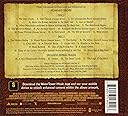


The Special Edition of the Original Motion Picture Soundtrack to The Hobbit: An Unexpected Journey contains the full score from the film with seven extended score cues, six exclusive bonus tracks, and deluxe liner notes packaged in a 2 CD hardcover digibook. The Soundtrack features original score by Academy Award winner Howard Shore recorded at famed Abbey Road Studios by the London Philharmonic Orchestra. Additionally it includes an original song, Song of the Lonely Mountain, written and performed by Neil Finn (Crowded House).One of today's most respected, honored, and active composers and music conductors, Howard Shore previously worked with director Peter Jackson on The Lord Of The Rings Trilogy, which stands as his most towering achievement to date. He won three Academy Awards for his music for those films. Review: The Hobbit: An Unexpected Journey - Regardless of your opinions of the film series, Peter Jackson's Lord of the Rings (LOTR) trilogy is legendary in every sense of the word. Howard Shores' scores for the three films have won industry awards, portrayed him in a new celestial light among film score composers, and won him the infinite adoration of countless fans both consumer and professional alike. With his score for The Hobbit: An Unexpected Journey, what's presented is both an improvement upon legacy themes as well as introduction of new ones, making The Hobbit's score yet another rooted and timeless classic in its own right. Opening track "My Dear Frodo" encapsulates and epitomizes so much of what we've come to expect from Shore's work on the original LOTR trilogy's scores, incorporating majestic horns and strings and both female and male choral vocals, portraying hope, optimism, trepidation, and reluctance all rolled into one. "Old Friends" outlines a comfortable and fun vibe, furthering to feelings of relaxation and content, yet displaying a barely noticeable surrounding of cascading apprehension. And thus the first of two discs continues, building upon a foundation of Shore's legacy material with development into new and extrapolated themes: "Axe or Sword" alternates between striking confluences of string-construed hills and horn-excavated valleys; "The Adventure Begins" rouses the soul into a quick pace following its introduction, and "The World Is Ahead" carries upon the strength of Shore's original trilogy inasmuch as its blood-stirring, triumphant, and inspirational construction. "An Ancient Enemy," one of the first disc's highlights, reintroduces male choral vocals shown at a prior point in the score, yet layers them over scathing string and horn work, thrusting forth a grandiose and impressive statuesque scope, reminiscent of the Balrog scene from The Fellowship of the Ring but brandishing a more gentle beauty and tumultuous evolution. "Radagast the Brown" begins with yearning female vocals and soon incorporates spiraling strings and quick-paced yet low-key percussion thrown into a cavity of scant LOTR thematic material which ends on a hair-raising escalation of horns. Tracks on the first disc continue to follow a similarly treacherous yet whimsical pattern, beginning with "The Trollshaws," continued by the existential flair of "Roast Mutton," and seemingly culminated in "The Hill of Sorcery," introducing the pending and rousing tracks of the second disc with a quickened theme, intermittently slowed by cautious horns and strings that quickly break into a cavernous and intimidating volley reminiscent of The Fellowship of the Ring's music surrounding the Moria scenes. "Warg-Scouts" ends the first disc's collection of music by displaying an involved yet troublesome and somehow amiable web of orchestral provenance. "The Hidden Valley" begins the second disc with recurrent themes with an undertow reminding of Inon Zur's score to the wonderfully exalting The Lord of the Rings: The War In the North video game. It's an excellent leadoff track, going from serene and heartfelt strings to a rousing march leading to "Moon Runes," which yields female vocals that evoke majesty, egregious beauty, and utter timelessness early on. Soon later, "The White Council," a personal highlight, floats onwards through volition through hapless, boundless acquisition to storied and fanatical gravitas, an ultimately influential and consequently important piece on the album. "Over Hill" carefully incorporates traits of the triumphant Bag-End theme from LOTR as it's poisoned with suspense, while "A Thunder Battle" will move the listener to the musical accompaniment to LOTR's Moria scenes yet again. "Brass Buttons" boldly defines the destiny of the score, injecting an exciting and imploding track of commanding authority and casual musical competence, all the while cementing the listener's desire to retain synergy with the remainder of the score and its merits, after which it transforms into a haunting track of illustrational heritage as well as efficacious and developmental beauty. "Out of the Frying Pan" shows an insurmountable effectivity in suspense and nonchalant aplomb and compositional countenance, leading into "A Good Omen"'s singular string/horn lead being pummeled by juxtaposed string/synth and orchestral, serene conglomeration. "Song of the Lonely Mountain," an acoustic yet pronounced piece, illustrates Neil Finn of Crowded House playing a monumental and summarily beautiful song, that strikes as slightly ineffectual relating to the film's score itself, into which "Dreaming of Bag End" soars, soon and lovingly collapsing into tranquility rather than peaceful finality, alternately ending the original score on somewhat of a curious prelude (but perhaps intentionally). Additional tracks "A Very Respectable Hobbit," "Erebor" (the first to incorporate bagpipes), "The Dwarf Lords," and "The Edge of the Wild" simply encourage further involvement in the score, the last of which contains striking, distinct, and reckless awe via bass and horn branches reminiscent of Cliff Eidelman's Star Trek VI: The Undiscovered Country. With the score drawing to a close, I sensed an incalculable gap between it and any future scores in the series, which is much how I felt following The Fellowship of the Ring. I sincerely love Howard Shore and his music, and love it or not, The Hobbit will undoubtedly shape your opinion going forward. Whether you're a fan of Shore's Lord of the Rings scores, or not familiar with them at all, The Hobbit: An Unexpected Journey will dazzle and uncontrollably undulate your senses with effortless character throughout its massive length. Make no mistake, Howard Shore has created a masterpiece here that rivals his work for the original Lord of the Rings trilogy, that somehow seems to not only incorporate his legacy series music, but also capitalize upon it with new themes and frighteningly apathetic motivation given the music's quality. Howard Shore's The Hobbit: An Unexpected Journey will rouse you more than Fellowship of the Ring, inspire you more than The Two Towers, and impress you more than that of The Return of the King, because what he introduces with The Hobbit score is the beginning of a new legendary and epic journey rather than a casual lap around the tracks which made him originally famous. I implore you, do not miss this work of heart-stopping beauty! Note: The extended version of Shore's score (reviewed here) contains six tracks of extended material totaling almost eight minutes, within "Old Friends," "Radagast the Brown," "Moon Runes," "The White Council," and "Song of the Lonely Mountain." Also included in the extended edition are six bonus tracks totaling over eleven minutes, including "Blunt the Knives" and "The Trollshaws," along with the second disc's ending tracks "A Very Respectable Hobbit," "Erebor," "The Dwarf Lords," and "The Edge of the Wild." Review: Nostalgic, Epic, Fresh, Ambitious, Dramatic, Moving: Howard Shore Does it Again. - By all accounts, this movie and soundtrack should not exist. 10 days before the "end of the world" on December 21, 2012, humanity has been treated to one of the most anticipated soundtracks of this century. Shore's Lord of the Rings music brings back fond memories of Middle Earth bringing to live the fictional world and all of its wonder. After three masterpieces composed to accompany the original trilogy, the announcement that not only would the Hobbit be made, directed by Peter Jackson, and extend across three feature films, but it would also feature three new scores by Howard Shore, I knew this would be an opportunity that could not be wasted. Howard Shore accomplishes the near impossible and delivers that perfect score that was both required and expected by audiences across the world. After one playthrough, I have only just begun to delve into this complicated and dense work filled with familar themes and fresh motifs. The brilliance of the work lies in its "replayability" in that multiple playthroughs are a requirement to fully appriciate the score. This ultimately leads to an enhanced experience as you gradually become fimilar with the nuances of the work, discovering new features of the score every time through. As far as the soundtrack is concerned, Shore pulled no tricks and stuck with everything that made his original work so successful. The score is entirely instrumental and maintains that distinct Lord of the Rings feel. As the listener moves from track to track, you recognize many old themes ranging from the Shire, to Rivendell, and the Dwarves. Shore expands upon these familar cues by balancing old sounds and new to create a rich expansion of his original score. In addition, to the familar themes for each character and geographical regions in Middle Earth, Shore also mixes in some of the best "filler" music of any composer. The transitions from one cue to the next is what makes this work so memorable. Additionally, Shore's use of the orchaestra is what makes this soundtrack so complete. Cues range from dramatic, epic, mysterious, sad, and triumphant, while illiciting a comprehensive set of emotions that few composers can match. As you listen, you will be reminded of events, people, and places that you experienced throuhout the original trilogy as it draws the viewer further into the movie. At this point, I can only superficially recognize the brilliance of the work, yet I cannot delve into the specificity required to analyze the nuances of this score. Accordingly, this score is far more complex than the movie could possibly be. While movie critics will draw potent analysis from one viewing of the film, it will take years of parcing through this dense work to explore all of its mysteries. That is what makes this such an amazing accomplishment for Shore. Overall, I highly reccomend this score to any classical, LOTR, or movie score fan. I also don't consider it a compliation of tracks but rather an aggregate symphonic story that guides the listeners through the movie. Without having seen the movie, I can feel the character arcs, the locations, and the action unfolding without the visial aid.
| ASIN | B009O07NDY |
| Best Sellers Rank | #22,384 in CDs & Vinyl ( See Top 100 in CDs & Vinyl ) #168 in Movie Scores (CDs & Vinyl) #520 in Movie Soundtracks (CDs & Vinyl) |
| Customer Reviews | 4.7 4.7 out of 5 stars (865) |
| Date First Available | October 10, 2012 |
| Is Discontinued By Manufacturer | No |
| Item model number | 25855139 |
| Label | Watertower Music |
| Language | English |
| Manufacturer | Watertower Music |
| Number of discs | 2 |
| Product Dimensions | 5 x 5.51 x 0.71 inches; 5.29 ounces |
C**R
The Hobbit: An Unexpected Journey
Regardless of your opinions of the film series, Peter Jackson's Lord of the Rings (LOTR) trilogy is legendary in every sense of the word. Howard Shores' scores for the three films have won industry awards, portrayed him in a new celestial light among film score composers, and won him the infinite adoration of countless fans both consumer and professional alike. With his score for The Hobbit: An Unexpected Journey, what's presented is both an improvement upon legacy themes as well as introduction of new ones, making The Hobbit's score yet another rooted and timeless classic in its own right. Opening track "My Dear Frodo" encapsulates and epitomizes so much of what we've come to expect from Shore's work on the original LOTR trilogy's scores, incorporating majestic horns and strings and both female and male choral vocals, portraying hope, optimism, trepidation, and reluctance all rolled into one. "Old Friends" outlines a comfortable and fun vibe, furthering to feelings of relaxation and content, yet displaying a barely noticeable surrounding of cascading apprehension. And thus the first of two discs continues, building upon a foundation of Shore's legacy material with development into new and extrapolated themes: "Axe or Sword" alternates between striking confluences of string-construed hills and horn-excavated valleys; "The Adventure Begins" rouses the soul into a quick pace following its introduction, and "The World Is Ahead" carries upon the strength of Shore's original trilogy inasmuch as its blood-stirring, triumphant, and inspirational construction. "An Ancient Enemy," one of the first disc's highlights, reintroduces male choral vocals shown at a prior point in the score, yet layers them over scathing string and horn work, thrusting forth a grandiose and impressive statuesque scope, reminiscent of the Balrog scene from The Fellowship of the Ring but brandishing a more gentle beauty and tumultuous evolution. "Radagast the Brown" begins with yearning female vocals and soon incorporates spiraling strings and quick-paced yet low-key percussion thrown into a cavity of scant LOTR thematic material which ends on a hair-raising escalation of horns. Tracks on the first disc continue to follow a similarly treacherous yet whimsical pattern, beginning with "The Trollshaws," continued by the existential flair of "Roast Mutton," and seemingly culminated in "The Hill of Sorcery," introducing the pending and rousing tracks of the second disc with a quickened theme, intermittently slowed by cautious horns and strings that quickly break into a cavernous and intimidating volley reminiscent of The Fellowship of the Ring's music surrounding the Moria scenes. "Warg-Scouts" ends the first disc's collection of music by displaying an involved yet troublesome and somehow amiable web of orchestral provenance. "The Hidden Valley" begins the second disc with recurrent themes with an undertow reminding of Inon Zur's score to the wonderfully exalting The Lord of the Rings: The War In the North video game. It's an excellent leadoff track, going from serene and heartfelt strings to a rousing march leading to "Moon Runes," which yields female vocals that evoke majesty, egregious beauty, and utter timelessness early on. Soon later, "The White Council," a personal highlight, floats onwards through volition through hapless, boundless acquisition to storied and fanatical gravitas, an ultimately influential and consequently important piece on the album. "Over Hill" carefully incorporates traits of the triumphant Bag-End theme from LOTR as it's poisoned with suspense, while "A Thunder Battle" will move the listener to the musical accompaniment to LOTR's Moria scenes yet again. "Brass Buttons" boldly defines the destiny of the score, injecting an exciting and imploding track of commanding authority and casual musical competence, all the while cementing the listener's desire to retain synergy with the remainder of the score and its merits, after which it transforms into a haunting track of illustrational heritage as well as efficacious and developmental beauty. "Out of the Frying Pan" shows an insurmountable effectivity in suspense and nonchalant aplomb and compositional countenance, leading into "A Good Omen"'s singular string/horn lead being pummeled by juxtaposed string/synth and orchestral, serene conglomeration. "Song of the Lonely Mountain," an acoustic yet pronounced piece, illustrates Neil Finn of Crowded House playing a monumental and summarily beautiful song, that strikes as slightly ineffectual relating to the film's score itself, into which "Dreaming of Bag End" soars, soon and lovingly collapsing into tranquility rather than peaceful finality, alternately ending the original score on somewhat of a curious prelude (but perhaps intentionally). Additional tracks "A Very Respectable Hobbit," "Erebor" (the first to incorporate bagpipes), "The Dwarf Lords," and "The Edge of the Wild" simply encourage further involvement in the score, the last of which contains striking, distinct, and reckless awe via bass and horn branches reminiscent of Cliff Eidelman's Star Trek VI: The Undiscovered Country. With the score drawing to a close, I sensed an incalculable gap between it and any future scores in the series, which is much how I felt following The Fellowship of the Ring. I sincerely love Howard Shore and his music, and love it or not, The Hobbit will undoubtedly shape your opinion going forward. Whether you're a fan of Shore's Lord of the Rings scores, or not familiar with them at all, The Hobbit: An Unexpected Journey will dazzle and uncontrollably undulate your senses with effortless character throughout its massive length. Make no mistake, Howard Shore has created a masterpiece here that rivals his work for the original Lord of the Rings trilogy, that somehow seems to not only incorporate his legacy series music, but also capitalize upon it with new themes and frighteningly apathetic motivation given the music's quality. Howard Shore's The Hobbit: An Unexpected Journey will rouse you more than Fellowship of the Ring, inspire you more than The Two Towers, and impress you more than that of The Return of the King, because what he introduces with The Hobbit score is the beginning of a new legendary and epic journey rather than a casual lap around the tracks which made him originally famous. I implore you, do not miss this work of heart-stopping beauty! Note: The extended version of Shore's score (reviewed here) contains six tracks of extended material totaling almost eight minutes, within "Old Friends," "Radagast the Brown," "Moon Runes," "The White Council," and "Song of the Lonely Mountain." Also included in the extended edition are six bonus tracks totaling over eleven minutes, including "Blunt the Knives" and "The Trollshaws," along with the second disc's ending tracks "A Very Respectable Hobbit," "Erebor," "The Dwarf Lords," and "The Edge of the Wild."
S**F
Nostalgic, Epic, Fresh, Ambitious, Dramatic, Moving: Howard Shore Does it Again.
By all accounts, this movie and soundtrack should not exist. 10 days before the "end of the world" on December 21, 2012, humanity has been treated to one of the most anticipated soundtracks of this century. Shore's Lord of the Rings music brings back fond memories of Middle Earth bringing to live the fictional world and all of its wonder. After three masterpieces composed to accompany the original trilogy, the announcement that not only would the Hobbit be made, directed by Peter Jackson, and extend across three feature films, but it would also feature three new scores by Howard Shore, I knew this would be an opportunity that could not be wasted. Howard Shore accomplishes the near impossible and delivers that perfect score that was both required and expected by audiences across the world. After one playthrough, I have only just begun to delve into this complicated and dense work filled with familar themes and fresh motifs. The brilliance of the work lies in its "replayability" in that multiple playthroughs are a requirement to fully appriciate the score. This ultimately leads to an enhanced experience as you gradually become fimilar with the nuances of the work, discovering new features of the score every time through. As far as the soundtrack is concerned, Shore pulled no tricks and stuck with everything that made his original work so successful. The score is entirely instrumental and maintains that distinct Lord of the Rings feel. As the listener moves from track to track, you recognize many old themes ranging from the Shire, to Rivendell, and the Dwarves. Shore expands upon these familar cues by balancing old sounds and new to create a rich expansion of his original score. In addition, to the familar themes for each character and geographical regions in Middle Earth, Shore also mixes in some of the best "filler" music of any composer. The transitions from one cue to the next is what makes this work so memorable. Additionally, Shore's use of the orchaestra is what makes this soundtrack so complete. Cues range from dramatic, epic, mysterious, sad, and triumphant, while illiciting a comprehensive set of emotions that few composers can match. As you listen, you will be reminded of events, people, and places that you experienced throuhout the original trilogy as it draws the viewer further into the movie. At this point, I can only superficially recognize the brilliance of the work, yet I cannot delve into the specificity required to analyze the nuances of this score. Accordingly, this score is far more complex than the movie could possibly be. While movie critics will draw potent analysis from one viewing of the film, it will take years of parcing through this dense work to explore all of its mysteries. That is what makes this such an amazing accomplishment for Shore. Overall, I highly reccomend this score to any classical, LOTR, or movie score fan. I also don't consider it a compliation of tracks but rather an aggregate symphonic story that guides the listeners through the movie. Without having seen the movie, I can feel the character arcs, the locations, and the action unfolding without the visial aid.
泊**延
主題の旋律と主題歌の「Song of the Lonely Mountain」の歌に魅入られて買った。作曲はHoward Show、作詞はNeil Finnらしい。「らしい」と言ったのはクレジットを見ると多くの人が関わったことが分かるからだ。Neil Finnの歌う詩はTolkienの「The Hobbit」で出てくる「The Dwarven song(ドワーフの歌)」が出展である。しかし制作者は2つのバージョンで映画中で使っている。 一つはドワーフの首領、Thorinが歌う「Misty Mountain」であり、このバージョンはThe Dwarven songの最初の1段と途中の1段をサビとして使っている。2つ目は、作品の内容を盛り込んだ新しい詩となっているが、特徴である韻の踏み方はTolkienの作品と「全く」同じにしている。曲としては2つの曲想と1つの変奏を入れて大衆的な好みに合わせている。だが、これを良しとしないフアンも多く、Johnny Medlerというシンガーは、The Dwarven songを忠実にFinnのメロディを借用して歌っている。Youtubeを見ると同じ様に原詩に忠実に演奏しようと言う人達の作品を見ることが出来る。惜しむらくはそれらの作品は、著作権の為に世に膾炙することは無いということだ。ただし、欧米の人と言えど、Finnの旋律に原詩をどう乗せるのかに稚拙があり、聞くに堪えないものもある。 私は原詩を朗読したいという欲求が昔からあり、このFinnの旋律は非常に有り難い。 Neil Finnの歌で面白いことがある。曲中の変奏のところで、CDについてくる資料には次の様な部分がある。 We must awake and make the day To find a song for heart and soul We must awake という部分は次の and make the day とは韻を踏んでないが、Tolkienの原詩の同じ部分ではここは全ての詩中で韻を踏んでいる。Finnはどう歌っているかというと、どうも We must away と歌っているフシがある。というのは声の最後の部分が微妙に終わっているのだ。ここは資料の方が違うのではないかと、映画「ホビット」のフアンサイトの掲示板に投稿してみたが、ネイティブ・スピーカである主催者もどちらか分からないと回答してきた。 「must awayでは文法的に間違っていて意味が通じないじゃないか」と思われる人がいると思うので、Tolkienの原詩の一節を提示して終わろうと思う。away は古語で動詞的に使っているのではないかと私は思う。 Far over the misty mountains cold To dungeons deep and caverns old We must away ere break of day To seek the pale enchanted gold.
J**E
Tolkien fans should definitely get this album. Downloads are cheaper, but if you're like me, you still like to own physical copies, especially when it comes to an album that means a lot to you, you won't mind shelling out more money for this gorgeous album. With they did them on vinyle - cause they'd be bigger and the text would be easier to read.
L**D
After Howard Shore's epic and award winning scores for the Lord of the Rings Trilogy, being a huge film score fan, this for me was one of the most anticipated releases in years. I can say at the outset, that Shore has, in my opinion matched the quality of his music to LOTR. Building on themes already known (I'm thinking mainly of the Shire theme here), and introducing some new themes for Radagast The Brown and a new epic theme that I expect represents the company travelling with Bilbo - I haven't seen the film yet so I don't know how to describe it in context, but it is the new theme as heard in the trailer. Regardless, Shore wastes no time in returning you to Middle Earth, and it is a sensational from the opening to the final note of the album. I won't go into every track in detail because that would be a pretty laborious read to go through over 30 tracks. There's some great choral writing in "A Good Omen" (Track 11, CD 2). There's some pretty epic action writing in "A Thunder Battle" (Track 6, CD2). The trailer/ Misty Mountains theme is used fairly sparingly, it's main appearances are in "Misty Mountains" (Track 6, CD1) - the vocals as heard in the trailer (minus the rousing orchestral accompaniment. This does later appear in "Over Hill", however, and is probably the best statement of the theme on the album. It is also reprised in "The World is Ahead" (Track 9, CD1), and is heard briefly in bonus track "The Edge of the Wild" (Track 17, CD2). The shire theme makes several welcome reprises, my favourites were in "Old Friends" (Track 2, CD1), "Dreaming of Bag End" (Track 13, CD2) and "A Very Respectable Hobbit (Bonus Track)" (Track 14,CD2). There are also occasional reprises of other themes from LOTR although they are used sparingly. A side note on the two slightly different album presentations. The normal edition The Hobbit: An Unexpected Journey , and the special (extended) edition The Hobbit: An Unexpected Journey are have two CDs releases, the special version has some extended cues and bonus tracks (some of which were particularly good at the end of CD2). Whether or not you go for the normal or extended edition will be very much determined by your desire for paying a bit extra for more music. Having owned the Complete Recordings from the Lord of the Rings, which is probably the best set of soundtrack releases for any film, this extended version was the obvious option. That said, it should be noted that even the extended version is not the "complete" score, which I expect will probably be released at some point in the future. These scores are also available via MP3 download, The Hobbit: An Unexpected Journey Original Motion Picture Soundtrack [+digital booklet ] and The Hobbit: An Unexpected Journey Original Motion Picture Soundtrack [+digital booklet ] for the normal and special editions respectively, which are better value for money (I do prefer to have the CD though). A recommendation if you prefer to get the ordinary edition is to pick up the tracks 14-17 on the special release only - these are great tracks that probably deserved to be on the ordinary release. These releases are also fantastic value for money, although whether you think the additional tracks and extended versions are worth the extra fiver (at the time of this review) is personal preference. The sound quality is as good as the original Lord of the Rings recordings, that has exceptional clarity and a wet mix that gives it that extra sense of depth. The London Philharmonic Orchestra sounds fantastic, as do the choral sections. The stunning performances and mixing really cannot be understated. As the previous reviewer remarked, the packaging for the Special Edition is a little flimsy - I have never really been a fan of cardboard CD packaging. That aside, the special edition does come with a lengthy CD booklet with lyrics to the songs present, some nice album art, and a lengthy commentary on the score by Doug Adams, who wrote this beast of a book about the Shore's music to the Lord of the Rings Trilogy > The Music of the Lord of the Rings Films: A Comprehensive Account of Howard Shore's Scores (Book & Rarities CD): 1 . I cannot comment on what is in the normal edition, but judging by what is said on the packaging for the special edition (that says contains "expanded liner notes"), I would imagine the notes by Adams might be excluded. Whether this would be of any interest to the casual listener is open to debate! The negative points - I wasn't entirely convinced by Neil Finn's "Song of the Lonely Mountain (Extended Edition)" - I just didn't think it had the right Middle Earth tone, but that's just my opinion. There are also a few things that I would have done differently, for example, track 6 (CD1) contains the Misty Mountains song that was heard over the trailer, and Over Hill on CD2 has the orchestral counterpart. Having that all as one track would have been good, but this is me being pretty petty if truth be told. Negative points are thin on the ground. Overall, Howard Shore has once again captured the essence of Middle Earth in a way that fans of the Lord of the Rings music will treasure. The new material is great, and sits alongside existing themes perfectly. It will be a years wait for The Desolation of Smaug, and already I am excited about what Shore will do for the next two installments. Make no mistake, of what will be one of the last soundtracks of 2012, it is also the finest. If you can afford the special edition, I have no hesitations in recommending it, but regardless of what album you go for, if you are a fan of Shore's music for Middle Earth, you cannot be without this music in your collection. Sensational. ***Update - now the film has been released I have read some odd things from numerous places online regarding the music in the film and on CD. Apparently, some of the best music on the soundtrack release is not present within the film, and some great music in the film is not present on the CDs (even the special edition). The latter point is not so unusual for soundtrack releases, and in the case of the LOTR, this was remedied by an expensive but fantastic "complete recordings" of the three scores. It would not surprise me if a complete recordings version of The Hobbit films surface in the future. It is unusual however for additional music to feature on the soundtrack release that does not feature in the film, although it is entirely possible that it will be used in the remaining two films. For those who are buying this soundtrack independently of seeing the film this will be of little consequence. However for those who are looking at this product having seen the film, be aware that some of the good music from the film itself does not appear to be on the CDs, but there will be additional music on the CDs not present in the film. Regardless, the music as heard on the CDs is stunning, and would recommend it regardless of how it is presented within the film itself.
C**D
Superbe musique 🎶 Le cd est en très bon état. Livraison rapide
D**D
Una de las mejores piezas musicales derivadas del cine. Un deleite para propios y extraños al mundo de El Hobbit y el Señor de los Anillos
Trustpilot
1 week ago
2 months ago