We remain fully operational. Our teams are working around the clock to ensure your deliveries continue safely.

DOWNLOAD THE APP


Customer Services
Copyright © 2025 Desertcart Holdings Limited
DOWNLOAD THE APP
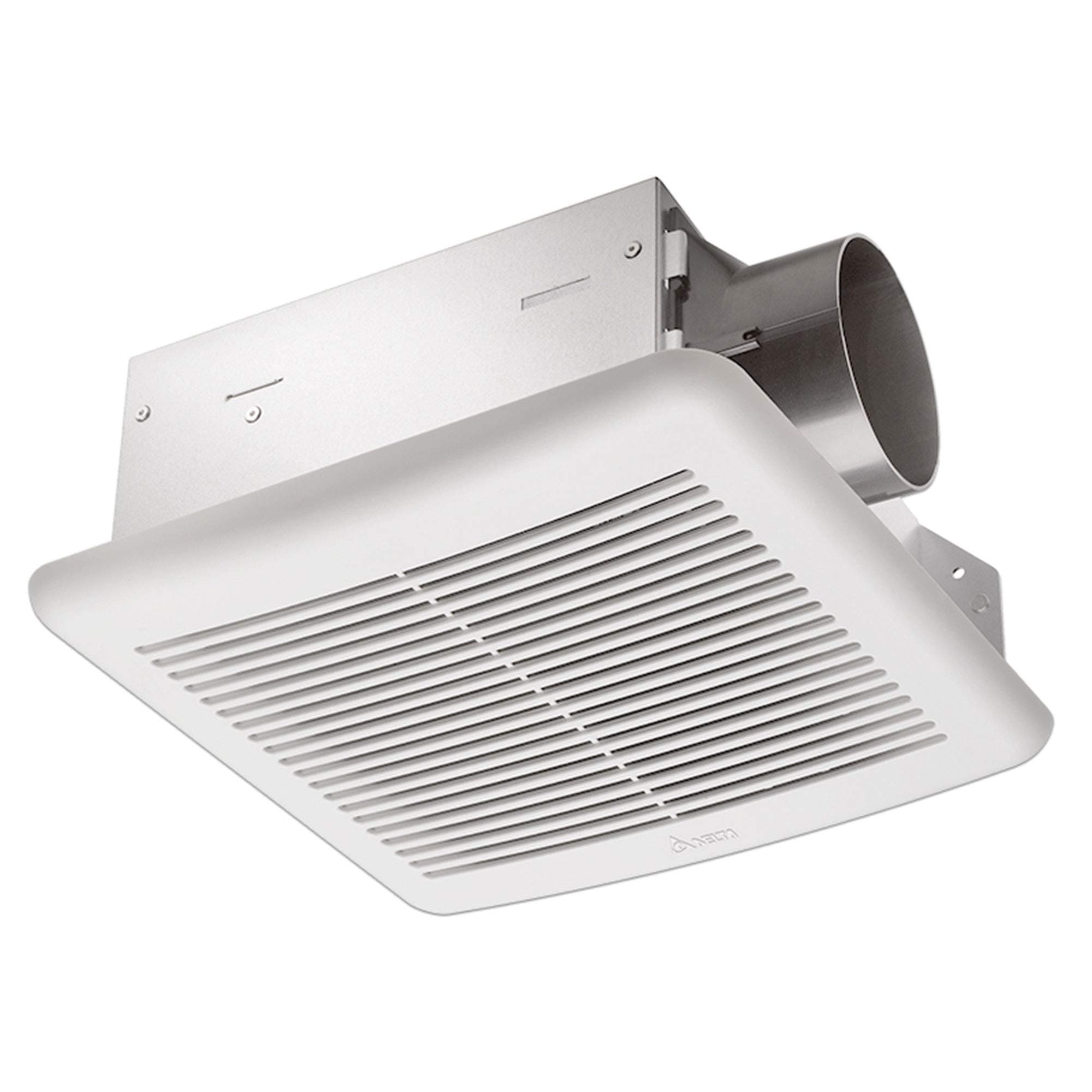

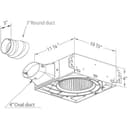
💨 Breathe smarter, not louder — the sleek fan your bathroom deserves!
The Delta BreezSlim SLM70H is a cutting-edge, Energy Star qualified exhaust fan featuring a brushless DC motor and a smart humidity sensor that automatically controls airflow above 60% humidity. Its compact 7.5" x 7.25" size fits existing bathroom fan openings for easy retrofit, delivering powerful 70 CFM airflow at whisper-quiet 1 sones noise. UL listed for ceiling or wall mount, it combines energy efficiency, quiet performance, and smart automation to elevate your bathroom ventilation experience.
| ASIN | B01D91PHR2 |
| Air Flow Capacity | 70 Cubic Feet Per Minute |
| Best Sellers Rank | #36,980 in Tools & Home Improvement ( See Top 100 in Tools & Home Improvement ) #89 in Household Ventilation Fans |
| Blade Material | Plastic |
| Brand | breez |
| Brand Name | breez |
| Color | With Humidity Sensor |
| Control Method | Touch |
| Controller Type | Button Control |
| Customer Reviews | 4.4 out of 5 stars 2,208 Reviews |
| Electric Fan Design | Exhaust Fan |
| Electric fan design | Exhaust Fan |
| Included Components | FAN |
| Indoor Outdoor Usage | Indoor |
| Is Product Cordless | No |
| Item Dimensions D x W x H | 7.2"D x 7.5"W x 3.9"H |
| Item Weight | 4 Pounds |
| Manufacturer | Delta Electronics (Americas) Ltd |
| Material | Metal |
| Model Name | BreezSlim |
| Model Number | SLM70H |
| Mounting Type | Ceiling Mount,Wall Mount |
| Noise Level | 1 Sones |
| Number of Blades | 5 |
| Number of Power Levels | 1 |
| Number of Speeds | 1 |
| Power Source | DC |
| Product Dimensions | 7.2"D x 7.5"W x 3.9"H |
| Recommended Uses For Product | Air Circulation, Home, Indoor |
| Room Type | Bathroom |
| Special Features | LED Light |
| Specification Met | Energy Star, UL |
| Standby Power Shutoff | energy efficient |
| Style | With Humidity Sensor |
| UPC | 885917001650 |
| Unit Count | 1.0 Count |
| Voltage | 120 Volts |
| Wattage | 13.1 watts |
K**S
Great replacement for construction-grade Broans
I have installed three of these Delta Breez SLM50 fans in my house. They are not silent, but they are a LOT quieter than the old 20-year-old Broans they replaced. The old Broans were impeller-type fans and generated a louder, lower-frequency noise that we could hear pretty much anywhere in our 2-story house. The new Deltas are squirrel-cage-type fans and generate a quieter, higher-frequency noise. If the bathroom door is closed and the bathroom fan is running, it's hard to hear the fan from outside of the bathroom and we can't hear it anywhere else in the house. They are pretty easy to install if you are moderately handy. The new fan goes into the same size opening as the old fan, and the electrical and ducting connections are on the same sides as the old fan. Because the Delta fan enclosure is smooth-sided (no lip or flange on its bottom edge), you can shove the new fan partially or fully up into the ceiling to make it easier to make the connection with the existing wires and ducting. I did two of the three installs from below (without attic access) and one with partial attic access (I went in the attic to spray some foam insulation around the base of the enclosure to limit heat loss into the attic). Getting the old Broan out of the ceiling isn't too hard as long as you can get to the fasteners which hold it to an adjacent stud. The fan itself separates from the metal housing after freeing a couple of metal tabs, and the electrical connection comes free by unplugging a cord. Once the fan unit is out, the enclosure can be freed once the fasteners are cut or removed. In my case the enclosure was fastened with screws that were accessible from within the enclosure, so it was easy. In the past when I have replaced a fan where the fasteners were not easily removable, I slid the blade of a hacksaw between the enclosure and the stud to cut them (wearing gloves). With the power turned off, access the electrical connection, remove the wire nuts and pull the wires loose. At this point you should be able to shift the enclosure around enough to get at the ducting connection. You will probably need to remove some old duct tape and maybe a screw or two holding the ducting to the enclosure and then you can pull the ducting loose and pull the enclosure down through the ceiling. I used foil tape instead of duct tape to connect the fan to the exhaust duct. It makes a better seal and stays on better. Also, because there is no flange at the base of the fan enclosure, there can be a gap between the drywall and the fan enclosure if the hole in the ceiling is cut too large, as mine were. To avoid heat loss, I used some foil tape to create a seal around the base (see picture) and for the installation on the top floor, i sprayed some foam insulation around the base from above. I'm happy so far. I hate fan noise so it's a huge relief to not hear the old Broans groaning throughout the house whenever one of them was running. This fan is a good value for the price and it's a great improvement over the old Broans.
U**.
Used this to replace Broan 688 fan in old Broan box without Attic access
This is a review and some hints how you can replace your Broan 688 fan assembly with the inside of a purchased Delta Breez Slim SLM50 in order to get a quite motor assembly without replacing the box in the attic. All work was done from down below in the bathroom. All you need in addition to the DeltaBreez SLM50 : • three 10x3.0 inch long sheet metal screws • 12inch of metallic (aluminum) duct tape • 2/16 drill bit at least 3 inch long when inserted in Power drill • Power Drill • Large Flathead screw driver • Medium Philips screedriver I came up with this solution after I replaced the week before a Broan 688 fan with a Panasonic FV-08VQ5 WhisperCeiling for one of our small bathrooms and it was more work that I had bargained for. For the first Broan replacement I had to go in the attic and shuffle 2 feet of lose blown-in isolation material to the site in order to access the old box. Removed the old box, cut a larger hole and installed the Panasonic. That all worked well and the Panasonic fan is the quietest and most powerful fans I ever had installed. However that took me all 3 hours of install, climbing in the not easy accessible attic around and then anther hour of cleanup of the mess I created in the bathroom below. So when the “Honey Do” request came to replace in the small restrooms the 50ccm fans as well I looked around what options I have to avoid to go again in the attic and eat dust and fiberglass, besides the other ones have really only head room for laying the whole time across the joists on your belly. Not a favorable outlook. So I went back to Amazon where I got the Panasonic and found a lot of not so good reviews for the Broan fan upgrade kit. The point made with the upgrade kit from Broan is that you get a new fan motor and a new designed blade set, but still keep the housing and the fan metal inside deflector. The install is easy and can be done in 20 min including cleanup. The downside is that upgrade kit is not really quieter than the one you just replaced; if at all the new Broan 688 fan still sounds more like a heavy duty turbine starting up. By chance I came up to a review on Amazon of the Delta Breeze SLM50 and it was stated it is the only replacement Fan which can use the same cutout dimensions as the older contractor grade Broan 688 so many of us got in our homes from cost cutting construction crews installed. I checked the install manual of the Delta Breez and discovered that the dimension of the outer box are the same. So if the outbox is the same then whatever is inside will fit as well. So I ordered the Delta Breeze SLM50 via Amazon and as soon it arrived I took the Delta Breez Housing apart and the inside fan and motor assembly out. The whole inside assembly of fan, motor and airflow channel is one sturdy plastic enclosure. That is the reason why it is also so much quite because the way how the air get’s channeled is engineered and so reduces the overall operational noise. So next I used the box I had pulled out the week before and removed from the Broan 688 the round metal air deflector which usually is with installed motor and fan plates there to direct the air to the outlet. That part becomes visible after you pulled down the motor of the Broan 688 by inserting the screwdriver to get the metal slot freed up. That half circular bended fan deflector is with 3 rivets connected to the walls of the old Broan 688 box. Using the a large flat screwdriver you can work that tool blade between the walls and the deflector and by gentle wiggling around and twisting the screwdriver the rivet will loosen and break lose the rivet and free up the part. Do that with each of the 3 rivets to remove the deflector. The electrical power box in the corner has also to be removed and can be pulled down quite easily. With these part removed you can already see that the Delta Breeze motor assembly will fit. Remove from the Delta Breez housing you received the Power connector they provide becauswe you want to use that connector and connect that to the power cables coming into the old Broan 688 box in your ceiling. Connect the electric plug connector you removed from the Delta Breeze housing to the Broan Box power cables. The ground is already connected so you only have to connect the connector you removed with the white and black cable. Let it hung down so that you later can connect the two connector to each other and push the cables into the corner of the housing. Next you need three 10x3.0 inch long metal screws, a power drill with a long 2/16 drill bit. The drill bit needs to be at least 3 inches long so that you can drill through the wholes provided by the new Delta Breez SLM50 motor assembly. I applied around the motor outlet aluminum metal duct tape where I removed for installing only half of the backing paper and attached it to the assembly left and right of the air flow outlet. After the motor was pushed in I was then able to remove the paper and pushed the metal duct tape with a medium Philips screwdriver against the metal housing. That created a nice seal after I also taped then the top of the air outlet with metal duct tape. That way air can only go from the moto assembly direct out to the old Broan 688 air outlet. That can maybe left out, but you maybe get then a little less efficiency and a little more possible noise level. During install I used some Foam from the Delta Breez packing material I pushed between the motor and the Broan box in place to have a temporary hold before the screws where in place and so avoided the possibility that the motor is coming crushing down on top of me while balancing on the porcelain throne below. Next I used the long drill and drilled with the motor in place the three 2/16 holes. Take the 3 inch long sheet metal screw and attach the new fan/ motor assembly via the holes in the plastic at the side of the housing in place. If you use larger then size 10 screws you need to enlarge the pre-drilled holes at the motor assembly . I also used a flashlight to see if I get the screw aligned with the drilled hole and then hand tighten each screw, the flashlight was very helpful. Next remove the 2 foam blocks you may be used as I did to temporary wretched the motor into the housing. Add additional Metal duct tape on top of the airflow outlet which connects to the Broan 688 outlet. Now push the Power cables all in the corner and then test the motor. The motor is really quite, but not as quite as the Panasonic. It is most likely double the noise of the Panasonic which is rated with <0.3 SOAN. The Delta Breez SLM50 in the Broan Housing is maybe < 0.8 SOAN, still very quiet and yes powerful for its size. Congratulate yourself that you did this in 1 hour and that you did not had to go into the attic at all and the mess in the bathroom is minimal. Should the motor ever fail it will easy be removed by removing the three metal screws holding it in place and then disconnect the power connector.
S**Q
Some Effort at Installation; Not Whisper Quite, But Fairly Quiet Fan for the Money
Being the first time I've installed a bathroom fan, and as a girl, this was not really intuitive to me. I had a heck of a time figuring out how to get the old housing out and I had some serious hiccups following the directions on this (basically uninstalled and reinstalled at least once due to my lack of understanding). I did not replace the hose exhaust as I used the existing duct work for that (I didn't want to go into the attic). Overall, it's a good fan since I'm upgrading from the same size builders model that was installed with the house. The old fan was 6 sones and this new one 2 sones. It starts out whisper quiet, but it does ramp up the noise level once it gets going, but still nothing like the airplane sounding builders model. I can't hear this fan running over the water running in the shower, so I consider this a huge improvement over the old one. A good buy for the money and the fact that it is an easy retrofit with the old builders model.
T**E
So far, it's an excellent addition to my bathroom
I read many reviews prior to purchasing this Delta Breez fan, and I could not be more pleased with this purchase. The room: My first floor 3/4 bathroom is in a 85 year old home. Full of charm, but no bath exhaust in any bathroom. I was working with limited options as there was no attic access, and a bedroom directly above this bathroom. I needed a quiet bath fan that couldn't be heard or felt through the floor in the bedroom above. This managed to be the winner because of it's size, ease of install from below, and thankfully just enough space to vent to the outside. Install: I hired an electrician to install this fan. I wanted it done right, I don't have faith in myself to deal with electric or ripping apart walls/ceilings. Given the time to factor for finding studs, routing electric, finding where to place the exhaust exit, installing the exhaust, connecting exhaust and electric to the unit, placing it in the ceiling and the time to install the push button timer switch (I highly recommend one so you can set it and forget it), was about 2 hours. For not having ceiling access above and working in essentially a cramped space, this was the only fan that would do. I purchased 5 ceiling bath fans to work with (2 Broan, 2 NuTone, and this Delta fan), and this Delta fan was the only one small enough while also being quiet that would fit in the space above (take this into note if you have an older home). Appearance: A bath fan is a bath fan. The grill is usually what makes the final appearance. The grill provided is nice, stylish, and modern. It does not look dated like most of the builder's grade fans do. Sound: When I first turn this on, you can hear the fan start up on the slower end, and gradually pick up speed. Quite different for what I've experienced in the past, but it's kind of nice not to just instantly notice it. For a 1 sone fan, it does well with noise output. I cannot hear the fan run from the bedroom above (added bonus). Connected to: I highly suggest getting a push button timer for this, or any bath exhaust fan, you may consider. The "set it and forget it" mentally is nice to pick a time for it to run. What it doesn't have: This doesn't have a light. I didn't care. I have a light in my bathroom, the last thing I wanted was another bulb to change. I don't particularly prefer my bath fans to have lights. The one I purchased does not have a humidity sensor as I didn't need it. If you need one with a humidity sensor, it's an available option and doesn't cost much more. Final thoughts: For my needs, this fan does well. I will be happy to report back in the future with any updates on it's performance. Delta Breez seems to put out a good product. I took a chance purchasing it blindly without seeing a demo in one of the box stores, and it worked out perfectly. If you have an older home with no access above the bathroom, only have space from room-side to do an install, or have limited space in your ceiling to do a ceiling install, I highly recommend this fan.
M**B
Straight forward replacement for Broan 696N, much quieter
Straightforward one-for-one replacement of the ubiquitous Broan 696N exhaust fan; moves the same air but is noticeably quieter. Don't know if its half as quiet as the 696N (2 sones vs 4 sones), but it is much quieter. Box dimensions, power input, and exhaust port all exactly the same as the 696N making it very easy to do a direct swap. I had tried the Nutone drop-in replacement motor (model BKR60) which claimed to be quieter than the stock 696N, but it wasn't any quieter, so I escalated to the Delta SLM50. My install took about 1.5hrs of actual work time, with another two hours on problem solving and a hardware store run for wood screws. In the end, it wasn't difficult or complex, but if its your first time dealing with an exhaust fan, budget some time for unexpected issues and problem solving them. I replaced a fan in the ceiling of my basement bathroom so no access from the top, but also no insulation to deal with. Getting my old box out was pretty straight forward. Power and exhaust tubing came off easily, but the old box was screwed in via its 'wings' outside of the box and thus behind dry wall. Luckily, the wings of the 696N use keyholes on the wings, so I was able to use a hammer to gently tap the box upward until I was able to align the keyholes with the screws and deattach the box from the joist. Then I just pulled it out without having to mess with cutting access holes in the ceiling drywall. New Delta SLM50 went in the reverse of how the old box came out. Getting the wiring attached was annoying with no extra pair of hands to hold the box while wirenutting wires together, but it was doable. One issue: If you put a cable clamp on the power wires where they enter the box (which you should!), the cable 'lid' no longer closes all the way. The cable clamp is just wide enough to prevent the lid from latching onto the boxs' notch which is not major, but was a frustration. Maybe the next version Delta could move the top cable knockout away from the notch a millimeter or two to allow cable clamps. I wasn't able to the use keyholes on the SLM50 to mount, but the box has some holes pre-punched that you can drill wood screws through into your joist to mount is securely (which is what the instruction booklet tells you to do with retrofit work). That means I was able to replace without having to do any drywall work, which is a huge win for me. Bottom line: Its a perfect replacement for the 696N, is pretty straightforward to install if you're at all handy, and is quieter and less power hungry than the 696N. I got 2 more 696Ns upstairs that I would 100% swap out for Deltas once I gameplan how to deal with the blown in insulation over them...
R**E
Perfect, and possibly the only, direct replacement for Broan 688/689 fans.
I replaced all three of the far-too-often-used junk Broan 688/689 fans in my house with one SLM70 and two SLM50s. Actually, I purchased a super quiet (and fairly expensive) 80cfm Panasonic fan at first, but then realized there's no room for it in the attic due to the proximity to other structures, including the furnace. Delta SLM-series are exact same size as Broan 688/689 fans, uses the same 3" pipe, and even the vent is located at the same location as the Broan fans. I imagine it was intentionally designed that way. Some reviewers wrote that the job can be done from under the ceiling. If you're installing a new fan, or if the existing fan is not screwed into the joist from the side panels (two wings in the enclosure), then it's probably possible. But if the two wings are screwed into the joist, I don't see how you can unscrew them from under the attic without enlarging the hole on at least one side. One side may be reachable through the vent hole after you temporarily remove the fan module from the enclosure. I planned to replace all three fans at the same time, so I went all out and did it from the attic. I even caulked the corners to make it as air tight as possible. Tip: Remove the fan module before installation, and then reinstall it after the enclosure and wiring are in place. It's much easier to work with the light-weight enclosure, and you also avoid damaging the fan module. It also allows you to screw the enclosure to a joist from under the ceiling. I was shocked to read Broan's own spec sheet stating that their 50cfm model consumes 108 watts!!! Their 60cfm model? 180 watts! I assume those are measured with the fan in open air environment, but still, those are some shocking numbers! No wonder they're so noisy. The motors on the Delta fans are marked 16 watts (SLM70) and 8 watts (SLM50). Actual power consumption is lower under non-zero static pressure environment. Delta spec states 13.1 and 11.5 watts for SLM70 with 0.1 and 0.25 static pressure, moving 70cfm and 54cfm respectively. I used SLM50s in a small toilet-only room and in a small laundry room. Plenty good enough for those uses. The SLM70 was installed into a small bathroom with a tub+shower. Due to the convoluted path the vent pipe takes, it's not able to move anywhere close to 70cfm, but it is barely enough to keep up with a hot shower. Note I live in a desert climate (dry all year long). I imagine it won't be enough in a humid climate. Remember, the vent pipe design is almost as important, if not more important, than the fan's cfm rating. Regardless, it is no worse than the Broan 688/689 for sure, so keep that in mind. Finally, quietness is somewhat subjective because noise level numbers don't say anything about the quality of the noise. These slim Delta fans aren't the quietest fans in the world, but I believe they are the quietest given their small profile size. And quiet they are! I do not hear the fan at all while I'm taking a shower. And the noise they make is mostly just smooth fan noises, instead of the irritating rattly rumble of the Broan fans. Basically, I'm loving these. Sure if I could, I'd love to have the <0.3 sones rated fan, but given the space constraint, I have no complaints at all with these fans.
A**Y
If you have the Broan 688 and even minor mechanical aptitude, get this one.
I had the Broan 688 in our half-bath for 10 years, and it was the only thing left that hadn’t been upgraded, and I finally got sick of the daily hearing abuse. The frame of the fan had “2 sones” stamped into the metal, but I’ve read other reviews that note that the 688 is 4 sones. The Delta is 1.0 sones, and whatever the true number is for the Broan, it was a really dramatic reduction in volume with the new fan installed. As the product notes, there is even a small LED light that comes on, when the fan is on, to indicate that it is running. If there was anything else running in the bathroom at the same time, I could see where the light would be needed. Some tips, which should be obvious: turn your old fan on and figure out which fuse on your electrical panel turns off the electricity (and turn it off). Keep a vacuum handy, because you are going to be upsetting some drywall with rough edges and (more importantly) you are removing a fan that has been sucking up 5-20 years’ worth of toilet paper dust, and will be so white that you can barely see it. Wear work glasses. The electrical work is just 3 wires, and if you can match colors and turn a wing nut, you can do it. The Broan and Delta had the same exact frame size, and so no drywall cutting was necessary, but it’s a little tight attaching the exhaust pipe and securing the frame, but not too bad. It’s a job that can be done if you have an hour left, after you get home from work, and you get to enjoy the results every day for as long as you remain in the home. It’s a cheap and quick upgrade, and worth it.
K**N
I would recommend this only for bathrooms of 50 square feet or ...
Review from my wife: It does an OK job. It is relatively quiet...sort of. It is small and unobtrusive. However, I didn't give this a full 4 or 5 stars for the reason that even having this professionally installed with a short exhaust run out of the house and taking in account the square footage of the bathroom, this fan drips water. Now, having said that, I take long hot showers. Not ashamed of this, but at certain times of the year, mainly spring and summer, there is condensation build up on the outside of the unit and it drips into the toilet (the fan is above the toilet...thankfully, so it can catch the drips). This happens less often with my husband's shower, however, it does happen. Both of our bathrooms are less than 70 square feet, and this fan is the correct rating for those rooms. I wrote an email to Delta Breez to ask if there was anything else to be done. They responded after a few weeks and explained that they would take it back, however, that just wasn't going to work. I would have to pay for my contractor to install either a bigger one or a different brand. It was just not in the budget. So, we live with it. I can not close any of my doors (I have two) in my bathroom while showering. It is a bit nippy when I step out, but I have to control the humidity in the room somehow. In summary, I would recommend this only for bathrooms of 50 square feet or less. Even then, think about another fan.
Trustpilot
1 month ago
1 day ago