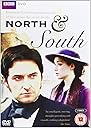
North & South [DVD]
Product ID: 49602656
Details
- FormatColour Digital
- GenreDrama
- LanguageEnglish
- Number of discs2
Desertcart purchases this item on your behalf and handles shipping, customs, and support to Indonesia.
North & South is a splendid, four-hour adaptation of Elizabeth Gaskell's 19th century novel about an unlikely, and somewhat star-crossed, love between a middle-class young woman from England's cultivated south and an intemperate if misunderstood industrialist in a northern city. Daniela Denby-Ashe plays Margaret Hale, forthright and strong-willed daughter of a former vicar (Tim Pigott-Smith) who relocates his family from a pastoral village outside London to unforgiving, largely illiterate Milton, a factory town where John Thornton (Richard Armitage) and his mother (Sinead Cusack), survivors of poverty, rule their cotton mill with an iron hand. Thornton befriends Margaret's father but incurs her wrath for his severity with his workers. What she doesn't notice is Thornton's core sense of responsibility for his employees' welfare. On the other hand, he misinterprets some of Margaret's own actions and intentions. Equally stubborn, the two drag out their obvious attraction over many painful months and events. North & South 's two leads are both very good, though Armitage's brooding, penetrating performance may very well be considered a classic one day. There are other wonders in the cast: Cusack and Pigott-Smith are superb, and Brendan Coyle is memorable as a firebrand union organizer who ultimately becomes an ally to a softening Thornton. The miniseries script by Sandy Welch is a persuasive mix of historical context and character study. Brian Percival's direction is full of moments that linger in the imagination, such as the winter-dream look of a busy cotton mill, with thousands of snowy fibers floating in the air. --Tom Keogh, desertcart.com North and South is a powerful adaptation of Elizabeth Gaskell's feisty and passionate British novel, set across the social divides in the changing world of Victorian industrial society. Margaret Hale is one of literature's most original heroines: a southerner from a country vicarage newly settled in the industrial northern town of Milton. In the shock of her move, she misjudges charismatic cotton mill-owner John Thornton, whose strength of purpose and passion are a match for her own pride and wilfulness. When the workers of Milton call a strike, Margaret takes their side, and the two are brought into deeper conflict. As events spiral out of control, Margaret - to her surprise - begins to fall in love with Thornton... DVD Extras: Specially recorded interview with Richard Armitage, Commentary on Episodes 1 & 4 with Kate Bartlett, Brian Percival and Sandy Welch, Deleted Scenes & Production Notes Review: Simply captivating and Armitage's acting is fantastic!! - Like some of the reviewers on desertcart, I didn't see the film on TV because French TV seldom broadcast British films like Pride and Prejudice and North&South. But luckily for me, I have a strong liking for everything that is English (cinema, literature, theatre and music) and I am always deeply interested in what British TV can produce. I've seen the BBC Pride and Prejudice many times (I've also read the book) I like it -even though my preference goes to the new 2005 movie (sorry, can't help it)- and I am even familiar with Elizabeth Gaskell's work (I've read Mary Barton and I've started reading North&South). So, on reading the positive reviews on desertcart and on the BBC website, I decided to buy it, although I knew little about the whole story. My God, I never imagined that this BBC film could be so good! I can't even describe how I felt when I first watched the first episode except that I became completely hooked and I couldn't stop watching until I knew how it ended. And what an end!!! Wow! Now I can only say that it has even eclipsed the BBC P&P film in my heart. It is more romantic anyway! Everything is perfect, the cast, the setting, the photography (the image of cotton flakes in the mill), the dialogues, the music, the social background. The background definitely adds another interesting layer to the film because you can see both sides, the mill owners' and the workers' and you can see them working. All the characters are marvellous and so likeable. They really make a difference for me because they are down-to-earth, they have depth and there is always a certain dignity about them. We can thank Elizabeth Gaskell for creating such wonderful characters, yet they wouldn't make such an impression in the film if the actors weren't so great. They really got into their parts. Sinead Cusack is a magnificent Mrs Thornton, you may have the impression that this iron lady always controls her emotions but you just look through her and realize that she is not as cold or hard as she seems, especially when you take full measure of the depth of her love for her son. What a great mother she is! And what about Brandon Coyle/ Higgins, I mean, I've just talked about the dignity of the characters, here is a fine example, you just have to look at the face of this union leader to know that he is at heart a good man, even though he is a bit ruthless sometimes. Even jobless or heartbroken, he remains dignified and calls for respect. Jo Joyner as Thornton's sister is a delight, probably the only source of comic relief in the story. And of course, the film wouldn't be so brilliant if there wasn't Daniela Denby-Ashe and Richard Armitage in the parts of Margaret and Mr Thornton. Daniela portrays both the vulnerability and the strength of the heroine very well. As for Thornton, oh, God, What a man! I fell in love with this fascinating character. Of course, Richard Armitage is already so charismatic that you can't take your eyes off him. But the actor is especially fantastic because he makes the character so alive on screen. He is Thornton! I can't believe I am saying that but `forget Darcy, Thornton is so much better'. I mean the man is so dedicated to his work, -and contrary to Darcy, he has known poverty and he has had to fight back-that I can't help being impressed. Out of nothing but using his wits, he has been able to run a fine business and when we first meet him, he is a well-off and powerful mill owner. His position in society makes him arrogant and brutal, yet, he remains fair with his workers and, thanks to Margaret, becomes more aware of the living conditions of the working class. So here you have strength, intelligence and integrity in one man; and, at the same time, his love for Margaret makes him completely vulnerable. Oh, the way he looks at her! (sigh) It is incredible what the two actors can produce on screen. In the proposal scene, the interaction between them is really intense. There is so much passion on their faces and in the way they respond to each other that it is breathtaking. I was really shaking inside. (I always feel a bit frustrated by the BBC P&P, although the actors are excellent, because the film sticks too much to the book. And I wish that we could see more touching of hands or more signs of passion between Firth and Ehle. Thankfully, here, the film, North &South, is not completely faithful to the book especially concerning the dialogues and so they have more impact in the film. The ending scene, in particular is so beautiful that it always brings tears to my eyes. Is it due to R. Armitage's magnetism on screen or to the tenderness that is palpable between them when they talk or when they look at each other or to the way they touch each other's hands with the sweet music behind? I can't tell. All I can tell is that Mr Thornton and Margaret Hale have become as dear to me as Mr Darcy and Elizabeth Bennet! Enjoy! This is a jewel! Review: Excellent - I had been given this box set for Christmas but hadn't had the chance to watch it until a few days ago. I'm not a massive fan of love stories so I put this on with a degree of trepidation, expecting it to be four hours of "I love you" and soppy glances. While there is a romantic undertone to this, it's actually done in a very subtle way which makes this all the more watchable. Enough people have given an indication of the plot so I don't want to go over old ground in that regard. North & South is a very interesting social commentary as well as a love story. It very subtly illustrates the hypocracy of the workers who feel demeaned and shunned by the 'masters', whereas they treat one of their own in a very similar fashion. They complain about the social heirarchy that exists when they are oblivious that they themselves have their own social heirarchy and have ways of dealing with those who don't adhere to the expected behaviour. Margaret Hale is deemed to be haughty, rude, snobbish and patronising towards the northeners, when the northerners demonstrate those same features to her. Margaret may not fit in with the social convention of an industrial town, but she can shift between a natural friendship with the workers and a marginally tolerant, if nothing else initially, relationship with Thornton and his mother. There are no clear good or bad characters in this production, contrary to how they first appear and it's refreshing to see that almost every character has their good and bad side, Margaret also shows she's not entirely clean cut mid way thourgh the series, albeit with good intentions. It's also interesting to see how the concept of the strike was dealt with. Much of this plot centres on the character of John Thornton. While Thornton appears initially to be a brutal, uncaring man we are gradually shown that this is not the case. His character makes no apologies for the tough way he runs his mill however the character is given the opportunity to say "yes, I beat a man in front of you for what you think is a small matter, but here is the reality...". Thornton's character in many ways is the least selfish in this show. He's certainly the most compassionate (if that's a word you could apply to him, he's a complex character) of the masters and his actions, while harsh, serve to protect his workers from unemployment and to look after his family (his mother in particular). The acting is brilliant and I can't say there was a weak link in any of them. While this has given Richard Armitage more than a big stepping stone in his career (easy to see why the females of UK give a collective swoon when he appears on screen in anything now!) much less has been seen from the other characters. I think it's perhaps because Armitage does steal every scene he's in but that's not to say his co-actors don't step up to the mark. Daniela Denby-Ashe is nicely cast as Margaret Hale. I'm not sure how Ms. Denby-Ashe managed to keep a stern "I really don't like you" look at Armitage's character when he's staring at her or trying to befriend her; it's certainly not a look I could maintain for long! She's a likable lead however and pulls Margaret Hale off with seeming ease. I feel a special mention should be given to Jo Joyner as the (very unexpected) comedy foil in this production. Yes, a BBC period drama doing comedy. Joyner plays John's sister Fanny. She's not the most tactful woman on the planet, but it still extremely likeable. Her facial expressions, comments, litte subtle gestures made me smile every time she was on screen. Without some of the physical acting, I'm not sure Fanny would have been such a funny character but I'm glad they decided to give her some depth. All too often period dramas can be overly stiff and formal. Joyner's character gave a nice refreshing edge to this brilliant drama. Finally, a must mention is the setting. While it's fairly obvious that this was filmed primarily in Edinburgh (and how I love my city, so to see it used for this production was wonderful) the recreation of the mills were also beautifully done. To see Thornton walking through the mill, with the fluff everywhere and his workers all silently operating the machinery while the children collect the fluff of the floors, was striking. I had visited New Lanark Mill town several years ago and to see on TV what the mill must have looked like is something else (well worth a visit if you're now interested in this industry/era!). Please give this a go. Gentlemen, even if you're not into 'lovey-dovey' stuff this is still a must watch. My husband has no interest in romances and is only very slightly tolerant of my Richard Armitage crush, but he's watched this and found it fantastic. I think he liked the notion of the struggle to provide for a family both in the worker environment and the masters' environment. He's also interested in trade union and how collctive labour power can draw industry to a halt so please don't disregard this as just a love story. That's a part of it, but it's very subtly done.
| Contributor | Brendan Coyle, Brian Percival, Daniela Denby-Ashe, Ian McHale, Jane Booker, Lesley Manville, Pauline Quirke, Richard Armitage, Rupert Evans, Sinead Cusack, Tim Pigott-Smith Contributor Brendan Coyle, Brian Percival, Daniela Denby-Ashe, Ian McHale, Jane Booker, Lesley Manville, Pauline Quirke, Richard Armitage, Rupert Evans, Sinead Cusack, Tim Pigott-Smith See more |
| Customer Reviews | 4.6 out of 5 stars 3,737 Reviews |
| Format | Colour, Digital Sound, Dolby, PAL, Subtitled |
| Genre | Drama |
| Language | English |
| Manufacturer | 2Entertain Video |
| Number of discs | 2 |
| Publication date | 11 April 2005 |
| Runtime | 3 hours and 53 minutes |
A**E
Simply captivating and Armitage's acting is fantastic!!
Like some of the reviewers on Amazon, I didn't see the film on TV because French TV seldom broadcast British films like Pride and Prejudice and North&South. But luckily for me, I have a strong liking for everything that is English (cinema, literature, theatre and music) and I am always deeply interested in what British TV can produce. I've seen the BBC Pride and Prejudice many times (I've also read the book) I like it -even though my preference goes to the new 2005 movie (sorry, can't help it)- and I am even familiar with Elizabeth Gaskell's work (I've read Mary Barton and I've started reading North&South). So, on reading the positive reviews on Amazon and on the BBC website, I decided to buy it, although I knew little about the whole story. My God, I never imagined that this BBC film could be so good! I can't even describe how I felt when I first watched the first episode except that I became completely hooked and I couldn't stop watching until I knew how it ended. And what an end!!! Wow! Now I can only say that it has even eclipsed the BBC P&P film in my heart. It is more romantic anyway! Everything is perfect, the cast, the setting, the photography (the image of cotton flakes in the mill), the dialogues, the music, the social background. The background definitely adds another interesting layer to the film because you can see both sides, the mill owners' and the workers' and you can see them working. All the characters are marvellous and so likeable. They really make a difference for me because they are down-to-earth, they have depth and there is always a certain dignity about them. We can thank Elizabeth Gaskell for creating such wonderful characters, yet they wouldn't make such an impression in the film if the actors weren't so great. They really got into their parts. Sinead Cusack is a magnificent Mrs Thornton, you may have the impression that this iron lady always controls her emotions but you just look through her and realize that she is not as cold or hard as she seems, especially when you take full measure of the depth of her love for her son. What a great mother she is! And what about Brandon Coyle/ Higgins, I mean, I've just talked about the dignity of the characters, here is a fine example, you just have to look at the face of this union leader to know that he is at heart a good man, even though he is a bit ruthless sometimes. Even jobless or heartbroken, he remains dignified and calls for respect. Jo Joyner as Thornton's sister is a delight, probably the only source of comic relief in the story. And of course, the film wouldn't be so brilliant if there wasn't Daniela Denby-Ashe and Richard Armitage in the parts of Margaret and Mr Thornton. Daniela portrays both the vulnerability and the strength of the heroine very well. As for Thornton, oh, God, What a man! I fell in love with this fascinating character. Of course, Richard Armitage is already so charismatic that you can't take your eyes off him. But the actor is especially fantastic because he makes the character so alive on screen. He is Thornton! I can't believe I am saying that but `forget Darcy, Thornton is so much better'. I mean the man is so dedicated to his work, -and contrary to Darcy, he has known poverty and he has had to fight back-that I can't help being impressed. Out of nothing but using his wits, he has been able to run a fine business and when we first meet him, he is a well-off and powerful mill owner. His position in society makes him arrogant and brutal, yet, he remains fair with his workers and, thanks to Margaret, becomes more aware of the living conditions of the working class. So here you have strength, intelligence and integrity in one man; and, at the same time, his love for Margaret makes him completely vulnerable. Oh, the way he looks at her! (sigh) It is incredible what the two actors can produce on screen. In the proposal scene, the interaction between them is really intense. There is so much passion on their faces and in the way they respond to each other that it is breathtaking. I was really shaking inside. (I always feel a bit frustrated by the BBC P&P, although the actors are excellent, because the film sticks too much to the book. And I wish that we could see more touching of hands or more signs of passion between Firth and Ehle. Thankfully, here, the film, North &South, is not completely faithful to the book especially concerning the dialogues and so they have more impact in the film. The ending scene, in particular is so beautiful that it always brings tears to my eyes. Is it due to R. Armitage's magnetism on screen or to the tenderness that is palpable between them when they talk or when they look at each other or to the way they touch each other's hands with the sweet music behind? I can't tell. All I can tell is that Mr Thornton and Margaret Hale have become as dear to me as Mr Darcy and Elizabeth Bennet! Enjoy! This is a jewel!
R**R
Excellent
I had been given this box set for Christmas but hadn't had the chance to watch it until a few days ago. I'm not a massive fan of love stories so I put this on with a degree of trepidation, expecting it to be four hours of "I love you" and soppy glances. While there is a romantic undertone to this, it's actually done in a very subtle way which makes this all the more watchable. Enough people have given an indication of the plot so I don't want to go over old ground in that regard. North & South is a very interesting social commentary as well as a love story. It very subtly illustrates the hypocracy of the workers who feel demeaned and shunned by the 'masters', whereas they treat one of their own in a very similar fashion. They complain about the social heirarchy that exists when they are oblivious that they themselves have their own social heirarchy and have ways of dealing with those who don't adhere to the expected behaviour. Margaret Hale is deemed to be haughty, rude, snobbish and patronising towards the northeners, when the northerners demonstrate those same features to her. Margaret may not fit in with the social convention of an industrial town, but she can shift between a natural friendship with the workers and a marginally tolerant, if nothing else initially, relationship with Thornton and his mother. There are no clear good or bad characters in this production, contrary to how they first appear and it's refreshing to see that almost every character has their good and bad side, Margaret also shows she's not entirely clean cut mid way thourgh the series, albeit with good intentions. It's also interesting to see how the concept of the strike was dealt with. Much of this plot centres on the character of John Thornton. While Thornton appears initially to be a brutal, uncaring man we are gradually shown that this is not the case. His character makes no apologies for the tough way he runs his mill however the character is given the opportunity to say "yes, I beat a man in front of you for what you think is a small matter, but here is the reality...". Thornton's character in many ways is the least selfish in this show. He's certainly the most compassionate (if that's a word you could apply to him, he's a complex character) of the masters and his actions, while harsh, serve to protect his workers from unemployment and to look after his family (his mother in particular). The acting is brilliant and I can't say there was a weak link in any of them. While this has given Richard Armitage more than a big stepping stone in his career (easy to see why the females of UK give a collective swoon when he appears on screen in anything now!) much less has been seen from the other characters. I think it's perhaps because Armitage does steal every scene he's in but that's not to say his co-actors don't step up to the mark. Daniela Denby-Ashe is nicely cast as Margaret Hale. I'm not sure how Ms. Denby-Ashe managed to keep a stern "I really don't like you" look at Armitage's character when he's staring at her or trying to befriend her; it's certainly not a look I could maintain for long! She's a likable lead however and pulls Margaret Hale off with seeming ease. I feel a special mention should be given to Jo Joyner as the (very unexpected) comedy foil in this production. Yes, a BBC period drama doing comedy. Joyner plays John's sister Fanny. She's not the most tactful woman on the planet, but it still extremely likeable. Her facial expressions, comments, litte subtle gestures made me smile every time she was on screen. Without some of the physical acting, I'm not sure Fanny would have been such a funny character but I'm glad they decided to give her some depth. All too often period dramas can be overly stiff and formal. Joyner's character gave a nice refreshing edge to this brilliant drama. Finally, a must mention is the setting. While it's fairly obvious that this was filmed primarily in Edinburgh (and how I love my city, so to see it used for this production was wonderful) the recreation of the mills were also beautifully done. To see Thornton walking through the mill, with the fluff everywhere and his workers all silently operating the machinery while the children collect the fluff of the floors, was striking. I had visited New Lanark Mill town several years ago and to see on TV what the mill must have looked like is something else (well worth a visit if you're now interested in this industry/era!). Please give this a go. Gentlemen, even if you're not into 'lovey-dovey' stuff this is still a must watch. My husband has no interest in romances and is only very slightly tolerant of my Richard Armitage crush, but he's watched this and found it fantastic. I think he liked the notion of the struggle to provide for a family both in the worker environment and the masters' environment. He's also interested in trade union and how collctive labour power can draw industry to a halt so please don't disregard this as just a love story. That's a part of it, but it's very subtly done.
F**A
Excellent series.
I love this story of the relationship between Margaret Hale and John Thornton as much as Pride and Prejudice. Elizabeth Gaskell has written a classic to rival Pride and Prejudice. This movie adaptation is brilliant. I would definitely recommend it.
A**A
Unforgettable!!!!!
I really have to be thankful to Amazon in particular and to all of you, reviewers in general, because I would have missed this unforgettable BBC series but for you. I hadn't known of this series at all because it wasn't showed in Spanish television. (Shame on us). So, the first time I heard of it was in these pages... Thank you! I am not going to repeat any of the very well merited praises all of you have written about this series, I couldn't agree more with all of you. The series is perfect in my opinion. Even after reading the book you cannot find fault with it. The atmosphere, the characters (all of them), the rhythm. All beautifully done. Maybe trying hard to find something to complain about, I could think that it was unnecessary to change the way in which Margaret and John meet for the first time. In the book it was not necessary to make John so disagreeable to make Margaret dislike him. This book speaks among other things, about prejudices, hers and his. In this period for a woman like Margaret risen up as the daughter of a gentleman, Thornton was very much behind her, it was not a question of money, but of social status and education. A manufacturer was a little better than a tradesman, somebody who buys and sells things to get some profit couldn't be a gentleman at all. Maybe in the series they thought that we would dislike Margaret if they didn't give us a more "modern" reason for her dislike to Thornton. I don't think it has to be like that at all. The stronger are your prejudices, the higher you have to rise to overcome them, the more you have to change and the better you have to love. In the book you find this perfectly logic. But anyway, the above mild critic is only my personal opinion and always comparing the film with the book, which is almost always unfair to any film. The language of films and books are so different that I only resent the changes when they don't respect the spirit of the book and this is not the case at all. For example, the climax in the film, the famous scene of the railway station which is completely different in the book, I find it perfect, as perfect as I found it in the book. Each of them perfect in their own way. The performances of all actors I find remarkable, of course with special mention to the two main characters beautifully portrayed. It is impossible not to fall in love with Armitage's Mr Thornton with his outstanding performance. He really creates a real alive character impossible to forget. The only thing I regret is that de DVD I bought here it has not subtitles in Spanish and so, I couldn't share my enthusiasm with any of my friends who can't speak English, which has been for me a real shame, so eager I was to comment this series. So, I had to share it with you. Thank you!
S**L
The North-South Divide
A very strong four part production from the BBC showing the difficulties a family from the south of England has when they move to the North of England in reduced circumstances following a family scandal. The customs, mentality, manners, culture and business ethics are totally alien to the Hale family, and they struggle to adapt to the industrial cotton mill world they are surrounded by. However, as time goes by, they realise that there are benefits to the northerner's approach. The story is based on the 1855 Victorian novel by Elizabeth Gaskell (which was edited by Charles Dickens) and has been creatively adapted to the screen by Sandy Welch. Some of the chronology has been changed from the novel, such as the train journeys at the start and end of the series - filmed at Bluebell Railway in Sussex - are inserted by Sandy Welch. And, the 1851 Great Exhibition scene was not in the novel, but is a magical addition to the TV adaptation. Filmed at Alexandra Palace in North London, it showcases many weird and wonderful objects from around the world. The two principal characters dominate proceedings - a love story between Margaret Hale (from the south) and John Thornton (from the north). Margaret is wonderfully portrayed by Daniela Denby-Ashe in an engaging, direct and thoughtful performance. Her incredible skepticism for the north at the start is gradually replaced by an appreciation of the working class values she encounters from factory workers, mainly Nicholas Higgins who is energetically and forthrightly played by Brendan Coyle. John is fantastically portrayed by Richard Armitage - he combines an aggression and focus on his work with a realisation that Margaret is the only woman who could replace his mother as the most important person in his life. His mother is regally played by Sinéad Cusack. The costumes are fantastic - they look authentic and there is an incredible difference between the impressive and clean clothing of the moneyed class, and the virtual dirty rags worn by the mill workers. The sets are wonderfully created, especially the cotton mill which is continually billowing with white fluffy cotton remnants which cause serious health problems for the workers - this was filmed at Helmshore Textile Museum in Rossendale and Queen Street Mill near Burnley. Many locations were used to shoot the series, all combining to give a very accurate representation of industrial Victorian England. Places used include Edinburgh, Keighley in West Yorkshire, Selkirk and Burnley. Overall, a fantastic adaptation showing how the North-South divide can be bridged. Full marks to everyone involved.
M**O
Dramatic, charismatic & breathtaking - WOW
Although Mrs Gaskell is not my favourite author I find her novels quite nice and entertaining. It was some years ago when I read the novel N&S. I liked it but it did not make a lasting impression. I roughly remebered the storyline and that was all. So knowing the novel in itself wouldn't have moved me to purchace the film, but having read the reviews I felt intrigued - better than Mr Darcy/Firth ??!! - and thought I'll give it a try. So yesterday afternoon I thought I'd watch an episode, maybe two, and ... I ended up watching the whole series. The 1st episode started like a typical costume drama with a wedding party, gossip and dancing: nice but nothing special really. However, when I got to the scene where Margaret is meeting John Thornton for the first time I was completely absorbed by the story. Richard Armitage as Mr Thornton intrigued me from the first (actually I remebrer preferring this character to Margaret Hale's in the book). He is absolutely wonderful: charismatic, brooding and straightforward. And as his character gained more and more dimensions I simply fell in love with him myself. He is upright, honest and despite strict discipline passionate and sensitive. I think his character is wonderfully elaborated: starting from the "brute" beating one of his employees cruelly (though it turns out he has his reasons); the loving son the mother is devoted to; the man suffering to control his unreturned love and passion; the rejected man in love helping Margaret (although he is risking his credibility and reputation as a magistrate) despite his hurt feelings; the employer getting closer to his workers (dining with them together)and a future family man (treating the little orphan kindly). Richard Armitage (son) and Sinead Cusack (Hannah Thornton, the mother) are simply wonderful together. The strong bond of affection, based on their absolute trust in each other, is almost tangible between them. I think my top favourite scenes are their pas de deux before and after the proposal. They really took my breath away. Daniela is a lovely, sensitive Margaret, though a bit pale and monoton besdide Richard Armitage and Sinead Cusack. However she succeeds in displaying the gradual change of her character: from prejudiced, sophisticated Southerner to a person appreciating people for their true worth not for the (country)sides they represent. Fanny, Thornton's sister is harshly colourful in clothes and vulgar and hilarious in character very suitingly opposed to both her mother & brother and Margaret. Her light touch is very welcome. The minor characters - Margaret's parents, Nicholas & Betsey Higgins, Mr Bell, the other mill owners - play their parts very convincingly. The strong contrasts are everywhere: in scenery, coustumes, colours and music. I think the costumes suited the characters very well - dark, strict colours for John and Hannah Thornton, light and feminine for Margaret, harsh for Fanny. The music is also very moving. The Edinburgh scenery for Milton suits the atmosphere of the series wonderfully. Well done BBC!
E**D
My firm favourite...A MUST SEE!!!
I cannot praise this adaptation of Gaskell's finest work enough. I am truly thankful because I would not have been introduced to this magnificent tale if not for my English literature syllabus! Whether you read the book or watch this fantastic production, this is one tale you cannot afford to miss. It is one of social divide and of true and great characters that transcend class. It is a social commentary of today's time as much as it was of the industrial age. Having read the book, with rapid pace, I ordered this in quick succession. I was certainly not disappointed. Though I had only intended to watch one episode, I (and my mother included!) were hooked and could not be satisfied until we had seen the conclusion of this beautifully worked drama. With captivating performances from all involved, believable character interactions, a moving story, stunning locations, and hauntingly beautiful music, this is THE drama to watch. I cannot believe I missed it when it first aired on the BBC. Truly I can safely say that it is better than the acclaimed Pride and Prejudice and is now officially my favourite book and drama of all time. If this immersing tale is enough to encapsulate a teenager, it will do the same to anyone! I cannot emphasise my recommendation further. Buy it, watch it and love it!
A**B
Captivating and Mesmerising!
I have never felt compelled to write a review on any of the dvds I have bought, but this one I simply had to... I ordered this dvd about 6 months ago from Amazon and shipped it to Malaysia. Forgot all about it in the drawer and just came across it 2 days ago, unwrapped!. And I haven't stopped watching it since!!! I have just finished watching it for the 4th time tonight (not including the many times I went and selected certain scenes to replay!!). Being a Jane Austen fan, my favourite book of all time is Pride & Prejudice. But my personal favourite tv/video version of P&P has to be the version with David Rintoul and Elizabeth Garvie. However, I now put this version of N&S up there - It is absolutely my top 2 (tied for place - as I simply CANNOT decide!). I loved all the unspoken words, the looks, the hands and never anything in excess. At times Daniela had a purity on her face that conveyed her message, although I did expect more emotion in certain scenes. I actually loved ALL the characters, my favourite has to be Mr. Thornton. But I also loved Mrs. Thornton who comes across as such a strong woman and the love for her son really shows. And Fanny, who simply made me laugh out loudly while she was reclining on the sofa fanning herself after the riot scene!!. And Higgins was also wonderful The part when Margaret leaves in the carriage, with Thornton willing her to look back was simply poignant! There were just so many wonderful scenes. But my favourite scene of all really has to be the train platform scene which was so well done! And the music scores were just as wonderful! Am downloading it onto my ipod! My one gripe? - wish the producers had dragged it out over more than the 4 episodes!! Would have been far, far happier with double that!!
F**N
Einfach nur großartig!
Ich gebe es freimütig zu, ich habe mir mit der Bewertung dieser Verfilmung ordentlich Zeit gelassen - warum kann ich gar nicht so genau sagen, vielleicht wollte ich mir dieses Period-Drama Juwel nicht schlecht reden lassen, vielleicht muss man viele Dinge auch erst einmal sacken lassen.... Ich habe keine bislang existierende Rezension gelesen, darum sehen Sie es mir bitte nach, wenn ich Dinge erwähne, die bereits in anderen Rezensionen aufgeführt sind! Wie viele andere bin ich ein großer Fan von Jane Austen- Verfilmungen, insbesondere den BBC-Verfilmungen der letzten Jahre. Wenn man dann auf der Suche nach weiterem "Futter" hochwertiger englischer Literatur-Verfilmungen ist, landet man irgendwann unweigerlich bei North & South. Ich habe den Kauf nicht bereut, ganz im Gegenteil: North & South ist einfach unfassbar gut! Sicherlich haben es andere Rezensenten bereits erwähnt, aber der Stoff hat natürlich nichts gemein mit Jane Austen und deren Lieblichkeit; wie sind hier ganz einfach in einer anderen Epoche angekommen. Die viktorianische Ära liegt in den letzten Zuckungen, wir befinden uns in den Zeiten der aufkommenden Industrialisierung mit all ihren Vor- und vor allem Nachteilen. Elisabeth Gaskell hat hier eine klare Sozialkritik formuliert über die Ausbeutung von Mensch und Natur zugunsten des Wohlstands einiger weniger! Aber nicht nur das: auch diese wenigen Profiteure werden nicht nur schwarz gezeichnet, auch hier gibt es solche und solche. Solche, denen es nur um die Mehrung des Wohlstands gelegen ist um jeden Preis (die erste Finanzkrise wirft ihre Schatten voraus -"Speculations"-) und andere, die trotz des Wohlstands nicht die weniger Privilegierten vergessen und sich der Verantwortung diesen gegenüber sehr bewusst sind. Und da sind wir auch schon bei "IHM" angekommen, John Thornton", Besitzer der Baumwoll-Weberei und somit einer der Privilegierten in einer ansonsten tristen Welt, gespielt von Richard Armitage. Seit dieser Verfilmung bin ich ein Riesen-Fan und Folge seinem Opus quer durch alle Genres (Spooks, Hobbit, Sparkhouse, Vicar of Dibley, etc...) aber ich kann ihn kaum besser finden als in dieser Verfilmung. Anfänglich scheint man ihn nicht wirklich zu mögen, sehen wir ihn zunächst nur durch Margret's "Brille", einen vermeintlich Hilflosen schlagend. Und damit ist Margrets Urteil über John Thornton gefällt.. Aber der Reihe nach... Ich will über die Details der Geschichte selbst nicht mehr allzu viel schreiben, ich denke, das haben andere zur Genüge getan. Aber das Spiel mit "Farben", um Stimmungen zu transportieren und zu verstärken, ist einfach grandios. In Margarets Paradies Helston (aus dem die Familie vertrieben wird!) ist farbig, bunt, lieblich, geradezu mit Weichzeichner gestaltet. Die neue Welt der Hales, Milston im Norden Englands, scheint grau in grau, einziger Farbtupfer sind die bunten Kleider der egoistischen Schwester John Thorntons, Fanny. Dem geneigten Zuseher wird auffallen, dass sich dieses Farbenspiel im Lauf der Serie ein wenig ändert, denn Margaret wird sich an Milston gewöhnen, dieses schließlich sogar dem geliebten Helston vorziehen - dieses wird durch diesen kleinen Kunstkniff unterstrichen. Margaret (Daniela Denby-Ashe) stellt die Heldin der Geschichte so glaubhaft dar, ich bin ehrlich begeistert. Sie wirkt einerseits hochmütig (der ungebildete "Industrieadel", dem Margrets Vater Bildung beibringen möchte, stand ja noch gesellschaftlich unter dem des alten Landadels, resp. den mittlerem Ständen, dem Margret als Pfarrerstochter entstammt), andererseits fasst sie schnell Zuneigung zu dem Fabrikarbeiter Nicholas Higgins und dessen Familie. (ebenso Schicksals-gebeutelt gespielt von Brendan Coyle, dem Butler aus Downton Abbey) Margaret wird lernen, dass die Dinge oftmals nicht so liegen, wie sie erscheinen und viele schmerzhafte Erfahrungen führen sie schlussendlich auf den "richtigen" Weg. John Thornton, düster, unnachgiebig, knallhart, viel zu schnell erwachsen geworden, ist all das, was Margret zunächst verabscheut. Dabei übersieht sie sein hartes Arbeiten, um sowohl seine Familie als auch seine Arbeiter versorgen zu können, seine Verantwortung, seine absolute Integrität und sein (ja, ja!) romantisches Wesen. Entgegen seiner Aussage gegenüber seiner Mutter, hat sich John Thornton schnell in Margret verliebt, aber er muss lernen, dass sie ihn verabscheut. Dennoch beschützt John (in seiner Eigenschaft als Polizei-Magistrat der Stadt) Margret nach einem Unglücksfall und erstmals sieht Margret John in einem anderen Licht. Nach und nach begreift Margret, was John leistet und wie er seine Arbeiter beschützt - sie rät sogar dem aufgrund eines angezettelten Gewerkschafts-Aufstands in Ungnade gefallenen Nicholas Higgins, sich bei John um Arbeit zu bemühen (die dieser ihm auch schließlich gibt!) Die beiden so vordergründig unterschiedlichen Männer etablieren so etwas wie Freundschaft, geprägt vom gegenseitigen Respekt vor der Leistung des anderen und es ist auch Nicholas, der John schlussendlich auf die Sprünge hilft, bezüglich Margret und ihren "Wirrungen" und Lebensumständen. Diese Serie ist bis in die Nebenrollen derartig gut besetzt - die knochenharte und willensstarke Mutter John Thorntons, fantastisch dargestellt von Sinead Cusack (übrigens verheiratet mit dem grandiosen Jeremy Irons!). Wenn ich ihren Ausführungen so zuhöre, gefriert mir so manches Mal das Blut in den Adern.... Die an einer Staublunge leidende Tochter Nicholas' Bessy (Anna Maxwell Martin), mit der sich Margaret anfreundet; die schrecklich überkandidelte Schwestern Johns, Fanny (Jo Joyner), Vater Hale (Tim Piggott-Smith), die Hausangestellte Dixon (Pauline Quirke), der Freund der Familie Mr. Bell (Brian Protheroe), der tragische Boucher (William Houston)... Ich könnte ewig weitermachen! Es geschehen viele Tragödien, Irrungen und Wirrungen, aber es gibt auch so viele ironische Momente, bis beide John und Margaret erkennen, dass die Dinge manchmal anders liegen als sie scheinen und am Ende alles gut ist! :-) (Na ja, zumindest für die beiden!) aber sehen Sie selbst. Aber bitte im englischen Original - manchmal muss man sehr genau hinhören, um alles zu verstehen, denn ein Fabrikarbeiter oder dessen Tochter spricht natürlich nicht so distinguiert, wie bei Jane Austen :-), aber die Stimme von Richard Armitage zu synchronisieren, ist ein Verbrechen! Ich bin hin und weg... Anschauen!!!
K**Y
Even wegdromen
Gewoonweg prachtig
T**A
APPASSIONANTE STORIA D'AMORE TRA PREGIUDIZI SOCIALI E RIVOLUZIONE INDUSTRIALE
Sicuramente l'ottima riuscita di questa trasposizione del romanzo di Elizabeth Gaskell deve molto a quest'ultimo sia per quanto riguarda i personaggi che per il susseguirsi degli eventi e lo svolgimento della storia. Ma è innegabile che la traduzione in immagini risulta efficacemente emozionante e coinvolgente, grazie a tutti gli elementi che insieme concorrono alla realizzazione di un eccellente prodotto per lo schermo. La sceneggiatura è di Sandy Welch (la stessa di Jane Eyre con Toby Stephens e Ruth Wilson (2006) e Emma con Romola Garai e Jonny Lee Miller (2009): due ottimi prodotti sempre firmati BBC) ed è già una garanzia; bella e curata la regia così come lo sono la scenografia, le ambientazioni e i costumi. Una menzione particolare va' alla colonna sonora di M. Phipps, che sottolinea e rende ancora più emozionanti i momenti più intensi della storia. Bravissimi tutti gli attori, sopra tutti Richard Armitage, attore versatile, qui al suo primo ruolo da protagonista (la produzione è del 2004), che con la sua bravura, la sua presenza scenica e il suo carisma, l'irresistibile e intenso sguardo e soprattutto con la sua voce profonda e dalle infinite modulazioni crea un John Thornton freddo e deciso, ma anche vulnerabile e appassionato, che è impossibile dimenticare (una bella sintesi tra Mr Darcy e Edward Rochester, senza sminuire l'originalità della creazione gaskelliana). Il dvd contiene anche degli extra interessanti. L'unico rammarico è che North and South non sia stato doppiato e distribuito in Italia (come invece è avvenuto per Jane Eyre del 2006), non solo per la storia d'amore, ma anche per gli altri aspetti quali i rapporti familiari e lo sfondo sociale e storico della rivoluzione industriale. L'unico modo per usufruirne è in lingua inglese con sottotitoli in inglese. Assolutamente imperdibile.
F**5
Excelente serie, y más completa que en su versión española
Ha sido un placer ver esta serie en su idioma original y con subtítulos en inglés (sólo en inglés, no en otros idiomas). Me ha permitido constatar que la versión en castellano que ya conocía está desgraciadamente incompleta, tijereteada y amputada en su metraje original, aquí y allá, con supresión de escenas que en algunos casos rondan el minuto de duración. El resultado de esta rapiña inadmisible es que en cada uno de los cuatro episodios desaparecen en la versión castellana unos 5 minutos de media, lo que supone un total de 20 minutos recortados. Ya digo: inadmisible amputación en la versión castellana. Ahora, tras haber visto la versión completa, se entienden mejor algunas cosas que resultaban algo enigmáticas cuando contemplaba la versión castellana menoscabada. Como la de la flor que Thornton entrega a Margaret casi al final de la serie y que revela que ha estado en Helstone. En cuanto a los extras, incluyen las escenas total o parcialmente suprimidas en el montaje final y una entrevista con Richard Armitage, el protagonista masculino. Como siempre con los extras, se pueden pedir más cosas, pero éstas no están mal. La contrastada calidad de la BBC ha conseguido una excelente plasmación en imágenes de una de mis novelas favoritas. ¡Cómo no ponerle las 5 estrellas!
M**S
Marcia’s musings
This movie is terrific. There is a sad part but the love between the characters is really touching.
Trustpilot
1 month ago
3 weeks ago