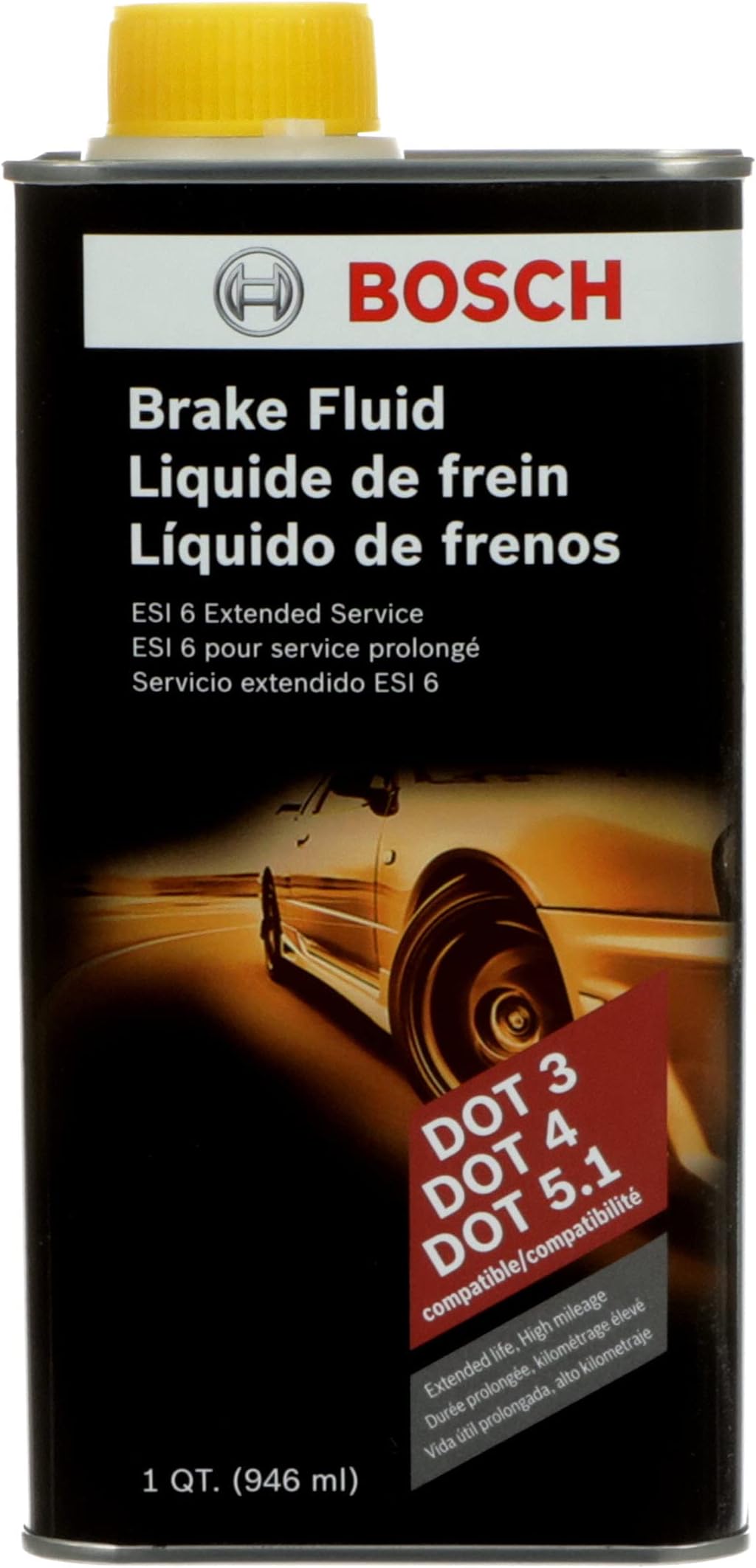
Recent findings conducted by the National Car Care Council revealed that 86 percent of the cars they randomly checked during state vehicle inspections, had at least one item that would cause the car to fail. Fifteen percent of these cars had low, contaminated or worn-out brake fluid. To put this another way, more than one in every 10 cars you are traveling with along city streets and highways has the potential of a brake failure due to brake fluid issues.Brake fluid is the key ingredient in any hydraulic braking system. The fluid is not only subjected to hundreds of pounds of pressure on many occasions during your drive, it is also a lubricant for the rubber components in your master cylinder, wheel cylinders, calipers and hoses. Additionally, brake fluid has corrosion inhibitors that keep the bores of hydraulic cylinders from rusting and pitting. Many of today’s brake fluids are made of polyalkylene glycol which is hygroscopic, meaning it absorbs moisture. This can be a good thing and a bad thing. The absorption of water promotes dispersal throughout the braking system and prevents “pooling” of the absorbed water in low-lying areas of the brake system where corrosive acids can form and make the components deteriorate at a faster rate. Water in a brake system will also freeze or boil faster than the fluid. Hygroscopic properties can be a bad thing, though, because the fluid will actually draw moisture through porous metal surfaces if the fluid has lost its corrosion-preventative abilities.Used fluid, when tested with chemical test strips, can sometimes contain up to 8-10% water contaminants after several years of use. Changing of the fluid whenever a brake component is being replaced is always recommended but seldom done, especially if you are fixing the car in your driveway or garage. Most service shops will recommend a flush and refill be done; however, cost-conscious consumers may opt against this for sake of saving some money on the total bill. A quick search through your owner’s manual will find a recommended service interval of roughly every three years that a flush and refill should be done. When replacing brake fluid, there are several different types to choose from. The easiest way to determine which fluid your car requires is by consulting your owner's manual, or by locating the specification stamped on the master cylinder reservoir. Most American-made cars used DOT 3 brake fluid until the mid-1990s. DOT 3 brake fluid has a dry boiling point of 284 degrees, which is fine for brake systems with large brake drums and thick disc brake rotors, where brake heat can be easily dispersed. It has a viscosity of roughly 1500 at -40 F.DOT 4 was used by many British or European cars and is also a poly-glycol base. DOT 4 absorbs less moisture than the DOT 3 fluid, and many enthusiasts have converted their hydraulic brake systems from DOT 3 or DOT 4 for this reason. Changing the fluid is not all that is involved in this conversion, though. To prevent cross contamination you should also change all the rubber components in the brake system. All steel lines and brake hoses need to be flushed, too. DOT 4 has a boiling point of 311 degrees F., and it is rated at a viscosity of 1800 at -40 F.DOT 5 is silicone-based brake fluid and is used in most new cars today. DOT 5 is expensive, but it has a dry boiling point of 356 degrees. Newer brake rotors tend to be smaller and thinner, which means they disperse heat a lot less efficiently. Also, DOT 5 does not absorb any moisture. DOT 5 will not harm painted surfaces and acts as a weather barrier for your brake system, preventing rust. DOT 5 can be used as an upgrade or replacement for both DOT 3 and 4, but should not be mixed with any of the other fluids. The procedures to convert your DOT 3 or 4 systems to the silicone-based DOT 5 are similar to the Dot 4 conversion procedure mentioned above. Silicone-based brake systems tend to be more difficult to bleed, but once this is accomplished, a DOT 5-filled system will resist rust better and last longer than the other formulations. Silicone brake fluid is also much lighter in cold temperatures, only about 900 weight at -40 F. A new formulation has recently been developed called DOT 5.1. This fluid is identical to DOT 5 silicone in both boiling point and viscosity; however, it is compatible in the poly-glycol based systems and anti-lock brakes as well. DOT 5.1 can be used in place of either of the poly-glycol-based fluids even though it has half the viscosity of DOT 3 or DOT 4 fluid. In fact, DOT 5.1 can be intermixed with the other non-silicone based fluids.Many imports also require special brake fluids be used, so as not to void original equipment vehicle warranties. Pre-2005 Audis and VWs use a Super Dot 4 that is light yellow in color and has a boiling point of 509 degrees F. This fluid was also OE-specified fluid for BMW until mid-2002, and all new Land Rover, Jaguar, Volvo, Porsche and Mercedes. Audi and VWs after 2005 use a low viscosity type DOT 4 LV that is yellow in color and has the same boiling point as Super DOT 4. The LV formulation is also used exclusively on Mini, Saab and BMWs built after mid-2002. Both of these import-specific fluids are available from the manufacturer Pentosin (as well as others) and sold at many dealerships and retailers, but they are not necessarily out front on the shelf with the other more common DOT fluids. Amazon why do you ship food with brake fluid?