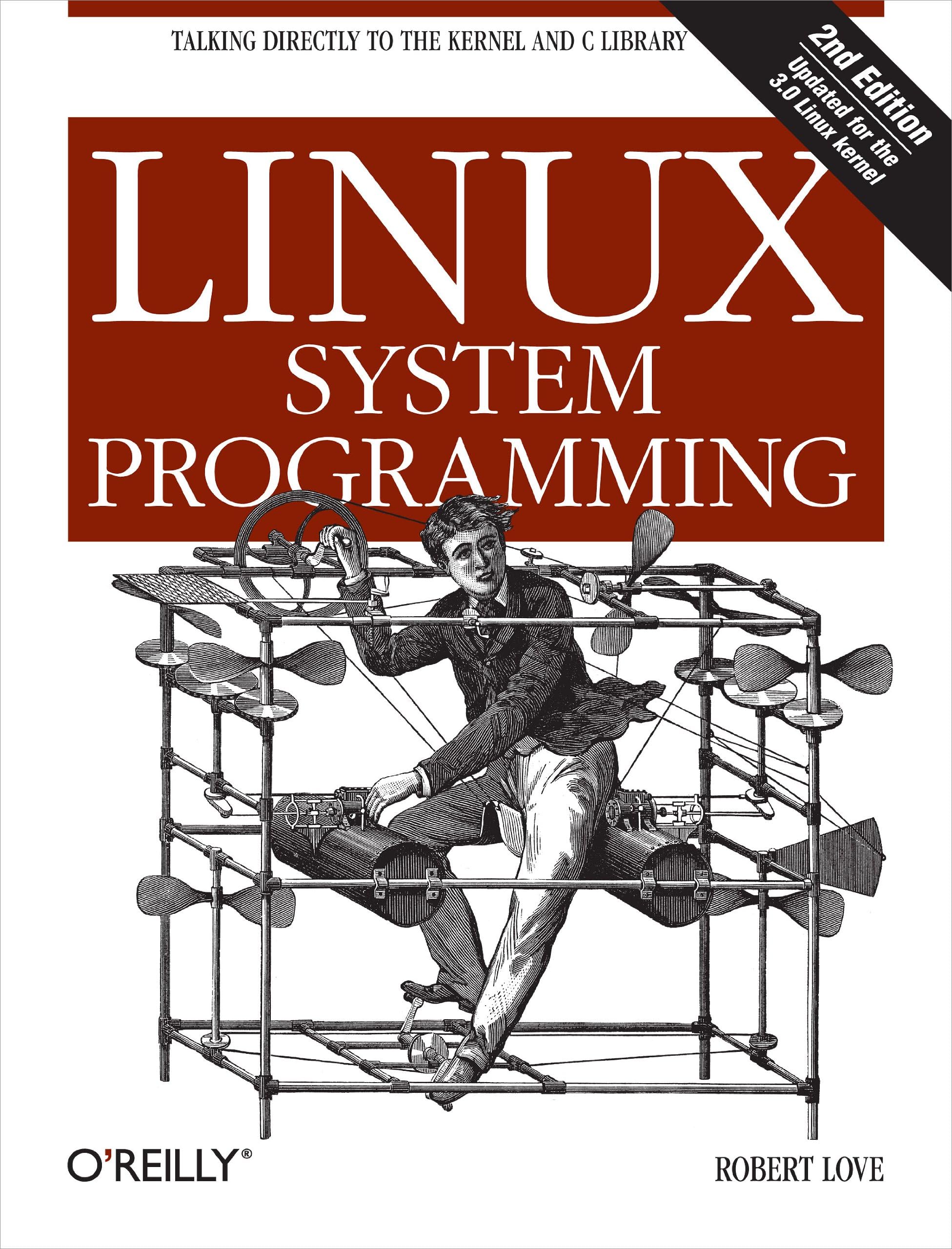
Linux System Programming: Talking Directly to the Kernel and C Library
Product ID: 4748481
Buy anything from 5,000+ international stores. One checkout price. No surprise fees. Join 2M+ shoppers on Desertcart.
Desertcart purchases this item on your behalf and handles shipping, customs, and support to Indonesia.
Write software that draws directly on services offered by the Linux kernel and core system libraries. With this comprehensive book, Linux kernel contributor Robert Love provides you with a tutorial on Linux system programming, a reference manual on Linux system calls, and an insider’s guide to writing smarter, faster code. Love clearly distinguishes between POSIX standard functions and special services offered only by Linux. With a new chapter on multithreading, this updated and expanded edition provides an in-depth look at Linux from both a theoretical and applied perspective over a wide range of programming topics, including: A Linux kernel, C library, and C compiler overview Basic I/O operations, such as reading from and writing to files Advanced I/O interfaces, memory mappings, and optimization techniques The family of system calls for basic process management Advanced process management, including real-time processes Thread concepts, multithreaded programming, and Pthreads File and directory management Interfaces for allocating memory and optimizing memory access Basic and advanced signal interfaces, and their role on the system Clock management, including POSIX clocks and high-resolution timers Review: Linux kernel in depth - This book on the Linux kernel is really in depth; reading this book will definitely help you master your Linux skills. Review: Best Pi book - Now that you're one of the millions of people who bought the wallet-sized, $35 computer called the Raspberry Pi. you want to know more about how to use it. That's why desertcart has sold many millions of books about the Pi. I was no exception. I spent way more on books about the Pi than I did on the computer itself. I wish I could tell you that all those books deserve 5-star ratings, but they don't. Some of the authors seemed to have rushed books to market, perhaps with visions of $ bills, and the word "millons" ringing in their ears. This book is an exception; it truly deserves the 5-star rating. Not every Pi owner wants to do systems programming. Many prefer to do more conventional things like wufting the Web, exchanging emails, watching movies and videos, or playing video games. But if you're one of those who want to know about what makes the Pi tick, and how to make it jump through hoops, this is the book for you. I can't imagine there's something about systems programming that Robert Love hasn't put in here. And, unlike many books about the Pi, this one is a truly professional, well written, and expertly produced exception. Buy it. You won't be sorry.







| Best Sellers Rank | #1,274,956 in Books ( See Top 100 in Books ) #108 in Linux Programming #198 in Linux & UNIX Administration (Books) #289 in Linux Networking & System Administration |
| Customer Reviews | 4.6 out of 5 stars 120 Reviews |
V**A
Linux kernel in depth
This book on the Linux kernel is really in depth; reading this book will definitely help you master your Linux skills.
J**W
Best Pi book
Now that you're one of the millions of people who bought the wallet-sized, $35 computer called the Raspberry Pi. you want to know more about how to use it. That's why Amazon has sold many millions of books about the Pi. I was no exception. I spent way more on books about the Pi than I did on the computer itself. I wish I could tell you that all those books deserve 5-star ratings, but they don't. Some of the authors seemed to have rushed books to market, perhaps with visions of $ bills, and the word "millons" ringing in their ears. This book is an exception; it truly deserves the 5-star rating. Not every Pi owner wants to do systems programming. Many prefer to do more conventional things like wufting the Web, exchanging emails, watching movies and videos, or playing video games. But if you're one of those who want to know about what makes the Pi tick, and how to make it jump through hoops, this is the book for you. I can't imagine there's something about systems programming that Robert Love hasn't put in here. And, unlike many books about the Pi, this one is a truly professional, well written, and expertly produced exception. Buy it. You won't be sorry.
T**N
Excellent for general audience
This book is excellent for learning low-level C programming. It covers most topics of the OS programming (I/O, concurrency, memory) in concise manner. Pros: The book is concise, therefore can be finished in short time. For general audience who don't do low-level programming for living, I would recommend this book than the "standard" books (by Stenvens or by Kerrisk). I admit that those two standard books are masterpieces, but they are over 1000 page long, and they are reference books for those people who specialize in low-level programming. On the other hand, this books (by Love) is suitable for programmers in general. Cons: One big omission is that it doesn't contain network socket programming.
J**S
Good resource, if a bit dry.
Explains low-level system programming in a Linux environment. Very thorough, in fact sometimes reads more like the man page than something which is supposed to be tutorial in nature.
J**6
enjoyable tour
this book covers a lot of ground with an approachable narrative style. As a casual programmer and Linux user I was surprised by how enlightening the information was just to understand how Linux works. Covers io, process and memory management, and some other details. Probably not ideal for novices. Some knowledge of c and processor concepts is required to get the most from the text. Overall very good read I'd recommend to any links user or software developer.
C**G
Well Balanced
This is well balanced book which explains linux system itself and gives some code snippets. The author has deep knowledge on linux system and relative topics which would help you broaden understading of LINUX, UNIX and BSD. (In this book, he takes some historical comments for BSD.) This has manuals for the system functions and many code examples. I also recommend his another book, Linux Kernel Development (3rd Edition) Have a good time with this system book~!
S**W
Awesome reference, great content, very well written
As a software engineer who works in a Linux environment, I was happy to find a systems programming reference. This book is a very nice reference, with insights to the kernel-level implementation of many of the various system calls. I highly recommend this book to any software developer performing systems programming in a Linux (or, in general, a Unix) environment.
J**.
Decent Introduction to Linux Programming, Thin on Examples
Huge caveat: this book is about application programming, not internal system (kernel) development. Coming from a Windows background I bought this book thinking it would be about writing programs for the system memory space, ie drivers and kernel modifications. That is not the case. In the Linux world "system programming" means anything that makes kernel calls, i.e., uses the system interface, whereas "application programming" is writing scripts. This definition completely differs from that in the Windows/Intel world where "system programming" means writing software that operates at privilege level 0 of the CPU, i.e., anything in the system memory space (usually drivers and various OS components). So, if you are coming from a non-Linux environment be aware of that. For example, the author considers a writing "text editor" to be system programming, whereas in Windows and the MacOS text editors are considered applications and writing them is considered application programming. This book covers all the basic calls in an introductory way. For example, the first chapter with meat in it, Chapter 2, covers "File I/O" and gives beginner level descriptions of calls like read(), seek() and select(). The main advantage of the book is that is pretty thorough in coverage, giving basic descriptions of every major system interface. Overall the book is decent, but is completely outmatched by other similar, much better books. For example, "The Linux Programming Interface" by Kerrisk has everything in this book plus a lot more and much better examples. In particular a big failing of this book is that is has no realistic examples, just toy snippets. A much better introductory book is "Understanding UNIX/LINUX Programming: A Guide to Theory and Practice" by Bruce Molay which has extensive, realistic examples that do real stuff. If you want to just gloss over Linux programming and get a "feel" for how it works quickly, this is decent book, but for anybody doing serious work there are better options.
S**E
Cos'è Linux, te lo spiego dalla A alla Z
Libro molto tecnico, consiglio una lettura per appassionati di Linux ed entusiasti di informatica
J**N
Not very useful
The book goes through various kernel interfaces in a man page style. The contents are rarely useful since most developers are either "talking" with kernel driver interfaces/subsystems or higher level kernel services /c++ libraries / 3rd part Linux parts (systemd etc.). Using directly the interface described in the book is rare and not usually justified.
J**O
Five Stars
Bought used and good as new
C**R
Es un man impreso
Se dedica a explicar funciones, sus parámetros y sus valores de retorno. Es poco mas que un man en la shell de cualquier distro de linux
F**T
Become highly knowledgeable about Linux file and process management
A good introduction to the low-level layers of Linux systems. Note that this is not a comprehensive approach to how Linux works. Prior knowledge and experience on Linux systems are advised to take the most out of this reading. It is a really good book if you hacked your way through Linux and you feel you would be more efficient if you knew how things actually work under the hood. It provides a good illustration of the Linux everything is a file philosophy by describing the consequences of various system calls on different kind of files (e.g. regular files or devices won't behave similarly) Even with this 429 pages, it is a really quick book to read. Even if it is a technical read, it doesn't go into highly theoretical concepts and thus, it is a perfectly valid candidate for your next commute read. Expect to finish it in less than two weeks if you grab it with you while commuting. The code illustrating the system calls are in C but the code snippets are very short and understandable for developer unfamiliar with the C programming language. The main topics covered in this book are: - Introduction to the process of reading/writing data from/to the disk - Process management and signals Note that those topics are mainly illustrated by studying C functions of standard libraries. But again, that should not be a stop if you are not familiar with C since the snippets are short and very well explained. A good point for this book is that it teaches you notions that will empower you to monitor Linux systems more efficiently. Especially the parts about processes and memory management. e.g.You often encounter memory leaks on your machine and don't know why? The book introduces you to zombie processes how they spawn and what can be done about them. Another nice thing about this book is that it provides you with some very low-level insights on software/hardware interaction, especially the part about writing data to memory. You will learn plenty of things about the various steps of writing information to the disk. Being knowledgable on this topic proved to be very helpful to help me understand challenges related to database related topics (e.g.concurrency and consistency).
Trustpilot
3 weeks ago
4 days ago