Buy anything from 5,000+ international stores. One checkout price. No surprise fees. Join 2M+ shoppers on Desertcart.
Desertcart purchases this item on your behalf and handles shipping, customs, and support to Indonesia.
🔍 Unlock the hidden colors of light with pinpoint precision!
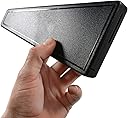
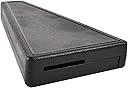
The EISCO PH100QA Premium Quantitative Spectroscope offers +/- 5nm accuracy across the visible spectrum (400-700nm) with a durable metal frame and 40x magnification. Perfect for educators, amateur astronomers, and science enthusiasts seeking reliable, easy-to-read wavelength data in a compact, portable design.


| ASIN | B00B84DGDA |
| Best Sellers Rank | #77,418 in Industrial & Scientific ( See Top 100 in Industrial & Scientific ) #3 in Lab Spectrometers |
| Brand | EISCO |
| Brand Name | EISCO |
| Customer Reviews | 4.2 out of 5 stars 434 Reviews |
| Global Trade Identification Number | 00849230049799 |
| Item Dimensions | 8 x 3.75 x 1 inches |
| Item Weight | 0.09 Pounds |
| Item dimensions L x W x H | 8 x 3.75 x 1 inches |
| Manufacturer | EISCO |
| Material | Metal |
| Material Type | Metal |
| Measurement Accuracy | 5nm |
| Measuring Range | 400nm - 700nm |
| Model | PH100QA |
| Output Type | optical |
| Part Number | PH100QA |
| Smart Home Compatibility | Not Smart Home Compatible |
| Specific Uses For Product | measuring spectra from charge gas tubes, flame tests, basic astronomy applications |
| UPC | 787461658369 849230049799 |
| Unit Count | 1.0 Count |
D**C
An excellent affordable spectroscope
This is essentially the same spectroscope that I used in chemistry class to observe various light bulbs and burning chemicals. I am using it to test filters to see the wavelengths of light that they allow to pass. It works as expected. I really appreciate that the nanometer scale is so accurate. I tested its accuracy with a fluorescent bulb and a green laser (indirectly). See the attached images that show the respective wavelength patterns. I took the pictures by just placing my cell phone camera over the eye hole. This spectroscope is simple to use and seems durable.
A**E
Great for the classroom setting, lackluster for laboratory use
This is a very solid/sound product. I've had no issues with the build quality. The accuracy, however, leaves some to be desired, especially in the laboratory setting. For laboratory use, I would recommend a computerized version, although the price range will be significantly higher. For classroom use, it works great. I can definitely envision a lab assignment being created around this item.
C**C
Great for LCD bulb testing
I got this EISCO spectroscope to visualize the spectral content of the various light sources around the house - different color-grades of LCD bulbs, LCD monitor panels, etc. - mostly for curiosity but also to confirm the various LCD bulb-maker claims. So its primary advantages for me include small & light size, and very low price. It performs this informal job very well, with very little effort. The "apparent distance" of the calibration scale as seen through the viewing end must be very close, because it is only in focus when I view MINUS my eyeglasses. With the eyeglasses (for distant vision) the scale is blurred.
D**N
good enough
no frills spectroscope. Needs some fiddling to use it
E**A
Great for the price. Fun experiment
I bought this prior to doing my own experiments with gratings I have purchased. It is kind of fun to compare old compact fluorescents with their peaky spectrums to more modern LED's and their more continuous spectra. The slit is pretty wide so I tightened it up with some black electrical tape. This made the spectrum fainter so it required brighter light, but the lines are narrower and crisper. The pic I shared is a compact fluorescent with the tighter slit. The 405 and 436 nm mercury lines are in the right place on my unit, but the bright green from mercury should be at ~546. There should be a twin peak at 577 and 579 due to mercury, but there appears to be a lot more going on in this lamp. I found that Fluorescents have other elements Terbium and Europium. Terbium makes the broad cyan peak at 487 nm and europium a bright red peak at 611nm. You can see that the scale on my unit shows this last peak at just below 600nm so it is off by at least 12nm by this end of the scale. Still great fun! Of note, older (40-50+) and/or farsighted users will not be able to view the scale in focus, but younger users should have no problem. Have fun!
J**I
Works and can't beat the price!
This is a fascinating product and it really works. Seeing how different light sources give out light at various parts of the spectrum amazes me. And I can look through different telescope filters to see how they alter the spectrum going through. Amazing, and a great price!
M**Y
Satisfied with the unit.
I bought this unit to check on my indoor light source for my in house plants to insure my plants are receiving close to the outdoor light spectrum. The unit performed well. Don't have to and should not look directly into the sun. As it is to measure the spectrum of the light only.
L**N
Very blurry and out of focus
This spectroscope actually has a scale so you can tell which wavelengths are being absorbed. Unfortunately it is so blurry that it is useless. It is more than useless, it is very frustrating. Save your money. This item is crap.
L**T
Gefällt mir
Für ein paar € weniger bekommt man Selbstbaulösungen aus Pappe. Ich habe keinen Vergleich, außer den Infos aus dem Web, aber die haben anscheinend durchaus auch ihre Meriten. Meine Entscheidung: Basteln wollte ich nicht, und vor allem hat das hier ein Kunststoffgehäuse, und wird daher bei mir länger leben :-). Die Skala ist hier getrennt vom Schlitz. Das hat den Vorteil, dass die Skala getrennt beleuchtet und quasi eingeblendet wird, und daher besser ablesbar ist, wenn man eine schwache Lichtquelle untersuchen möchte. Der Nachteil ist, dass beides werksseitig genau aufeinander justiert werden muss, sonst liegt man daneben. Mit meinem Exemplar habe ich ein grün nachleuchtendes Kunstoffteil á la Lichtschalter untersucht. Das sollte auf 555 nm leuchten, weil für diese Wellenlänge das menschliche Auge am empfindlichsten ist, und genau den Wert habe ich auch abgelesen. Spektral"linien" wird man damit nicht sehen, weil der Spalt dafür zu breit ist. Auch bei meinem 555-nm-Luminophor war die "Linie" daher etwa 10 nm breit. Den Spalt könnte man natürlich auch abkleben, aber darunter leidet die Lichtstärke, und den Mittelwert bei einem Balken statt eines Strichs abzulesen, ist nicht so schwierig. Wenn Sie das nachvollziehen wollen: Vielfach gibt es noch als Straßenbeleuchtung die gelben Natriumdampflampen mit 589 nm. Oder Sie haben einen Laserpointer, dessen (monochromatische) Wellenlänge Sie kennen, steht in der Beschreibung. Bitte nicht direkt in den Spalt leuchten, sondern auf z.B. ein Blatt Papier! Interessant ist, damit auf "Spektraljagd" zu gehen. Ich z.B. dachte bisher immer, dass "weiße" LEDs blaues Licht emittieren, das durch gelbe Luminophore zu Weiß gemischt wird. Gelb ist Rot plus Grün, und mit dem Blau wird das zum Weiß. Ich hätte also zwei oder drei Farben erwartet, aber da war fast der komplette Regenbogen, bei einer billigen LED-Taschenlampe.
V**M
Muy bien
Funciona excelente, lo use para divulgación de la ciencia en una feria científica.
C**4
Spettroscopio a reticolo
L'apparecchiatura è semplice ma ingegnosa. Utilissima la scala delle lunghezze d'onda inserita nel fondo. Trovo che questo semplice spettroscopio sia utilissimo per piccole esperienze quotidiane sull'analisi delle luci prodotte in una fiamma da elementi chimici diversi (sodio, potassio, fluoro, mercurio, ecc.).
A**L
Bien precio/calidad
No se ven las líneas de absorción del espectro solar.
M**K
Works as intended
Works as intended. Would have liked more or more detailed instructions but I spent some time with it and figured it out.
Trustpilot
2 weeks ago
1 month ago