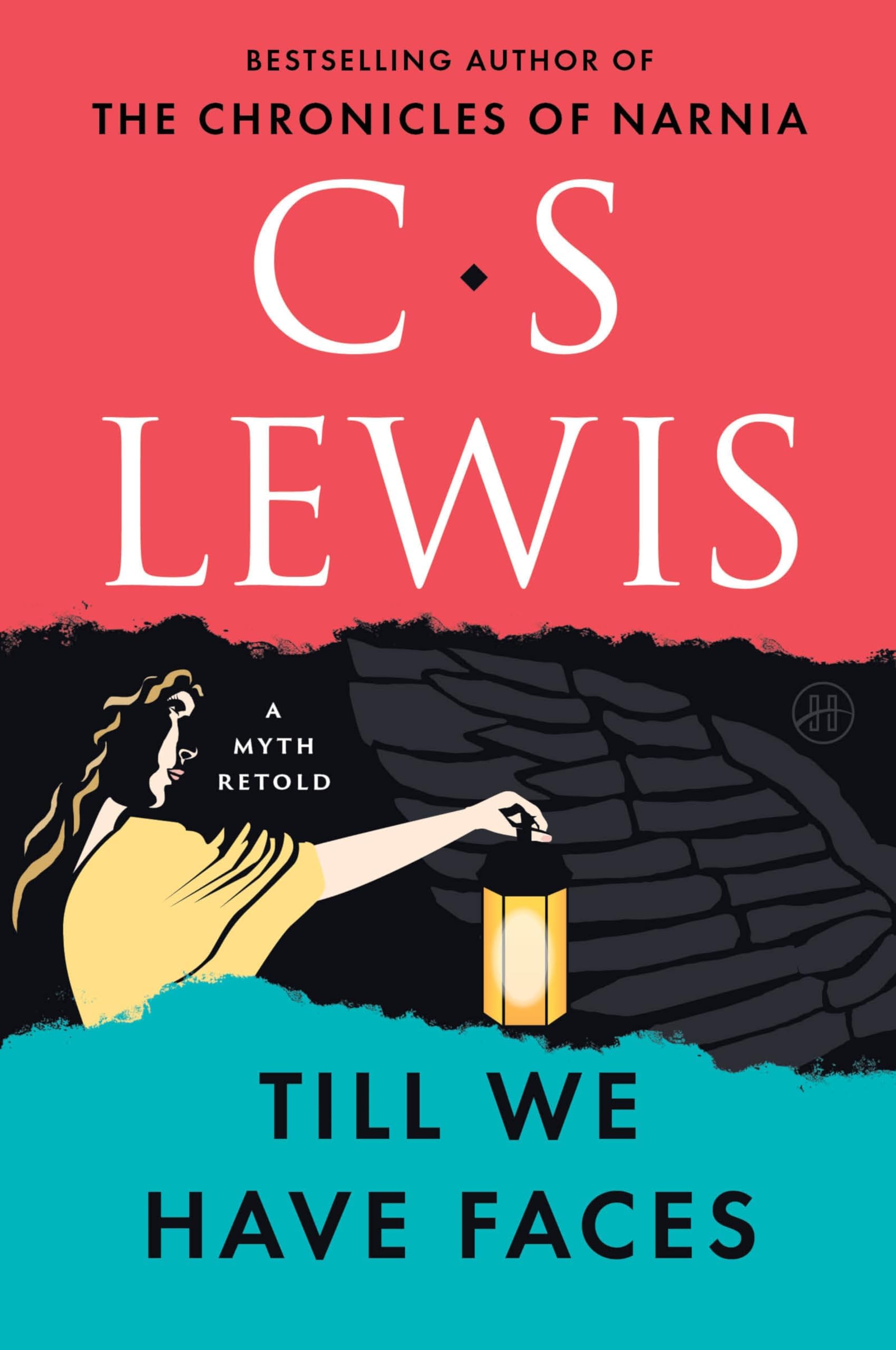
Till We Have Faces: A Myth Retold
Product ID: 39242217
Desertcart purchases this item on your behalf and handles shipping, customs, and support to Indonesia.
This twist on an old story, is an exploration of love—between sisters, between friends, between teacher and pupil, between men and women. Till We Have Faces is retold through the eyes of Psyche’s oldest sister, Orual. Orual was born ugly and even though she’s a princess, she struggles with the death of her mother and the friction between her sisters. There are two lights in Orual’s life. One is her tutor, the Fox, a Greek slave captured through war. The other is her much younger sister Istra, later nicknamed Psyche, born from Orual’s father’s second marriage. Istra is beautiful and sweet and good but far from being jealous of her, Orual loves her as a daughter. When the priest of Ungit says that Psyche’s great beauty is an insult to the goddess and she must be sacrificed, Orual fights to prevent this. When Orual expects to find her sister dead, she finds her well and thriving. But, why can’t Orual see what everyone else sees? Blinded by her jealous love, Orual castes blame on the duplicity of gods. What is the truth? What is real? Lewis’s novel is a brilliant examination of envy, loss, betrayal, blame, grief, guilt, and conversion. Why must holy places be dark places? Lewis reminds us of our own fallibility and the role of a higher power in our lives. “Holy places are dark places. It is life and strength, not knowledge and words, that we get in them. Holy wisdom is not clear and thin like water, but thick and dark like blood.” Review: Lewis's Best Ever - Till We Have Faces (TWHF) is C. S. Lewis’s (CSL’s) master work. The first time I read it I was already mature, a college Graduate and familiar with many of his books, but I neither understood it very well nor liked it very much. It was so … strange; strange and terrible. When I reread this Kindle version of it, I loved it. I understood it much better now that I have read and reread many more of CSL’s works since my first reading; it also helps that I have now read many of the same books that CSL was influenced by, particularly The Golden Bough. CSL was a brilliant man; a really, uncommonly, exceptionally brilliant man. When I first came to his corpus through the Chronicles of Narnia I could see only a shadow of this—he was, after all, writing for children. And in his books like The Screwtape Letters and Mere Christianity, he uses his vast intellect to bring difficult ideas down to the level of the general reader. After several readings of these I started to approach his works with a certain intellectual expectation. I don’t know if you’ve ever gone to pick up an empty paint can that turned out to be full, but reading TWHF can be a similar experience; if you are expecting another Screwtape Letters you’re in for a sudden shock to the senses. In TWHF CSL is writing at his best and highest level. He is writing with all that was in him and at his disposal for those of like mind and training. TWHF is Lewis at his finest. When I was a child in Lewis, it was much too fine for me. Now, with a mature pallet, I find it the most remarkable and stunning of his works. If you like CSL you should read it. If you are young in CSL, you might not like it or understand it, but you will have a baseline so that, a decade from now when you reread it, you’ll appreciate just how much you’ve grown. You have probably figured out already that TWHF is a “retelling” of the story of the Greek myth of Cupid and Psyche. If you haven’t already read the myth, I actually recommend that you wait until after you’ve read TWHF to do so. CSL changes the story so much that you may come in with erroneous pre-conceived notions of what the story is going to be about if you pre-read it. CSL treats the original story with such subtlety that, when you do read it, you’ll be amazed at how closely he was able to stick to the original plot while still changing it completely. I now offer here a few helpful guides to understanding the story. I outline the philosophy more than the plot because you’ll pick-up the surface level plot easily but might miss the point behind the plot that CSL is trying to make. For many of the ideas that CSL tries to convey in TWHF I will give cross references in his other works where the same thought can be found. The themes that seem so obvious in those books and essays are better camouflaged in TWHF—so well camouflaged that you might think CSL is saying something new and different in TWHF. He is not, it is the same CSL and he is making the same points. First, if you are used to CSL’s other works, you will be shocked by his use of “holiness” in TWHF. You’ll quickly realize that holiness is far removed from pretty modern churches: it is dark, dirty, bloody, powerful, and cultic. This does not mean that CSL suddenly became a pagan in later life. But he does want to draw his reader’s attention to a sharp contrast. The contrast is not between Christianity and paganism but between two worldviews: the enlightenment and paganism, and the two groups that hold those views. We moderns, you and me, with our enlightened world view, our reason, skepticism and anti-supernaturalism, are represented by the Greeks in TWHF. Anytime Lewis refers to “the Greeks,” he’s talking about us modern people with our post enlightenment sensibilities. To this he is contrasting an older worldview; the world view that The Golden Bough excavates; the worldview that has been prevalent in most cultures and for most of history all over the world; the worldview of sacred “holiness.” A worldview that has a reverent, even terrified, respect for the supernatural; a worldview whose adherents have an intuitive understanding of their own guilt and the power of the spiritual. It is the worldview of Glome, the main city in TWHF, and the dark goddess Ungit whose Temple is found there. If you have read The Golden Bough (though I can’t actually recommend you do so) you’ll understand this ancient worldview and why the people of Glome behave the way they do toward Ungit, toward Psyche, toward the Priest, toward the King and why the King acts a certain way toward his daughters. The pagan worldview is represented by many in the book, probably most strongly by the first priest of Ungit; more importantly, it is also represented by Bardia, the captain of the royal guard who’s been born and bred in Glome and is a consummate believer in the dark goddess Ungit. The modernist world view is represented by The Fox, a captured Greek slave and philosopher. As CSL says in Mere Christianity and elsewhere, Satan always brings errors into the world in pairs of opposites. The Fox and Bardia represent two extreme opposite errors that can be made in worldview. The perfect Christian middle ground between these two points of view is represented by Psyche. She is the Christian, the Bride of Christ; she is Eve in the Garden of Eden, she is the church. She is all of these at the same time (see CSL’s essay Transposition in The Weight of Glory for a brilliant description of how one character can be so many things). Orual, the main character, is an archetypical modern, skeptical person. When she encounters Psyche after her “marriage” to the god (i.e., Jesus), Orual is shocked, horrified, curious and doesn’t know what to make of Psyche’s tale. Psyche tells Orual that her Groom is a magnificent God, that she lives in a beautiful palace, that she's wearing amazing clothes and attended by courteous spirits, but all Orual can see are rags and bear mountain crags. Orual seeks advice from The Fox and Bardia to help her to decide whether she believes Psyche or not (because, even though Psyche’s words sound incredible she is radiant and healthy and reasonable and looks to be in her right mind). Her two dear friends give her two wrong answers. The Fox says that Psyche is crazy and that the Groom is the wish of a fevered mind or pure insanity. Bardia says that the Groom is real—real and a terrible beast, a demon monster. And here we see the fundamental thesis of the book. It is a thesis which CSL expounds plainly in Mere Christianity and even works into The Lion the Witch and Wardrobe through the professor; it is the trilemma. That is, it plainly shows Lewis’s contention that there are exactly three different conclusions that one can come to about Jesus: that he was a liar, a lunatic or the Lord of all. The Fox, the modern skeptic says that Psyche’s Groom is either Freudian wish fulfillment (CSL goes to particular pains to refute Freud in The Pilgrim’s Regress) or insanity brought on by stress. Bardia says the groom is the monster son of Ungit, the terrible goddess who is fed with the blood of sacrifice and demanded the sacrifice of Psyche. Psyche is the Christian who can clearly see the groom is her beloved Lord, master and savior (clearly a type of Christ). [It almost seems blasphemous to represent Jesus with a pagan god (and Cupid of all gods!); but Lewis had a high respect for all myth and, in Myth Became Fact, explains how God used myth to prepare the pagans for the coming of Christ. TWHF can also be read as a case study in pagan myth prefiguring Christ.] Orual clearly hears the three opinions on the Groom from The Fox, Bardia and Psyche, the three people closest to her in the world, and must choose between them. The brilliance of Lewis is how he makes each of the three views seem so probable. It is the depiction, in a complete fiction, of the real and compelling views that people have today about Jesus. In Mere Christianity the trilemma is presented as a simple bit of irrefutable logic, and that to believe anything other than that Christ is Lord is foolhardy. But, as we all know, it isn’t that obvious in real life. In real life we can’t see the heavenly Kingdom that Christ talked about. Just as Orual couldn’t see Psyche’s King (her husband) or his castle, or anything about the life she shared with her Groom (i.e., her spiritual life). In our world too, there are no shining crowns-- only poor, humble, dirty disciples being crucified upside down. Lewis’s genius is to bring us to the point where we can clearly see how each point of view of the trilemma is defensible and yet, to see how each wrong answer could be detected as false in an unbiased observer. Orual is a bit of a confusing character at first so I had better prepare you a little for her. Orual is initially portrayed as weak, humble, ugly and abused; our hearts go out to her—we see her as a Harry Potter type and want her to win and be successful because she’s the underdog. But, don’t be fooled, she isn’t the hero of the story—at least not at first. She too is subject to transposition: she is both Mankind, Satan, and the archetypal jealous woman CSL despised. In her pitiable role as mankind we see her suffer; first as she comes into the world, and through no fault of her own, suffers due to her father’s sin; later she does suffer for her own “sinful” choices just as all men do. Orual wears a veil for much of the story. It is the symbol of the separation of man from God, just as the veil in the temple between the Arc of God in the Holy of Holies and the Holy place of the temple symbolized the divide between God and man. Orual, like mankind, must make a decision about the trilemma. She decides badly. She decides based on her jealousy and her desire to “own” Psyche. In this way she is very reminiscent of some women in The Great Divorce and in the negative example of affection in The Four Loves. Her desire to keep Psyche to herself leads her into the metaphorical role of Satan who she represents at points throughout the rest of the story. In one chilling scene her father looks at her and says, “I know who you are!” She’s not sure what he means, and neither are we readers, but we feel in our bones the terrible truth that she is the very devil of Hell. Using pity, Orual manipulates Psyche into betraying her Groom. It leads to the loss of Psyche’s Groom and her paradise. Orual’s temptation of Psyche is paralleled nicely in the second book of CSL’s space trilogy, Perelandra. But in that story, “Eve” successfully withstands the temptation because Ransom is there to help her. Psyche has no such help and, like mankind, is banished for her sin. Again, the whole scene is played out so brilliantly that we can completely empathize with Orual. Orual doesn’t see the gleaming golden God that Psyche says is there, or the beautiful palace, or the wine or fine food (it’s a bit like the dwarves who refuse “to be taken in” at the end of The Last Battle). And yet, Orual does get to see a vision of the truth once—she sees a glimpse of that other world, across a river, at dawn. CSL’s works are full of that glimpse into something beyond, something piercing and sweet, evocative and intensely private, something he called “joy.” He discusses this explicitly in Surprised by Joy but uses it throughout his works. It is a recurrent theme in The Pilgrim’s Regress, indeed it is the Pilgrim’s chief reason for traveling: to find the city that he glimpsed or to recapture the feeling it gave him. In Narnia the best expression of it is at the end of The Voyage of the Dawn Treader. Repicheep, paddling his coracle, is about to pass through the standing wave at the end of the world that separates Narnia from Aslan’s country. The wave breaks for a moment and Lucy, Edmund and Peter all get the same kind of piercing glimpse beyond into Aslan’s country that the Pilgrim got in The Pilgrim’s Regress. It’s one of my favorite parts in all Lewis’s works, here's teh quote, "It lasted only a second or so, but what it brought in that second none of those children will ever forget. It brought both a smell and a sound, a musical sound. Edmund and Eustace would never talk about it afterwards. Lucy could only say, “It would break your heart.” “Why,” said I, “was it so sad?” “Sad! No,” said Lucy." It is important to remember that TWHF is written by Orual as a protest and a formal complaint against the gods who she claims have been exceedingly cruel to her. The one glimpse Orual has of Psyche’s true paradise is her chief piece of evidence. She says it proves how the gods gave her just a tiny taste of that other world—just enough to make her doubt and debate its existence. She claims the gods could have made things very plain and clear to her, but didn’t. She complains how they left her with doubt, enough doubt to do terrible, terrible things to Psyche. Again, CSL brilliantly paints this picture so that we, the readers, also understand how maddening this is for Orual; we kind of agree with Orual too. Who hasn’t wished for God to perform an irrefutable miracle in front of an unbelieving friend or family member so that they would have to believe? After the loss of Psyche, Orual goes on to tell us about the rest of her life and her great deeds so we continue to believe that she is the hero of the story (if we haven’t figured out the truth) and we root for her. It is only in Part II, when Orual gets a vision of who she really is, and how she has really acted, that we realize what a self-centered megalomaniac Orual really is. But we sympathize with her at the same time; because we see in her what we know is in ourselves. It is one of those powerful literary revelations where, as the character comes to understand her sin we understand our own sin too; it’s similar to how in The Great Divorce, as we see the various “ghosts” play out their scenes we gasp and think, “Oh no … that’s not like me, is it?” The meaning of the ending is still a little confusing to me. Orual, in a vision, is allowed to make her complaint to the Gods. And through this we realize that her best arguments are just an incessant, petty, narcissistic whine. It is the whine that her life has been; she’s been living the same petty whine over and over again. She finally realizes this and at the same time she realizes that the gods cannot give her an answer to her complaint which is the book. There is so very little of her there to even talk to. She hasn’t yet got a "face” to debate the gods with because she is still so tiny and petty and immature. She realizes that before she comes back and demands a response from them that she needs to become a person, she can’t debate with the God’s till she has a “face”. After this point in the story I start to lose my grip on CSL’s metaphors. In the very last parts of the story there seems to be a conflation between Orual and Psyche—that perhaps the two are one and that the pains that Orual has suffered have been to the advantage of Psyche. It makes me wonder if, in the final analysis, CSL envisioned them as one person with two parallel lives being lived simultaneously, a spiritual and a physical. If that was his intent, it is hardly clear. Perhaps after 10 more years I’ll be able to explain even the very ending to you. For now, you should read it for yourself and see what you think it means. Review: Seeking our Say in the Court of the Universe - As posted on my blog, Victoria's Reading Alcove at Wordpress There are many among us who have suffered some life changing event; an event that changes us in quick or slow ways, forever. These are the kinds of events that cause us to build “public faces.” More often than not, these changes build a wall between us and others at least in part because we do not wish to allow ourselves to be vulnerable to suffer more pain, or its repercussions, ever again. We also build these walls in our choice to push those who are suffering away. Much like Job’s friends, we seek, in whatever way accessible, to understand the cause and effect of what we see. As humans we are creatures always in search of order. We cannot tolerate the arbitrary, we must find a pattern. In some of us that results in a search for God (or gods), in others it is the explicit effort to eradicate even the hint of the divine from our lives. I believe, in some way, this was the seed to human sacrifice. In our ancient civilizations, with vastly less understanding than we have today, there was a strong belief that the gods must demand blood and restitution for the shortcomings of mankind. After all; there were famines, natural disasters, accidents, pestilence, and all sorts of ways to die. Perhaps, in their ignorance, they thought to choose those to send to the gods in order to save their own hides. We have, of course, changed this view over the last several millennium or so. Although the Aztecs were hard at it in the early centuries CE, there had arisen a culture in the Middle East that looked on the sacrifice of human life as an abomination. They did, however, hold tightly to the sacrifice of blood offerings. This interpretation of divine demand remained through the birth of Christianity. There was still a strong conviction that someone somewhere had to pay the price for all that was not right with the world. One of the problems we seem to face most consistently is what constitutes restitution and what constitutes the natural course of the universe and is there a difference? This weekend, I decided to re-read a favorite tale I had read many years ago. There are times when I go through stages of hunting down everything by a particular author and read through it all. This remembered stage was a search for C. S. Lewis. He is best known for titles such as the Narnina series, the Space Trilogy and Christian apologetics. The subject of my blog is a bit off the usual track. It is a retelling of the tale of Psyche and Cupid. I found it quite intriguing at the time and deeply thought provoking now. Let’s visit Glome and meet the Queen whose thoughts and actions may touch your dreams and your fears. Perhaps you’ll find a treasure to take back home. The story of Cupid and Psyche is quite old. We know it best from the Latin novel, Metamorphoses (The Golden Ass) written in the 2nd century CE by Apoleius. The tale itself must be quite ancient since depictions of Eros (Cupid) and Psyche appear in Greek art as early as the 4th century BCE. The basic story is about a king with three daughters, each quite beautiful but none as beautiful as the youngest. Although the older sisters marry, the youngest finds only worshipers and no lovers. So much is the attention she receives she draws the ire of Venus. Venus sends her son Cupid to end the competition, but Cupid falls in love and takes her away to a hiding place. His only request is that she never tries to discover his identity. Time passes and the young bride tires of being alone all of the time and begs to see her sisters. The visit is disastrous. As a result of their jealousy of her new style of living, her sisters coerce her into revealing the identity of her husband. By exposing him, she brings the wrath of Venus upon them both and Psyche is forced to wander in a quest to meet the demands of this very jealous goddess. She wins in the end and is restored to her beloved Cupid. I don’t want to give you all the story twists of Lewis’ retelling; it’s really a charming read. What I will do is tell you something of what I found within the pages of this rather different interpretation of the tale. You see in this story the elder sister does not see the palace, except through the mist in the middle of the night of betrayal. She believes her young half-sister to be quite mad. She seeks some way to believe, some way to find an answer from her goddess or her Greek philosophical training and finds only contradiction and doubt. She finally makes the decision to coerce her sister into revealing the identity her new found husband. The results are disastrous as Orual discovers her sister was quite sane and she is now responsible for sending the young lady into the wilderness to be tested by a jealous goddess. Princess Orual returns home to become Queen Orual on the death of her father only a few days later. Shaken to the core, she vows to always wear a veil, so that none can see how homely she is, and to slowly extinguish that part of her that was the caring and loving protector of her beloved little sister. She lives her life in constant fear that the gods will strike her down. And she never allows herself to love again. Queen Orual is a wise ruler. She reverses the policies of her father and finds ways to protect the country from the vagaries of nature, to build their treasury and to protect their borders. An excellent fighter, she rides with her armies when required. The kingdom finds peace, and yet she suffers. It is by chance that during a casual trip, taken for pleasure, she happens upon a temple, built in honor of her little sister Istra (Psyche in Greek). The tale she hears is nothing like the story she knows and she vows to write her own story, the truth. She vows to seek justice from the gods. I find the tale compelling because it is a search for a very elusive thing; something that we are so sure we know, and yet we face trials, suffering, and retribution. Like Job, we believe we are doing our best, that we make appropriate decisions based on the knowledge we have, only to discover we didn’t have all the facts. No matter how hard we seek answers, we only see darkly the things in this world. And, like Job, we reach a point where we begin to demand answers. Not because we don’t believe, but because we do. In the book the Queen muses as she writes, “There must, whether the gods see it or not, be something great in the mortal soul. For suffering, it seems, is infinite and our capacity without limit.” No, not so different from the world we live in. Seeking guidance, following precepts and yet suffering. Seeing a world in pain, and noting that much of what happens is an accident of birth. Is it any wonder that our highly developed, rational minds seek answers? That we reach a point when we stop and demand of the universe, of God, “Why?” Our Queen sets out her tale in order to challenge the gods, to ask them to tell her what more she could have done with the information she had. In the end she learns that her love for her sister, her suffering throughout her life, brought solace during the years of Istra’s wandering. It provided support during times of trial, and that when the final test came her sister had grown to the point that even her dearest and most loved could not sway her from the task at hand. Istra (Psyche) does, in the end, earn the approval of the gods and win back her place at Cupid’s side. Orual brings us to the lesson that although we often suffer the consequences of ill informed decisions, we still have a chance to build on our failures and turn them into something productive. We gain “face” if you will by what we do about suffering, how we treat those in pain, how we use the tools we are given to make the world a better place, however small that improvement may be. It is when we strive in this way that we earn the right, the obligation to stand, “gird our loins like a [rational being]” so that when we are asked we can inform. That search for understanding can never end; else why are we given these incredible gifts of a rational mind, a spirit of wonder, and a will to seek truth? ”I saw well why the gods do not speak to us openly, nor let us answer. Till that word can be dug out of us, why should they hear the babble that we think we mean? How can they meet us face to face till we have faces?”



| Best Sellers Rank | #4,495 in Books ( See Top 100 in Books ) #1 in Western & Frontier Christian Romance #1 in Christian Westerns (Books) #2 in Western Religious Fiction |
| Customer Reviews | 4.6 out of 5 stars 4,883 Reviews |
L**K
Lewis's Best Ever
Till We Have Faces (TWHF) is C. S. Lewis’s (CSL’s) master work. The first time I read it I was already mature, a college Graduate and familiar with many of his books, but I neither understood it very well nor liked it very much. It was so … strange; strange and terrible. When I reread this Kindle version of it, I loved it. I understood it much better now that I have read and reread many more of CSL’s works since my first reading; it also helps that I have now read many of the same books that CSL was influenced by, particularly The Golden Bough. CSL was a brilliant man; a really, uncommonly, exceptionally brilliant man. When I first came to his corpus through the Chronicles of Narnia I could see only a shadow of this—he was, after all, writing for children. And in his books like The Screwtape Letters and Mere Christianity, he uses his vast intellect to bring difficult ideas down to the level of the general reader. After several readings of these I started to approach his works with a certain intellectual expectation. I don’t know if you’ve ever gone to pick up an empty paint can that turned out to be full, but reading TWHF can be a similar experience; if you are expecting another Screwtape Letters you’re in for a sudden shock to the senses. In TWHF CSL is writing at his best and highest level. He is writing with all that was in him and at his disposal for those of like mind and training. TWHF is Lewis at his finest. When I was a child in Lewis, it was much too fine for me. Now, with a mature pallet, I find it the most remarkable and stunning of his works. If you like CSL you should read it. If you are young in CSL, you might not like it or understand it, but you will have a baseline so that, a decade from now when you reread it, you’ll appreciate just how much you’ve grown. You have probably figured out already that TWHF is a “retelling” of the story of the Greek myth of Cupid and Psyche. If you haven’t already read the myth, I actually recommend that you wait until after you’ve read TWHF to do so. CSL changes the story so much that you may come in with erroneous pre-conceived notions of what the story is going to be about if you pre-read it. CSL treats the original story with such subtlety that, when you do read it, you’ll be amazed at how closely he was able to stick to the original plot while still changing it completely. I now offer here a few helpful guides to understanding the story. I outline the philosophy more than the plot because you’ll pick-up the surface level plot easily but might miss the point behind the plot that CSL is trying to make. For many of the ideas that CSL tries to convey in TWHF I will give cross references in his other works where the same thought can be found. The themes that seem so obvious in those books and essays are better camouflaged in TWHF—so well camouflaged that you might think CSL is saying something new and different in TWHF. He is not, it is the same CSL and he is making the same points. First, if you are used to CSL’s other works, you will be shocked by his use of “holiness” in TWHF. You’ll quickly realize that holiness is far removed from pretty modern churches: it is dark, dirty, bloody, powerful, and cultic. This does not mean that CSL suddenly became a pagan in later life. But he does want to draw his reader’s attention to a sharp contrast. The contrast is not between Christianity and paganism but between two worldviews: the enlightenment and paganism, and the two groups that hold those views. We moderns, you and me, with our enlightened world view, our reason, skepticism and anti-supernaturalism, are represented by the Greeks in TWHF. Anytime Lewis refers to “the Greeks,” he’s talking about us modern people with our post enlightenment sensibilities. To this he is contrasting an older worldview; the world view that The Golden Bough excavates; the worldview that has been prevalent in most cultures and for most of history all over the world; the worldview of sacred “holiness.” A worldview that has a reverent, even terrified, respect for the supernatural; a worldview whose adherents have an intuitive understanding of their own guilt and the power of the spiritual. It is the worldview of Glome, the main city in TWHF, and the dark goddess Ungit whose Temple is found there. If you have read The Golden Bough (though I can’t actually recommend you do so) you’ll understand this ancient worldview and why the people of Glome behave the way they do toward Ungit, toward Psyche, toward the Priest, toward the King and why the King acts a certain way toward his daughters. The pagan worldview is represented by many in the book, probably most strongly by the first priest of Ungit; more importantly, it is also represented by Bardia, the captain of the royal guard who’s been born and bred in Glome and is a consummate believer in the dark goddess Ungit. The modernist world view is represented by The Fox, a captured Greek slave and philosopher. As CSL says in Mere Christianity and elsewhere, Satan always brings errors into the world in pairs of opposites. The Fox and Bardia represent two extreme opposite errors that can be made in worldview. The perfect Christian middle ground between these two points of view is represented by Psyche. She is the Christian, the Bride of Christ; she is Eve in the Garden of Eden, she is the church. She is all of these at the same time (see CSL’s essay Transposition in The Weight of Glory for a brilliant description of how one character can be so many things). Orual, the main character, is an archetypical modern, skeptical person. When she encounters Psyche after her “marriage” to the god (i.e., Jesus), Orual is shocked, horrified, curious and doesn’t know what to make of Psyche’s tale. Psyche tells Orual that her Groom is a magnificent God, that she lives in a beautiful palace, that she's wearing amazing clothes and attended by courteous spirits, but all Orual can see are rags and bear mountain crags. Orual seeks advice from The Fox and Bardia to help her to decide whether she believes Psyche or not (because, even though Psyche’s words sound incredible she is radiant and healthy and reasonable and looks to be in her right mind). Her two dear friends give her two wrong answers. The Fox says that Psyche is crazy and that the Groom is the wish of a fevered mind or pure insanity. Bardia says that the Groom is real—real and a terrible beast, a demon monster. And here we see the fundamental thesis of the book. It is a thesis which CSL expounds plainly in Mere Christianity and even works into The Lion the Witch and Wardrobe through the professor; it is the trilemma. That is, it plainly shows Lewis’s contention that there are exactly three different conclusions that one can come to about Jesus: that he was a liar, a lunatic or the Lord of all. The Fox, the modern skeptic says that Psyche’s Groom is either Freudian wish fulfillment (CSL goes to particular pains to refute Freud in The Pilgrim’s Regress) or insanity brought on by stress. Bardia says the groom is the monster son of Ungit, the terrible goddess who is fed with the blood of sacrifice and demanded the sacrifice of Psyche. Psyche is the Christian who can clearly see the groom is her beloved Lord, master and savior (clearly a type of Christ). [It almost seems blasphemous to represent Jesus with a pagan god (and Cupid of all gods!); but Lewis had a high respect for all myth and, in Myth Became Fact, explains how God used myth to prepare the pagans for the coming of Christ. TWHF can also be read as a case study in pagan myth prefiguring Christ.] Orual clearly hears the three opinions on the Groom from The Fox, Bardia and Psyche, the three people closest to her in the world, and must choose between them. The brilliance of Lewis is how he makes each of the three views seem so probable. It is the depiction, in a complete fiction, of the real and compelling views that people have today about Jesus. In Mere Christianity the trilemma is presented as a simple bit of irrefutable logic, and that to believe anything other than that Christ is Lord is foolhardy. But, as we all know, it isn’t that obvious in real life. In real life we can’t see the heavenly Kingdom that Christ talked about. Just as Orual couldn’t see Psyche’s King (her husband) or his castle, or anything about the life she shared with her Groom (i.e., her spiritual life). In our world too, there are no shining crowns-- only poor, humble, dirty disciples being crucified upside down. Lewis’s genius is to bring us to the point where we can clearly see how each point of view of the trilemma is defensible and yet, to see how each wrong answer could be detected as false in an unbiased observer. Orual is a bit of a confusing character at first so I had better prepare you a little for her. Orual is initially portrayed as weak, humble, ugly and abused; our hearts go out to her—we see her as a Harry Potter type and want her to win and be successful because she’s the underdog. But, don’t be fooled, she isn’t the hero of the story—at least not at first. She too is subject to transposition: she is both Mankind, Satan, and the archetypal jealous woman CSL despised. In her pitiable role as mankind we see her suffer; first as she comes into the world, and through no fault of her own, suffers due to her father’s sin; later she does suffer for her own “sinful” choices just as all men do. Orual wears a veil for much of the story. It is the symbol of the separation of man from God, just as the veil in the temple between the Arc of God in the Holy of Holies and the Holy place of the temple symbolized the divide between God and man. Orual, like mankind, must make a decision about the trilemma. She decides badly. She decides based on her jealousy and her desire to “own” Psyche. In this way she is very reminiscent of some women in The Great Divorce and in the negative example of affection in The Four Loves. Her desire to keep Psyche to herself leads her into the metaphorical role of Satan who she represents at points throughout the rest of the story. In one chilling scene her father looks at her and says, “I know who you are!” She’s not sure what he means, and neither are we readers, but we feel in our bones the terrible truth that she is the very devil of Hell. Using pity, Orual manipulates Psyche into betraying her Groom. It leads to the loss of Psyche’s Groom and her paradise. Orual’s temptation of Psyche is paralleled nicely in the second book of CSL’s space trilogy, Perelandra. But in that story, “Eve” successfully withstands the temptation because Ransom is there to help her. Psyche has no such help and, like mankind, is banished for her sin. Again, the whole scene is played out so brilliantly that we can completely empathize with Orual. Orual doesn’t see the gleaming golden God that Psyche says is there, or the beautiful palace, or the wine or fine food (it’s a bit like the dwarves who refuse “to be taken in” at the end of The Last Battle). And yet, Orual does get to see a vision of the truth once—she sees a glimpse of that other world, across a river, at dawn. CSL’s works are full of that glimpse into something beyond, something piercing and sweet, evocative and intensely private, something he called “joy.” He discusses this explicitly in Surprised by Joy but uses it throughout his works. It is a recurrent theme in The Pilgrim’s Regress, indeed it is the Pilgrim’s chief reason for traveling: to find the city that he glimpsed or to recapture the feeling it gave him. In Narnia the best expression of it is at the end of The Voyage of the Dawn Treader. Repicheep, paddling his coracle, is about to pass through the standing wave at the end of the world that separates Narnia from Aslan’s country. The wave breaks for a moment and Lucy, Edmund and Peter all get the same kind of piercing glimpse beyond into Aslan’s country that the Pilgrim got in The Pilgrim’s Regress. It’s one of my favorite parts in all Lewis’s works, here's teh quote, "It lasted only a second or so, but what it brought in that second none of those children will ever forget. It brought both a smell and a sound, a musical sound. Edmund and Eustace would never talk about it afterwards. Lucy could only say, “It would break your heart.” “Why,” said I, “was it so sad?” “Sad! No,” said Lucy." It is important to remember that TWHF is written by Orual as a protest and a formal complaint against the gods who she claims have been exceedingly cruel to her. The one glimpse Orual has of Psyche’s true paradise is her chief piece of evidence. She says it proves how the gods gave her just a tiny taste of that other world—just enough to make her doubt and debate its existence. She claims the gods could have made things very plain and clear to her, but didn’t. She complains how they left her with doubt, enough doubt to do terrible, terrible things to Psyche. Again, CSL brilliantly paints this picture so that we, the readers, also understand how maddening this is for Orual; we kind of agree with Orual too. Who hasn’t wished for God to perform an irrefutable miracle in front of an unbelieving friend or family member so that they would have to believe? After the loss of Psyche, Orual goes on to tell us about the rest of her life and her great deeds so we continue to believe that she is the hero of the story (if we haven’t figured out the truth) and we root for her. It is only in Part II, when Orual gets a vision of who she really is, and how she has really acted, that we realize what a self-centered megalomaniac Orual really is. But we sympathize with her at the same time; because we see in her what we know is in ourselves. It is one of those powerful literary revelations where, as the character comes to understand her sin we understand our own sin too; it’s similar to how in The Great Divorce, as we see the various “ghosts” play out their scenes we gasp and think, “Oh no … that’s not like me, is it?” The meaning of the ending is still a little confusing to me. Orual, in a vision, is allowed to make her complaint to the Gods. And through this we realize that her best arguments are just an incessant, petty, narcissistic whine. It is the whine that her life has been; she’s been living the same petty whine over and over again. She finally realizes this and at the same time she realizes that the gods cannot give her an answer to her complaint which is the book. There is so very little of her there to even talk to. She hasn’t yet got a "face” to debate the gods with because she is still so tiny and petty and immature. She realizes that before she comes back and demands a response from them that she needs to become a person, she can’t debate with the God’s till she has a “face”. After this point in the story I start to lose my grip on CSL’s metaphors. In the very last parts of the story there seems to be a conflation between Orual and Psyche—that perhaps the two are one and that the pains that Orual has suffered have been to the advantage of Psyche. It makes me wonder if, in the final analysis, CSL envisioned them as one person with two parallel lives being lived simultaneously, a spiritual and a physical. If that was his intent, it is hardly clear. Perhaps after 10 more years I’ll be able to explain even the very ending to you. For now, you should read it for yourself and see what you think it means.
M**Y
Seeking our Say in the Court of the Universe
As posted on my blog, Victoria's Reading Alcove at Wordpress There are many among us who have suffered some life changing event; an event that changes us in quick or slow ways, forever. These are the kinds of events that cause us to build “public faces.” More often than not, these changes build a wall between us and others at least in part because we do not wish to allow ourselves to be vulnerable to suffer more pain, or its repercussions, ever again. We also build these walls in our choice to push those who are suffering away. Much like Job’s friends, we seek, in whatever way accessible, to understand the cause and effect of what we see. As humans we are creatures always in search of order. We cannot tolerate the arbitrary, we must find a pattern. In some of us that results in a search for God (or gods), in others it is the explicit effort to eradicate even the hint of the divine from our lives. I believe, in some way, this was the seed to human sacrifice. In our ancient civilizations, with vastly less understanding than we have today, there was a strong belief that the gods must demand blood and restitution for the shortcomings of mankind. After all; there were famines, natural disasters, accidents, pestilence, and all sorts of ways to die. Perhaps, in their ignorance, they thought to choose those to send to the gods in order to save their own hides. We have, of course, changed this view over the last several millennium or so. Although the Aztecs were hard at it in the early centuries CE, there had arisen a culture in the Middle East that looked on the sacrifice of human life as an abomination. They did, however, hold tightly to the sacrifice of blood offerings. This interpretation of divine demand remained through the birth of Christianity. There was still a strong conviction that someone somewhere had to pay the price for all that was not right with the world. One of the problems we seem to face most consistently is what constitutes restitution and what constitutes the natural course of the universe and is there a difference? This weekend, I decided to re-read a favorite tale I had read many years ago. There are times when I go through stages of hunting down everything by a particular author and read through it all. This remembered stage was a search for C. S. Lewis. He is best known for titles such as the Narnina series, the Space Trilogy and Christian apologetics. The subject of my blog is a bit off the usual track. It is a retelling of the tale of Psyche and Cupid. I found it quite intriguing at the time and deeply thought provoking now. Let’s visit Glome and meet the Queen whose thoughts and actions may touch your dreams and your fears. Perhaps you’ll find a treasure to take back home. The story of Cupid and Psyche is quite old. We know it best from the Latin novel, Metamorphoses (The Golden Ass) written in the 2nd century CE by Apoleius. The tale itself must be quite ancient since depictions of Eros (Cupid) and Psyche appear in Greek art as early as the 4th century BCE. The basic story is about a king with three daughters, each quite beautiful but none as beautiful as the youngest. Although the older sisters marry, the youngest finds only worshipers and no lovers. So much is the attention she receives she draws the ire of Venus. Venus sends her son Cupid to end the competition, but Cupid falls in love and takes her away to a hiding place. His only request is that she never tries to discover his identity. Time passes and the young bride tires of being alone all of the time and begs to see her sisters. The visit is disastrous. As a result of their jealousy of her new style of living, her sisters coerce her into revealing the identity of her husband. By exposing him, she brings the wrath of Venus upon them both and Psyche is forced to wander in a quest to meet the demands of this very jealous goddess. She wins in the end and is restored to her beloved Cupid. I don’t want to give you all the story twists of Lewis’ retelling; it’s really a charming read. What I will do is tell you something of what I found within the pages of this rather different interpretation of the tale. You see in this story the elder sister does not see the palace, except through the mist in the middle of the night of betrayal. She believes her young half-sister to be quite mad. She seeks some way to believe, some way to find an answer from her goddess or her Greek philosophical training and finds only contradiction and doubt. She finally makes the decision to coerce her sister into revealing the identity her new found husband. The results are disastrous as Orual discovers her sister was quite sane and she is now responsible for sending the young lady into the wilderness to be tested by a jealous goddess. Princess Orual returns home to become Queen Orual on the death of her father only a few days later. Shaken to the core, she vows to always wear a veil, so that none can see how homely she is, and to slowly extinguish that part of her that was the caring and loving protector of her beloved little sister. She lives her life in constant fear that the gods will strike her down. And she never allows herself to love again. Queen Orual is a wise ruler. She reverses the policies of her father and finds ways to protect the country from the vagaries of nature, to build their treasury and to protect their borders. An excellent fighter, she rides with her armies when required. The kingdom finds peace, and yet she suffers. It is by chance that during a casual trip, taken for pleasure, she happens upon a temple, built in honor of her little sister Istra (Psyche in Greek). The tale she hears is nothing like the story she knows and she vows to write her own story, the truth. She vows to seek justice from the gods. I find the tale compelling because it is a search for a very elusive thing; something that we are so sure we know, and yet we face trials, suffering, and retribution. Like Job, we believe we are doing our best, that we make appropriate decisions based on the knowledge we have, only to discover we didn’t have all the facts. No matter how hard we seek answers, we only see darkly the things in this world. And, like Job, we reach a point where we begin to demand answers. Not because we don’t believe, but because we do. In the book the Queen muses as she writes, “There must, whether the gods see it or not, be something great in the mortal soul. For suffering, it seems, is infinite and our capacity without limit.” No, not so different from the world we live in. Seeking guidance, following precepts and yet suffering. Seeing a world in pain, and noting that much of what happens is an accident of birth. Is it any wonder that our highly developed, rational minds seek answers? That we reach a point when we stop and demand of the universe, of God, “Why?” Our Queen sets out her tale in order to challenge the gods, to ask them to tell her what more she could have done with the information she had. In the end she learns that her love for her sister, her suffering throughout her life, brought solace during the years of Istra’s wandering. It provided support during times of trial, and that when the final test came her sister had grown to the point that even her dearest and most loved could not sway her from the task at hand. Istra (Psyche) does, in the end, earn the approval of the gods and win back her place at Cupid’s side. Orual brings us to the lesson that although we often suffer the consequences of ill informed decisions, we still have a chance to build on our failures and turn them into something productive. We gain “face” if you will by what we do about suffering, how we treat those in pain, how we use the tools we are given to make the world a better place, however small that improvement may be. It is when we strive in this way that we earn the right, the obligation to stand, “gird our loins like a [rational being]” so that when we are asked we can inform. That search for understanding can never end; else why are we given these incredible gifts of a rational mind, a spirit of wonder, and a will to seek truth? ”I saw well why the gods do not speak to us openly, nor let us answer. Till that word can be dug out of us, why should they hear the babble that we think we mean? How can they meet us face to face till we have faces?”
P**D
The Mask that Everyone Wears
Myths are often a distillation of human experience and knowledge, pared down to an easily digestible story that is both memorable and instructive. No less so here, as Lewis takes the tale of Cupid and Psyche and adds a small change to the basic tale - but that change reverberates and focuses the message that Lewis is imposing on the tale, a message about what love is versus what many normally think it is. Lewis sets the tale in the `barbarian' country of Glom, with a King obsessed with getting a son, and thereby cursed with three daughters. Orual is the supremely ugly one, Psyche just as beautiful as Orual is ugly, and the third sister is the personification of greed and petty jealousy. But it is Orual that the book follows, down deep into her basic outlook about herself, her relationship with the Gods, and most especially how her feelings for Psyche and her sense of propriety cause her to commit blackmail in the name of love. Lewis clearly shows that love that does not place the desires of the loved one above any personal sense of right/wrong/duty/honor is not a true love, but rather the product of selfishness, of the `I know what's best for my love' syndrome. But this is merely the beginning to the layers of philosophy present in this book, as it calls into question not only if there are gods, but just how mortals can or must perceive them if they exist, and how much `God' is present in everyone. Masks are a symbol here, from the veil that Orual takes to wearing, to those masks used by the priesthood when performing their embassies for their god, to the masks that everyone presents to the outside world. Also covered is the value of good deeds versus an irredeemable sin, what vital tasks man is burdened with during his short lifetime, and even the value of philosophy as a field of study. All this and more is hidden underneath this apparently simple story, with little direct exposition of these ideas until this last portion of the book, which is written as a dream allegory. The characterization of Orual is excellent - she is person you can recognize and feel with, and her dilemmas are ones we all have faced, though perhaps not in such grandiose terms. Psyche, the King, and Fox, the sister's Greek slave teacher, are drawn with enough depth to understand their motivations, and provide the proper environment so that each person's actions are understandable and the plot action inevitable. I did feel that the last section of book went a little too far in the way of symbolism and philosophy, that perhaps a more action-oriented explication of the points Lewis was trying to present in this section would have been better. But this is certainly a book that is good for more than one reading, with a timelessness to its messages, and told with skill and great thought. --- Reviewed by Patrick Shepherd (hyperpat)
S**E
Incredible
I'm sure what I've to say about this work by a master storyteller has already been said, but nonetheless, I'll echo those who have read it before me. Till We Have Faces is an enthralling retelling that challenges and convicts as much as it delights. The way the story unfolds, drawing you in, making you sympathetic to Orual, inviting you to make comparisons between her life and yours, is unparalleled. Lewis's writing kept me reading and nodding, wishing I was more of Psyche rather than Orual, knowing the story was an excellently laid trap to, in a matter of speaking, unveil my own face. To say any more would ultimately detract from the story, and so I will leave it at this and hope you will read it and receive the blessing of seeing yourself with a little less of a veiled face.
M**K
One of the best books I've ever read
This is what a book should be. C.S. Lewis was a wordsmith. Interesting read with a great pace, not just a story, but a philosophical lesson that leaves you wanting more.
P**R
A mature and intellectually rich work of fiction from Lewis
The story was both surprising and engaging: set in the pre-Christian pagan world with a complicated protagonist who is frequently sympathetic but also profoundly unlikeable. Without giving away the story or the arc of the book away, I was blown away by how artfully the book is written, particularly Book I and Book II play into the the overall narrative story, and how Book II reframes the reader’s understanding of Book I. The writing is a narrative of not only the story, but is an exploration of the introspective psychological journey of the protagonist and how she understands and interprets the events of her life. This was extremely well done, and helps to develop sympathy for what is at times an extremely villainous person. The ending I found to be unexpected and very moving. I read this book while simultaneously listening to many different podcast discussions about it, creating something comparable to a book club experience. In retrospect, I wish I had listened to the commentaries and podcasts after having read it so that they would not to color my impressions of it as I read it. Nevertheless, for those who have read the book and who are not sure what to think about it (or even if they are), I would recommend listening to lectures and podcasts on it as they can offer valuable insight as to why so many people love this book and regard it as Lewis's best novel. It is certainly a mature and intellectually rich work of fiction from Lewis—one that goes well beyond the scope of his beloved Narnia series for children.
A**R
Good story
Ah, the great C. S. Lewis, the Christian king of allegory, who makes mythology feel like homework. He made me cry and I hated him for it.
M**Y
Beautiful story
I was really mad at Orual for part of this book, and there were a couple dark parts, but by the end I was absolutely enamored. And the ending was so satisfying and beautiful, and meaningful. It stuck around in my head for a long time. This is going in the list of my favorites.
A**A
Libro en mal estado
El producto ha venido en un estado pésimo para el precio que tiene. Las hojas mal cortadas, salidas, los cantos de las hojas ennegrecidos, y los de la cubierta desgastados. Esto no es estado para vender un libro como "nuevo" en absoluto.
C**N
un libro un po' particolare, per amanti delle variazioni sul tema
Scritto divinamente ( e non poteva essere altrimenti) Till we have faces unisce le due passioni di Lewis, la classicità e il fantasy. A tratti un po' noioso, sembra più adatto a chi conosce già il mito di Amore e psiche e vuole leggere l'ennesima variazione sul tema, e non è certamente l'ideale per tutti, ma più un divertissiment per classicisti; decolla dopo un po'.
V**S
Ein Meisterwerk
Der letzte Roman von C. S. Lewis: ein Meisterwerk!
G**L
Till we have Faces
Me encanta los libros de C. S. Lewis
N**M
Interesting
It's a very interesting book ...set in Barbaric times ...
Trustpilot
1 week ago
2 weeks ago