

Buy anything from 5,000+ international stores. One checkout price. No surprise fees. Join 2M+ shoppers on Desertcart.
Desertcart purchases this item on your behalf and handles shipping, customs, and support to Indonesia.
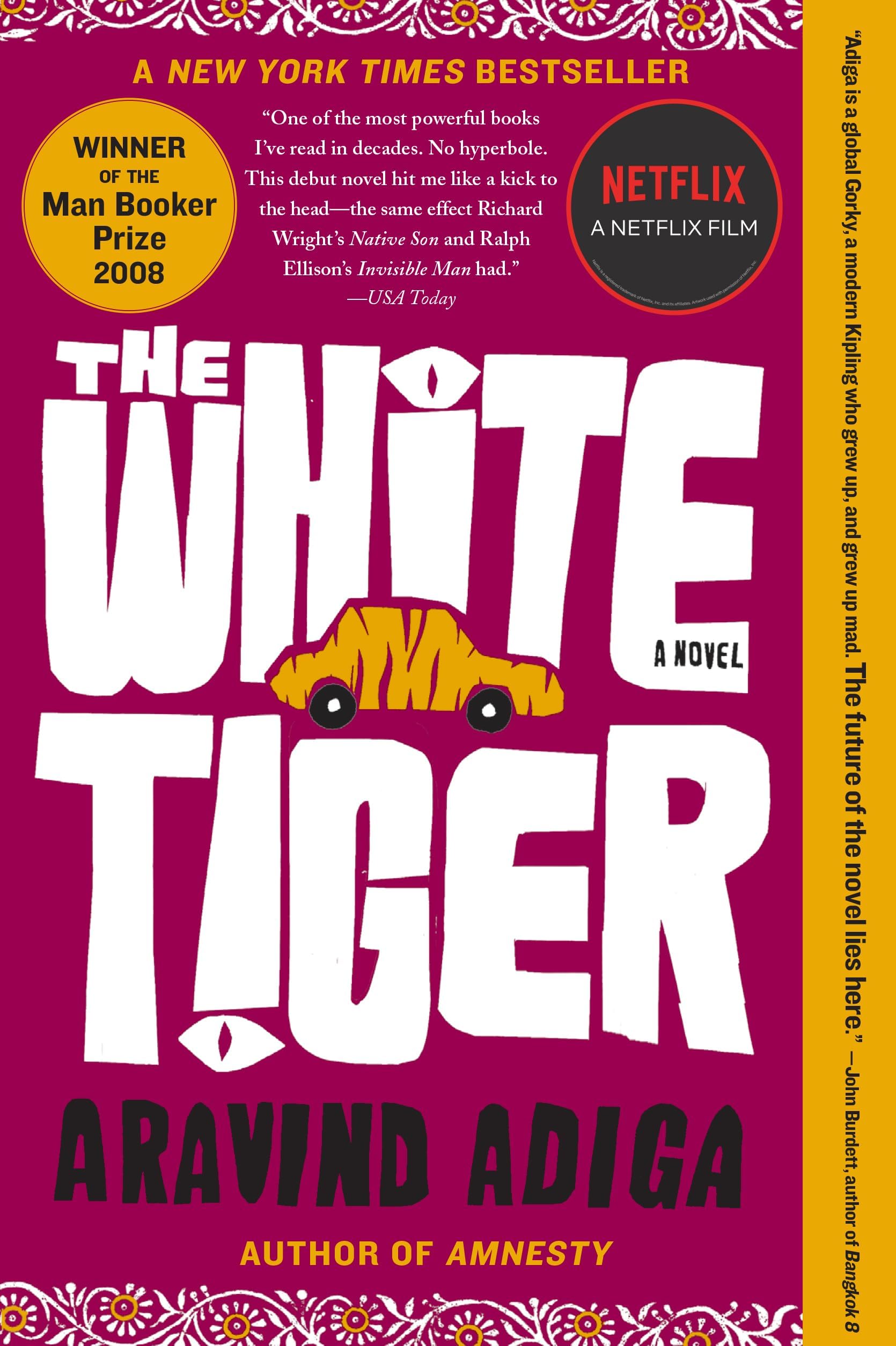
NOW A MAJOR MOTION PICTURE | Winner of the Booker Prize “This is the authentic voice of the Third World, like you've never heard it before.” —John Burdett, author of Bangkok 8 The debut novel from the author of Amnesty and Selection Day Aravind Adiga, The White Tiger is a darkly comic and unflinching look at modern India’s caste system, poverty, corruption, and ambition. At the heart of the novel is Balram Halwai, the so-called “white tiger”—a rare creature who rises against the odds. Born in a poor Indian village, Balram becomes a driver for a wealthy family in Delhi before reinventing himself as a self-made Bangalore entrepreneur. As he recounts his journey in a letter to the visiting president of China, Balram exposes the contradictions of Indian society, where deep-rooted traditions of servitude and inequality collide with the promise of global business and outsourcing. Wickedly funny, brutally honest, and deeply provocative, The White Tiger reveals the stark realities of class, corruption, and opportunity in contemporary India. Amoral yet strangely endearing, Balram’s voice pulls readers into a world both dazzling and unsettling. With its biting social commentary and sharp storytelling, The White Tiger stands as one of the most important works of 21st-century Indian literature—a bold satire and a powerful portrait of ambition and survival. Review: Once In A Generation - "He can read and write but he doesn't understand what he has read. He's half-baked. The country is full of people like him, and we entrust our glorious parliamentary democracy to characters like these. That's the tragedy of this country". "But pay attention: fully formed fellows after twelve years of school and four years of university wear nice suits, they join companies and take orders from other men for the rest of their lives. Entrepreneurs are made from half-baked clay." "We worship him in our temples because he is the shining example of how to serve your master with absolute fidelity, love and devotion. These are the gods they have foisted on us. Understand how hard it is for a man to win his freedom." "You, young man, are an intelligent, honest and vivacious fellow in this crowd of idiots and thugs. In any jungle what is the rarest of animals ... the creature that comes along once in a generation? I thought about it and said: the white tiger." ************ White Tiger begins with an entrepreneur writing a letter to Chinese Premier Wen Jiabao, who is planning a state visit to Bangalore, and tells his life story. Balram grew up so poor he didn't have a name or birthday; his mother was sick and his father too busy as a Bihar rickshaw puller to make a record. After a few years of education he was pulled from school to pay off his sister's dowry by working in a tea shop. Thugs extort money from villagers, hospitals bribe politicians and cheat patients. He rejects religion for making people servile. Balram moves to a nearby city, learning to drive a limousine. Ringing bells at rich people's gates, Balram gets a job as a chauffeur and servant for one of the landlords of his home town. The landlord's son Ashok has just returned from New York with his pretty new wife, Pinky Madam. Balram keeps his ears open, learning his employer and coworker's secrets. He becomes the number one driver over rival employees. The boss is in with corrupt politicians who steal elections and sell public resources for personal gain. A huge kickback is demanded by the Great Socialist. Ashok, Pinky and Balram head for New Delhi to fix the problem, bribing a minister. Delhi is a vast city of crazily numbered streets and endless roundabouts, of extreme air pollution and income disparity. Drivers and servants live in horrible conditions but better than those on the streets. Balram begins to hate the squalor and aspires to the life of his masters. Pinky causes a tragic accident and leaves for New York; Ashok is left alone with Balram. In addition to his driving, Balram cooks, cleans and washes Ashok's feet. He begins to cheat the boss by selling gas, side rides and inflating repairs. In the jungle Maoists smuggle Chinese bombs, waiting to overthrow their masters. When Balram's grandmother arranges a marriage to get his dowry something snaps. He had been sending all his money home but stopped months earlier. Ashok's family made him sign a confession for a crime he didn't commit, wanting him to serve jail time for someone else. Servants were expected to accept abuse without complaint, relatives punished for a servant's transgressions. His nephew arrives unexpectedly from the village with instructions for Balram to look after him. When Ashok makes plans to replace him he takes a terrible revenge, becoming a businessman in Bangalore. Aravind Adiga won the Booker Prize in 2008 for White Tiger, his first novel, which went on to become an Academy Award nominated film. He grew up in a family of doctors, bankers and politicians, not the background of the narrator, but his voice is authentic. Adiga's writing is iconoclastic and must have offended some readers. His critique of conditions of poverty and ignorance, rise of capitalism and corruption is both satirical and sympathetic. As a debut by a young author it is impressive. Although Adiga is comic and entertaining throughout he embeds serious social insights into his story. Review: Story of escape from a rooster's coop - 2008 appears to the be the year to celebrate the story of unconventional transformation, from rags to riches, of India's underdogs - the folks at the very dregs of India's social, cultural, economic and caste strata. "Slumdog Millionaire" has been nominated for a large number of Oscars (with the Oscar ceremony just a few hours away) and Mr. Adiga's book - white tiger - having won the 2008 Man Booker Prize. Both of these share the common theme of putting on center stage the abject filth, absolute corruption and horror of what life at the bottom of India's society can be. All of this interwoven into an entertaining tale of the transformation of an underprivileged protagonist who share the common strains of sheer determination and willingness to take a big risk. In Mr. Adiga's case, it is the tale of transformation of an ordinary chauffeur into a budding entrepreneur in the heart of India's technological center, Bangalore. This is not a story you are likely to read in the pages of Economist or Business week, but every bit as realistic and far more interesting than any your may find there. The story unfolds in a series of letters which the protagonist, Mr. Balram, writes to the Premier of China who is on a visit to India to learn about entrepreneurship. And there is a lot for Mr. Jiabao, and all of us to learn. While Mr. Adiga claims his novel to be a work of fiction, but it is fiction far closer to reality than I seen in recent past in an English novel. The farce that Indian schooling system for the underprivileged is with it drunken teachers and stealing of school uniforms for the poor, the electoral system where only the corrupt stand and looting of ballot boxes and intimidation of anyone wanting to vote is rampant, the unfettered brutality of the police and feudal lords of the anyone without a voice, the horrors of India's dowry system and the abject filth in which the servants live sometime right within the posh housing complex of the upper class are all interwoven into this satirical and entertaining tale. Mr. Adiga's depiction in the character of Ashok, Balram's master, whom Balram kills to make his transformation, of the hollow idealism and impotency of the foreign return middle-class Indian ever ready to make any compromise in the face of corruption to sustain their position of privilege, is also very poignant. This novel lacks the intellectual depth in the depiction of emotions and character as in Umrigar's "The Space Between Us" or the literary finesse of Ms Arundhati Roy in The God of Small Things, two other novels that cover the same clientele, but is more sardonic, comprehensive and witty in its depiction of the absurdity and horrors of life at the bottom of society. Mr. Adiga uses the simile of an overcrowded rooster's coop of the variety that any Indian who has gone to buy chicken in the market of Old Delhi can relate to, to depict how difficult the escape from such a coop is made not only by the net but the other chickens inside who are more likely to hold you back. An escape from this coop is as rare a the sighting of a white tiger, the title of this notable first novel by Aravind Adiga.
| Best Sellers Rank | #69,408 in Books ( See Top 100 in Books ) #194 in Cultural Heritage Fiction #523 in Coming of Age Fiction (Books) #2,471 in Literary Fiction (Books) |
| Customer Reviews | 4.2 out of 5 stars 12,115 Reviews |
D**R
Once In A Generation
"He can read and write but he doesn't understand what he has read. He's half-baked. The country is full of people like him, and we entrust our glorious parliamentary democracy to characters like these. That's the tragedy of this country". "But pay attention: fully formed fellows after twelve years of school and four years of university wear nice suits, they join companies and take orders from other men for the rest of their lives. Entrepreneurs are made from half-baked clay." "We worship him in our temples because he is the shining example of how to serve your master with absolute fidelity, love and devotion. These are the gods they have foisted on us. Understand how hard it is for a man to win his freedom." "You, young man, are an intelligent, honest and vivacious fellow in this crowd of idiots and thugs. In any jungle what is the rarest of animals ... the creature that comes along once in a generation? I thought about it and said: the white tiger." ************ White Tiger begins with an entrepreneur writing a letter to Chinese Premier Wen Jiabao, who is planning a state visit to Bangalore, and tells his life story. Balram grew up so poor he didn't have a name or birthday; his mother was sick and his father too busy as a Bihar rickshaw puller to make a record. After a few years of education he was pulled from school to pay off his sister's dowry by working in a tea shop. Thugs extort money from villagers, hospitals bribe politicians and cheat patients. He rejects religion for making people servile. Balram moves to a nearby city, learning to drive a limousine. Ringing bells at rich people's gates, Balram gets a job as a chauffeur and servant for one of the landlords of his home town. The landlord's son Ashok has just returned from New York with his pretty new wife, Pinky Madam. Balram keeps his ears open, learning his employer and coworker's secrets. He becomes the number one driver over rival employees. The boss is in with corrupt politicians who steal elections and sell public resources for personal gain. A huge kickback is demanded by the Great Socialist. Ashok, Pinky and Balram head for New Delhi to fix the problem, bribing a minister. Delhi is a vast city of crazily numbered streets and endless roundabouts, of extreme air pollution and income disparity. Drivers and servants live in horrible conditions but better than those on the streets. Balram begins to hate the squalor and aspires to the life of his masters. Pinky causes a tragic accident and leaves for New York; Ashok is left alone with Balram. In addition to his driving, Balram cooks, cleans and washes Ashok's feet. He begins to cheat the boss by selling gas, side rides and inflating repairs. In the jungle Maoists smuggle Chinese bombs, waiting to overthrow their masters. When Balram's grandmother arranges a marriage to get his dowry something snaps. He had been sending all his money home but stopped months earlier. Ashok's family made him sign a confession for a crime he didn't commit, wanting him to serve jail time for someone else. Servants were expected to accept abuse without complaint, relatives punished for a servant's transgressions. His nephew arrives unexpectedly from the village with instructions for Balram to look after him. When Ashok makes plans to replace him he takes a terrible revenge, becoming a businessman in Bangalore. Aravind Adiga won the Booker Prize in 2008 for White Tiger, his first novel, which went on to become an Academy Award nominated film. He grew up in a family of doctors, bankers and politicians, not the background of the narrator, but his voice is authentic. Adiga's writing is iconoclastic and must have offended some readers. His critique of conditions of poverty and ignorance, rise of capitalism and corruption is both satirical and sympathetic. As a debut by a young author it is impressive. Although Adiga is comic and entertaining throughout he embeds serious social insights into his story.
A**8
Story of escape from a rooster's coop
2008 appears to the be the year to celebrate the story of unconventional transformation, from rags to riches, of India's underdogs - the folks at the very dregs of India's social, cultural, economic and caste strata. "Slumdog Millionaire" has been nominated for a large number of Oscars (with the Oscar ceremony just a few hours away) and Mr. Adiga's book - white tiger - having won the 2008 Man Booker Prize. Both of these share the common theme of putting on center stage the abject filth, absolute corruption and horror of what life at the bottom of India's society can be. All of this interwoven into an entertaining tale of the transformation of an underprivileged protagonist who share the common strains of sheer determination and willingness to take a big risk. In Mr. Adiga's case, it is the tale of transformation of an ordinary chauffeur into a budding entrepreneur in the heart of India's technological center, Bangalore. This is not a story you are likely to read in the pages of Economist or Business week, but every bit as realistic and far more interesting than any your may find there. The story unfolds in a series of letters which the protagonist, Mr. Balram, writes to the Premier of China who is on a visit to India to learn about entrepreneurship. And there is a lot for Mr. Jiabao, and all of us to learn. While Mr. Adiga claims his novel to be a work of fiction, but it is fiction far closer to reality than I seen in recent past in an English novel. The farce that Indian schooling system for the underprivileged is with it drunken teachers and stealing of school uniforms for the poor, the electoral system where only the corrupt stand and looting of ballot boxes and intimidation of anyone wanting to vote is rampant, the unfettered brutality of the police and feudal lords of the anyone without a voice, the horrors of India's dowry system and the abject filth in which the servants live sometime right within the posh housing complex of the upper class are all interwoven into this satirical and entertaining tale. Mr. Adiga's depiction in the character of Ashok, Balram's master, whom Balram kills to make his transformation, of the hollow idealism and impotency of the foreign return middle-class Indian ever ready to make any compromise in the face of corruption to sustain their position of privilege, is also very poignant. This novel lacks the intellectual depth in the depiction of emotions and character as in Umrigar's "The Space Between Us" or the literary finesse of Ms Arundhati Roy in The God of Small Things, two other novels that cover the same clientele, but is more sardonic, comprehensive and witty in its depiction of the absurdity and horrors of life at the bottom of society. Mr. Adiga uses the simile of an overcrowded rooster's coop of the variety that any Indian who has gone to buy chicken in the market of Old Delhi can relate to, to depict how difficult the escape from such a coop is made not only by the net but the other chickens inside who are more likely to hold you back. An escape from this coop is as rare a the sighting of a white tiger, the title of this notable first novel by Aravind Adiga.
W**N
Incredible Journey Through A Changing India
A Man-Booker Prize nominated book by Aravind Adiga. They remain slaves because they can't see what is beautiful in this world -The Poet Iqbal, as quoted by Balram, the protagonist of the book. To read this book is to leave with the impression that India is a mess. It is 99% of the 2nd most populous nation on Earth being kept in chains of servitude by themselves. Adiga has written a compelling first novel on the liberation of a man born to be a servant of the rich. It describes the way that Balram, a boy born in the Darkness - small villages away from the coast, is sold into indentured servitude to pay off the dowry debts associated with marrying of a daughter. Balram, told by a school inspector that he is a White Tiger - something born once a generation, rises through sheer ambition to become a driver for a local landlord. Through his cunning, he is brought to Delhi to serve as driver for Ashok - the son of the landlord. As a driver, he begins to understand the relation between master and servant in his culture. The servant is nothing more than a throwaway item to be used and discarded. A pivotal moment of the book occurs when Ashok's wife demands to drive after a wild night out with her husband. On the way home, she hits and kills a young child. No one saw the accident. Yet, to be safe, the landlord's family arranges for Balram to confess to the hit-and-run accident. It is a source of pride for Balram's family - that he would do this for the master! From this point, Balram begins a series of rebellions leading up to the murder of Ashok and the theft of millions of rupees. This is not a vicious murder of a hated landlord. Rather, it is an amoral killing of the system that Ashok represents. It is the death of the old system. Yet the old system did not know it was dying. Balram runs away to the southern coast - to Bangalore, the tech capital - and sets up a taxi system for tech companies with the help of bribery of the police. When one of his drivers accidentally kills someone, he uses his connections in the police to sweep it under the rug. He protects his driver. Yet he insists on going to the family's house, paying his respects, giving them thousands of rupees, and hiring the killed boy's brother. The system is not dead, yet Adiga suggests it is changing as the few servants who free themselves change it from within. This is not what westerners would call a morality story in the Western sense. There is a man willing to kill to get ahead. This is a man held up as honorable. The beauty of Adiga's writing is it opens a window into the culture that lets you root for Balram, hold him as honorable, even as he does dishonorable things. Good read.
B**R
Good read ..very crude , and quick ending
I liked the book, but found it too unreal. So I would say it's a good fiction piece. The letter format is too unreal, along with many details happening with this guy including his character is unreal. Transformation from a devotee to a killer is really drastic, and then he did not get caught? no one from Dhanbad ever came to Bangalore? The type of family he worked for, in reality they will not only kill his family but hunt him down like a dog and sniff him out from any where ..after the murder the book raps up too fast. ....but overall first half is enjoyable The main character is very self centered, but shrewd, although quite controversial ( If he really had killer instinct (littrelly) that should show in other actions; Another incidence when he saves the life of his nephew, and knowingly let's his whole family die ?? ; he gives money to the family of the kid who dies from his employed driver, but on the other hand is ready to kill his nephew if he revolts? again very unreal). Book is a good bollywood Movie matrerial (Like Slumdog...) , and I can picture some actors in Bollywood who can perfectly play this role e.g. K K Menon for the main role :) ...
M**.
Excellent, insightful reading
Balram is the narrator of Aravind Adiga's "The White Tiger." An innocent and mostly unassuming man, Balram writes a series of letters to the Premier of China. The unsolicited advice is never answered and probably never read, coming from a man who thinks himself an incredible entrepreneur. Why he writes is never revealed, leading the reader to think Balram is either naive or crazy, perhaps both. Throughout the letters, the narrator reveals his life story and how he became a mildly successful businessman in the growing metropolis of Bangalore. Balram starts out as a tea shop "monkey," saving money to help his family in "the Darkness," Adiga's term for India outside the major cities where the caste system is dominant. "the Darkness," or rather people from "the Darkness" and their ways, is a major theme throughout the book. For example, Balram himself never escapes the niavity that he sees in other people from "the Darkness." As the story progresses, he becomes the servant for a wealthy and corrupt family that has coal interests. One of the members of that family has conflicting interests about exploiting people and bribing politicians, or developing the interests of the country and its people. Eventually, Balram becomes more and more self-sufficient and more and more self-aware to the point that he is corrupted. The story is written from a fascinating perspective, Balram's. He is an excellent narrator and despite his situation's transformation, his overall character never changes. The book moves quickly and is extremely well-written. It is certainly worth a read.
U**S
Memorable Narrator
4.5 Adiga's debut novel gives us on narrator who is, by turns, charming, repugnant, profound, egotistical, insightful, and much more, but always, always fascinating. Balram, when he introduces himself, is a self-made entrepreneur and a murderer. His story is told through a letter he writes to the Chinese Premier who will be visiting his country. His voice is unique and can stand with some of the best know 'narrators' of classic literature. That his is such a different voice from a underrepresented culture from much of the canon literature is perhaps what makes it more real - in that his tale is authentic to who he is, and the world in which he exists, but that world is likely so unfamiliar to the audience that it confounds expectation and forces us to look at our own stance and belief on many moral, philosophical, and religious topics. Anyone who knows me, knows I tend to be highly critical of 1st Person narration for a number of reasons. To create a unique, memorable voice that tells the story is complicated - perhaps more so than many authors understand, despite 1st POV being the instinctual way to tell a story. Besides the need for a unique voice, 1st POV can only tell one story always filtered through the narrator and too often authors try to short-cut or work around this and find ways to tell another story that we are to believe is not filtered through the consciousness telling that story. Here, however, that is never the case. We are left with no doubt that the world Balram inhabits is all his. Balsam offers to give the Premier insight into his country through his own tale of being born in a lower caste in the 'darkness', through his sporadic and limited education to the moment he gets lucky and becomes a driver for a wealthy man. Through his bizarre, amusing, shocking, winding tale, we do see an India that is far different than the Bollywood films or many popular books and films. Balram's world is filled with corruption, yet there is a level of honor within that established system. There is a hardness and a harshness to many of the lives presented, yet there is an acceptance of them that is surprising. Balram's life is one of service, yet he finds a door to freedom, albeit one that while revealed early on, takes an entire book to build to. When we first hear him refer to himself as a murderer, we want to dislike him - yet it is difficult to do. Bit by bit we are drawn into his world and his worldview. In the end, he participates in the very system he needed to escape from, but he does so on his own terms and with his moral sense in tact, leaving him feeling he at least is living in that system in a better, more moral way. The ability to convince the audience of the same is perhaps the real power of Balram, and Adiga. My one criticism of the novel is that were moments that felt repetitive, that we'd covered that ground well and needed to move on. Fortunately, they were few and far between, and overall I was absorbed into Balram's world. For this book, I alternated between the kindle version and the audio - and I have to say that the narrator on the audio version was excellent, bringing life to a diverse cast of characters with slight shifts in tone, rhythm, pitch, and subtly that was masterful. Considering the story is 1st POV, that the audio narrator had to filter all the characters through the storyteller, it was extremely well done because it felt like Balram was imitating those around him, giving us yet another layer of story.
B**M
A scathing satire of modern India
If the character of Francis Urquhart (from the novel House of Cards by Michael Dobbs) had been born in abject poverty in rural India, he might have told this story. The protagonist, Balram Halwai, is the White Tiger referenced in the title. Balram is equal parts charming and repugnant as a character. He tells the story of his life in a letter to the Chinese premier who is about to visit his country, explaining the path that took him out of The Darkness of India and into success as an entrepreneur. Along the way, he paints a scathing picture of modern India, exposing the degradations imposed on the poor (who are condemned to live in a brutal servitude known as The Rooster Coop), to the rampant corruption, to the massive upheavals to traditional social structure, to the chasm between the powerful rich and the poor masses. India is seen through the eyes of someone who has discovered the narrow path of mental and physical freedom out of The Rooster Coop and is willing to pay the price to achieve that freedom. The imagery will remain with the reader long after finishing the novel. Side note: the novel contains profanity and some vulgar and violent descriptions (for those who do not want this type of content)
A**S
Highly recommend
Painful to read and painful to get through. Poverty is soul destroying as this book so expertly and with a bull's eye direct hit pointedly remonstrates with the reader, in fact, I'd say begs the reader to see walking in the shoes of someone who grows up so horribly poor and demeaned. Any errors in describing specific Indian poverty should be overlooked because the big picture of poverty is so ably and realistically portrayed. Any poor citizen in the world from Africa to the Americas, if they've had enough of an education to read will recognize the utter helplessness and feelings of hopelessness and futility of being poor. I highly recommend that people fast for three days, live on the streets without bathing, flush bathroom or money, sit on a sidewalk and see how the world behaves towards you. I have read many reviews where it is obvious the world of poverty is an abstract idea and has never been lived. Poor people in every society not only live with the degradation and pain of having nothing next door to impossible wealth, but they are pressed deeper into filth with accusations of immorality and lack of will. Before panning this book, if you cannot get past a mental mindset based on a middle-class lifestyle and education, you will not see what the book is really about. Yes, it uses an Indian backset and a class culture created by the Hindu religion, but the point is how poverty overwhelms the luxury of morality and generosity and love. When you are poor love, marriage and children drown you into deeper generational poverty. Lack of education further dooms one into a life of slavery, whatever Pollyanna words (such as 'servants', virtually unpaid) are used to cover up the utter failure to help a human being to read, eat well, or live in clean housing, or raise children in a decent environment. Any traveler to many countries has seen children playing in open sewers without, I suspect, really thinking about that for too long. I've been in conversations where well fed Westerners cannot fathom "how they can live like that." I cannot fathom the lack of empathy or understanding. Any doctor can describe how a lifetime of malnutrition affects the brain and body. Any person with means who moved to a new city and feels lost without knowing where the stores and dry cleaners are is getting a very small taste of what it is like for a person of no education and low caste to function in a higher tech world. Add in cultural religious pieties which in my experience are as useful as handing toys to a starving child and you have a class of humans who believe in their enslavement and early death and utter misery is their lot, as well as the spitting in their faces by wealthier folks who despise them for their dirty bodies, lack of teeth and cultural practices which add to their poor health. Carl Rogers wrote of how his eyes were opened when he went to China as a missionary convinced that Christianity would lift the Chinese out of a "lessor" society, only to discover schools and food and doctors and decent housing would do far more to improve the lives of the poor Chinese rather than memorizing Bible verses. When it comes to poverty so many people think in terms of spiritual salvation and morality and ignore the physical necessities of survival.
�**A
The White Tiger - only once in a generation this special ...
.. one of a kind is born. And as a real tiger or a human being he (or she...) will be the most extraordinary example of his or her kind. Here we follow the development of a poor 'half-baked' Indian boy named simply Gunna - Boy. Because no-one in his family had the time to give him a real name. His teacher finally names him. But he has changed now again, leaving the old name behind like a snake leaves its skin. Now he has become an entrepreneur - and his story is masterly told by Aravind Adiga. Who rightfully won the Man Booker Prize in 2008. And what a story it is! It will be given to us in form of letters our now adult protagonist is writing night after night to the Premier of China, in Beijing - by him called 'The Capital of the Freedom-Loving Nation of China'. From a extraordinary talented scholar in his village to an almost-slave in a tea-shop. Then to the high-rises of Delhi as a junior driver for a very rich, but also very malleable millionaire. And the whole family - with the roots in the same village our boy came from, plus one American spouse - see in him only a beast of burden. Only his Master has some limited form of human feelings for him. The boy sleeps in the basement with roaches and dreams the impossible dream. Contacts with other drivers in similar situations will teach him to find a way out of this one-way street. The Money his salary - which once rolled right into the hands of his odious grandmother in the dirty hometown - now he keeps it for his way out. But the corruption that surrounds him day by day will corrupt him too, and very soon. Now the question is: Will he really be able to commit murder to realize his dreams of a free - and before all - totally independent life? The answer comes very soon in the letters he writes from his new office, adorned with a lot of crystal chandeliers. He is an 'entrepreneur' now - and Jo's start-ups are very successful. He plans for the future, too. But he has lost almost all humanity. So he has finally become a real 'White Tiger' - merciless feeding on everything and everyone, and be sure to be the first on the meal. A very accurate picture of the India when Bangalore came up as the Silicon Valley of India. Our hero has found the right place to enlarge his activities into the sector of real-estate. Where there will be people they need places. I only wish that this very talented author writes a book like "10 Years Later" - to see if that White Tiger had survived the modern jungle of hyper-modern India... Have to read 2 books of Aravind Adiga, "Last Man in Tower" and "Between the Assassinations". Both are a clear mirror of the Indian Society and touch the themes of corruption and Hindus vs Muslims. I will review those books, too. But this one is a clear 5**** star, a wonderful example how a citizen is more than able to judge his 'Mother India' and the moral corruption without annoying an interested reader like me. Reccomended for those with an open mind, especially for foreign cultures and upcoming industrial giants.
H**N
Love to read book with simple words
For progress of English language skills
T**E
Excelente estado
Libro totalmente nuevo, en excelente estado, llego 1 día antes de lo marcado
C**4
Just read it!
A superb, brilliant book. Could only have been written by someone from India, despite some reviewers and interviewers critical of his wealthy upbringing and education as a potential deterrent to his writing of such a book. His perspective is magnificent. Empathy, sadness and humour, all there. A first novel; all hail to him. A well-deserved prizewinner. It was suggested to me recently that I read it. Sorry that I didn't discover it years ago but so thankful that I now have; a treasure.
G**M
Der Wahnsinn
Das Buch ist echt aussergewöhnlich sowohl von der Erzählform und dem Stil her, als auch vom Inhalt. Muss man gelesen haben. Die Geschichte wird erzählt als eine Folge von E-Mails des Protagonisten an den chinesischen Premier, welcher in Kürze das Land besuchen wird. Dabei ist sowohl die Sprach-Mentalität -- das kann man nicht beschreiben, aber jeder, der schon regelmässig mit Indern kommuniziert hat, erkennt es sofort wieder -- umwerfend gut getroffen, als auch die ungeschönte Schilderung der Lebensumstände, der offenen Menschenverachtung und des offenen Rassismus, welche im größeren Teil der Welt vorherrschen. Auch der "Erfolg" zu jedem Preis, der in weiten Teilen der Welt vorherrscht ("erfolgreich sein" ist in einigen Ländern auch sprachlich synonym mit "Geld haben"). Mit dem Geld kommt automatisch Ansehen und rechtsfreiheit -- egal, wieviele Verbrechen man auf dem Weg begangen hat. Auch die tiefgreifende Verlogenheit und Korruption des angeblich sozialen/sozialdemokratischen Staatssystems, welches die Armen ausbeutet und die Reichen reicher macht -- mit "the Great Socialist" umschrieben -- die man ja eigentlich überall auf der Welt antrifft (auch bei uns, nur spricht nicht darüber) ist umwerfend gut geschildert -- inklusive Wahlbetrug und Handel mit Ämtern. Wer noch nicht in Indien gewesen ist (oder nur als Tourist im "Licht"), dem mag die Schilderung teilweise übertrieben oder sogar bösartig verleumderisch vorkommen. Wer aber Indien oder Südostasien generell schon "hautnah" erlebt hat, und auch erlebt hat wie wenig ein Leben wert ist, wenn einer kein Geld hat, und dass man andererseits mit 10 Euro so ziemlich alles und jeden kaufen kann, der wird beeindruckt sein von der Detailtreue sowie dem Mut des Autors, die Wahrheit tatsächlich so unverblümt aufzuschreiben. Gut für ihn, dass er in Australien wohnt, denn in Indien kann er sich wohl nicht mehr blicken lassen. Das mir gelieferte Exemplar war -- vom Inhalt abgesehen -- etwas schlecht gearbeitet, die Seiten teils nicht richtig geschnitten, und teils eingerissen. Schade, aber bei einem Taschenbuch für 6€ ist das verschmerzbar.
Trustpilot
1 month ago
5 days ago