🍞 Elevate your home baking game—because fresh, flawless bread waits for no one!
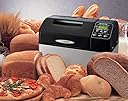
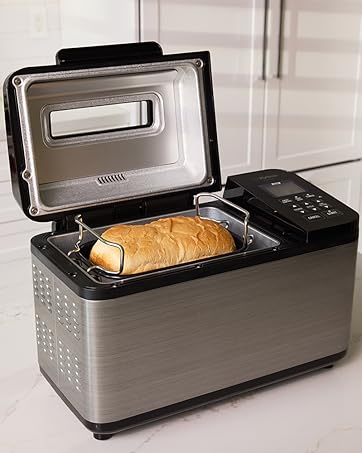
The Zojirushi Home Bakery Supreme Breadmaker is a premium 2-pound capacity bread machine featuring 10 versatile programs including bread, cake, jam, and meatloaf. It offers precise crust shade control, a quiet dual-paddle kneading system for superior gluten development, and a convenient 13-hour delay timer. Its user-friendly LCD panel and non-stick interior ensure easy operation and cleanup, making it a top choice for millennial professionals seeking gourmet homemade bread with minimal effort.


| ASIN | B002XVUAOU |
| Best Sellers Rank | #31,276 in Kitchen & Dining ( See Top 100 in Kitchen & Dining ) #26 in Bread Machines |
| Brand Name | Zojirushi |
| Capacity | 2 Pounds |
| Color | Black |
| Customer Reviews | 4.3 4.3 out of 5 stars (3,137) |
| Global Trade Identification Number | 04974305706843 |
| Included Components | Breadmaker, inner cooking pan, measuring cups, manual, recipe booklet |
| Item Dimensions D x W x H | 8.5"D x 16.87"W x 12.25"H |
| Item Type Name | Home Bakery Supreme Breadmaker |
| Item Weight | 19.5 Pounds |
| Manufacturer | Zojirushi |
| Material | Stainless Steel |
| Model Number | BB-CEC20 |
| Number of Programs | 10 |
| Part Number | BB-CEC20BA |
| Product Care Instructions | Hand Wash Only |
| UPC | 722651276084 083883800752 667562990257 722651279061 721272065671 737989656026 |
| Voltage | 120 Volts |
| Warranty Description | 1-year warranty |
| Wattage | 700 watts |
C**R
Great bread and a great machine
About a year ago we bought a Breadman Pro breadmaker, which was OK. But it has started to have the spindle for the paddle fall out, which can be a bit awkward if it happens at the wrong time. Parts are hard to find, so I decided to get another breadmaker. When I was looking last year, I was very taken by this Zojirushi, but we got the Breadman Pro locally for about $50, so we went with that. The Zojirushi arrived very quickly and in good order. I washed the pan and paddles, set it up, and decided to try the Basic White loaf. Result: a really good loaf of bread. The best I've ever tasted? No, but very, very good! Comparisons. The Zojirushi is much, much quieter in operation. Very quiet, in fact, which is much appreciated. I am careful with my measurements for bread, but I got this loaf as a far better 2 lb. loaf than the Breadman Pro could do. The shape was better, it had a nice crust (I think it was the butter), and was more even within in terms of texture and form. The two smaller paddles came out of the loaf very cleanly and left far less disturbance than in the Breadman Pro (which has one larger paddle). And the indentations were crusted, rather than torn bread. The larger pan of the Zojirushi allows a 2 lb. loaf that is longer (about 1.5 inches) and so not as high as the Breadman Pro. It doesn't spill over the sides of the pan. The shape fits nicely into the bread cutting form we have, so we can slice it nicely. At present, sandwiches for all 5 of us for lunch consumes a whole loaf, less a couple of slices, so this longer loaf will allow us more slices per loaf. I had cut back to 1.5 lb loaves with the Breadman Pro, as the shape of the top of the 2 lb. loaves wasn't good for cutting and using for sandwiches, but these 2 lb. loaves will do us very nicely. Still to be tested is whole wheat bread and various specialty recipes. But this good start is very promising. Will report back later. June, 2011, Update. This machine is still amazing. It produces excellent raisin loaf, and the recipe for the custom Crusty French Bread can be run through the ordinary cycle with excellent results: it's my more common loaf. We've produced a loaf a day for most of the time we've had it, and it has worked very, very well. Loaves are a good shape for sandwiches. It produces very good bread with some wholemeal flour, but fully wholemeal loaves are still a bit heavy, but the family still eat them: I need to experiment more! Various other loaves from the recipe book have been great. Points to watch. As noted in other reviews, you do need to get the paddles out when washing the pan, but the non-stick surface makes this easy. The non-stick material on the 6 rivet heads on the base of the pan seems a little less effective, and a little material may adhere to the spindles, but these are simple checks you washed it properly. I don't think I've had a time where a paddle has stayed in a loaf, as they seem to bake a crust around themselves. Wiping with your finger in a wet cloth after washing seems to clean it well enough. The fact that there is a supporting website and spare parts is very comforting after the vacuum of support for our old Breadman Pro when it failed. I'd rather pay more and get longer life and support, as well as better bread. I don't think that the Zojirushi has produced a loaf one could call 'below average.' I am not sure why the people who couldn't get it to work had problems, but a little fine tuning can make a difference, e.g., I use a tiny fraction less yeast than the recipe for a better loaf. In summary, an excellent piece of equipment that is a fixture in our kitchen. It works well and without drama. It's not cheap, but you get what you pay for here: a quality product which does what it's supposed to. November, 2015, Update. Still working well, without any dramas. We had to cut back on bread, as two of the four people now living here can't have gluten, one of them seriously. So the breadmaker sat on a shelf for quite a while. But the arrival of gluten-free bread mixes (especially Bob's Red Mill) have revived the Zojirushi, and it didn't miss a beat. We now have three gluten-free styles (whole grain, white and raisin), which produce great bread. I tend to add extra yeast to help them rise a bit quicker in the available time, and the resulting loaves are greatly appreciated. I am very glad I bought this machine. It has been flawless and is so easy to use, and produces great bread. Would that all kitchen appliances were so well made and work so well. Six or more stars, if that were possible! May, 2019, Update. It's still going strong. I just made a gluten-free loaf yesterday and a regular loaf today, and both turned out very well. Several years ago I bought a pair of new paddles, as the original ones were starting to lose their coating and bread was sticking to them. That was quick and easy and we have since settled back into a regular routine with bread without any drama or concerns. This has turned out to be an excellent investment. Far better bread than any previous bread maker we've used, and trouble-free operation. It's simply an impressive product that I am very happy I bought.
S**T
Best kneading, light top crust, GREAT BREAD!
THOROUGHLY RESEARCHED BREADMAKERS BEFORE I TOOK THE LEAP I have been using this Zoji daily for a month and am very pleased. I have 4 decades of home bread baking experience and have tired of the kneading process, although I still love shaping loaves and rolls and pizza crusts. Before I made this purchase, I researched breadmakers and bread machines everywhere I could--in books, on websites about breadmaking and flours, at Amazon (where the reviews are always the most enlightening), at retailers online, and in brick & mortar stores. Analysis of the qualities of this Zoji led me to make this purchase and I was lucky enough to make my decision when the price was as right as it was going to get. Quite obviously, the Zoji isn't cheap, but it is a great value. And value matters more to me in the long run. QUALITIES THAT SOLD ME: HORIZONTAL BREAD PAN, 2 KNEADING PADDLES, GREAT TEMPERATURE CONTROL The main qualities of this Zoji that finally convinced me were the longer, more horizontal bread pan, the two kneading paddles, and the detail about temperatures and times for each phase of the Zoji process (these are available in the Zoji manual on their website). I have to admit I was also influenced by the King Arthur Flour blog and several related posts I ran across (google "king arthur flour zojirushi test kitchen" for some fascinating observations). What you get with the Zoji is a machine designed by people who know what they're doing in terms of gluten development, temperature control, and rising times. VERSATILE MACHINE TAKES THE PROCESS TO COMPLETION WITH FLYING COLORS The Zoji is perfect for me. The two kneading paddles thoroughly develop the gluten and work the dough into a smooth, even textured ball so that I may shape the rolls or loaves myself. Or I can let the machine do ALL the work. I don't know how Zoji has managed it but the loaf is beautifully shaped by the machine just before the final rise. I often open the lid at that point and sneak in with a knife to make some slashes across the top of the loaf to give the bread a more handmade look, but I don't have to do this. The Zoji, unlike any breadmaker I've tried before, is perfectly capable of taking the breadmaking process from start to finish all by itself while still turning out an exquisite product. It is a tremendous time-saver. You really can set it and forget it. BETTER FLAVOR DEVELOPMENT THAN HANDMADE! The thorough kneading and three rises that the Zoji gives the dough make the flavor of the finished bread richer and more complex. The controlled temperatures at each phase of the breadmaking process lead to a beautifully-textured loaf. The recipes that are included are wonderful. But I have to admit that I prefer to use my own combinations of kefir, eggs, less salt, whole wheat flour, and yeast. The Zoji still gives great results even though I don't measure my ingredients. EASY TO CLEAN Before each use, I pour a bit of canola or olive oil on the posts where the two paddles will be inserted. Then I place the paddles on the posts and pour in a bit more oil. I am careful to keep the amount of oil to a minimum so that the bread does not get oily. I then reduce the fat in the recipe by the amount I used to pre-oil the paddles and posts. By doing this step first before I add any other ingredients to the bread pan, I find that the loaf slips effortlessly from the pan, the paddles slip easily off their posts, and nothing requires washing. A quick wipe with a moist cloth is all that is required for clean-up. When I made bread by hand, there was a lot more washing to do at the end. Now instead of washing dishes, I get to sit down and enjoy a slice of hot, crusty, steamy bread. Delicious and easy! CLEAN, UNOBTRUSIVE APPEARANCE ON THE COUNTER The Zoji is also a very good-looking countertop kitchen appliance. Since I use mine so often, I never put it away. The fact that the breadmaker is so handsome is just one more quality in its favor. ONE IMPERFECTION: THE TOP CRUST DOES NOT BROWN ENOUGH ON ANY SETTING My only complaint is that the top crust does not brown as nicely as I'd prefer. But this is a minor problem. The bread tastes GREAT. The top crust is acceptable although not perfect and could be corrected with a few moments under a broiler. The flavor and texture of the bread are just outstanding. FIVE STARS ANYWAY! I would like to have given 5 stars, but I think the Zoji designers really ought to be motivated to tweak their awesome bread machine so that it is absolutely perfect. Aw what the heck, the Zoji is so great, I'm giving it 5 stars anyway!!!
F**U
Si sigues las instrucciones (porciones y medidas) es una súper herramienta para tener pan recién hecho todos los días en tu casa!
J**N
I bought mine (Zojirushi BB-CEC20WB Home Bakery Supreme, White) three weeks ago. Before that, I had a few other bread makers (vertical Philips Deluxe, Horizontal Philips, Tefal home bread baguette bread maker) and had a close look at pretty much every model available at Sears, Canadian Tire, Walmart, Costco and Zellers (Cuisinart, B&D, West Bend and so on). Most bread maker models had a remarkably low quality with poor design, disgusting appearance, cheap knobs falling out or in, poor coating, sharp edges, aluminum or plastic transmissions and even plastic kneading blades (!). Before Tefal, I also bought the famous Kitchen Aid mixer, quite advanced, expensive and powerful (600 Wt) model, but, surprisingly, it could not prepare whole wheat dough properly, the process was quite messy, aluminum hook etc., so I returned it back to the store. In between, I was making bread manually. Thus, my impression is that for making bread and moderate amounts of dough, a good bread maker seems to be the best choice. To my experience, the main problem with more or less decent bread makers, like Horizontal Philips or Tefal baguette, is that even though the bread maker itself still works fine, the companies are no longer supplying spare parts, particularly bread pans and paddles. So after a while, usually when the bread pan starts leaking in a year or two, the whole machine becomes almost useless. Thus, having spare parts was a big plus for considering Zojirushi. Yet another was composing custom programs. The price... Well, Tefal cost $199 ($149 on sale) when I bought it, Horizontal Philips was $149. Zojirushi cost $214, now it costs $189. There is some difference indeed, but Zojirushi design is far superiour. Now some of my impressions. First of all, the Zojirushi unit is very well balanced and is NOT moving during kneading. Most other bread makers I tried, except Tefal baguette, tended to move (which means a good chance of falling off the shelf or table, running into something, falling into the kitchen sink filled with water and dishes, plugging themselves out and so on). The Zojirushi is quiet. In fact, this is probably the least noisy bread maker I have used. The unit is decently designed. It fits nicely under the kitchen shelves. The lead does NOT tend to fall onto your fingers when you open the bread maker. By the way, Tefal baguette rack fits well into Zojirushi, too. Zojirushi remembers not only the last program used, but also its modifications, like preheat on or off, which is convenient. In other bread makers, browsing through beeping menus every time the unit is on seems a bit annoying. Quality of dough and bread is good even for standard programs and an average "Selection" or "Compliments" flour from Food Basic or Price Chopper. The crust is NOT too dark if "light" is chosen. The loaf is NOT too heavy. I think the problems other folks have reported (the crust was too dark or uneven, bread much higher on one side, too hard etc.) were mostly due to their recipes or measuring errors, - if their units are not lemons, of course. Mine is apparently not. That custom programming allows to bake beautiful loafs, perfect, absolutely fantastic. To illustrate what can be achieved by using the breadmaker's custom programming, I have added some images to the "Customer Images" section. They clearly show a good performance of the machine even in preparing some of the healthiest and best tasting (but also most demanding) types of bread, including old Russian style rye sour dough bread and whole wheat sore dough bread. Recipe book and the instructional DVD are nice to have, even though I am mostly using my own recipes. The paddles are made in such a way that they do not stick inside the loaf - a really nice feature that I have not seen in any other bread maker. Cleaning the pan is exceptionally easy comparing to the other brands. Just soak for half an hour or so in warm water, the blades are going off easily. Now some potentially weak points. The bread pan will probably need a replacement in a year or two - but this is true for any bread maker I have seen. A stainless steel pan and paddles, by the way, would make the breadmaker even more attractive. There are no additional side supports for the bread pan (thus the bottom mount experiences higher loads), - but, on the other hand, it makes the pan insertion and removal more convenient. Nice looking, well designed, convenient, reliable, fool-proof. In summary, this is the best bread maker I have ever had. ~~~~~~~~~~~~~~~~~~ After a while ~~~~~~~~~~~~~~~~~~ December 2, 2012, more than a year after my happy purchase. As I expected, the bread pan and the paddles proved to be the weakest point of the bread maker. After I paid a ridiculously high cost of the replacement pan and paddles (around $110), I found that the replacement blades themselves, like the original ones, are also being heavily worn during mixing, especially at their upper part, from inside the hole. Since they are made of aluminum, it results in releasing of toxic aluminum into the food, which is not acceptable. I could only wish both the pan and the paddles were made of a less toxic material. In the meantime, I simply took off the blades. Now I am mixing the dough manually in a ceramic bowl (it takes about 5 minutes), then I put the dough in the pan with the blades removed and launch a simple custom program (say, 20 min preheat, 2 hrs to 2 hrs 30 min rise and 1 hr 10 min bake). Thus, no mixing, no toxic metal release in my food and no wearing of the precious bread pan. By the way, it seems that release of aluminum into the food is a common problem for all bread makers, since the pan and paddles are made of aluminum and are wearing out while mixing the dough. Since aluminum is heavily used in food industry, commercially available bread is probably contaminated with aluminum, too. Fortunately, the design and programming of the Zojirushi bread maker was flexible enough, so I could circumvent the aluminum problem. For that custom program, the machine also allows to set the crust control. I noticed that after the brief manual mixing, the bread rises less than after the machine mixing, which may sometimes be even advantageous. The texture and taste are also different, but very good, too.
M**L
I chose this machine as my 4th breadmaker in 5 years. We have already "killed" a Breadman, a Black and Decker and a TFal. I really hope this one lasts. It certainly feels solid and it is soooo much quieter than any of the others. I used to make sure I didn't have anything else to do in the kitchen when the others were kneading because I couldn't stand the racket. This one I have to check and see if it's working. It does take up more counter space even than my TFal, which was also horizontal, and it doesn't fit in the cabinet spot I had "reserved". But it's worth it. I always have to "break in" my new machines but this time I just used my tried and true family favourite--I do think it's the Canadian flour thing that gets me in trouble when I try the recipes included with the machines. Have also made beautiful bagel dough, and the overnight timer works perfectly. (With other machines the temp has been wrong by morning but the preheat on the Zojirushi seems to make a difference.) I do find the crust a bit light for my taste, but it's not a deal-breaker, and that just seems to be me, judging by the other reviews. I loved that it didn't stink up my house the first time I used it--I expected to throw out the first loaf, just wanted to do a bake and burn off the chemicals. However, the smell during the first cycle was hardly noticable and we've enjoyed the bread from that first loaf. I left the blades in the first time, and was really pleased that they came out without leaving a huge rip in the bottom of the loaf. Generally though I watch the cycle and remove the blades after the final knead. If you haven't used a horizontal machine, it's so worth it to have a normal-shaped loaf, especially if you plan to feed a family regularly rather than just make an occasional loaf. It was expensive, but honestly, why spend so much more for the stainless one? The white one was a relative bargain. Note I've been using it for a couple of weeks now. I hope it lasts, but if it doesn't I will try to get replacement parts and keep going. (I got a replacement part for my old TFal and have it in reserve--getting parts always takes forever and I get impatient waiting--so this time I have a backup if I have to replace anything on this one.) Editing 5 months in...still loving this machine, absolutely no issues with it. It's quiet and reliable. My favourite bread machine so far. I can see that the paddles might wear, there is a little wobble starting to show in the way they fit, but I did see replacement paddles somewhere...
D**N
I owned a cheaper breadmaker before (Hamilton Beach), which was pretty good and made tasty bread, but this machine is far, far superior, both in terms of the build quality and in terms of the bread it makes. If you are serious about making bread, this is the sucker to get for sure. Key advantages: -- Makes delicious bread every single time. -- Makes a normal shaped loaf and can also make smaller loaves (although it is better at the standard size). -- Quite easy to use. -- Easy to order and find replacement parts (forget this with cheap breadmakers) -- High build quality overall. -- Good recipe book that comes with it that explains things very well. -- Is heavy and so does not move around the counter or seem unstable. Disadvantages -- Can be a bit noisier than I'd like. -- Looks like it was teleported here from 1997. -- Expensive. -- Is big and takes up a lot of space on the counter. These machines are not cheap, so it might be a good idea to figure out if you are really serious about making bread before buying this machine. The cheaper machines (e.g. Hamilton Beach) are far below the Zojurushis in terms of build quality but actually work fine for straightforward items like white bread, and you can probably buy them for next to nothing, either new or used. However, if you know that you will use your breadmaker a lot, this is a great machine.
L**B
I've had this bread machine for over a year and I use it at least once a week. My standard recipe is a simple sourdough on the regular setting (I've never tried the sourdough setting – it seems like a useless extra), plus pizza dough and various ryes and brown breads when I'm feeling adventurous. My standard recipe plus the pizza dough never fails. I purchased the Zojirushi after a lot of research. My previous bread machine was a refurbished Regal model that lasted over ten years. The Zojirushi came up as the premium model with good reviews on many sites. I picked it because it seemed reliable, I liked the rectangular loaf pan, and it had lots of options. General Observations: Counter footprint is okay – not overwhelming, but not really "space saving" either. Machine looks nice and sleek, a bit like a large lunchbucket. It's heavy, so I keep it on the counter. It's not a small appliance but the shape is narrower than my old breadmaker so I'm happy. I don't bother with the room temperature thing where you have all the ingredients sit in the pan so they get to the same room temperature. It takes a little figuring to turn it off, but once it's off, it stays off. Otherwise, the bread would take almost 4 hours to make. Advance setting (future bread timer) has screwed up once or twice and baked unmixed bread. I'm not sure that I can blame this on the machine, though. I've never put the pan in the dishwasher. Doesn't need it – it cleans up quickly. I'm able to "read" dough and don't bother too much with the exact proportions or how the ingredients have to be layered. I throw them in any which way and it always works. However, for delayed baking, I tend to follow directions exactly and have had some misses. Pros: Loaf pan is awesome. I've NEVER had a loaf stick or break when removing it from the pan. Bread comes out smoothly each and every time with a few shakes. I can't say enough about this feature – it's probably the most important part because it's the everyday convenience. Dual paddles, yay! And they have never needed to be pried out of the loaf. Not once. Excellent directions. Clear, colorful, easy. Never had a loaf over-rise and flood the container, which happened a lot with the old one. The capacity of this one seems perfect. Cleans up like a dream. Rinse a few times, done. Dough setting has always made perfect dough. Predictable and easy to watch whether you have the window or the lunchbucket-like roof open while you're monitoring the consistency of the dough, which I recommend you do. Consumes less electricity than my old model (doesn't trip my circuit). Cons: It's complex – almost too many settings to cycle through, but the directions are excellent. No small (1 lb or 1.5 lb) loaf setting. However, I've ignored the directions and made smaller loaves and they seem to be okay. Jam setting really doesn't work, but I am not an expert and suspect jam just has to be made on a stove. Not as fast as my old Regal – about three and a half hours instead of the usual 2:15 I was used to, but bigger loaves. The 2 hour "speed setting" makes pretty crappy bread. Don't use it. Loaves come out slightly uneven as others have observed but this really doesn't bother me. The coating on the upper corners of the pan is cracking slightly – kind of like a wrinkle? -after a year's use. This does bother me. Conclusion: was it worth the extra $? I am not sure. I know that I am absolutely in love with the loaf pan and the structure. The thing that used to drive me nuts with my old breadmaker was how hard it was to get the bread out. I would easily pay $ for the dual-paddle loaf pan but, in retrospect, I wish I'd gotten a smaller machine with the ability to make faster/smaller breads. But only if it has this loaf pan. Anyway, so far, so good. It is easy to use so it gets a lot of use.
Trustpilot
5 days ago
1 month ago