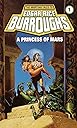
A Princess of Mars
Product ID: 28037869
Desertcart purchases this item on your behalf and handles shipping, customs, and support to Indonesia.
Suddenly projected to Mars, John Carter found himself captive of the savage green men of Thark. With him was Dejah Thoris, lovely Princess of Helium. And between them and rescue lay a thousand miles of deadly enemies and unknown dangers. The green warrior decided to close in and end the battle; just as he rushed me, a blinding light struck full in my eyes, so that I could not see Zad's approach and could only leap blindly to one side to avoid his mighty blade. It caught me in the left shoulder; but as my vision cleared a sight met my astonished gaze that almost made me forget the fight. Standing on her chariot with Sola and Sarkoja, my beloved Dejah Thoris turned on Sarkoja with the fury of a tigress and struck something that flashed in the sunlight from her upraised hand. Then I knew what had blinded me at that crucial moment, and how Sarkoja had found a way to kill me without herself delivering the final thrust! Sarkoja, her face livid with baffled rage, whipped out her dagger and aimed a terrific blow at Dejah Thoris—and Zad was once more advancing on me with reddened blade. I felt the steel tear into my chest and all went black before me. . . . Review: Adventure, romance, is book has it all -- love it! - At the close of the Civil War, Confederate cavalryman John Carter found himself to be a man without a country -- and so he bid farewell to his native Virginia and headed west in search of gold. While attempting to save his prospecting partner from an Apache attack, Carter seeks refuge in a cave -- a cave with mystical properties as he soon finds himself transported to Mars, otherwise known as Barsoom. The variances in the Martian atmosphere gift Carter with a preternatural speed and strength. Carter's newly-discovered gifts allow him to survive among the Tharks, a nomadic, six-limbed tribe of fierce Martian warriors, winning him the hard-won respect of Tars Tarkas, one of the tribe's premiere chieftains. Carter gives little thought to his long-term future on Mars until the Tharks capture Dejah Thoris, the beloved Princess of Helium, one of the Red -- or humanoid -- Martians centers of power. In a life or death struggle to safeguard Dejah from the warlike Tharks and restore her to her people, Carter falls in love -- and in losing his heart finds a reason to fight for a future on this planet so different from his own. I cannot remember the last time I indulged in the luxury of re-reading a book, so to read A Princess of Mars twice in four months? That's something special indeed. A Princess of Mars is my first experience with early 20th-century classic pulp fiction, and it has proven to be a memorable one indeed. Burroughs's first drafted John Carter's first adventure after a series of failed business ventures. The behind-the-scenes featurette on the recently released film, "100 Years in the Making," posits that John Carter was birthed out of an existential crisis in the author's life -- and taken as such it is fascinating to watch Carter's journey from outsider to Martian hero unfold. A Princess of Mars is in many respects the first space western, with the arid Martian climate standing in for the American west. If Mars is the western frontier, the various tribes of warlike Tharks are stereotyped Native Americans -- but what is fascinating is that Burroughs does not rest on stereotypical divisiveness. Carter moves from an attitude of superiority and frustration with his Thark captors to respect and admiration from their battle prowess and code of honor exhibited by warriors such as Tars Tarkas. This eventually helps birth an unprecedented alliance between the once sworn Green and Red Martian enemies, perhaps pointing to Burroughs' own belief in the inherent possibility of new beginnings symbolized by wild frontiers. First published in 1912 in serial form, Princess is told wholly from John Carter's point-of-view. The first time I read the novel I was a bit put-off by the sheer amount of information "dumping," exacerbated by the fact that all of the action is related as Carter's reminiscences of his Martian adventures. For a good part of his time on Mars Carter is observing and learning, concealing the fact that he's learning the language and customs of the Tharks. This narrative style made the first third or so of the novel a bit of a slow-go on my first read-through -- but on my second, knowing what to expect, I couldn't put the book down. I relished Burroughs's imaginative world-building and richly-drawn characters. This is an intelligent adventure, articulately-told, with a cracking pace and a finely-honed sense of adventure and heart. While the non-stop action and breath-taking fight sequences make this a page-turning read, by far my favorite aspect of the novel is romance -- perhaps something I relish all the more because, in a novel of this ilk, a romance this passionate seems unexpected. I'm a complete and total sucker for an old-fashioned romance, and Carter's character possesses an inherent nobility and chivalry that I just adored. And while Dejah isn't quite the warrior the film version introduces (at least not yet), her nobility, self-sacrificing spirit, and intelligence mark her as a ground-breaking character -- every inch the lady, strong-willed, and willing to fight for what she believes. I loved the way Burroughs's develops their relationship. He seems to relish in their cross-cultural misunderstandings, but doesn't shy away from ages-old male/female archetypal behavior that lends their budding romance humor and spark. Princess is an old-fashioned adventure novel that becomes an increasing page-turner the more Burroughs lets us see Carter adapt to his new environment, gradually opening himself up to friendships and relationships with people whose appearance and customs are so different from his own at first blush. John Carter's first adventure on Mars is the rare type of novel that improves when revisited, giving me a deeper appreciation for Burroughs's work as a pioneer in the realm of science fiction and fantasy. A Princess of Mars is a ground-breaking, thoroughly entertaining adventure that holds up to this day -- a sterling example of Burroughs's imaginative prowess, a classic from the pen of a pulp fiction master. I adore this book. Bring on the sequels! Review: Old school pulp fun - Watching John Carter got me to reread A Princess of Mars. I barely remembered anything of the book, and it's only 81 pages, plus the Kindle version was free! It's definitely superior to the film, and good campy pulp fun. Plus, when you take into account it's 1917 publication date, it's actually pretty impressive! The writing itself is fast and clean, even if the sentences include copious subordinate clauses, high falutin vocabulary, and the occasional archaic turn of phrase. Like "fetich" which my Kindle dictionary informed me is a dated spelling of "fetish." The style suffers a little -- by modern standards -- from an overabundance of "tell." The book moves rapidly and the narrator tells you in a straightforward first-person past what happened. He doesn't illustrate the points by action, but calls it as he sees it. Even the action is given to narrative summary rather than blow by blow description. This is compact and functional but feels dated. The plot is a straightforward adventure. Our protagonist, who is pretty much great at everything, hurls himself from one predicament to the next, all the while extracting maximum drama and showmanship. Things rarely go badly for him, and there is little subtly of choice. I can see how significant an effect Burroughs had on mid century pulp Science Fiction masters like Phillip Jose Farmer or L. Ron Hubbard (I'm ignoring the religion and talking about the writer). Farmer adventures like Dark is the Sun, World of Tiers, or The Cache feel like direct descendants of A Princess of Mars. For 1917, the world building is fairly extensive. There aren't too many outer space adventure novels before this, so he must have invented a lot of the tropes. There are flying craft, exploding bullets, terraforming machines, and all sorts of goodies. And all in an era when the biplane was the height of aeronautical tech. The book's biggest weakness is the utter lack of subtlety. John Carter is able to instantly read into alien situations and ferret out the meaning -- even when he can't understand the language. He is an instant master of the new tech, a perfect navigator, etc. The solution to his problems are usually readily available. Burroughs resorts to certain devices -- like convenient eavesdropping -- multiple times. The "romance" between Carter and Dejah Thoris is formulaic at best. Still, she is described repeatedly as gorgeous and nearly naked, which sets the standard for pulp heroines. As a student of media conversions, I continue to wonder at the bungles in the recent film adaptation. Read my thoughts on the John Carter film here, but while they borrowed most of the characters, situations, and feel from the novel, they made many plot changes for the worse. Some of the camp factor does come from the source material, and there would probably be a need to simplify the action, however this doesn't excuse the addition of multiple prologues, and ridiculous meta-villains. Pulp action is pulp action. Dressing it up with an extra layer of plot complexity doesn't change that. Andy Gavin - author of The Darkening Dream
| Best Sellers Rank | #237,367 in Books ( See Top 100 in Books ) #881 in Space Operas #985 in Classic American Literature #1,219 in Science Fiction Short Stories |
| Customer Reviews | 4.4 out of 5 stars 4,921 Reviews |
R**N
Adventure, romance, is book has it all -- love it!
At the close of the Civil War, Confederate cavalryman John Carter found himself to be a man without a country -- and so he bid farewell to his native Virginia and headed west in search of gold. While attempting to save his prospecting partner from an Apache attack, Carter seeks refuge in a cave -- a cave with mystical properties as he soon finds himself transported to Mars, otherwise known as Barsoom. The variances in the Martian atmosphere gift Carter with a preternatural speed and strength. Carter's newly-discovered gifts allow him to survive among the Tharks, a nomadic, six-limbed tribe of fierce Martian warriors, winning him the hard-won respect of Tars Tarkas, one of the tribe's premiere chieftains. Carter gives little thought to his long-term future on Mars until the Tharks capture Dejah Thoris, the beloved Princess of Helium, one of the Red -- or humanoid -- Martians centers of power. In a life or death struggle to safeguard Dejah from the warlike Tharks and restore her to her people, Carter falls in love -- and in losing his heart finds a reason to fight for a future on this planet so different from his own. I cannot remember the last time I indulged in the luxury of re-reading a book, so to read A Princess of Mars twice in four months? That's something special indeed. A Princess of Mars is my first experience with early 20th-century classic pulp fiction, and it has proven to be a memorable one indeed. Burroughs's first drafted John Carter's first adventure after a series of failed business ventures. The behind-the-scenes featurette on the recently released film, "100 Years in the Making," posits that John Carter was birthed out of an existential crisis in the author's life -- and taken as such it is fascinating to watch Carter's journey from outsider to Martian hero unfold. A Princess of Mars is in many respects the first space western, with the arid Martian climate standing in for the American west. If Mars is the western frontier, the various tribes of warlike Tharks are stereotyped Native Americans -- but what is fascinating is that Burroughs does not rest on stereotypical divisiveness. Carter moves from an attitude of superiority and frustration with his Thark captors to respect and admiration from their battle prowess and code of honor exhibited by warriors such as Tars Tarkas. This eventually helps birth an unprecedented alliance between the once sworn Green and Red Martian enemies, perhaps pointing to Burroughs' own belief in the inherent possibility of new beginnings symbolized by wild frontiers. First published in 1912 in serial form, Princess is told wholly from John Carter's point-of-view. The first time I read the novel I was a bit put-off by the sheer amount of information "dumping," exacerbated by the fact that all of the action is related as Carter's reminiscences of his Martian adventures. For a good part of his time on Mars Carter is observing and learning, concealing the fact that he's learning the language and customs of the Tharks. This narrative style made the first third or so of the novel a bit of a slow-go on my first read-through -- but on my second, knowing what to expect, I couldn't put the book down. I relished Burroughs's imaginative world-building and richly-drawn characters. This is an intelligent adventure, articulately-told, with a cracking pace and a finely-honed sense of adventure and heart. While the non-stop action and breath-taking fight sequences make this a page-turning read, by far my favorite aspect of the novel is romance -- perhaps something I relish all the more because, in a novel of this ilk, a romance this passionate seems unexpected. I'm a complete and total sucker for an old-fashioned romance, and Carter's character possesses an inherent nobility and chivalry that I just adored. And while Dejah isn't quite the warrior the film version introduces (at least not yet), her nobility, self-sacrificing spirit, and intelligence mark her as a ground-breaking character -- every inch the lady, strong-willed, and willing to fight for what she believes. I loved the way Burroughs's develops their relationship. He seems to relish in their cross-cultural misunderstandings, but doesn't shy away from ages-old male/female archetypal behavior that lends their budding romance humor and spark. Princess is an old-fashioned adventure novel that becomes an increasing page-turner the more Burroughs lets us see Carter adapt to his new environment, gradually opening himself up to friendships and relationships with people whose appearance and customs are so different from his own at first blush. John Carter's first adventure on Mars is the rare type of novel that improves when revisited, giving me a deeper appreciation for Burroughs's work as a pioneer in the realm of science fiction and fantasy. A Princess of Mars is a ground-breaking, thoroughly entertaining adventure that holds up to this day -- a sterling example of Burroughs's imaginative prowess, a classic from the pen of a pulp fiction master. I adore this book. Bring on the sequels!
A**N
Old school pulp fun
Watching John Carter got me to reread A Princess of Mars. I barely remembered anything of the book, and it's only 81 pages, plus the Kindle version was free! It's definitely superior to the film, and good campy pulp fun. Plus, when you take into account it's 1917 publication date, it's actually pretty impressive! The writing itself is fast and clean, even if the sentences include copious subordinate clauses, high falutin vocabulary, and the occasional archaic turn of phrase. Like "fetich" which my Kindle dictionary informed me is a dated spelling of "fetish." The style suffers a little -- by modern standards -- from an overabundance of "tell." The book moves rapidly and the narrator tells you in a straightforward first-person past what happened. He doesn't illustrate the points by action, but calls it as he sees it. Even the action is given to narrative summary rather than blow by blow description. This is compact and functional but feels dated. The plot is a straightforward adventure. Our protagonist, who is pretty much great at everything, hurls himself from one predicament to the next, all the while extracting maximum drama and showmanship. Things rarely go badly for him, and there is little subtly of choice. I can see how significant an effect Burroughs had on mid century pulp Science Fiction masters like Phillip Jose Farmer or L. Ron Hubbard (I'm ignoring the religion and talking about the writer). Farmer adventures like Dark is the Sun, World of Tiers, or The Cache feel like direct descendants of A Princess of Mars. For 1917, the world building is fairly extensive. There aren't too many outer space adventure novels before this, so he must have invented a lot of the tropes. There are flying craft, exploding bullets, terraforming machines, and all sorts of goodies. And all in an era when the biplane was the height of aeronautical tech. The book's biggest weakness is the utter lack of subtlety. John Carter is able to instantly read into alien situations and ferret out the meaning -- even when he can't understand the language. He is an instant master of the new tech, a perfect navigator, etc. The solution to his problems are usually readily available. Burroughs resorts to certain devices -- like convenient eavesdropping -- multiple times. The "romance" between Carter and Dejah Thoris is formulaic at best. Still, she is described repeatedly as gorgeous and nearly naked, which sets the standard for pulp heroines. As a student of media conversions, I continue to wonder at the bungles in the recent film adaptation. Read my thoughts on the John Carter film here, but while they borrowed most of the characters, situations, and feel from the novel, they made many plot changes for the worse. Some of the camp factor does come from the source material, and there would probably be a need to simplify the action, however this doesn't excuse the addition of multiple prologues, and ridiculous meta-villains. Pulp action is pulp action. Dressing it up with an extra layer of plot complexity doesn't change that. Andy Gavin - author of The Darkening Dream
B**S
Still original after 100 years
Books that were popular years ago are frequently disappointments, particularly when they're so influential in shaping genres. Too often, the books that follow them exploit all of their novelty, so coming in late to the story means we already have the aftertaste in our mouth from all the most delicious bits; there's nothing left that's noteworthy or original (or rather, original-seeming). A Princess of Mars, however, has aged particularly well; a fact which is evidenced by the film adaptation due for release in 2012. Perhaps Burroughs' Mars series was thoroughly exploited by the pulp sci-fi of the 20's and 30's and I just had the good fortune to miss out on all that - I don't know. I just know that after I finishing the story (it didn't take long - it's a short book and reads quickly) I had a hunger for all things Martian. The story follows John Carter, a captain on the defeated side of the American side of the Civil War who goes out West to find a new fortune. Through methods not important, he finds himself transported from near-death on Earth to deathly danger on Mars (there known as "Barsoom"). John Carter is a man of courage, a man of no mean martial skill (no accidental concept-pun, that), and a man of honor, and through the force of these qualities (and the nifty feats his terran-trained muscles allow him to perform in Martian light gravity), he wins his fortune, along with the love of the most perfect woman of Barsoom. What works: the story is raw, unashamed pulp adventure, and captures every bit of the daring, excitement, despair, and thrill of unbelievable escapes that you could hope for. John Carter is the archetypal adventure here - brave, earthy, honest, quick to rise to any challenge that stands in his way. In that sense it's the pinnacle of the genre. It reads quickly, and rarely gets bogged down in lists of actions that can frequently hamper action scenes. Our chest swells vicariously for Carter's courage, and even an abundance of superlatives thrown at Dejah Thoris, the titular princess of Mars, seem to work because Carter sounds so sincere. If he says she's the most beautiful creature to walk any planet, we believe him. What elevates the novel from simple pulp, though, is the way it paints Mars. There's a sense of deep, extensive history, a sense that the planet and its inhabitants are thoroughly "other", but within the context of their otherness there are both generalizations (just as we can apply to ourselves), and widely variant individuals. The green men of Mars never really feel like humans with an extra pair of arms. The descriptions of the planet fit the Mars we can easily imagine until science reminds us that along with the lack of atmosphere and water (Barsoom's atmosphere is artificial and continuously replenished, and the planet is as dry as any desert), there is indeed no large-scale life on Mars. What doesn't work: While there are philosophical interludes, the pulp adventure of the story is it's primary - and nearly singular - note. If deeds of bravery and strength don't appeal to you and after the first few pages you don't think this book is your thing, you won't find any hidden redeeming qualities 100 pages in. The Takeaway: I read the second book by accident before the first, but the third is certainly in my book queue. If you have a Kindle, you can download the books for free from Amazon. If you don't, a paperback collection of the first several paperbacks is relatively cheap. If adventure (think Indiana Jones hybridized with the Grail Quests of the knights of the Round Table) appeals to you, you will love this book.
V**R
Flame Princess
Mars is a very interesting planet in our solar system for a few reasons. It's named after the Roman god of war, it's reddish-rust-like color has given it nicknames like "the red planet" and "the red star", and it's over 141 million miles away from the sun. It seems like a very curious place to explore. But have you have found yourself on the planet where there are green barbarians, tough princesses and a out-of-this-world romance? That's what readers will find in this truly must-read sci-fi classic. Told by the main character as an elderly man, we meet John Carter who is a Virginian and is exploring a cave in the mountains of Arizona with his captain James K. Powell who are both on a journey to gold-filled quartz. After getting into trouble with Indians and ending up unconscious in the cave, he ends up falling asleep and finding himself on the planet of Mars without any clothes. John observes the atmosphere of Mars and its living creatures, and judging by their features, they're far different from human people. He is suddenly taken by warriors and is in a chamber filled with the Martians and their chief Tars Tarkas, but escapes along with Sora, an eight feet woman and a tough frog-like canine named Woola. After learning more of Martian life, he is off with Woola by his side to the hills and meets Dajah Thoris, the Princess of Helium in a fight with Tars Tarkas and his warriors. As time goes by, John is already falling in love with Dajah. But his journey will bring him to a battle full of danger which will determine the fate for him and his companions, his journey back home and his true love for Dajah Thoris. "A Princess of Mars" instantly won me over at the beginning of the story. The plot is flawless and imaginative, even with the explanation of Martian life. The main character John Carter is one unforgettable person and has a daring and interesting feeling as well as Dajah Thoris, Tars Tarkas, Sora, and even Woola. The novel sorta has that similar feeling to Ray Bradbury and Robert Jordan. Readers will truly see this novel as a classic piece of science fiction, thanks to it's blend of action, thrills and romance. I cannot wait to see what will happen next for John Carter, and readers will be eager to see that as well. So for "A Princess of Mars", it's already one of my favorite novels I've ever read and readers will see Mars in a whole different way.
D**R
Good, but... You can tell this was ERB's first novel.
I read these stories when I was in high school, and I quite enjoyed them. ERB's Barsoom tales are a wonderful series, and make fantastic escapist entertainment, but have to admit, even back when I first read the books, I never entirely warmed to the character of John Carter himself, or of Dejah Thoris, and I enjoyed far more the books in the series where these two were not the primary characters (e.g. "The Mastermind of Mars," "A Fighting Man of Mars," "Llana of Gathol). Not only were those later books written after Burroughs was a bit more polished as a writer, the real problem is that JC and DT are, to put it bluntly, appallingly one-dimensional characters. They have NO flaws whatever. John Carter in particular, is what people call, in modern parlance, a "Mary Sue" character -- an overly idealized character, lacking any significant flaws or weaknesses, and constituting a pretty obvious a wish-fulfilment fantasy for the author. (The name comes from a story written as an intentional parody of this type of character, which is especially prevalent in amateur fan fiction.) In "A Princess of Mars," John Carter lands amongst the savages, but immediately impresses them with his prowess at absolutely everything. In no time at all -- mere days -- he's learned their language, defeated several of their best warriors, taught them new and better ways to control their domestic animals, and won the status of a high mucky muck among them. His origin on Earth, with three times the gravity of Mars, makes him superhumanly strong, he's immune to the natives' telepathy (but can read their minds at will), and is literally (according to a passage in chapter one) incapable of feeling the emotion of fear. He never does anything that even sails withing shouting distance of being selfish, self-serving, or dishonorable in any way whatever. And since the story is told from the first person perspective, it makes him sound like a truly insufferable braggart. He never makes a serious mistake through the entire series (his worst one, unintentionally offending Dejah Thoris, out of ignorance of Martian customs, is soon put right), Before the end of the third chapter, it has been fully conveyed to the reader that, no matter what, Carter is not at risk of serious injury, failure or death. This makes it really hard to care about the character; after all, it's not like Carter is going to ever have to overcome a failing or character flaw (he doesn't have any), and there's no sense at all that his plight might be the same as yours would be if you could somehow be put in his place, because there is never ANY feeling whatever that he will make a bad decision, even by accident or out of ignorance. And this aspect of the character never improves in subsequent novels; in fact it gets worse, on more than one occasion he states -- it's first person, remember -- that he is unquestionably the greatest swordsman who has ever lived. Not just of his era, or in living memory, or anything like that, but EVER. The result is that there is no sense of challenge, no credible threat that ever seems to genuinely endanger the character, and likewise, there is no sympathy for the reader to feel with a human character, no need for character development and no sense that the character will ever grow as a person through adversity, after all, he's perfect already. And all this is real pity, because other aspects of this book, and the subsequent volumes, are first rate. Sure it's a scientifically ludicrous fantasy, but it's entertaining, and if you suspend disbelief, you may lose yourself in one of the all time great settings for exciting, adventure fiction: lots of ancient ruins, warring city-states, vast stretches of unexplored wilderness, different races, exotic locales, etc.. Of course, it's still pulp writing, so one shouldn't be expecting anything other than escapist entertainment. The best installments in the series supply this, but the sheer weight of John Carter's one-dimensionality drags down the books which feature him as the main character.
L**.
This was just a fun read!!
Princess of Mars is just a fun book. Edgar Rice Burroughs blew clear through my expectations and gave me a dime-store delight style pulp science fiction read that left me grinning. After H.G. Wells’ In the Days of the Comet, I was expecting something stuffy and a bit of drudgery to work through. However, it was obvious pretty early on that Burroughs’ writings were definitely more compatible with my tastes. Like so many others in early science fiction, it features an All Powerful White Male that finds himself fighting for truth, good, and the heart of a fair maiden at every turn. Actually, truth be told, the one thing I didn’t really like about A Princess of Mars was John Carter. I loved Burrough’s vision of alien life on a dying planet. Everything from the races to the culture made me grin. Especially the guard dog thingum that just needed some loves. But John Carter? Dude comes across as a self-important douche canoe. You know, one of those characters who is a good guy, but likes to let everyone around him know that he is a GOOD GUY. A brave guy. A strong guy. The bestest guy. Etc. Gag me. Action, adventure, and tons of epic battles whilst John Carter establishes his reputation and then get the girl pepper A Princess of Mars. There’s plots, secrets, treachery, and last minute saves on a level that most soap operas would envy. As for other characters, they’re pretty much all stereotypes, but at least they’re fun stereotypes. You have the old jealous crone, the homely but good-hearted ‘sister’, and of course the drop-dead gorgeous (but slightly stupid) love interest, etc. There were several good lines in A Princess of Mars, but the one that made me cackle was: “In one respect at least the Martians are a happy people; they have no lawyers.” A definitely positive step forward for science fiction in general, A Princess of Mars is one of those books that you must read. It’s not a classic that’s going to make you yawn as you shift through hundreds of pages of tedious detail and boring conversation. Instead it’s a page-turner where you get to snark and snicker at a hero with over-inflated sense of self-worth that’s only aided by the fact that he’s on a planet where his heavier-gravity adjusted body gives him an ability that sets him apart. But even while you’re rolling your eyes at him, you’re actively rooting for him. You want this guy to get his girl and save the day. Overall, I really liked A Princess of Mars. In fact, I liked it enough that only a firm grip on my purse kept me from picking up a hardback collection of the whole series at the bookstore a few days after I read it.
R**.
Epic, magic, perfect... (AmazonClassics Edition)
Years ago I resold Ray Bradbury's "The Martian Chronicles." It is a beautiful collection of stories but mostly I felt it as an allegory of the life in the U.S. than a travel to Mars. "A Princess of Mars" is different, is what I wanted to read when I read Bradbury's book; the extraordinary "The War of the Worlds" is closer in spirit to "A Princess of Mars." In both Mars is an old world. The visions of this senility are different of course, but in both there is an underlying sense of despair for the certainty of an imminent final. If you have seen the movie "John Carter" as I did, well... I think it was a funny movie, but not that memorable, what left me unprepared me to how spectacular the book is! The story starts with magic and Arizona. Edgar Rice Burroughs could make Arizona in a spiritual and cultural way so otherworldly, make you feel like a Martian reading about the Earth. Through a mysterious method John Carter gets transported to Barsoom, our Mars. The weaker gravity confers to Carter a comparatively superior strength and the power to make prodigious jumps. I love so much Superman as a character, I have read his first stories and the explanation of his powers are due to Earth's weaker gravity in comparison to his native Krypton... clearly Superman is a John Carter from another world that is raised to be a Tarzan in our primitive land, the last and best of their own. And we have him thanks to Edgar Rice Burroughs. Barsoom is a bit a fantasy about our own cultures it they had somehow survived the end of the world millennia ago. There is not much science, but I really feel like knowing another place. A place of adventures, intended to entertain in a grandiose way. And, to not spoil the adventure, I highly recommend you to read this book, it makes you want to travel to space, and to dream you will find warriors and a princess called Dejah Thoris. The AmazonClassics Edition is super comfortable to read, it helps that it has X-Ray, a modern typography and a clean formatting. If it is not the best it is pretty close. There is not date of original publication though, a minor detail that is a bit nagging; and there are not illustrations. I checked in Wikipedia and I saw the original publication in book was carefully illustrated by the artist Frank E. Schoonover. Another advantage of this edition is that its purity is not spoiled by introductions of intellectuals that, in this age, instead of the book they speak about their personal politics (I am referring to the intromission of Junot Diaz in another edition) In that regard the AmazonClassics Edition is free of it. Is only the book, the text, for you to enjoy and nothing more.
W**!
A Treasure!!!
Mars. John Carter, and Dejah Thoris!!! Ideal Realized!!! Wonderful!!!
P**A
Todo perfecto
Perfecto estado y envio
J**O
❤️
Tenía tres años buscándolo! Muchas gracias. Si tienen las demás novelas de la saga en físico, también las quiero 🙏🏻🙏🏻
R**T
its very small book
very small
K**A
Politisch unkorrektes Pulp-Vergnügen
Wer die etwas misslungene Verfilmung John Carter (2012) gesehen hat und nun in der Vorlage nach mehr Sinn sucht, sollte sich erst mal im klaren sein, dass sich in den 100 Jahren, in denen das Buch auf dem Markt ist, einiges in der Scifi-Literatur verändert hat und nicht nur was die "political correctness" betrifft, auf die hier natürlich keinerlei Rücksicht genommen wird. John Carter ist ein echter Pulp-Action Held. Stark, gewitzt, gut aussehend, ehrenhaft und auf dem Mars, auf dem er sich nach wenigen Seiten befindet, auch noch mit außergewöhnlichen Fähigkeiten gesegnet. Durch die geringe Schwerkraft und Luftdruck ist er schnell wie eine Kugel, stark wie eine Lokomotive, kann große Gebäude mit einem Satz überspringen und telepathische Fähigkeiten hat er auch noch. Und dafür muss er noch nicht mal seine Unterwäsche über der Hose tragen. Ein bedauerlicher Nebeneffekt ist, dass man um unseren Helden meist genauso viel Angst haben muss, wie um Superman, der von einer Gruppe Rentnerinnen mit Gehstöcken bedroht wird. Was an der Geschichte von Edgar Rice Burroughs besonders gefällt, ist nicht die geschliffene Wortwahl (wie gesagt es ist ein Pulp-Roman), sondern die große Fantasie mit der eine fremde Kultur beschrieben wird. Der recht kurze Roman enthält dazu auch mehr Handlung als heutzutage übliche 1000 Seiten-Trilogien. Oft wünscht man sich dabei , der Autor hätte sich etwas mehr Ruhe genommen, wenn Szene um Szene an einem vorbeieilt. Besonders das Ende vermittelt das Gefühl, das Burroughs irgendwie das Papier ausgegangen sein muss, soviel quetscht er auf ein paar Seiten. Etliche Nebenfiguren wie Dejah Thoris, Tars Tarkas, Sola und Kantos Kan sind trotz des teilweise hektischen Tempos aber erstaunlich gut ausgearbeitet. Urteil : Etwas gewöhnungsbedüftig, aber immer noch extrem lesenswert.
R**S
Excellent reading !
Excellent read. A masterclass of writing and a wonderful story line. Looking forward to the next in the series. Try it?
Trustpilot
2 months ago
4 days ago