
Buy anything from 5,000+ international stores. One checkout price. No surprise fees. Join 2M+ shoppers on Desertcart.
Desertcart purchases this item on your behalf and handles shipping, customs, and support to Indonesia.
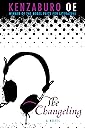
Buy Grove Press The Changeling by Oe, Kenzaburo, Boehm, Deborah online on desertcart.ae at best prices. ✓ Fast and free shipping ✓ free returns ✓ cash on delivery available on eligible purchase. Review: Kenzuboro Oe deserved the Nobel prize but is a very erratic writer with some defective works interspersed with major accomplishments. This book may be his best. It certainly is quirky so that it may not be to everyone's taste. The story which intertwines lives and changes narrative perspective (successfully) in the last section actually revolves around tape recordings by a person who committed suicide after a triumphs in the movies in a dialogue with a novelist who shares traits with the author. Quite a conceit. The pivotal event in the past deals with the novelist's father's last patriotic suicidal attack on a bank. The novel is richly textured, very vivid, carefully reflective, the characters extremely well portrayed. Sometimes the writing seems as if were meant to be translated as explanations of Japanese phrases follow. Immersion in this book will produce a profound understanding of post World War II Japanese reactions and the intellectual world that then developed. An adventure indeed and one worth taking for any lively mind. Review: If you've read Oe before, you'll know that he uses many repeated themes through his novels, based on his own life and family background . This is a good 'first' Oe to read as it is self-contained as a story and you don't need to know much background. I read 'Death by Water' and 'The Silent Cry' first but this isn't ideal. I'd recommend reading them; Changeling, Death by Water, Silent Cry. All very absorbing and hard to describe - he writes almost as if he's a 'bad' author, layering slightly different accounts and interpretations of the same events until these coincide in a realization that he has been leading you towards. It's like living inside the head of someone undergoing therapy to piece together their past.
| Customer reviews | 4.2 4.2 out of 5 stars (16) |
| Dimensions | 13.97 x 3.18 x 20.96 cm |
| Edition | Translation, Reprint |
| ISBN-10 | 080214523X |
| ISBN-13 | 978-0802145239 |
| Item weight | 522 g |
| Language | English |
| Print length | 480 pages |
| Publication date | 8 February 2011 |
| Publisher | Grove Press |
J**S
Kenzuboro Oe deserved the Nobel prize but is a very erratic writer with some defective works interspersed with major accomplishments. This book may be his best. It certainly is quirky so that it may not be to everyone's taste. The story which intertwines lives and changes narrative perspective (successfully) in the last section actually revolves around tape recordings by a person who committed suicide after a triumphs in the movies in a dialogue with a novelist who shares traits with the author. Quite a conceit. The pivotal event in the past deals with the novelist's father's last patriotic suicidal attack on a bank. The novel is richly textured, very vivid, carefully reflective, the characters extremely well portrayed. Sometimes the writing seems as if were meant to be translated as explanations of Japanese phrases follow. Immersion in this book will produce a profound understanding of post World War II Japanese reactions and the intellectual world that then developed. An adventure indeed and one worth taking for any lively mind.
S**T
If you've read Oe before, you'll know that he uses many repeated themes through his novels, based on his own life and family background . This is a good 'first' Oe to read as it is self-contained as a story and you don't need to know much background. I read 'Death by Water' and 'The Silent Cry' first but this isn't ideal. I'd recommend reading them; Changeling, Death by Water, Silent Cry. All very absorbing and hard to describe - he writes almost as if he's a 'bad' author, layering slightly different accounts and interpretations of the same events until these coincide in a realization that he has been leading you towards. It's like living inside the head of someone undergoing therapy to piece together their past.
H**R
The master is back in grand style. I had given up on Oe as a novelist, after the rather boring previous Somersault. His latest, originally from 2000, but in the translated version copyrighted 2010, is a magnificent hoax, a piece of double talk strewn with traps and resonant with the basso ostinato of relentless self-mockery. I am sure there are even readers who are fooled into thinking that this is a piece of darkness, loaded with the search for the meaning of death. Is there life after death, is there a soul different from the body? Where does it go? The novel is based on real life events, mainly a brother-in-law's suicide in 1997, but essentially all the way back to WW2. Oe gives us a self-portrait under the name of Kogito Choko. The hero is a writer of international fame, a brooding man, with a handicapped son (who has turned into a composer). Even Choko's book titles are identical with Oe's. Kogito has most of Oe's life, he comes from a place in the hinterland, surrounded by forests. He had studied French literature, and later, after having become famous, taken teaching assignments in the US and in Germany. He speaks English that is hard to follow. Germany is his second foreign market, after the US. His fame has somewhat subsided, and there are opponents, specially a journalist at home, who likes to attack him viciously. He has a childhood friend, Goro, who has made it in the film world, as an actor and as a director. Goro has made a film of Choko/Oe's `A Quiet Life'. Kogito has married Goro's sister. The story starts with a bang: the friend/ brother-in-law commits suicide by jumping from a high place. He had previously taken up the habit of sending Kogito cassette tapes with long ranting monologues. Kogito will listen to the tapes at night, and make his own comments. It is a dialogue of sorts. The comments are not sent back. There are 30 tapes. One day, while listening to a tape, Kogito hears an announcement from Goro that he is now going to the other side, and that he will stay in contact. Then follows a noise like a thud, which Kogito will later call the Terrible Thud. Then he hears Goro say some more words. Later he learns that the suicide had happened some hours before. From then on, listening and re-listening to the collected tapes becomes an obsession, as does looking for other ways of contact with the friend, who is now assumed lonely on the Other Side. We learn that Goro had messed with Kogito's life since a long time, setting up hoaxes, with him and also against him. Together they had cooked up the project that Kogito would invent an unknown, unpublished, aging Japanese writer, would publish conversations with him, would start inventing pieces of the man's work, would then let him die and then start editing the man's life work, thus merging into him. We find that the tapes are full of similar pranks. Kogito is thus manipulated, from the `other side' so to say, into accepting a teaching job in Berlin in the winter 1999/2000. This excursion turns into an expedition into Goro's past, and possibly into the reasons for the suicide. As the lives of the two men were intertwined for decades, the expedition also leads into Kogito's own past, and beyond that to his father's role as a leader of a short-lived right-wing insurrection which had tried to oppose Japan's surrender. Kogito has made enemies by his literary treatment of this past. In a ponderous way we are gradually dragged into a literary mystery with a political dimension, where the awareness of time and of causality becomes shaky. The word cogitacious (or cogitational?) does not yet exist, but I propose to admit it to general use for books like this. Or do you believe Oe calls his `hero' `Kogito' for no reason? The book's language is cogitacious not just in content, but also in style. That requires some getting into. As I don't read Japanese, I can't tell if it is equivalent to Oe's own style. It might well be that Oe builds walls to make it harder for us to enter his hermetic world, or to make us believe that he is serious. It could also be the translator's fault. Since the text and the story move in the cultural rectangle of Japanese, English, French, and German, we meet quite a few international quotes and names. I am not always convinced that either Oe or his translator has handled all those quite properly. I have noted some cases, but won't bore you with them. They are trifles, but should be removed for a next edition. A great novel, a true Nabokovian delight, just in time to revive my confidence in contemporary writers. Oe is not done yet. The book picks up on his old themes and works them into his new life story chapter. More should follow.
F**R
I enjoyed it but not the easiest read.
J**N
I had previously read A Personal Matter by Kenzaburo Oe, which I thoroughly enjoyed. I highly recommend this book as well.
Trustpilot
2 days ago
5 days ago