We remain fully operational. Our teams are working around the clock to ensure your deliveries continue safely.

DOWNLOAD THE APP


Copyright © 2025 Desertcart Holdings Limited
DOWNLOAD THE APP
Buy anything from 5,000+ international stores. One checkout price. No surprise fees. Join 2M+ shoppers on Desertcart.
Desertcart purchases this item on your behalf and handles shipping, customs, and support to Indonesia.
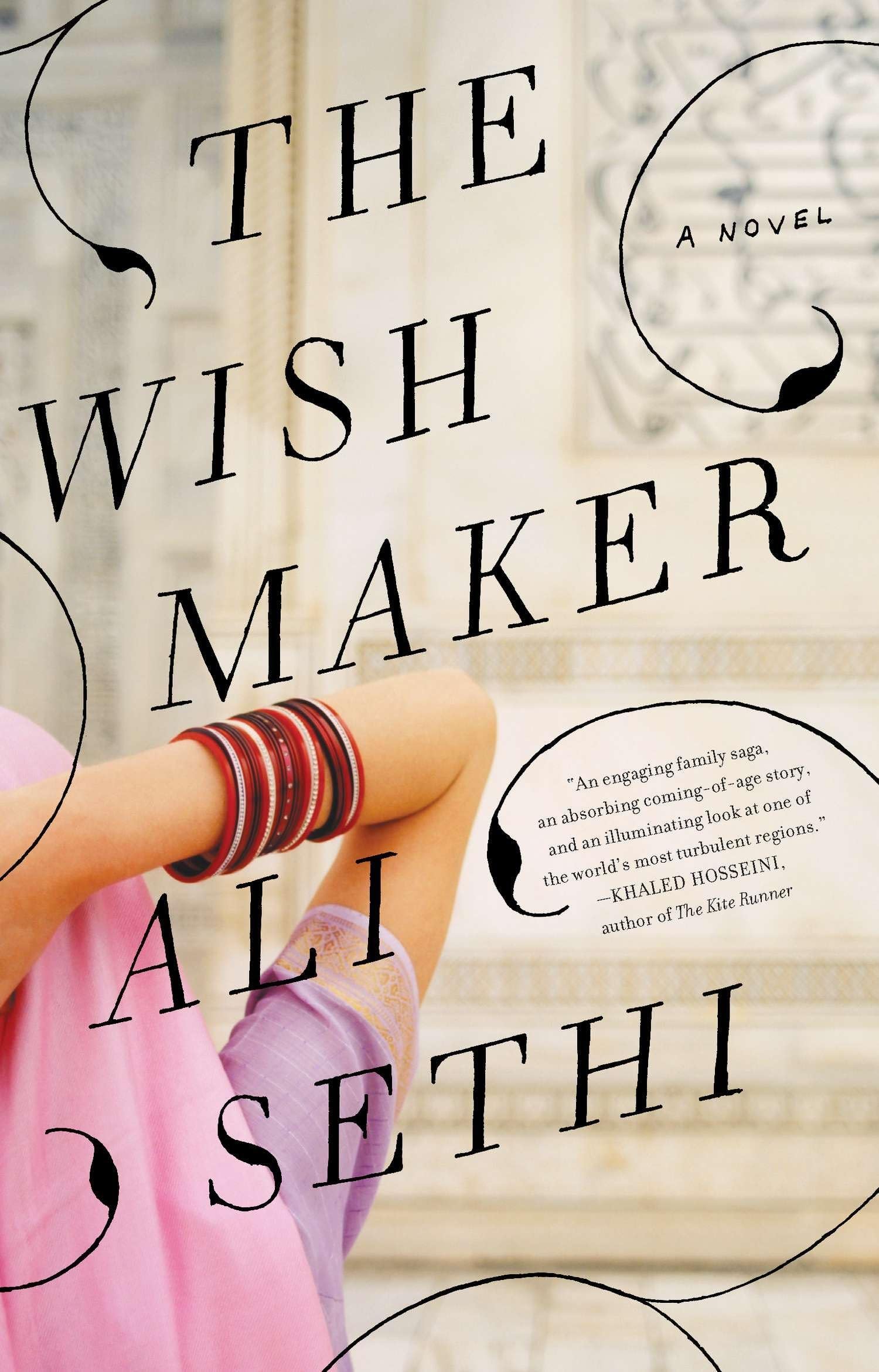
The Wish Maker [Sethi, Ali] on desertcart.com. *FREE* shipping on qualifying offers. The Wish Maker Review: A beautifully written book, along with a little history of Pakistan - At first I was hesitated to choose this book as I was kind of over the "Kite Runner" et al, but I am glad I decided to pick The Wish Maker. I loved this book, whipped right through it, as it was so enjoyable to read. The plot begins in the present and switches back into the past. We have Zaki, a little boy as our narrator, he has been fatherless since age -2 months. The story mostly takes place in a traditional Pakistani middle to upper class home. I love the voyeurism of seeing how other cultures really are in their homes(they're basically just like us). In Zaki's home there are two forces, the Matriach, Daadi, a very traditional and stern woman and Zaki's mother, Zakia, a feminist and modern woman. There is also the pseudo-sister, Samir Api, who comes to live with Zaki's family as the daughter of his Grandmother's sister. It's a bit mysterious at first as to why Samir comes to live there but eventually the stories unravel. Samir Api is a charming girl who dreams of a Bollywood Actor sweeping her away someday. Zaki's adoration of Samir is evident yet subtle. We end up asking ourselves,which is a better way to nurture children, old school or modern? the answer is probably in the perfect mix of a multi-generational household. I love a fictional book that I can learn something from and I did learn a lot of fringe information about the era of Benazir Bhutto and her father's execution, of how pinning hopes on political leaders can often be disappointing. I also learned about the almost "Civil War" like parallels of the Pakistanis and the Indians. Pakistani children of the Grandmother's generation grew up next to Indian children, Parsi children, then one day, they are all gone, and those friendship ties are severed forever. Life goes on. About halfway through the book I thought it was about women, but it really is much more than that, Zaki is raised in a household of women, but he lives a rich life at school with boys where he watches and learns. He is fatherless but he has strong "back up" with all the women at home who look out for him in their individual ways. I highly recommend this book, the writer is quite talented (I think this is his first book?) He doesn't hit us over the head with the internationalism, you quickly slip into the plot and relate as human to human, not culture to culture. One thing is for sure after reading the book you will know what that costume the Pakistanis wear is called, a Shalwar Kameez. It is also worn in India but here is the definition: Traditional suit consisting of three pieces: a loose fitting, drawstring pajama like pant, a long, tunic style shirt and a long, complimenting or matching scarf. It is generally accepted that the kameez should come below the knee to the mid-calf region. The kameez is usually fitted throughout the shoulder and bust area and loose from the hips down to the hem. Side walking vents (splits) are added to both sides. Review: I should warn you right away, this book doesn't ... - I should warn you right away, this book doesn't have a lot of suspense, you don't have to wait for what might happen in the end.The novel is about an upper middle class family in Lahore. It is similar to a lot of other novels coming out from Pakistan since 2000. The writer growing up in Pakistan, going to colleges in America, and to a lesser extent in Britain, coming back, and writing books in English. After the protagonist in this novel comes back from America, he narrates his life growing up, his parents' life, especially his mom's, and his grandparent's. There's quite a lot on the politics of the county, especially during the 80s and 90s. The author's focus is this upper call family and their sheltered environment. There's almost nothing on other people--their servants--their lives, their struggles. It's probably because other than the western audience, the vast majority of people in Pakistan who would read this book, will also belong to that small elite class. The flaw in this novel is that author doesn't deeply divulge into lives of characters, I felt the description of almost all the characters is at the superficial level. I didn't get to see why people did what they did, they just did it.
| Best Sellers Rank | #3,777,202 in Books ( See Top 100 in Books ) #39,987 in Literary Fiction (Books) |
| Customer Reviews | 4.2 4.2 out of 5 stars (89) |
| Dimensions | 5.12 x 1.05 x 8 inches |
| Edition | 1st |
| ISBN-10 | 1594484635 |
| ISBN-13 | 978-1594484636 |
| Item Weight | 12 ounces |
| Language | English |
| Print length | 464 pages |
| Publication date | June 1, 2010 |
| Publisher | Penguin Publishing Group |
A**G
A beautifully written book, along with a little history of Pakistan
At first I was hesitated to choose this book as I was kind of over the "Kite Runner" et al, but I am glad I decided to pick The Wish Maker. I loved this book, whipped right through it, as it was so enjoyable to read. The plot begins in the present and switches back into the past. We have Zaki, a little boy as our narrator, he has been fatherless since age -2 months. The story mostly takes place in a traditional Pakistani middle to upper class home. I love the voyeurism of seeing how other cultures really are in their homes(they're basically just like us). In Zaki's home there are two forces, the Matriach, Daadi, a very traditional and stern woman and Zaki's mother, Zakia, a feminist and modern woman. There is also the pseudo-sister, Samir Api, who comes to live with Zaki's family as the daughter of his Grandmother's sister. It's a bit mysterious at first as to why Samir comes to live there but eventually the stories unravel. Samir Api is a charming girl who dreams of a Bollywood Actor sweeping her away someday. Zaki's adoration of Samir is evident yet subtle. We end up asking ourselves,which is a better way to nurture children, old school or modern? the answer is probably in the perfect mix of a multi-generational household. I love a fictional book that I can learn something from and I did learn a lot of fringe information about the era of Benazir Bhutto and her father's execution, of how pinning hopes on political leaders can often be disappointing. I also learned about the almost "Civil War" like parallels of the Pakistanis and the Indians. Pakistani children of the Grandmother's generation grew up next to Indian children, Parsi children, then one day, they are all gone, and those friendship ties are severed forever. Life goes on. About halfway through the book I thought it was about women, but it really is much more than that, Zaki is raised in a household of women, but he lives a rich life at school with boys where he watches and learns. He is fatherless but he has strong "back up" with all the women at home who look out for him in their individual ways. I highly recommend this book, the writer is quite talented (I think this is his first book?) He doesn't hit us over the head with the internationalism, you quickly slip into the plot and relate as human to human, not culture to culture. One thing is for sure after reading the book you will know what that costume the Pakistanis wear is called, a Shalwar Kameez. It is also worn in India but here is the definition: Traditional suit consisting of three pieces: a loose fitting, drawstring pajama like pant, a long, tunic style shirt and a long, complimenting or matching scarf. It is generally accepted that the kameez should come below the knee to the mid-calf region. The kameez is usually fitted throughout the shoulder and bust area and loose from the hips down to the hem. Side walking vents (splits) are added to both sides.
U**B
I should warn you right away, this book doesn't ...
I should warn you right away, this book doesn't have a lot of suspense, you don't have to wait for what might happen in the end.The novel is about an upper middle class family in Lahore. It is similar to a lot of other novels coming out from Pakistan since 2000. The writer growing up in Pakistan, going to colleges in America, and to a lesser extent in Britain, coming back, and writing books in English. After the protagonist in this novel comes back from America, he narrates his life growing up, his parents' life, especially his mom's, and his grandparent's. There's quite a lot on the politics of the county, especially during the 80s and 90s. The author's focus is this upper call family and their sheltered environment. There's almost nothing on other people--their servants--their lives, their struggles. It's probably because other than the western audience, the vast majority of people in Pakistan who would read this book, will also belong to that small elite class. The flaw in this novel is that author doesn't deeply divulge into lives of characters, I felt the description of almost all the characters is at the superficial level. I didn't get to see why people did what they did, they just did it.
M**7
The Wish Maker
I ordered the book from this company, said used and in good condition. They were exactly right, and it came when they said it would. I will definitely order from them again.
H**S
Falls far short of greatness
Overview: First, I have absolutely NO idea what Booklist's review has to do with this book. Consider it to be a mistake, so ignore it. I largely agree with some of what other reviewers suggest, such as Dick Johnson, who says, "For those who like family sagas and/or coming-of-age books, this is a winner." Both he and Goldengate mention, "There are some shortcomings, though...This one had all the drawn out descriptions, but spent too much time going nowhere...". I also agree that the length is far too much, but more like by 200 pages, rather than 100. The characters are well-detailed (sometimes obnoxiously so), but the plot goes nowhere. And it does so slowly. So slowly that it drives you inexorably insane. The atmosphere is genuine, but this is not enough to carry the book. The themes are mysterious here, and the author, in his interview on the Amazon.com website, seems incapable of actually framing his intention, other than to say that it was to show the different effects that the times had on different people, Zaki and Samir, notably. I disagree, though, that this book is something that many people will want to bother reading. Hopefully, my review will steer them toward something better, like Daniyal Mueenuddin's wonderful, "In Other Rooms, Other Wonders". A. Plot Imagine a mountain, labeled as tension. At the beginning of any conflict, you are at the bottom. As you get closer to the climax, you travel up the mountain. The peak is the climax, and the downslope is the resolution of the conflict. Now, imagine that you cut off the top of the mountain. Imagine that you go straight from somewhere building toward the climax to resolution. The climax is not bad, it is not good, it just is NOT. Admittedly, this is a common enough trend in Eastern literature This is the major, MAJOR flaw with the book. Stories are meant to have some emotional payoff. And this one definitely doesn't. Some things happen, but there is never really ANYTHING happening. It is amazing that you can describe times and events that are so tumultuous, so meaningful, and then fail to actually relate them to anything happening in the lives of the characters. There are attempts, now and then, but they are fleeting, ethereal, and ephemeral. Never are they really anchored in the present and the character's lives. B. Characters The characters are extremely over detailed. There is no reason for them to be. They are trite, obnoxious, and vapid. None of them have any real merit. Zaki is passive and inert. Samir Api is a self-centered brat, interested only in her own opinions, her own fortunes, and her own possessions. Zaki's mother, Zakia, is a much more interesting character, fighting for the liberation of women in Pakistan, although she does so in a fashion that is related only in the penumbra of Zaki and Samir Api's awareness. Other characters are equally interesting, but we are maddeningly given no details about them. Instead, we are focused onto the few meaningless characters, and expected to elevate them into characters of literary magnificence. (On the other hand, it is entirely possible, and perhaps even likely, that further focus on these characters would have reduced them to meaningless as well.) C. Setting The setting is Pakistan, from the time of independence to current day. The vast, vast majority of what takes place, however, occurs during the 1990's, and is little more than the kitsch you would read about in any teenage novel. Surprise, surprise, Pakistani teenagers behave like American teenagers. D. Theme The themes of the novel are less than clear, likely because the author really didn't intend any overarching themes. E. Point of View The point of view for the story was mostly Zaki's, which was an interesting choice, given the plethora of women that comprised his environment and the paucity of female role models around. This could make Zaki's voice more powerful, but it does not, because he has no real, independent character. He, rather, simply wanders about doing things, but fails to make any motions of his own. F. Aesthetics The story's aesthetics, along with the dearth of activity, contribute to its feeling of a turtle's pace. The mood evinced by all of the descriptions and all of the activity in the story reduce it to to sluggishness, like pouring molasses in January...in Yellowknife. Conclusion: If you are interested in something like this, go read Daniyal Mueenuddin's "In Other Rooms, Other Wonders" instead. The characterizations are better, the stories are more meaningful (which isn't, admittedly, that hard), and the plots actually move. On the other hand, if you love coming-of-age stories, set in Pakistan, then this is probably something that you would at least partially enjoy, and you should read it. For the remainder of people, this is probably not worth reading. There are better options, as I have mentioned more than once. C- Harkius
A**R
Too many characters and a whole lot of rambling. This wasn't a good read for me at all.
D**A
I don't like he printing quality of this book so I just returned it..
M**H
Ali Seth's The Wish Maker is his debut novel and I so hope there will be others to follow as it is such an excellent read. The story revolves round Zaki, recently returned to Pakistan for his cousin Samar's wedding. The two grew up together and are best friends as well as cousins. Zaki takes the reader on a journey into his childhood and we share his journey to adulthood, meeting all the members of his extended family and the servants attached to the household. We come to know these people very well and to care about them. It is beautifully written; witty, sad, funny and a totally satisfying read which offers a real insight into life in Pakistan. Reviewed by Mary Smith, author of No More Mulberries
G**.
the strong begins strongly but then becomes dull and repetitive. i was disappointed
J**R
This book is rather aimed for teenagers rather than for adults - most of the content seem to be monotonous.
Trustpilot
1 day ago
2 months ago