
Desertcart purchases this item on your behalf and handles shipping, customs, and support to Indonesia.
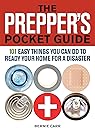
Prep your home and family for any disaster situation with this best-selling, comprehensive handbook on emergency preparedness and survival. Over 75,000 copies sold. From California earthquakes and Rocky Mountain wildfires to Midwest floods and Atlantic hurricanes, you can’t escape that inevitable day when catastrophe strikes your hometown — but you can be prepared! Offering a simple DIY approach, this book breaks down the vital steps you should take into 101 quick, smart and inexpensive projects: #6 Make a Master List of Passwords #16 Calculate How Much Water You Need #33 Start a Food Storage Plan for $5 a Week #60 Make a Safe from a Hollowed-out Book #77 Assemble an Inexpensive First Aid kit #89 Learn to Cook Without Electricity #94 Pack a Bug-out Bag Review: Great book for the price - I bought The Prepper's Pocket Guide on desertcart because it was inexpensive and had good reviews. As always with desertcart I received the book quickly and in secure packaging. The book is a soft cover which seems durable enough, although with a "pocket guide" I would think that a hard cover book would be more appropriate for long term durability. The book is a list of "101 easy things you can do to ready your home for a disaster". The book is a total of 206 pages with very few illustrations. Because the book is a list, it makes it very easy to read a little at a time as there are no long discourses about any one topic. I read the whole book over the course of a couple days reading bits in what little time I had during the day and doing the bulk of the reading at night after the kids were in bed. I found many of the suggestions to be pretty common sense for even someone like me who doesn't spend a huge amount of time or money and preparedness. Things like "learn basic cooking skills" and "de-clutter your house" are pretty well... basic. That being said, the author always had solid reasoning and possibly a method that I had not thought of before to complete even what may seem like a basic or mundane preparation. After all, if there were a interruption in the grid or delivery system, maybe you wouldn't be able to go to the store and buy a loaf of bread, so learning basic cooking/baking skills isn't so basic for many of us in our supermart frozen food lifestyles. There were quite a few items in the list that I took to heart and have started implementing. One such item was keeping a written list of emergency contacts. These days, with everything being electronic, I can't remember some of my best friend's phone numbers because all I have to do is push two buttons on my phone and it is ringing. I can however tell you all of my friends phone numbers from 5th through 12th grades, before cell phone times for me. This really has nothing to do with "prepping" either, how many of us have had our cell phones or computers crash and lost all or most of our data? Another suggestion that goes along with that is keeping all of your family's documents in one folder. Again, if you were ever to need to bug out of your house, you don't want to have to be rummaging through piles of papers looking for social security cards or birth certificates. More importantly when you are preparing to travel or filling out paperwork you will know exactly where all your files are located. Other suggestions include making an emergency first aid kit, a power out kit, and a chart for how to purify water with bleach. While this book is not a compendium on how to do everything in detail, I never felt as though it was lacking in necessary specifics about a suggestion. And if the author was not an expert in an area, he led the reader to where more details could be found or how the skills could be learned. It is impossible to teach someone to do everything they would need to do in a survival/preparedness situation in 206 pages. Many of the suggestions have entire books written on the topic, such as canning foods, but solid reasons are given for why it is a good idea to learn the skill/technique and some of the basics of that particular skill. If you are looking for a list of things to get you started, or keep you going on a preparedness plan, I would highly suggest this book. Understand that it is not a how-to book on every topic, but a great list of things to do, and enough details to get most of them done. Review: Excellent General Or Starter Guide For Preppers - I broke down and bought two Prepper books and this was my favorite. It is extremely useful. 101 Easy Things You Can Do to ready yourself for a disaster. The author breaks these ideas down into sections. Getting Started (common mistakes, emergency plans, etc), Financial Readiness (paying off debt, reviewing insurance coverage, etc), Water Needs (how much you need, storing it, distilling it, finding it, etc), Food Supplies (stocking up, learning to cook the staples we'd have to live on, gardening, canning, etc), Ready Your Home (pets, emergency kits, etc), Personal Health And Safety (temporary toilet, first aid kits, protection from crime, etc), When The Power Is Out (generators, starting a fire, cooking without power, etc) and last but not least, Getting Out (bug-out bags, whether to stay or go, etc) There are lots of good ideas here and they are good ideas no matter what is going on in the world around us and so wouldn't hurt to implement them now and always. Stocking up on food whenever you can, knowing how to cook and to garden and can, having debt paid down, plans on how to contact loved ones, and other common sense ideas. There's no panicked rhetoric here, no suggesting of stockpiling guns or anything else that you might find on some Prepping sites, no hints of ensuing calamity. This is my style of prepping: calm and organized and easily doable. The author suggests adding $5 a week to your grocery budget to stock up on beans/lentils/canned foods that might see you thru an emergency. That, I can do! General note about these prepper/impending disaster books: When this movement was just a blog-on-the-internet thing, I trusted it more. It has gotten to the point now where people are making money off these ideas. Makes me think of the cold war panic (before I was born) and people paying out big money to dig storm shelters in their backyard. I believe in being prepared. Just please, I would advise in general, not regarding this particular book, figure out if you are helping yourself in your prepping or helping the pocketbook of somebody getting paid to scare you. That said, I prep in very common sense ways: gardening, stocking my cupboards, having plans of what to do in an emergency. If you want to prep in that way, I'd also suggest Survival Mom: How to Prepare Your Family for Everyday Disasters and Worst-Case Scenarios or just go hang out on the website. The other book on Prepping I bought but didn't like as much (due to the title and to the less laid-back style) was 31 Days to Survival: A Complete Plan for Emergency Preparedness That author talks about guns, making traps to catch game, tools you have to have to survive, etc. If you can get past the title (thinking you can do an item each day), it can be useful to some.


| Best Sellers Rank | #250,579 in Books ( See Top 100 in Books ) #108 in Disaster Relief (Books) #164 in Survival & Emergency Preparedness #265 in Sustainable Living |
| Customer Reviews | 4.4 out of 5 stars 839 Reviews |
H**D
Great book for the price
I bought The Prepper's Pocket Guide on amazon because it was inexpensive and had good reviews. As always with Amazon I received the book quickly and in secure packaging. The book is a soft cover which seems durable enough, although with a "pocket guide" I would think that a hard cover book would be more appropriate for long term durability. The book is a list of "101 easy things you can do to ready your home for a disaster". The book is a total of 206 pages with very few illustrations. Because the book is a list, it makes it very easy to read a little at a time as there are no long discourses about any one topic. I read the whole book over the course of a couple days reading bits in what little time I had during the day and doing the bulk of the reading at night after the kids were in bed. I found many of the suggestions to be pretty common sense for even someone like me who doesn't spend a huge amount of time or money and preparedness. Things like "learn basic cooking skills" and "de-clutter your house" are pretty well... basic. That being said, the author always had solid reasoning and possibly a method that I had not thought of before to complete even what may seem like a basic or mundane preparation. After all, if there were a interruption in the grid or delivery system, maybe you wouldn't be able to go to the store and buy a loaf of bread, so learning basic cooking/baking skills isn't so basic for many of us in our supermart frozen food lifestyles. There were quite a few items in the list that I took to heart and have started implementing. One such item was keeping a written list of emergency contacts. These days, with everything being electronic, I can't remember some of my best friend's phone numbers because all I have to do is push two buttons on my phone and it is ringing. I can however tell you all of my friends phone numbers from 5th through 12th grades, before cell phone times for me. This really has nothing to do with "prepping" either, how many of us have had our cell phones or computers crash and lost all or most of our data? Another suggestion that goes along with that is keeping all of your family's documents in one folder. Again, if you were ever to need to bug out of your house, you don't want to have to be rummaging through piles of papers looking for social security cards or birth certificates. More importantly when you are preparing to travel or filling out paperwork you will know exactly where all your files are located. Other suggestions include making an emergency first aid kit, a power out kit, and a chart for how to purify water with bleach. While this book is not a compendium on how to do everything in detail, I never felt as though it was lacking in necessary specifics about a suggestion. And if the author was not an expert in an area, he led the reader to where more details could be found or how the skills could be learned. It is impossible to teach someone to do everything they would need to do in a survival/preparedness situation in 206 pages. Many of the suggestions have entire books written on the topic, such as canning foods, but solid reasons are given for why it is a good idea to learn the skill/technique and some of the basics of that particular skill. If you are looking for a list of things to get you started, or keep you going on a preparedness plan, I would highly suggest this book. Understand that it is not a how-to book on every topic, but a great list of things to do, and enough details to get most of them done.
A**5
Excellent General Or Starter Guide For Preppers
I broke down and bought two Prepper books and this was my favorite. It is extremely useful. 101 Easy Things You Can Do to ready yourself for a disaster. The author breaks these ideas down into sections. Getting Started (common mistakes, emergency plans, etc), Financial Readiness (paying off debt, reviewing insurance coverage, etc), Water Needs (how much you need, storing it, distilling it, finding it, etc), Food Supplies (stocking up, learning to cook the staples we'd have to live on, gardening, canning, etc), Ready Your Home (pets, emergency kits, etc), Personal Health And Safety (temporary toilet, first aid kits, protection from crime, etc), When The Power Is Out (generators, starting a fire, cooking without power, etc) and last but not least, Getting Out (bug-out bags, whether to stay or go, etc) There are lots of good ideas here and they are good ideas no matter what is going on in the world around us and so wouldn't hurt to implement them now and always. Stocking up on food whenever you can, knowing how to cook and to garden and can, having debt paid down, plans on how to contact loved ones, and other common sense ideas. There's no panicked rhetoric here, no suggesting of stockpiling guns or anything else that you might find on some Prepping sites, no hints of ensuing calamity. This is my style of prepping: calm and organized and easily doable. The author suggests adding $5 a week to your grocery budget to stock up on beans/lentils/canned foods that might see you thru an emergency. That, I can do! General note about these prepper/impending disaster books: When this movement was just a blog-on-the-internet thing, I trusted it more. It has gotten to the point now where people are making money off these ideas. Makes me think of the cold war panic (before I was born) and people paying out big money to dig storm shelters in their backyard. I believe in being prepared. Just please, I would advise in general, not regarding this particular book, figure out if you are helping yourself in your prepping or helping the pocketbook of somebody getting paid to scare you. That said, I prep in very common sense ways: gardening, stocking my cupboards, having plans of what to do in an emergency. If you want to prep in that way, I'd also suggest Survival Mom: How to Prepare Your Family for Everyday Disasters and Worst-Case Scenarios or just go hang out on the website. The other book on Prepping I bought but didn't like as much (due to the title and to the less laid-back style) was 31 Days to Survival: A Complete Plan for Emergency Preparedness That author talks about guns, making traps to catch game, tools you have to have to survive, etc. If you can get past the title (thinking you can do an item each day), it can be useful to some.
L**.
Easy Preparedness
Great summary of preparedness skills and even some basic survival, not just hoarding food. I particularly like the checklists because they give me a plan and goals. This book makes being prepared as routine as a trip to the store. It's simple, realistic, practical. No fear mongering. The strategies in the resource are so practical that in a few, virtually no-stress, weeks, I could be ready for most situations involving interruptions in food, water, and electricity just by following the advice and strategies the way they are written. There is even a checklist for the office in case I get caught at work! I will forever keep an old pair of walking shoes in the trunk of my car, too! The only thing I'd say lowered my rating is the reliance on canned food from the store. I try to avoid canned food, but using up canned food routinely is part of the plan. For those who don't mind, the canned food makes being prepared much easier. (There is some info on home canning but not a how-to since it's not a canning book.) In spite of this small criticism, I am a satisfied book owner. This book is a good value. The information is reliable. Save some time, money, and frustration trying to find this information by yourself, and get this book because it has information you probably won't even think to look for. Put your efforts into your preparation; this book is step one.
W**G
Excellent book excellent material made with the book excellent information
Great book great material excellent information accurate information something to use if you live in a small space this is the book to have when you're prepping and you got nowhere to put anything it teaches you practical ideology in prepping really more or less to keep your shelf stocked and how to make homemade food to have small detailed skills is the key for survival but more you know the better you're off and this book covers a great basis of that
C**7
The perfect Prepper's book for beginners and friends.
I am a Prepper by every definition and I have purchased over a dozen of these books as gifts and guides to friends and coworkers trying to take steps to have normal, everyday preparations in place for the most likely events that would require someone to fall back on their own self-reliance. It is a simple and thoughtful book of basics that I found beneficial to regular everyday people as well as myself. So many of the Prepper material deals with worse case scenarios and global life changing events whereas this book takes you through the common sense and realistic basics to get you ready for most events. It gives good solid and sound advice and steps towards prepping and basic self reliance and delivers it in a friendly, factual manner without any hype or in a demeaning manner. This is the book for everyone who wants to be prepared for the most likely events to occur to everyday Americans. It does not make a political stand or wrap itself in a religious message when explaining steps and strategies. It is not designed to give you the steps to start your own bug out retreat and commune, fend off invading hostile nations invading American, bad guys coming to steal your supplies and kill off the neighbors or the military tactics and strategies afforded to Special Warfare operatives. It is for people who have budgets and live in an everyday society that want to be able to deal with natural disasters, loss of jobs or property and the more serious events other than The End Of The World As We Know It. I would recommend it to everyone other than the most hardcore of Preppers, Survivalists, Paramilitary and Anti-Government Anarchists.
G**N
overview that fits in pocket
I don't have anything negative to say about the book. It is an collections of topics. Perfect for flipping through in a waiting room or something. Short chapters and it fits right in your cargo pocket. whole book took about an hour to read. Lots of references and websites listed in the back. Not a keeper for me and I intend to donate it to the library this weekend for someone starting out to have. She did point out things about having brownies and snacks for kids to make an unpleasant event seem like a fun adventure instead. Has a handful of other/alt uses for household goods as well.
R**R
Taught me a lot
As other reviewers have pointed out, this is not the book you need to prepare for the end of the world. This book is more directed to less apocalyptic events, like losing power for a week or more, hurricanes, earthquakes, etc. The author is also realistic enough to start with the premise that the most likely "emergency" any of us is going to have is going to be a financial one. Much less interesting than teotwawki, but much, much more likely to happen. That's the essence of smart prepping - start with what is most likely to happen, get ready to deal with that, then work down the list to more exotic disasters. I have been reading prepper/emergency books for awhile, and though I have definitely not read every book on the topic, this seems like an excellent book to start with. The author is especially smart about preparing within a normal budget - most of us do not have several thousand dollars lying around, but we can probably (hopefully?) find $20-$50 a month to slowly build up first a week's worth of food, and then a month's worth of food. Unfortunately, though, I think the estimates for food costs in the shopping budget the author lays out are a little unrealistic. I can't buy chicken soup for 50 cents a can. This book did teach me all sorts of interesting things, like that every household actually has 40-80 gallons of emergency water storage... its in your the hot water heater. And that you do not need a yogurt maker to make yogurt. There are good lists for "get out of dodge" bags, first aid kits, car emergency kits and more. You'll also learn how to follow the north star, make a solar still and a solar oven, and even learn basic land to air signal signs so you can tell a helicopter whether you're okay or if someone needs medical care.
M**R
A quick, handy read with lots of actually useful tips
This is pretty nifty and a nice consolidated handbook for little things you can do to improve your self/family preparedness. It's not going to make you look like Doomsday Preppers, this is FAR too practical for that nonsense. I didn't think I'd need it since I've read through the authors website top to bottom and that's still fairly true - the website has essentially all of what's in here and more. But I do really like (and find convenient) how all of that has been put into one space. This is not a book you necessarily need to have paperback (compared to some other preparedness books) because it lists what you should do BEFORE any emergencies. So, I enjoyed the ebook version. The language does get a little tiresome, ie: lack of full sentences. The entire book is written in the exact same sentence structure which while simple and easy to understand (big plus) makes it hard to stop by wishing there was at least one or two sentence subjects on a page. But that does not take away from the job this material does (and does well). I recommend everyone take a look because I'm sure you'll find at least one or two things you can do that doesn't take a lot of time, money, or effort but would pay off in every day life, not just emergencies.
M**N
In this easy to read 8 chapter book
In her first prepper book The Prepper’s Pocket Guide author Bernie Carr shows you how it’s done. After experiencing a disaster first hand Bernie Carr shakes your belief that “it will never happen to me”. In this easy to read 8 chapter book, this little guide has big information and the author spills it out for you with no frills, there are no photos and no charts; a perfect little pocket guide that gets right to the point and everyone can follow. As we watch the disasters playing out on the evening news, with earthquakes in California, wilderness fires in the Rocky Mountains, hurricanes on the Atlantic coast, don’t you feel like it might be time to be prepared? In your lifetime something will happen to you. Take your responsibilities and you will feel safer and more as you follow her 101 easy things you can do to ready yourself, your family and your home. Every page is 1 idea and a real game changer. Everyone everywhere will eventually face a disaster. Bernie Carr will set you on the right path. Burntrootbroadcasting.com
R**F
The Prepper's Pocket Guide: 101 Easy Things You Can Do to Ready Your Home for a Disaster
Heel handzaam boekje met nutige tips
M**C
This is a well written hand book for easy reading at night (or as my son said
Written by an experienced prepper, the author shares her experiences from first hand use and preparation for her family from a range of scenario's and actual disasters. This is a well written hand book for easy reading at night (or as my son said, handy for the toilet when you need a good read!) It is American biassed, so for anyone in the UK/ Europe you are going to have to think laterally and apply the advice to your own country...our gun and dangerous weapons acts in the UK prohibit the use, ownership and carrying of offensive and dangerous weapons, but there are other guides on prepper websites that can guide you on self defence and defence of your property if you decide to bug-in in a SHTF situation. It has useful links to US websites which looked interesting and might be used to add to the info in the book. One key part are the lists for new preppers, these are quite basic but comprehensive, especially if you are on a budget and don't want to look like you're in the army or special forces, this is a low key, practical guide book for everyone to consider about what to do when the SHFT.
M**L
Mäßig informativ
Ich gebe zu, als BOS-Angehöriger bin ich vielleicht etwas sensibilisiert für die Thematik, trotzdem war ich etwas überrascht, wie wenig Neues ich hier finden konnte. Größtenteils Tips, auf die man spätestens dann selbst kommt, wenn man einmal in den Genuß eines mehrstündigen Stromausfalls gekommen ist. Da sind die Ausführungen der "Survival-Mom" (obwohl ich sicher nicht zu ihrer Zielgruppe gehöre) wesentlich imformativer und vor allem angenehmer-unterhaltsamer zu lesen (ihr Buch wird hier auch angeboten, nicht durch den Titel irritieren lassen).
A**S
Gives 20 years old advises
Good but should be updated, he gives the kind of advice: ‘no need to buy DVDs you can rent them in a DVD renting shop’……
Trustpilot
1 day ago
2 months ago