๐ท Snap, Share, Shine!
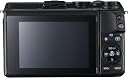
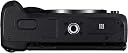
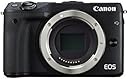
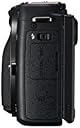
The Canon EOS M3 Mirrorless Camera Body is a compact powerhouse featuring a 24.2 MP CMOS sensor, DIGIC 6 processor, and versatile connectivity options including Wi-Fi and NFC. Perfect for both photography and videography, it offers full manual control, a tilting touchscreen, and compatibility with a wide range of lenses, making it an ideal choice for creative professionals on the go.
| ASIN | B014EOLYYI |
| Age Range Description | Adult |
| Are Batteries Included | Yes |
| Aspect Ratio | 1.50:1 |
| Auto Focus Technology | Contrast Detection |
| Autofocus | Yes |
| Autofocus Points | 49 |
| Battery Weight | 47 Grams |
| Bit Depth | 14 Bit |
| Brand | Canon |
| Built-In Media | Battery Pack LP-E17, Battey Charger LC-E17, Camera Cover R-F-4, Camera/Wi-Fi User Guide, EOS M3 BODY (BLACK), Insertion for CIG registration, Interface Cable, Kit One Year Limited Warranty Card, Strap EM-200DB, Terminal Cover |
| Camera Flash | Built-In |
| Camera Lens | [INF] Telephoto lens with manual focus capabilities |
| Color | Black |
| Compatible Devices | Canon EF-M |
| Compatible Flash Memory Type | SDXC |
| Compatible Mountings | Canon EF M |
| Connectivity Technology | Wi-Fi |
| Continuous Shooting | 4.20 |
| Crop Mode | 3:2 |
| Customer Reviews | 4.4 out of 5 stars 56 Reviews |
| Digital-Still | Yes |
| Display Maximum Resolution | 24.2 MP |
| Display Type | LCD |
| Dots Per Screen | 1040000 |
| Effective Still Resolution | 24.2 |
| Expanded ISO Maximum | 25600 |
| Expanded ISO Minimum | 100 |
| Exposure Control | Manual |
| File Format | MP4 |
| Flash Memory Bus Interface Type | UHS-I |
| Flash Memory Speed Class | C10 |
| Flash Memory Type | SDXC |
| Flash Modes | Auto, On/Fill, Off, Slow Sync, Rear Curtain |
| Flash Sync Speed | 1/200 seconds |
| Focus Features | Hybrid |
| Focus Mode | Manual Focus (MF) |
| Focus Type | Manual Focus |
| Form Factor | compact-dslr |
| Generation | 3 |
| HDMI Type | Type C Mini HDMI |
| Hardware Interface | HDMI, PictBridge, SDHC, SDXC, USB |
| Has Color Screen | Yes |
| Image Capture Type | Stills & Video |
| Image Stabilization | Dynamic |
| Image stabilization | Dynamic |
| Item Part Number | 9694B001 |
| Item Weight | 12.91 Ounces |
| JPEG Quality Level | Basic, Fine, Normal |
| Lens Type | Standard Zoom |
| Manufacturer | Canon Cameras US |
| Manufacturer Part Number | 9694B001 |
| Maximum Shutter Speed | 30 Seconds |
| Memory Slots Available | 1 |
| Metering Methods | Evaluative |
| Minimum Shutter Speed | 1/4000 Seconds |
| Model Name | Canon EOS |
| Model Number | 9694B001 |
| Model Series | EOS M |
| Movie Mode | Yes |
| Night vision | No |
| Number of Diaphragm Blades | 7 |
| Optical Zoom | 1 x |
| Photo Sensor Resolution | 24.2 MP |
| Photo Sensor Size | APS-C |
| Photo Sensor Technology | CMOS |
| Real Angle Of View | 31.08 Degrees |
| Recording Capacity | 10.67 Hours |
| Remote Included | No |
| Screen Size | 3 Inches |
| Sensor Type | CMOS |
| Series Number | 3 |
| Shooting Modes | Manual |
| Skill Level | Professional |
| Special Feature | Lightweight |
| Specific Uses For Product | Photography |
| Supported File Format | MP4 |
| Supported Image Format | JPEG |
| Total Still Resolution | 24.2 MP |
| Total USB 2.0 Ports | 1 |
| Total USB 3.0 Ports | 1 |
| Total USB Ports | 1 |
| Touch Screen Type | Capacitive |
| UPC | 013803270853 |
| Video Capture Format | MP4 |
| Video Output | HDMI |
| Video Resolution | FHD 1080p |
| Viewfinder | Electronic |
| Warranty Description | 1 year coverage for labor, 1 year coverage for parts |
| White Balance Settings | Custom |
| Wireless Technology | NFC, Wi-Fi |
| Write Speed | 4.2 fps |
| Zoom | Optical Zoom |
C**R
Perfect for street photography
Great camera. I use it with a 22mm f/2 lens EF-M lens and this is a fantastic combination which produces absolutely stunning images and the whole set up fits into my pocket. I compared M3 with 22mm f/2 lens against my full frame 6D with 17-40 f/4 lens set at 35 mm. I sold my 17-40 after that. The crop sensor M3 with 22/2 wide open produced at least as good images as my 17-40 set at 35 mm at f4. Of course, the 17-40 is a zoom lens and you have an option for incredibly wide 17mm shots. But M3 + 22/2 is a stunning combination. I have read that autofocus of M3 is not good, and that is partially true. However with the native EF-M 22mm f2 lens, autofocus is very fast and accurate. I was able to get well focused shots on the street while walking most of the time. So it's very fast and accurate. I have really no complaints at all about aufocus speed with this lens. My 100mm f/2 worked with M3 great as well. However, my 400mm f5.6 lens focused extremely slowly with M3. The same goes for my 80-200/2.8 lens. Usable only for static subjects. Regarding image quality, it is a good as it gets for a crop sensor camera from Canon. There's nothing better from Canon. There's not much to say except that is great. It's Canon and that says everything. High ISO performance is great for a crop sensor camera. My 6D (full frame) is better obviously because of full frame. But M3 performs really solidly at high ISO. Colors are great as in all Canon cameras. Dynamic range could be slightly better at base ISO, but as soon as you increase ISO to 1000 or above, it is the best in its class. When I say dynamic range could be slightly better at base ISO, this doesn't mean it's bad. It's great, but there's room for improvement. That's all. This camera really shines with the 22mm f/2 lens, and in my view it's worth buying this camera only so that you could use this lens. With this lens, M3 is perfect for street photography. Light, compact and with image quality comparable pro grade L zoom glass on full frame. Last, but not least, it's cheap.
M**M
Improvement on the EOS-M classic in every way
Fantastic upgrade in all ways to the EOS-M. Is definitely on par with other mirrorless options. +LCD screen very bright, even in sunlight +rotating LCD so can selfie-shot and also shoot from low down/on ground / holding above your head if in a crowd +add on external viewfinder came with my combo package and it works great +much improved hand grip +autofocus speed much faster than original EOS-M. Most noticeable in native EF-M lenses and STM lenses - other lenses still not that fast. I've personally used the EF 50mm f1.8, 40mm f/2.8, EF-M 22mm, kit lens, EF-M 55-200, EF 24-105L - All have VERY fast and SLR speed autofocus. It WHIPS them into focus! I'm very happy! +I love that I can swap my load-out for my needs - are you going H.C. Bresson style? Let's go with the native 22mm or EF 40mm and no viewfinder. Doing a semi-pro outdoor engagement session? Slide on the external viewfinder, and mount your 24-105L! +Battery life improved compared to original EOS-M Overall, a great camera. Its photo quality continues to perform at SLR quality. Especially for a lower price point compared to some micro 4-3rds cameras and mirrorless, I think its a great deal.
M**M
Great little camera, good complement if already own Canon
Love this camera -- it's the perfect complement to my 5DM3. It works great paired with the 22 f2 as a lightweight travel camera with great image quality. AF is not earth-shattering, but is quick and accurate. Battery lasts forever (when constant AF setting is turned off). Video is smooth. RAWs are easy to process with existing worfklows. I think this camera is perfect for Canon owners looking for that Canon "look" to their pictures. It's also a great budget crop body for those times you want extra reach for EF lenses. It's definitely not the camera for everyone and I don't think it'll win very many converts, if any, from Fuji/Sony/etc., but it fits perfectly with my needs, hence 5 stars.
M**N
Good travel-light camera but needs another iteration or two
(Edited a month later after returning from my long vacation using the body, see second half below) I just received this camera and have been prepping two of them for our European vacation. Unlike prior wildlife trips I've decided to try traveling light this time. Usually I take the full menagerie (5DM2 body, 6D body, 100-400 4.5-5.6L, 50mm(1.2L), 24-105L, plus backups). So obviously with the M3 I got the adapter so I could bring along one or two of my L lens. My wife will be lugging the M3 with the stock 18-55 M-lens. I will be lugging the M3 with my full-sized 50mm and my 24-105 zoom only. I won't be bringing along my 100-400. So this review is mainly for folks who have regular glass and are interested in the M3. I'll edit the review when I get back from the trip, so far this is just initial testing at home and in the yard. First thing to note is that you won't be taking pictures as quickly as on a 6D, nor would I expect to be able to. That said, generally speaking, once it gets a focus lock the single-shot shutter button is nice and snappy. The focus lock speed depends on the lens. It is pleasantly quick with the stock lens and the adapted 50mm. In fact, with the 50mm I was very pleased with the very quick focus response! With the 24-105 it is quick about 50% of the time and lags a little 40% of the time and has real problems 10% of the time (runs the gamut or gives up). But for that 90% it is still much faster than a point-and-shoot. With the 100-400 it is quick about 20% of the time and lags a bit 50% of the time and has real problems 30% of the time. As other reviewers have noted, if the focus is already close it tends to be quicker. The focus, once locked, is essentially perfect and even less error prone with the 50mm at F1.2 than the 6D, so I'm happy in that camp. Manual focusing is possible with zoom mode but not even remotely as easy as the 6D with an S-type focusing screen. But not necessary unless you want to be defocused in an artistic way. Note that "MF Peaking" mode only works with the stock M lens, not with external lens (it can't figure out when you are manually focusing, it would be nice if they added that feature since it would be easy to detect via the sensor). In anycase, I'm extremely happy with the AF when using the 50mm 1.2L prime. Continuous AF mode should not be used with any adapted lens, though it almost works 'ok' with the 50mm. Driving larger lenses continuously will drain your battery quickly and the sound can be annoying. Similarly, Servo mode doesn't work all that well with adapted lens because it tends to get confused quite often and can't track. Second item... don't expect to be able to use the built-in flash with a full-sized lens. Theoretically you can tilt it backwards with a small wedge for a 45-90 degree ceiling bounce but it doesn't seem to have the feature natively. But hey, the M3 has a hot-shoe (but I won't be bringing my external flash, not with the F1.2 50mm available). You can laugh when you put a real flash on this diminutive camera. In-camera image-review and storage: Works as expected but I always take pictures in RAW mode and with RAW-only the review doesn't do any cleanup on the photo and it is fairly difficult to use it to check fine detail or focus. The review looks much better when a JPG is available, so be aware of this and use something like RAW+S2 (RAW+S3 is worthless). Needless to say, nobody in their right mind should be using this camera without at least a 64GB SDXC card (x a couple), and nobody in their right mind should ever use JPG-only storage mode for stills. Always use RAW or RAW+something. I didn't test movie taking but I've found generally that a 400x (speed) card is just fine and it is a waste of money to buy a 1000x or faster card, but YMMV. ISO operation is pretty much as expected. My one recommendation here is to go into the menu system and reduce the max auto ISO from 6400 to 800 or 1600 for stills, and learn to set the ISO manually when you need to go higher. You will be happier. I usually leave exposure safety-shift turned off for myself and on for my wife. Movies can use higher ISO values. As with most recent sensors, higher ISOs have less noise when more light is available, allowing for quicker shutter times so YMMV. I leave the auto max at 6400 for my wife. Resolving power using the L lens seems to be down the pixel on this 24Mpix camera, so for vacation shots I don't think I will have any trouble framing in post-production. I intend to use mostly the high-end 50mm prime for its fine depth of field. The M3 has a solid feel. The M3 with the 18-55 also has a solid feel though the manual focusing ring is a little rough when moving it (considering that it isn't mechanical, it shouldn't be rough). The adapter pushes the L lens out a bit the overall result has a reasonably solid feel to it. The 50mm certainly, and also the 24-105. The 100-400... well, it's hard not to laugh at the tiny camera connected to a big lens. Don't torque the camera mount! Negatives: #1 Honestly, Canon needs to produce more lens for this form factor. They are deathly scared of losing volume in their higher-end DSLRs but HEY CANON! EITHER LOSE VOLUME TO YOUR OWN PRODUCTS OR YOU WILL LOSE VOLUME TO A COMPETITOR'S PRODUCT! WAKE THE HELL UP! Other than that the M3 was what I expected. #2 The AF, which is all software, could be significantly improved for adapted zoom and telephoto lens and I eagerly await a firmware update from Canon. The servo AF is also pretty bad and could easily be improved. #3 There doesn't seem to be a picture-in-picture zoomed focusing mode for manual focusing, which is a shame. Current manual focus helper features are not well designed. I hate it when the camera flips between magnifications when taking a shot, it's stupid and unnecessary and frankly it is inconvenient because the shutter button half-pressed is very sensitive, making it difficult to hit other buttons at the same time. #4 If you use auto-review mode (e.g. like set to 2 seconds or something), you can't hit the 'Q' (magnify) button while it is reviewing the shot to automatically go into the normal review mode. You have to hit the normal review mode first, then magnify. This would be a trivial software fix for Canon to make. What I can't comment on yet: #1 Battery life, I'm taking extras on the trip, will report back. (Note to new camera buyers, it takes several full charge cycles for a new lithium-ion battery to reach full capacity!). #2 I did not do any resolution tests on the stock 18-55 M lens, will report back (wife is using that lens). Quick tests looked reasonably good (or at least, as expected, which is to say I'm not trying to compare this baby to a 5D/6D/7D/1D or similar camera). ---- VACATION RESULTS ---- I took this body on our month-long European vacation, and specifically did not take my larger DSLR (6D) body. I really wanted to see how I felt using the M3 in a setting where I wanted good pictures, but wasn't doing wildlife shots (which the M3 definitely cannot do). Here is my take after returning. First the pluses - The body is much lighter than the 6D. Handling of the camera in my hand was fine even with the EOS 50mm F1.2L and 18-105L zoom. Obviously my left hand was mostly holding the lens and my right was around the camera. I was able to take the pictures I wanted without too much trouble. The only real trouble I had was taking pictures of moving birds. The M3 AF just couldn't handle it. Now the negatives - and there are many. * Reading other reviews I bought a second battery, and boy did I need it! Two batteries got me through a day without any problems but one battery definitely wasn't enough. If you intend to do any significant photography with the M3 you need at least one extra battery, and be sure to charge everything up overnight. * Mode changes did some fancy mode-change graphics on the display and ignored my attempts to get back to display mode (half pressed) or to register other function changes until it finished with its fancy graphics. REALLY ANNOYING. The camera is useless for ~3 seconds or so after every mode change. * Display stuttering. In numerous situations the camera did not immediately go into live mode or execute the AF, but 'froze' for a second or so, causing me to lose the moment. Also true after taking a picture. It was decently fast taking multiple pictures with the shutter button held down but the moment I released it it couldn't take another picture for ~2 seconds or so. * AF search non-optimal. This was expected. It did fairly well with the 50mm and a bit less so with the 28-105, but sometimes couldn't lock focus and would give up for no reason. When it did lock focus, it did a good job in most cases. The one case where it got confused with with the 50mm at F1.2... the very thin depth of field confused it if the focus box encompassed a range that couldn't be focused (i.e. dead center in focus, edges not due to the depth of field, which is what I wanted but the camera was often not happy doing AF in that situation). I feel that Canon could easily fix the most egregious AF issues with a firmware update if they put their mind to it. * Way too easy to mess-up settings due to the controls being so sensitive. The screen touch wasn't too bad and I left it on, but it was just too easy to hit the multi-way rocker. I'm used to reviewing all settings while taking a picture but my wife is not and half her shots were messed up due to accidental key/rocker-presses. * The pop-out screen was useful, but it also popped out on several occasions when I didn't intend it to. * Similarly the flash sometimes popped out when not intended (and of course the built-in flash is unusable with any EOS lens attached, so I didn't want to use it at all). * Software regressions. I think Canon explicitly degraded some of the software features to differentiate the camera (unnecessarily) from their higher-end DSLR bodies. HEY CANON, THAT'S STUPID! YOU ARE GOING TO LOSE YOUR MARKET IF YOU KEEP DOING THAT S***. * The best use of the M-fn button was to set it to 'display-off'. I started with it set to stop the camera down to show the depth of field, but the battery life was so abysmal and the timeout settings in the menu so badly designed that I soon changed it. I set the display timeout to a high value in the menu so it wouldn't keep turning off on me while I was fiddling with my EOS lens (such as when doing manual focusing), and then set M-fn to turn off the display. Hitting the button after taking a shot was more optimal, despite the camera wanting to turn the display on again with almost any action (so e.g. when putting the camera back into my camera shoulder bag it would often turn on again). Canon really needs to rethink the display timeout stuff in the software. * Camera uses higher ISO values too aggressively. There needs to be a menu option to skew in favor of a slower shutter speed. I was focused to change the menu setting for max auto ISO back and forth depending on whether I was doing day, evening, or night shots to work around the problem. 800 is a reasonable max auto-ISO during the day, ~1500-ish evening, and 3200 at night. My final update is to drop it to 3 stars for the reasons listed above. The low battery life is totally unacceptable. The flash and display pop-outs both need to be redesigned. And the camera firmware is totally unacceptable considering how long Canon has had to work on it. Please note that despite my dropping it to 3-stars, I was able to get some very nice (non-wildlife) photos out of the camera with my EOS lenses. -Matt
P**A
Excellent image quality
A few years ago, Peng-Toh and I were talking about mirrorless cameras. At that time, I'd spent some time with the EPL-1. The EPL-1 did a good job of pretending to be a good camera: shutter speeds were fast, and previewed images looked sharp and beautiful. But once you imported the images into Lightroom, the results were ugly: you quickly discovered that most of the time, the focus was off, and while the images were sometimes usable, they were never ones you were proud to share. Even photos from point and shoots such as the S90 were better. The consensus between Peng-Toh and I was that Canon would enter the mirrorless market, and do it right. Canon did enter the mirrorless market a few years ago, in the form of the EOS M, but it did everything wrong. Apparently, auto-focus was awful, so much so that I didn't even consider the camera. Peng-Toh did buy one, but he was disappointed. The one thing that Canon did right, apparently, was that the image quality was superb, but that was apparently insufficient to overcome all the other flaws. Canon had an EOS M3 sale during the holidays (and it's still running today). At $430, it's not cheap (though in the same ballpark as say, the Sony A6000), but online reviews indicated that Canon had solved the autofocus issues with the camera. The photo community seems to think that Canon isn't serious about mirrorless, and to some extent they're right: there are only 4 dedicated EFM lenses, and the M3 doesn't sport any high end features such as in-body image-stabilization, and Canon doesn't have any full frame mirrorless cameras like Sony. Pit against that, however, is that for any long lens work, you might as well stick the full frame EF lenses on the camera. Sure, the lens is huge compared to the camera, and you could have shaved a couple of hundred grams off the lens if you weren't carrying so much glass, but when you have a long lens that weight difference is really lost in the noise. Furthermore, those full frame mirrorless Sony cameras are very expensive, and when you come down to the same price level of the EOS M3, you get cameras like the Sony A6000. Even a cursory glance at the sample images comparing the EOS M3 to the A6000 using the kit lens easily reveals that the combination of a Canon lens and the EOS M3 utterly destroys the Sony equivalent as far as image quality. And if you're knowledgeable, you won't be shooting with the kit lens! With that in mind, I took the plunge and got the EOS M3 for my wife on her birthday. Along with the body, I purchased the EF-M 22/f2 and the EOS M mount adapter. We also bought and returned the EFM 18-55mm zoom. The zoom was surprisingly nice, but it had a strange color cast that I didn't find appealing. When building a new system, my philosophy is where possible build it around primes that provide roughly a doubling of focal length. So paired with the EFM-22, I got out my ancient EF 50mm/1.8. The two lenses yield a full-frame equivalent of a 35mm lens and an 80mm lens, which nicely covers the "normal" range, with the 80mm providing a great portrait lens. The 50mm together with the EF mount weigh just 80g more than the zoom, but provide a 1.8 maximum aperture which lets you isolate a subject in its surroundings. If Canon had made a wide angle prime EF-M lens, I would have bought it as well, since that's what's missing. When the camera arrived, I was impressed by how small it was, especially with the 22mm prime attached. It was tiny, just a bit bigger than the Sony RX100. But what blew me away was that my wife tried the camera, and then declared that she wasn't going to shoot with just her phone again. The biggest feature for her was the NFC wireless transmittal of photos from the camera to her smartphone. She'd always hated having to use lightroom to extract photos from a camera: by contrast, photos that go into her smartphone are immediately available for sharing and posting onto social networks. And the quality difference was obvious: this clearly is a DSLR in a point and shoot body. The nice thing about the EOS M3 if you're already a Canon user is that all your existing accessories work with it. My flashes and my collection of EF lenses were immediately compatible. When you put that together with high quality primes, it blew away anything produced by anyone who owns a crappy 18-200mm zoom instead of a decent lens. To put it all together, we went to a physical store and picked up a Think Tank Mirroless Mover 25i (after trying a bunch of other bags). It fit a flash, a mini tripod, the charger, and various other accouterments for serious shooting. In practice, Xiaoqin mostly carried it around with just the 22mm/f2 attached. With a 24MP image output, even severe cropping still grants usable photo quality. In practice, the camera produces superlative images. Low light performance is impressive: The biggest flaw in the camera is that shot-to-shot times are slow in one-shot mode, and the 50mm tends to hunt a bit. (An upgrade to the latest and greatest 50mm STM would probably solve this problem) But by far the biggest benefit is that the camera's much likely to be traveled with than my ancient EOS 5D2. That alone made my wife decide to keep the camera instead of sending it back to Amazon. Since I'm not the primary user of this camera, don't expect any long term reviews from me. But if you're a Canon user looking for a travel setup (especially if you're a landscape person who needs a camera for backcountry camping or cycling), I won't hesitate to recommend this to you. The image quality is superb, it's small and light (it's smaller than even the G series of point and shoots), and a landscape shooter won't have any issues whatsoever with the shot-to-shot times. Canon might not have "done it right" yet, but for someone who's got 2 kids and would like to travel with a serious camera that's nevertheless still light enough to bring on a trip, the M3 is an great alternative to the DSLR and produces far better photos than even the Sony RX100. Recommended.
E**E
Thank God for this excellent camera!
This camera is perfect and for replacing my another eos m3 which I purchased in 2015. I dropped that one couples of times and it still worked. While recently, the display seemed to take rest so I search a new one to continue the ministry of taking pictures the wonderful creation of God. I am so thankful I can get this my favourite camera from Amazon again and I just need to mounted to lens and plug in a memory card to take picture. I feel very glad and delighted in this purchase. The camera arrived earlier than the schedule and in excellent conditions. Thank God and the seller for perfect maintenance and packings.
B**R
Perfect Travel or Backup Camera!
This is my second M3, purchased to replace one that was destroyed in the field. I looked into possible upgrade options, but the M3 remains the best in the Canon mirrorless camera line. The small size of the body means you can drop it in a pocket (with the lens off), it has a decent set of native lens options, and the optional lens adapter lets you use any Canon-compatible cropped sensor DSLR lens with the M3 body. It takes good video with relatively good built-in mic, as well as a mic jack. The only potential downside that I can see is for people with larger hands. I have child-sized hands, so I do just fine with the tiny buttons and close configuration, but some of my guy friends have a terrible time trying to operate it.
P**X
Capable camera kit in a compact size
This is actually our second EOS M3. I bought my wife an international version a couple of months back as an upgrade to her EOS M first version. This new version has all of our dislikes of the first version worked out. The battery life is way way better and the focus is not at all as frustratingly slow as the first M. The buttons could be a little bigger but there are always trade offs. After using my wife's M3 I found that I really like the compact size. I've always liked Canon's color on their digital cameras so I replaced my big heavy DSLR kit with the M3.
Trustpilot
1 month ago
4 days ago