

Buy anything from 5,000+ international stores. One checkout price. No surprise fees. Join 2M+ shoppers on Desertcart.
Desertcart purchases this item on your behalf and handles shipping, customs, and support to Indonesia.
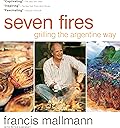
Seven Fires: Grilling the Argentine Way [Mallmann, Francis, Kaminsky, Peter] on desertcart.com. *FREE* shipping on qualifying offers. Seven Fires: Grilling the Argentine Way Review: Simply the best book about Argentine cooking available in English - "Seven Fires" has to be the best Argentine cookbook available in the English language. For one thing, it's written by a native Argentine, Francis Mallmann, who also happens to be one of the world's greatest chefs. Mallmann has three restaurants of his own, two in Argentina and one in Uruguay. "The Times of London" and "USA Today" have called his restaurants among the ten best places to eat in the world. More than just a simple cookbook, the first ten pages of "Seven Fires" include brief chapters about Mallman's background growing up in the beautiful Patagonian lake district of Bariloche, and some general material about Argentina. There is extensive and detailed information to get you off to the right start, including a chapter on "The Ways of Fire", including how to build and light a fire, the life cycle of a fire, how hot is "hot", and things you should be aware of whether dealing with wood or charcoal. Space is given to the parrilla, which is the grill itself (yours may be a hibachi or a Weber kettle, but principles are the same); the chapa, a flat piece of cast iron set over the coals; the infiernillo technique that involves two fires and which the author poetically refers to as "a little hell"; the horno de barro (outdoor oven); the rescoldo, which is cooking in the embers, and the asador method of cooking whole animals. Separate chapters deal with making Appetizers; Beef; Lamb, Pork & Chicken, Fish & Shellfish, Vegetables, Light Meals & Salads, Deserts, Breads, and Basics (things like sauces and tapenades). There is plenty of variety among the recipes. Sure, the author addresses cooking an entire cow - which the average reader probably won't be doing at home - but don't worry he also talks about making the perfect steak, and many other recipes for beef. He also presents dishes as wide ranging as empanadas, caramelized endive in vinegar, salt crusted chicken, brook trout in crunchy potato crust, and dulce de leche flan or crepes soufflés with raspberry preserves, and hundreds more. The recipes are generally simple and easy to follow. The photography is gorgeous. Not every finished dish is pictured, but the book is lavishly illustrated with beautiful pictures of food preparation, food presentation, and breathtaking views of the Argentine landscape. Written with the US audience in mind, the measurements are non-metric. This is a beautiful book. It goes far beyond a mere collection of recipes and becomes more of a cultural exploration. Highly recommended! Review: This is a quantum leap book - You should consider this book as a quantum leap experience - not your 26.th version of the East Tuscan New Flavor Cooking Experience, etc., but something which gives you totally new insights in food preparing. After studying the book and preparing some of the presented dishes, it is for me not so much the "fire" cooking approach, which is for most people who don't have a 20 acre country property at hand (beware of the neighbors) anyway out of reach. Rather, the insightful knowledge transmitted by Francis Mallmann is his methodic approach to "burnt" food, that is, generating taste by controlled burning of food. The interesting take is here, that Mallmann uses burning techniques mainly (or only) with vegetables, but not with meat. In this respect, he advocates (correctly) meat grilling at comparably low temperatures, contrary to the typical (US) American steak house approach (huge cuts, burnt outside and left rare inside, served with mushy vegetables). Almost every aspect of the book documents that this write up entails a compilation of decades of professional experience and tinkering with food, and the recipes are very well adapted for home cooking (some upgrading in Lodge cast ironware required, although, and anybody with a professional grade exhaust system is at an advantage). I am, however, not of the opinion that the recipes are "easily" to be followed. In spite (or even because) of the simplicity of the arrangements, the home chef must have excellent execution skills to deliver. All in all, a fantastic book. Thank you, Francis Mallmann, for passing your collected wisdom on to us.


| Best Sellers Rank | #78,543 in Books ( See Top 100 in Books ) #19 in Latin American Cooking, Food & Wine #91 in Barbecuing & Grilling #458 in Celebrity & TV Show Cookbooks |
| Customer Reviews | 4.8 4.8 out of 5 stars (815) |
| Dimensions | 8.88 x 1 x 10.25 inches |
| Edition | First Edition |
| ISBN-10 | 1579653545 |
| ISBN-13 | 978-1579653545 |
| Item Weight | 2.31 pounds |
| Language | English |
| Print length | 278 pages |
| Publication date | May 12, 2009 |
| Publisher | Artisan |
P**A
Simply the best book about Argentine cooking available in English
"Seven Fires" has to be the best Argentine cookbook available in the English language. For one thing, it's written by a native Argentine, Francis Mallmann, who also happens to be one of the world's greatest chefs. Mallmann has three restaurants of his own, two in Argentina and one in Uruguay. "The Times of London" and "USA Today" have called his restaurants among the ten best places to eat in the world. More than just a simple cookbook, the first ten pages of "Seven Fires" include brief chapters about Mallman's background growing up in the beautiful Patagonian lake district of Bariloche, and some general material about Argentina. There is extensive and detailed information to get you off to the right start, including a chapter on "The Ways of Fire", including how to build and light a fire, the life cycle of a fire, how hot is "hot", and things you should be aware of whether dealing with wood or charcoal. Space is given to the parrilla, which is the grill itself (yours may be a hibachi or a Weber kettle, but principles are the same); the chapa, a flat piece of cast iron set over the coals; the infiernillo technique that involves two fires and which the author poetically refers to as "a little hell"; the horno de barro (outdoor oven); the rescoldo, which is cooking in the embers, and the asador method of cooking whole animals. Separate chapters deal with making Appetizers; Beef; Lamb, Pork & Chicken, Fish & Shellfish, Vegetables, Light Meals & Salads, Deserts, Breads, and Basics (things like sauces and tapenades). There is plenty of variety among the recipes. Sure, the author addresses cooking an entire cow - which the average reader probably won't be doing at home - but don't worry he also talks about making the perfect steak, and many other recipes for beef. He also presents dishes as wide ranging as empanadas, caramelized endive in vinegar, salt crusted chicken, brook trout in crunchy potato crust, and dulce de leche flan or crepes soufflés with raspberry preserves, and hundreds more. The recipes are generally simple and easy to follow. The photography is gorgeous. Not every finished dish is pictured, but the book is lavishly illustrated with beautiful pictures of food preparation, food presentation, and breathtaking views of the Argentine landscape. Written with the US audience in mind, the measurements are non-metric. This is a beautiful book. It goes far beyond a mere collection of recipes and becomes more of a cultural exploration. Highly recommended!
T**R
This is a quantum leap book
You should consider this book as a quantum leap experience - not your 26.th version of the East Tuscan New Flavor Cooking Experience, etc., but something which gives you totally new insights in food preparing. After studying the book and preparing some of the presented dishes, it is for me not so much the "fire" cooking approach, which is for most people who don't have a 20 acre country property at hand (beware of the neighbors) anyway out of reach. Rather, the insightful knowledge transmitted by Francis Mallmann is his methodic approach to "burnt" food, that is, generating taste by controlled burning of food. The interesting take is here, that Mallmann uses burning techniques mainly (or only) with vegetables, but not with meat. In this respect, he advocates (correctly) meat grilling at comparably low temperatures, contrary to the typical (US) American steak house approach (huge cuts, burnt outside and left rare inside, served with mushy vegetables). Almost every aspect of the book documents that this write up entails a compilation of decades of professional experience and tinkering with food, and the recipes are very well adapted for home cooking (some upgrading in Lodge cast ironware required, although, and anybody with a professional grade exhaust system is at an advantage). I am, however, not of the opinion that the recipes are "easily" to be followed. In spite (or even because) of the simplicity of the arrangements, the home chef must have excellent execution skills to deliver. All in all, a fantastic book. Thank you, Francis Mallmann, for passing your collected wisdom on to us.
D**N
Inspirational
During family camping trips we adore the campfire. My kids wanted me to cook our meals over the campfire, but inevitably I would ruin many of the things I would try to cook not knowing how to control the heat. I happened upon Seven Fires looking for a wood fire cookbook to remedy that. I had never seen a book so enthusiastically reviewed that I knew I had to get it. The reviews are true, it is an amazing book. It is so inspiring and exciting that we have started to build a backyard asado area. I have a makeshift parrilla and chapa already and plan to build a cob oven. The pictures in the book are beautiful and really spark ideas of how you can make your own yard a great place for entertaining your family and friends. There is a simplicity to the recipes that I really love. For example the Burnt Oranges with Rosemary was very simple, yet so complex and gourmet tasting my family loved and devoured them. The Burnt tomatoes are simple and delicious as well. I tried some onions and peppers cooked resoldo (cooked in embers and ashes ) and they were full of flavors so much more than if I had cooked them any other way. I learned to butterfly a chicken to cook on the parrilla for Chicken Chimehuin. I have to admit it looked pretty magnificent cooking on the grill and everyone was very impressed at its presentation and it tasted great. The lemon confit took it over the top. I can see that there will be lots of fun to be had experimenting and learning from this book.
M**E
O livro além de ser lindíssimo, com fotos incríveis, é também um manual de consulta permanente. Conteúdo muito completo.
J**N
A great read and beautiful recipes
T**A
interessantissimi
G**A
If you're into meat, you seriously HAVE to grab the cookbook "Seven Fires: Grilling the Argentine Way"! This isn't just a recipe book; it's an absolute must-have if you want to step up your grilling game and cook meat like a pro. Everything about it—from the techniques to the sheer deliciousness of the recipes—makes it perfect for any meat lover. It's totally essential!
S**O
recommended 100%
Trustpilot
1 month ago
5 days ago