🌟 Capture the depths, own the moment — waterproof your creativity!
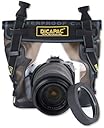
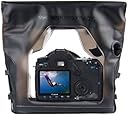
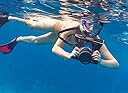
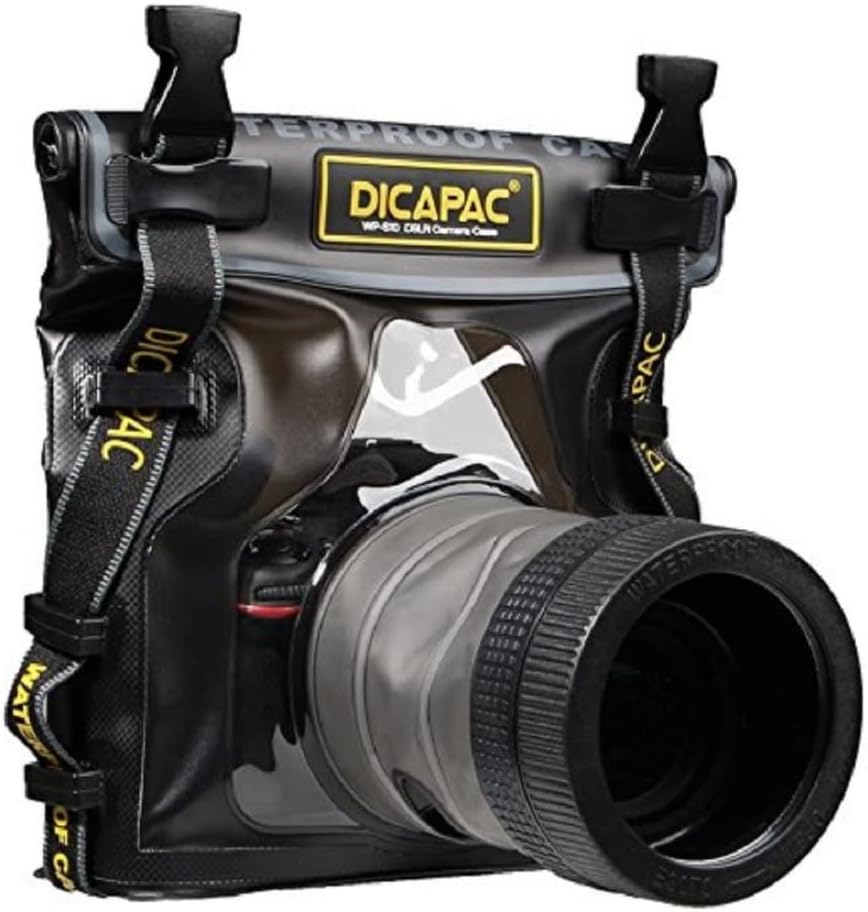
The DiCAPac WP-S10 Pro is a floating, 100% waterproof DSLR camera case designed for underwater photography up to 16.4 feet. Featuring a secure roll and velcro zipper system with a built-in finger sleeve, it allows full camera control while protecting your device from water, dust, fog, sand, and snow. Compatible with DSLR lenses from 2.0 to 5.9 inches, its UV-coated polycarbonate lens ensures clear, scratch-resistant images, making it the perfect gear for adventurous professionals who refuse to miss a shot.
| ASIN | B00169HXW2 |
| Best Sellers Rank | #250 in Underwater Photography Housings |
| Brand | DiCAPac |
| Built-In Media | Camera case |
| Color | Dark Brown |
| Compatible Devices | DSLR Cameras (2.0-5.9" Lens) |
| Customer Reviews | 3.8 out of 5 stars 1,272 Reviews |
| Enclosure Material | Acrylonitrile Butadiene Styrene (ABS) Thermoplastic Polyurethane (TPU) Silicone Polyvinyl Chloride (PVC) Polycarbonate (PC) |
| Exposure Control Type | Automatic |
| Global Trade Identification Number | 07387809212784, 08809176623066 |
| Item Dimensions D x W x H | 6"D x 11"W x 9"H |
| Item Weight | 15.2 ounces |
| Manufacturer | DICAPac |
| Manufacturer Part Number | WP-S10 |
| Material | Acrylonitrile Butadiene Styrene (ABS) Thermoplastic Polyurethane (TPU) Silicone Polyvinyl Chloride (PVC) Polycarbonate (PC) Material Acrylonitrile Butadiene Styrene (ABS) Thermoplastic Polyurethane (TPU) Silicone Polyvinyl Chloride (PVC) Polycarbonate (PC) See more |
| Maximum Shutter Speed | 1/2000 segundos |
| Media Type | ProductImage |
| Minimum Shutter Speed | 1/4000 Sek. |
| Model Name | WP-S10 |
| Model Number | WP-S10 |
| Model Series | WP-S10 |
| Mounting Type | Strap Mount |
| Number of Items | 1 |
| Product Dimensions | 6"D x 11"W x 9"H |
| Screen Size | 6.7 inches |
| Shooting Modes | Manual, A, M |
| UPC | 520864106248 |
| Unit Count | 1 Count |
| Video Capture Format | MP4 |
| Video Capture Resolution | 240p |
| Viewfinder Type | Optical viewfinder |
| Warranty Description | 6 Month |
| Water Resistance Level | Waterproof |
C**N
I have been reasonable with it, but not timid updated now September 2019
Update September 14 2019. I am back in Maui and am using the same housing from my review last year. It sat for 9 months without being used and is still performing well. No leaks Last year used my Pentax KP with 17-50 tamron and this year I am using tamron 28-70 it is a bit longer than the other lens so fits a bit better I have not gone more than about 8 feet deep on this trip so far and have been out 5 times already . The last four images are from this trip Update 22 November 2018 . I have now used this in the ocean 8 times in 2 weeks and not a drop of a leak. I have dove down to 10-15 feet while snorkeling and all has been good. I have not stratched the lens viewpoint glass but I just rinse it with fresh water and keep that part covered with a cloth when storing. I received this for my birthday and told my wife today it has been one of my most useful presents. I have added additional pictures taken using this digipac I followed the instructions and first tried this in a pool then moved to the ocean. Each time I use it I am very methodical on ensuring I close it up properly. I have gone close to 16 feet but for 5-10 secs at a time We Remember your putting a 1000 dollar or more DSLR in at 70 dollaR bag. This waterproof housing is nice for snorkeling to get good quality images. I use a Tamron 17-50 lens with this on my Pentax KP. I am able to use the zoom though a bit awkward. Camera Autofocus continues to work well. If I were to point out a design areas concern it is that the finger slot for working the shutter is probably the point of waterproof failure I would be concerned about Be careful that you are not swimming putting your force through the shutter finger hole. Would have like to see that rubber area be more robust
F**N
Does what it needs to do
I bought this case for my Canon Rebel Xti after doing a lot of research for underwater cases and housings to prepare for a trip to Curaçao. Curaçao is an amazing place to go snorkeling with lots of amazing sea life, lots light, and crystal clear waters, so I was excited about the prospect of doing some underwater photography. However, the options for my camera were slim and the only real underwater housings I could find cost more than what the camera is now worth. Generally the more professional housings I found cost between $400-1000, which is money I could better just put towards a new camera. When I found this case I was skeptical at first, considering some people experienced leaks, but eventually decided to just give it a try. It is very important to ensure that you close the seal correctly and check the case for leaks before putting your camera inside. I tested mine a few times, in the bathtub and under the shower, until I was confident it was watertight. The case is a little cumbersome to handle in the water, the front lens has a tendency of not sitting nicely in front of the camera lens, resulting you seeing the case in the photos. It is also difficult to use the viewfinder through the plastic, especially while wearing snorkeling goggles, which makes framing very difficult. One handy feature of the case is that it floats, which gave me some peace of mind in the case I was separated from my camera in the water. However, this is also a drawback as it makes diving and swimming a little harder. Overall, the complaints are only minor considering that I was able to take my camera underwater into the ocean, take photos, and it still works. It did everything it needed to do. I went snorkeling everyday for 10 days and not once did any water get inside the case, even after diving near the depth limit. Bottom line, this may not be a professional housing and has its drawbacks in terms of operational ease but it'll keep your camera dry.
D**Y
Hard to Use but your Best Bet
I was a little apprehensive buying this, as I imagine you are too, after looking at all the negative reviews; But here's the deal. You get what you pay for. It's not a professional, underwater rig that will allow you to get a flawless shot every time. But it is also NOT a spawn-of-satan contraption designed to murder your expensive camera. DOES IT WORK? Instead of just signing myself into an insane asylum by throwing my DSLR into a modified Ziplock bag and tossing it into a pool, I did numerous tests by putting paper towel in the bag and submerging the the device in a pool for various amounts of time. After the paper towel repeatedly emerged dry, I took a deep breath and put my camera in the housing with much trepidation. Once opened and examined, all was found to be dry, safe, and in perfect working order. I have done about ten total tests of this housing using different lenses and settings and still have a working, fully functional canon T5i! So worry yourself not! If you properly test your product and follow the directions, you should have no issues with the safety of your camera. IS IT USEABLE? That's a tricky question to answer. Frankly, it is VERY difficult to operate under water. (It's difficult to operate out of water too). Your manual control is limited as there are only three finger ports in the housing and they don't really help a whole lot. The bag is also very hard to manhandle under the water. Imagine you've put your camera in an inflatable pool floaty and are trying to swim under water with it. Let's just say it's a good cardio work out. I would recommend getting some cheap wrist or ankle weights and putting them in the bag along with your camera to help even out the weight and also to help keep your camera positioned properly in the bag. WHY THE 5 STARS? Like I said: You get what you pay for. It does what it advertises. With this, you can get footage underwater without losing your $700 camera. Is it professional? No. Does it work? Yes. I'm happy with it.
A**Y
Obviously not an Ikelite, but it works okay...
Before purchasing, I read all the reviews, including the horror stories from people losing thousands of dollars worth of equipment. I decided to take a chance on this product for two reasons. #1) I needed something simple to protect my Canon 50D on kayaking trips. I have no intentions of completely submerging it. If I did, I would definitely save up and invest in something like the Ikelite. #2) Since I'm only looking for something to protect my camera from occasional splashing, I really didn't want to spend the money for an Ikelite or a GoPro. I hope my experience (so far) helps other consumers. The seal works sort of like a Ziploc bag meets a dry bag. Once the camera is inside, it has an old-school ziploc seal (the old, press until you feel it's locked). Next, it rolls closed like a dry bag. Last, it has two sets of velcro to keep it closed. I used this case for the first time about two weeks ago. This also happened to be my dog's first kayaking trip. Naturally, Charlie (the dog) wanted to go for a swim at the most inopportune moment. When I pulled him up out of the water, I forgot my camera was in my lap and proceeded to set Charlie in my lap on top of the camera. Thankfully, I had sealed the camera in the case before I ever got in the kayak. Water poured off of the dog and completely drenched me and the camera. My camera remained in the case untouched for another 6 hours or so. I did not open the case to check on it while in the kayak, nor after returning to the car. After finally removing the camera, I was pleased to find that it and the inside were completely dry. I have no doubt that without this case my camera would have been completely ruined. Therefore, I gave it three stars for protecting my camera from excessive "splashing". However, I do not trust it enough to submerge my camera. It appeared to have water around the internal parts of the ziploc seal, although water did not appear to have gotten passed this seal. It loses 2 stars because the lens housing is kind of difficult. There are little finger holes for adjusting the lens, which is fine, but the end of the case ended up in 90% of my shots. I felt like I was taking pictures with my phone and got my finger in the way in nearly every shot. I was using a 60mm F2.8 macro lens. I think using a longer lens with a lens hood might help keep everything lined up, but I haven't tried that yet. IMO, it should protect the camera from water while not making it harder to get good shots. If there was some sort of velcro strap on the sides of the lens housing so the length could be custom adjusted to whatever lens you use, then it would be a four-star item. I'm sure I have straps laying around from some old purses or tote bags that I could super glue on (or something). I did not have any issues with condensation. If you're interested, I got this to use with the case: Stack-On SPAD-60 Safe 'N Dry Desiccant for Stack-On Long-Gun Safes and Cabinets, 10-Pack I'm assuming this worked, since I'm in Houston, which is pretty steamy, and there was literally no condensation at all.
K**R
difficult, bulky, not camera specific
I bought this camera housing for a 'swim with the manatees' trip. After weighing the options of a point and shoot camera/hard shell housing I DIDN'T know vs. taking a chance using this with my Canon 7D and possibly getting incredible pictures I decided to buy this. Many reviews I read had many suggestions about use. Protecting inside glass, using dessicant for moisture while in cool water, getting a better fit inside for easier use. HA!!! I tried everything!! Tested for watertight seals...check, so far so good. For hours I fiddled, re-positioned my 7D with 10-22 wide angle lens. Despite being advertised as fitting the Canon 7D, the actual bag is just too big. The included foam and two foam cushions were worthless to make the camera and lens fit. The bag itself is too generic in size for a nice tight fit to hold the camera in place AND be able to use the controls well. Despite the water pressure making a tighter fit, camera shift made it hard to find the controls in the same place each time I wanted to shoot video. The camera lens size in diameter was a good fit but the length was a problem. The bellows were not adjustable to fit the shorter length of the lens so after wedging the camera as far forward as I could, stuffing a piece of foam along the lower back to attempt less shift, the bellows created a shadow ring if I attempted to zoom out for more wide angle. SO I bought a roll of gross duck tape and had to tape the bellows down effectively removing the finger holes that control zoom. SO, ALL choices have to be made BEFORE closing the bag and shooting. Have the camera completely preset, hope it is what you want and need, then close it up because you can make NO changes once the waterproof case is closed up and wet. Dessicant! HA, doesn't work in short time intervals. I placed several inside the case along the bottom. Air temp was 75 degrees, water temp was about 72 degrees...fogging began to form after a short time. Unintentional soft focus. (I did use the old dive mask trick with toothpaste and feel it slowed the process.) I did get a few videos that were worth the trouble. I also had to stop and take the strap off as it was always floating in the way. Bulky, it felt like I was pushing a pillow around after I had to take the strap off. UNABLE to switch camera from video to stills so that was disappointing. The switch area was too tight. After the swim? The inside was very, very wet. NOT soaking from a leak. Wet from condensation due to the camera heat. Thank goodness the Canon 7D can stand up to some moisture. How disappointed was I with this housing overall? I almost left it in my hotel room to lighten my luggage weight but decided to just sell it to someone else who may want to give it a try...
W**N
Great way to get started shooting underwater!
I just completed my third dive with this camera, and my gear has been completely protected from the water each time. I am a professional photographer and using this to experiment with underwater portraiture. The WP-S10 is made for larger DLSRs like the Nikon D90, D300, D700, D4 etc. If you are using a smaller camera like the D3300 or a Canon Rebel, you want to get the Digipac made for your size camera or you will find this to be bulky and awkward. I've used this this with a Nikon D300s combined with a 14mm f/2.8 as well as the D700 (with battery grip) and a 24-70 f/2.8 and had good results with both. The bag ships with three foam inserts for the bottom that you can use to adjust the height of the camera - I took them out when using the D700 with battery grip as it was tall enough. For my next shoot I think I will go back to using the D300s/14mm combination as it was the easiest to shoot with (no live preview on the D700 so you are shooting in the dark). One thing to note... it does give you enough room to put a radio trigger on your hot shoe. HOWEVER... if your radio trigger happens to be the older Pocket Wizard II style, it will require severe bending of the antenna in order to get it to fit in the bag. I had to do this on one dive because a battery died in my cheap Ebay triggers. Happy ending though - the Pocket Wizard lived to tell the tale. This is a great product and a great price. If you are careful about handling it and use basic common sense, this thing should last a good long while. It IS HARD to operate some of the controls on the camera when underwater, but you get used to it. It is, after all, a $65 bag and if you want ease of use and a more rugged structure, you should absolutely spend $1,300 - $5,000 on a hard housing. I may go that route if I get enough work lined up. In the meantime, I am quite happy to plug along with this. Good luck to you
J**B
Works well enough to get some unique images that you couldn't get without it
(I am a professional wedding photographer. I shoot about 35 weddings a year. This year, I began shooting destination weddings and thus wanted a solution to shoot portraits of couples in the ocean and underwater. I have very good equipment, maintain it regularly, and heavily research all purchases. I am primarily a photographer, but I am also a gear nut.) I purchased the DiCAPac WP-S10 knowing its limitations: the finger ports were awkward to use, the front lens element doesn't sit flush with the camera lens, the included spacers don't do much to make the fit snug, and some users experienced equipment destroying leaks. Knowing all of this, I considered the cost of the housing against much more expensive traditional underwater housings. This unit costs about about 2% of the cost of a professional housing (~$65 vs ~$2500). I received the housing and did the tissue test in my bathtub. No moisture. Still, I wasn't going to risk one of my professional bodies, so I decided I would use my wife's Canon SL1 with a Canon 35 f/2 IS. The camera is admittedly ridiculously small compared to a 5D or 7D series body. But, sealing up the three closing mechanisms (the ziplock, dry-bag roll, and velcro) as well as tightening the front lens port, the camera went under the bath water without so much as a drop of liquid inside. I took a picture of my toes, illuminated with an underwater flashlight, practiced changing the settings and reviewing images, and decided it would be good enough for Jamaica. Afterward, I removed the camera and there was no moisture. I also tried fitting my 7D Mark II in the housing with a Canon 24-70L Mark II and it also was too small to fit well...and forget about trying to rotate the zoom. It seems the ideal camera size for this housing would be a 1DX or Nikon D4S, but I wouldn't recommend putting that much money into this cheap of a housing. Stick to cheap primes and older or less expensive bodies. Here's why: I got to Jamaica and went out to the ocean to practice before my shoot. Partially submerging the SL1/35f2 combo, I got some great shots. I had brought a snorkel/mask/fin set along, so I dove underwater to test the setup. This is were the problems began. Where there had been no moisture before, now the inside was fogging up. I had placed 3 silica packs inside the housing beforehand, but they seemed to do nothing. Thinking maybe I hadn't let the humidity levels equalize from our air-conditioned room to the hot and humid Jamaican climate, I swam back to shore, and opened up the bag. By this time, the camera and lens were covered with 20 or so large beads of water. But thankfully, the camera seemed to work just fine. After drying the camera and bag and letting them equalize temperature and humidity, I tried again. Again, partially submerged, worked fine. Completely underwater led to strong fogging and drops of water showing up in the inside. I called it a day for fear of pressing my luck. The next day, I managed to snap some good pictures of the couple using my partial submerging technique. But as soon as we went underwater, experienced the same problems. I have another destination wedding this December in Riveria Maya and strongly considering my options. Overall: 2 stars. Works well enough to get some unique images that you couldn't get without it. But is not even remotely a replacement for a traditional underwater housing. And I would NOT trust this housing with a camera/lens that I needed for a later shoot.
R**J
I mean I'm happy with it because of the possibilities it creates.
Ok, so why do I think this thing is worth 5 stars? I mean it allows me to get my digital SLR into the water safely for under $100. That's awesome as far as I'm concerned. Yeah, it has a lot of limitations as far as what you can adjust on the camera once it's in the bag and you are in the water, so just pick AV mode or something that doesn't require too much control and then you can focus more on taking your shots and staying underwater. It isn't a $1,500+ underwater housing specifically made for your digital SLR. It's a waterproof, heavy gauge plastic bag made out of similar stuff pool toys and inflatable rafts are made out of with some clear windows for you to be able to see the buttons and screen on your camera while keeping your gear water-free. The lens cap is a hard acrylic though, pretty good. I'm a wedding and portrait photographer and I love the water. I recently came across someone who would like to do a dress trash session underwater. I can do that with this bag. Granted, underwater photography takes some getting used to with this kind of setup especially, but whatever, this bag strongly serves its purpose. If you have $1,500+ to spend, go get a hard housing from Ikelite, LiquidEye, or Aquatica. They are all pretty incredible from my research, but some of them also cost as much as $3,500+. But if you just want to get you digital SLR in the water with you and don't want to spend as much as you would buying a brand new full frame body, try this thing out. Just make sure you seal the bag up properly and screw the cap on nice and tight. Do a test run before you give it a go with your camera inside. I actually just did my test run with my old camera and lens. Since that went well, I feel comfortable bringing my 5D Mark II and 35mm f1.4L in the water with me now and I should be good for that underwater dress trash shoot. Remember, everything takes some practice and getting used to. If you are the kind of person that can adapt to your gear, this should serve you well, but if you are more the kind of person that needs to adapt things to your liking, this may be a bit more of a challenge for you because this is the type of product that takes a lot of accepting it's limitations and learning to work the best you can within them. Good luck!
Z**C
Great for the price!
I used this with my canon 70d 18-135mm lense and it certainly kept the water out, it was bone dry inside the case after a whole day of mass water flights in Thailand for the Thai new year. There wasn't a great deal of reflection or unwanted light caused by using the case either. Due to the section which houses the lens being so long you could see the black circle shape on the frame unless you hold the bag back making the end run flush with the lense, in the end I just taped the thing in place. Operating the controls for instance changing mode was fairly difficult once the camera was inside the bag but using the back controls and main fail wasn't a problem... For the price I would highly recommend, it cost a fraction of the price in other waterproofing options. That said I rarely fully submerged the camera for sustained periods, the longest was a a few minutes at around 1.5m and this was fine. I felt nervous about going deeper for longer periods but there wasn't any signs it couldnt last longer I just didn't want to risk it. The weakest areas of the bag were the finger holes where the plastic felt a little thin, but so long as you're careful putting your fingers inside it should be fine.
F**.
Ist gar nicht so schlecht :)
Trotz der hier auch einigen negativen Bewertungen habe ich die DiCAPac WP-S10 gekauft, gebe jetzt meine ersten Erkenntnisse hier an und ergänze sie dann in ein paar Wochen nach den praktischen Erfahrungen. Ich denke, es ist schon klar, dass "richtige" Unterwasser-Kameras und "richtige" harte Unterwasser-Gehäuse stabilere Varianten darstellen und daher auch schon berechtigt mit einem Vertrauens-Vorschuss bedacht werden - aber eben auch mit einem ganz stolzen Preis. Es gibt auch andere "Beutel", die professioneller daherkommen und preislich zwischen der WP-S10 und den Hardcases angesiedelt sind, aber die waren gerade jetzt nicht erhältlich und so bin ich dann doch für den kommenden Kurzurlaub darauf ausgewichen...und bin gespannt. Aufhänger waren für mich jetzt nicht Unterwasser-Aufnahmen, sondern ich will nur etwas meine Bedenken zerstreuen, ich könnte beim Fotografieren im Meer stehend irgendwie ins Straucheln kommen und die Kamera untergehen. Ich weiß noch nicht, wie tief ich demnächst rein muss. Nun, da die Tasche da ist, kommen natürlich doch auch Ideen auf, einige Fotos in unmittelbarer Nähe zur Wasseroberfläche zu machen - sowohl darüber, als auch darunter und ggf. auch in einer Bewegung mit Serien-Aufnahmen von oberhalb nach unterhalb der Oberfläche. Ich vermute, dass eine solche Tasche, wenn sie einmal dicht hergestellt ist und nicht zu schlimm behandelt wurde, auch grundsätzlich dicht bleibt. Sollte irgendwo ein kleines Leck entstehen, hoffe ich, dass die spritzwassergeschützte Kamera das noch aushält, bevor sie befreit wird. Gerade habe ich die Tasche mal trocken "anprobiert". Meine Nikon Z9 passt NICHT hinein, weil der Überstand (Hochformatgriff) des Gehäuses unterhalb des Objektiv-Anschlusses zu groß ist. Die Z8 passt dagegen perfekt und das sogar auch noch mit einem Godox X2T-Blitzauslöser, der mir Fotos mit ferngesteuertem Studio-Blitz ermöglichen soll (gegen Sonnenauf-/-untergang und vielleicht im Pool?). Als Objektiv habe ich das Nikon Z 24-120/4-Zoom montiert und damit zunächst Testschüsse bis 94 mm machen können. Da dessen Tubus beim Tele-Zoomen ausfährt, ist halt da ungefähr Schluss. Das reicht aber auch für mich vollkommen aus. Eher geht's in den Bereich um 50 mm oder in den Weitwinkel. Ob mein 12 mm Fishey ohne Abschattungen funktioniert, habe ich noch nicht probiert. Jedenfalls muss man bei kurzen Objektiven aufpassen, dass es keine Abschattungen durch das Frontglas des Beutels gibt. Beim Einbringen der Kamera empfinde ich es als hilfreich, das Objektiv (zumindest, wenn es eine vergleichbare Größe hat) nicht an der Kamera mit hinein zu schieben, sondern es nach der Kamera von vorne durch die Tasche anzusetzen. Das erleichtert das Handling ganz enorm und vermeidet unnötige Belastungen der Schweißnähte der Tasche. Natürlich muss man dabei aber peinlich darauf achten, nicht etwa Sandkörner in der Tasche zu haben und die in Kamera oder Objektiv zu bugsieren. Woanders habe ich gelesen, dass die Tasche gerade auch durch das Aufschrauben deren Frontglases stark belastet würde, wenn dessen Ring und Beutel gegen einander gedreht werden. Ich weiß nicht, ob sich mittlerweile die Konstruktion verändert hat, aber bei meiner Tasche gibt es vorn einmal den Deckel mit dem Frontglas (Kunststoff) und sein Gegenstück am Beutel selbst. Beide bestehen aus je einem stabilen und griffigen Kunststoff-Ring. Da versteht es sich für mich von selbst, dass ich beim festen Zuschrauben NICHT den Deckel gegen den Beutel festschraube, sondern den Deckel gegen dessen stabiles Gegenstück, damit die Schweißnähte etc. der Tasche nicht zu stark belastet werden und reißen. Für mich sind die Fingerlinge die Achillesfersen der Tasche, denn da besteht auch die Gefahr, beim Einbringen oder Rausholen der Kamera dran zu ziehen und die Verbindungen zu beschädigen. Unbedingt aufpassen! Der obere Labyrinth-Verschluss ist meiner Meinung nach sehr gut und sicher ausgeführt und eigentlich ohne Anleitung richtig zu bedienen. Auch das Aufschrauben des Front-Glases kann man eigentlich nicht wirklich falsch machen. Wer hier schräg ansetzt und mit Gewalt zudrehen will...na ja...ist selber schuld... Sehr überrascht war ich bei meiner Trockenübung darüber, wieviele Bedienelemente ich tatsächlich bedienen kann. Neben dem Auslöser über den Fingerling kann ich die AF-ON-Taste, die ich zum Fokussieren programmiert habe, gut bedienen aber auch das Steuerkreuz und den Joystick. Selbst andere Tasten kann ich über die Rückseite der Tasche drücken. Und auch die Stellräder lassen sich in kleinen Schritten drehen. Was ich noch nicht wirklich probiert habe, ist das Zoomen mittels der beiden unteren Fingerlinge. Ich denke aber, dass werde ich eher nicht nutzen und so auch Belastungen in deren Bereich vermeiden. Die Kamera wird auf sinnvolle Parameter voreingestellt und über das Display visiert. Vielleicht nehme ich auch Festbrennweiten, anstelle des Zooms. Ggf. kann ich später ja noch Zuschneiden. Über Wasser geht der Blick durch den Sucher. Unter Wasser erwarte ich das nicht mehr. Da muss das Display herhalten und vielleicht vorher auf "heller" eingestellt werden. Vermutlich werde ich aber für "Action-Aufnahmen" auch oberhalb des Wassers eher über das Display grob visieren. Der Dynamik-Umfang der heutigen Kameras verzeiht auch etwas falsche Einstellungen. Da vermute ich, dass sich notfalls am Rechner ausreichend korrigieren lässt. Für die Schärfe am richtigen Platz ist wohl eher eine geschlossenere Blende angesagt, auch wenn dafür die ISO vielleicht etwas höher gedreht werden muss. Ich bin da aber noch gespannt, auf meine Erfahrungen... Den Eimer-Test hat meine Tasche gerade gut überstanden. Ich habe den zweigeteilt durchgeführt, da ich keinen Eimer oder Ähnliches habe, in den die Tasche komplett passt. Und den Verschluss knicken wollte ich auch nicht. Das wäre sicher eine Problem-Handlung. Da ich die Tasche vorher extra nicht luftleer gedrückt habe, habe ich sie einfach mit der Werkzeugkiste im Eimer zweimal für rund 30 Minuten unter Wasser gedrückt gehalten. Der Auftrieb ist schon enorm. Und bevor ich eine Stunde lang an der Badewanne knie, trinke ich lieber in Ruhe Kaffee... Aktuelles Fazit: Meine Tasche ist aktuell DICHT, das Handling für mich vollkommen in Ordnung, aber Ständiges Ein- und Auspacken wird es NICHT geben. Mal eben schnell wird die Tasche bei mir wohl auch nicht eingesetzt, sondern eher bei geplanten Aktionen. Für ganz wichtig halte ich, ein ganz ruhiges und behutsames Vorgehen beim Handling und absolute Vorsicht mit dem Frontglas der Tasche, damit das nicht unnötig schnell zu sehr verkratzt oder erblindet. Natürlich ist der Preis für einen "Gefrierbeutel" deutlich überzogen, aber wenn die Tasche bei guter Behandlung das tut, was sie soll, ist der für mich voll in Ordnung. Ich wollte das schon mal teilen und werde etwa Ende Juni nachberichten...
R**N
ca fonctionne c'est pas cher
Ça fonctionne et c'est pas cher pour aller dans l'eau. On peut faire des reglages mais c'est difficile de tourner les molettes. Les boutons y a pas de soucis. Il faut absolument mettre du silica gel pour limiter la buée comme dans tous les caissons je pense. les images sont légèrement floues peut être que je ne suis pas encore au point avec le hublot. Mais ça permet de prendre des photos inédites de mon fils dans la piscine. je suis quand même pas ultra confiant pour l'instant sur l'épaisseur du plastique et les multiples coutures je pense que ça peut dechirer si on touche quelque chose ou se faire percer par un insecte ou devenir "poreux" après quelques années et changements de température. Du coup je vérifie de temps en temps l'étanchéité dans un évier avec du sopalin. Pour l'instant ça ressort sec donc c'est bien étanche. avec le boîtier dedans je reste à la surface.
G**R
Pretty good
So far so good, have used it 3 times now and had some good results. It's not the easiest thing to shoot with as visibility is difficult. But it keeps the water out. Make sure you seal it properly and check with a tissue before use to make sure it's still working.
V**A
It fulfills the requirement pretty well. The bag is totally water proof with ...
It fulfills the requirement pretty well. The bag is totally water proof with several locks to avoid water seeping in. With some practice it was easy to work on buttons and change settings. Clicking is easy enough as well. The only issue is changing the mode from Manual to AV or anything else as this is on the left side of the camera and no finger controls are available there in the bag, But if you have the mode pretty much fixed it does not matter. Good product.
Trustpilot
1 week ago
5 days ago