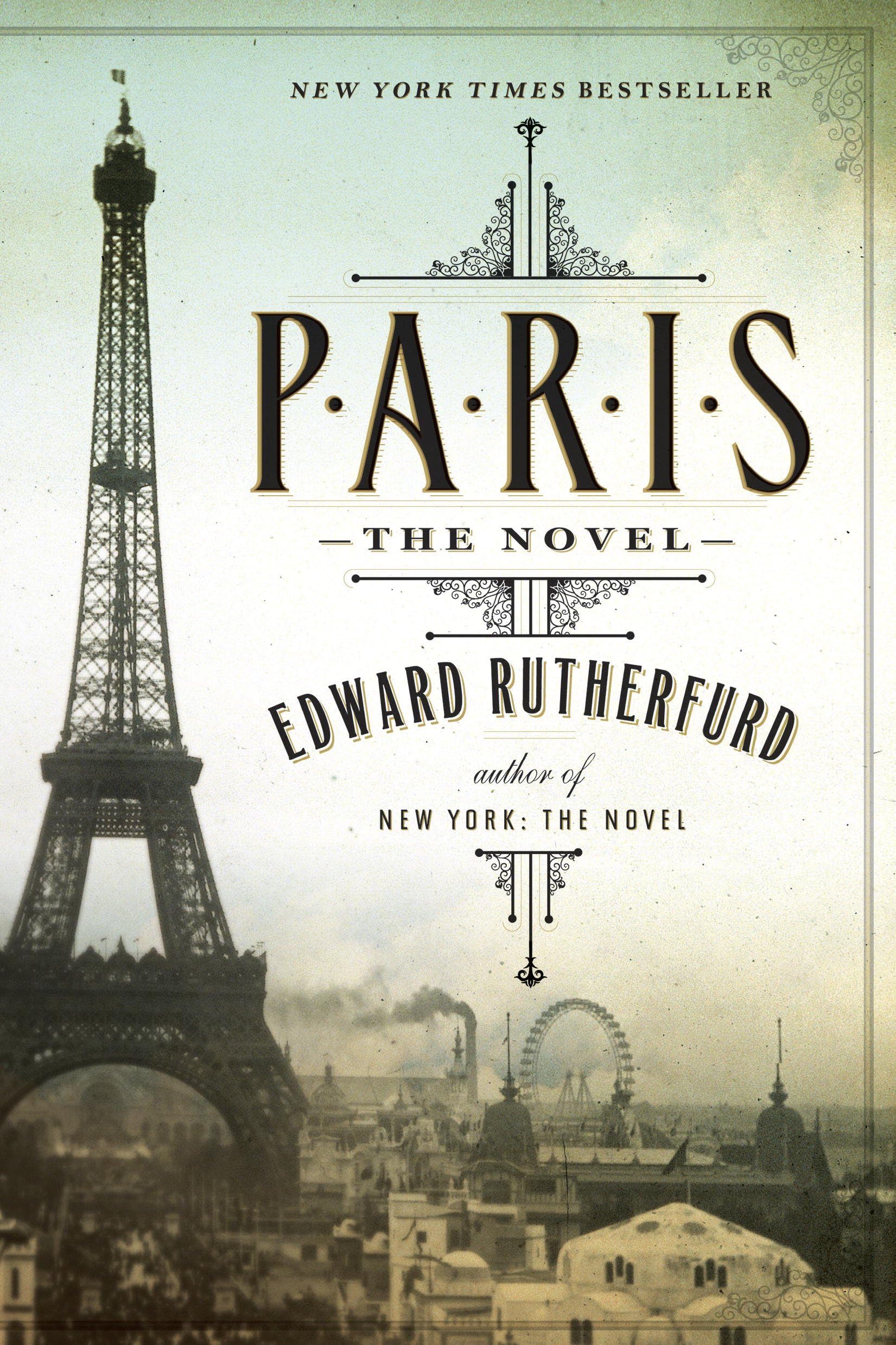
Paris: The Novel
Product ID: 110081494
NEW YORK TIMES BESTSELLER From Edward Rutherfurd, the grand master of the historical novel, comes a dazzling epic about the magnificent city of Paris. Moving back and forth in time, the story unfolds through intimate and thrilling tales of self-discovery, divided loyalty, and long-kept secrets. As various characters come of age, seek their fortunes, and fall in and out of love, the novel follows nobles who claim descent from the hero of the celebrated poem The Song of Roland; a humble family that embodies the ideals of the French Revolution; a pair of brothers from the slums behind Montmartre, one of whom works on the Eiffel Tower as the other joins the underworld near the Moulin Rouge; and merchants who lose everything during the reign of Louis XV, rise again in the age of Napoleon, and help establish Paris as the great center of art and culture that it is today. With Rutherfurd’s unrivaled blend of impeccable research and narrative verve, this bold novel brings the sights, scents, and tastes of the City of Light to brilliant life. Praise for Paris “A tour de force . . . [Edward Rutherfurd’s] most romantic and richly detailed work of fiction yet.” —Bookreporter “Fantastic . . . as grand and engrossing as Paris itself.” —Historical Novels Review “This saga is filled with historical detail and a huge cast of characters, fictional and real, spanning generations and centuries. But Paris, with its art, architecture, culture and couture, is the undisputed main character.” —Fort Worth Star-Telegram “Both Paris, the venerable City of Light, and Rutherfurd, the undisputed master of the multigenerational historical saga, shine in this sumptuous urban epic.” —Booklist “There is suspense, intrigue and romance around every corner.” —Asbury Park Press Review: An Epic and a must read for those who love Paris - This is not a travel book even though the title might have misled you. This is a novel written by Edward Rutherfurd. I have read novels from James Michener before. So when I heard Edward Rutherfurd is a Michener disciple, I was interested. James Michener is known for choosing a place and writing a story which spans centuries and generations. In this book, Edward Rutherfurd uses the same principles as Michener to tell the rich history of the city of lights. Edward Rutherfurd tells the story of Paris from 13th century to the second half of 20th century, a decade after the WWII. How does Rutherfurd accomplishes this difficult task in such a way he has the reader hooked to the beginning to the end? He accomplishes this by two techniques. The first one is to weave the story around 4-5 families whose lives are intertwined through the evolving time and the turbulence associated with these times. The second technique is to tell the story in a non-linear fashion. By setting the story against 4-5 families, Edward Rutherfurd explores all the possible complexities which occur in human relationships. The complexities revolve around the French theme of liberté, égalité et fraternité. Using this theme, the author explores not only class inequality, bigotry and prejudices through the ages but also the struggle of the various members of the families to overcome these obstacles. The chasm which has deepened the ages is finally forgotten and a brotherhood formed between various families against the occupying forces during the concluding chapters set in the 20th century. If this is not melodrama at the best, then what is? The second technique to jump between ages which means you might be reading what is happening in the 19th century and the author abruptly switches to 13th century when the next chapter begins. This is very effective to build suspense and capture attention. Even though the reader is confused, he is still eagerly looking forward to the next chapter. He desperately wants the the author to connect the dots. This also forces the reader to be very attentive while reading. A few months back, I read Graham Robb's Parisians: An Adventure History of Paris . You may find similarities between these two books. If you love Paris, these two books should be in your reading list. Both these books explore Paris through centuries. In Graham Robb's Parisians, the author tries to tell the story of Paris by putting himself into the shoes of many historic figures. In this book, Edward Rutherford spins a story where records the actual history of the city with fictional characters interacting with the historical figures. The streets which are existing today in Paris comes alive in both the books. If you have walked through Paris, then you inadvertently becomes a part of this novel. This is recommended if you like to read an epic. This is recommended if you love Paris. Review: Travel with me to Paris - From today’s master of epic storytelling comes a novel that captures Paris in all of its contradictory moods: fiery passion and suave calm, loyalty and rebellion, peace and war, hope and despair, light and dark. With his meticulous research and imaginative prose, Rutherford takes the reader on a journey that spans centuries, tying together the histories of several families as they make their impressions on the very heart of Paris. We watch in fascination as Thomas Gascon helps to build the Statue of Liberty and the Eiffel Tower. Our hearts ache with Jacob as he watches his daughter escape with her forbidden lover. We listen with blushing cheeks to the tales that come out of the Moulin Rouge; we laugh along with Marie when she is introduced to the incomparable Ernest Hemingway. And we stand tall with Charlie as he gives his all to protect his beloved city. All that Paris is - all that it is imagined to be - is captured here in these spellbinding pages. In all honesty, I wasn’t sure I was going to enjoy this novel when I first started reading it. I’ve been a fan of Mr. Rutherford’s works for so long that I expect them to grab hold of me from the very beginning and hold me captive until their thrilling end. This novel, however, with its jumping narrative (as opposed to the fluid shift through time that he has employed previously) felt broken and disorienting. My initial reactions to the characters, too, were not as positive as they have been in the past. However, as I went further and further into the novel, I found myself drawn in despite my reservations. By the middle of the book, I was once again a happy captive, anxious to get to the end and hoping for the best for all of my favorite characters. As in life, the resolution did not unfold exactly as I had hoped it would, but it was satisfying nonetheless. Though I would certainly recommend other Rutherford books to first time readers (my favorites are the Ireland and London books), this tome is still one that should not be overlooked - especially by armchair travelers like me!! With his unrivaled blend of impeccable research and narrative verve, Rutherfurd weaves an extraordinary narrative tapestry that captures all the glory of Paris. More richly detailed, more thrilling, and more romantic then anything Rutherfurd has written before, Paris: The Novel wonderfully illuminates hundreds of years in the City of Light and Love and brings the sights, scents, and tastes of Paris to sumptuous life.


| Best Sellers Rank | #71,379 in Kindle Store ( See Top 100 in Kindle Store ) #140 in Literary Sagas #354 in Family Saga Fiction #490 in Historical Literary Fiction |
N**A
An Epic and a must read for those who love Paris
This is not a travel book even though the title might have misled you. This is a novel written by Edward Rutherfurd. I have read novels from James Michener before. So when I heard Edward Rutherfurd is a Michener disciple, I was interested. James Michener is known for choosing a place and writing a story which spans centuries and generations. In this book, Edward Rutherfurd uses the same principles as Michener to tell the rich history of the city of lights. Edward Rutherfurd tells the story of Paris from 13th century to the second half of 20th century, a decade after the WWII. How does Rutherfurd accomplishes this difficult task in such a way he has the reader hooked to the beginning to the end? He accomplishes this by two techniques. The first one is to weave the story around 4-5 families whose lives are intertwined through the evolving time and the turbulence associated with these times. The second technique is to tell the story in a non-linear fashion. By setting the story against 4-5 families, Edward Rutherfurd explores all the possible complexities which occur in human relationships. The complexities revolve around the French theme of liberté, égalité et fraternité. Using this theme, the author explores not only class inequality, bigotry and prejudices through the ages but also the struggle of the various members of the families to overcome these obstacles. The chasm which has deepened the ages is finally forgotten and a brotherhood formed between various families against the occupying forces during the concluding chapters set in the 20th century. If this is not melodrama at the best, then what is? The second technique to jump between ages which means you might be reading what is happening in the 19th century and the author abruptly switches to 13th century when the next chapter begins. This is very effective to build suspense and capture attention. Even though the reader is confused, he is still eagerly looking forward to the next chapter. He desperately wants the the author to connect the dots. This also forces the reader to be very attentive while reading. A few months back, I read Graham Robb's Parisians: An Adventure History of Paris . You may find similarities between these two books. If you love Paris, these two books should be in your reading list. Both these books explore Paris through centuries. In Graham Robb's Parisians, the author tries to tell the story of Paris by putting himself into the shoes of many historic figures. In this book, Edward Rutherford spins a story where records the actual history of the city with fictional characters interacting with the historical figures. The streets which are existing today in Paris comes alive in both the books. If you have walked through Paris, then you inadvertently becomes a part of this novel. This is recommended if you like to read an epic. This is recommended if you love Paris.
M**A
Travel with me to Paris
From today’s master of epic storytelling comes a novel that captures Paris in all of its contradictory moods: fiery passion and suave calm, loyalty and rebellion, peace and war, hope and despair, light and dark. With his meticulous research and imaginative prose, Rutherford takes the reader on a journey that spans centuries, tying together the histories of several families as they make their impressions on the very heart of Paris. We watch in fascination as Thomas Gascon helps to build the Statue of Liberty and the Eiffel Tower. Our hearts ache with Jacob as he watches his daughter escape with her forbidden lover. We listen with blushing cheeks to the tales that come out of the Moulin Rouge; we laugh along with Marie when she is introduced to the incomparable Ernest Hemingway. And we stand tall with Charlie as he gives his all to protect his beloved city. All that Paris is - all that it is imagined to be - is captured here in these spellbinding pages. In all honesty, I wasn’t sure I was going to enjoy this novel when I first started reading it. I’ve been a fan of Mr. Rutherford’s works for so long that I expect them to grab hold of me from the very beginning and hold me captive until their thrilling end. This novel, however, with its jumping narrative (as opposed to the fluid shift through time that he has employed previously) felt broken and disorienting. My initial reactions to the characters, too, were not as positive as they have been in the past. However, as I went further and further into the novel, I found myself drawn in despite my reservations. By the middle of the book, I was once again a happy captive, anxious to get to the end and hoping for the best for all of my favorite characters. As in life, the resolution did not unfold exactly as I had hoped it would, but it was satisfying nonetheless. Though I would certainly recommend other Rutherford books to first time readers (my favorites are the Ireland and London books), this tome is still one that should not be overlooked - especially by armchair travelers like me!! With his unrivaled blend of impeccable research and narrative verve, Rutherfurd weaves an extraordinary narrative tapestry that captures all the glory of Paris. More richly detailed, more thrilling, and more romantic then anything Rutherfurd has written before, Paris: The Novel wonderfully illuminates hundreds of years in the City of Light and Love and brings the sights, scents, and tastes of Paris to sumptuous life.
L**A
A sweeping epic: personalized
As a reader who had come ‘late to the table’ to reading in general, and history as a result, I was both thrilled and astounded at the bloody history of my fellow sojourners in France especially from Paris. To be at the the literal cafe table with the artists Chagall, Monet, writer Hemingway, and the other great men and women of their time in the place that added to their reach of the great heights of notoriety and fame to which they aspired and rose, with people you came to know and feel such affinity for, was masterfully and captivatingly done. Then to see the horror and heartache of the two world wars, and revolutionary ideas and philosophies and plots unfold amongst those same souls both young and old; both ‘legitimate’ and illegitimate’ oh, oh, what mastery. What a way to be told the rich history of this gem that is called Paris. Thank you Mr. Rutherford for this work.
J**R
a fun look at modern French history
Learning history is so very fun and informative through Rutherford’s books. Paris is no exception. It also served as a resource for places to visit beyond the obvious tourist sites.
R**S
Ever been to Paris (even for a day)? Then read this book - and see "Midnight in Paris" as well.
Some sagas that cover multiple centuries seem too overwhelming and disoriented, with too little attention given to any of the elements/people/events under review. But I've already read two of Rutherfurd's other marathons - "London" and "New York" - and thoroughly enjoyed them both. So "Paris" was the perfect 800-page book for me to take on a cruise, and to try out my new Kindle Fire instead of carrying a massive tome in my suitcase. The only Kindle problem I ran into was trying to read the family tree, which covered centuries in such small type that I could barely see it. I think there's a way of enlarging the tree, but I couldn't figure it out. That gave me the excuse not to worry about all the family connections and just keep forging ahead. Some people might be put off by the chapter chronology, which focuses on the 19th and 20th Centuries. But that didn't bother me. If I missed out on a few of the long-term family connections reaching back to previous times, I didn't really regret it, and the "flashbacks" included intriguing insights into the history and development of Paris over the years. I was particularly taken with the building of the Eiffel Tower - the controversy it provoked about how it would ruin the whole design of Paris; the views of Monsieur Eiffel; the construction difficulties. As always in Rutherfurd books, there are plenty of romances, although virtually no lurid sex scenes. And Rutherfurd does very well in presenting the various social mores, and how they changed over the centuries. Women in business: Impossible! Aristocrats engaged in actual work, other than the military or the bureaucracy? Outrageous! People marrying outside their own class? Simply not done! Lots of interesting stories about how barriers came down, and both the good and bad guys/girls were presented in gray rather than black and white. A very engaging read indeed.
R**M
Historical Soap Opera
This is my first Rutherfurd work, but I gather it’s typical of his approach — hundreds of years of history as seen through the experiences of several different families who interact to a greater or lesser degree. I decided to read it because I’m planning a trip to Paris later this year and, while I’ve read lots of books about Paris and have been there several times, I wanted a referesher. I’m not sure I got what I wanted, because the book is as much soap opera as history. I’m not suggesting that the history is wrong - it seems clear that Rutherfurd has done his research well. But it’s as much soap opera as it is history, and sometimes the latter suffers for the sake of the former. The coincidences that tie the various families together are a bit much and strain credibility. Don’t get me wrong - it’s not a horrible book; it’s not a hard read, though it is significantly longer than seems necessary, with some segments seemingly thrown in just to avoid missing an historical period. But when compared to some greater works of historical fiction, it leaves something to be desired.
L**.
the story of Paris in the interactions of six families
I was happy to get a chance to review Paris: The Novel in such close proximity to my review of R.F. Dederfield’s Give Us This Day. Both books are large sagas of historical fiction. But they differ significantly as a reflection of the different focus of their respective authors. And I don’t mean just that one is set primarily in France while the other takes place mostly in England. Give Us This Day is primarily the story of one family and their family business, with small side trips into the adventures of a few of the employees of the business. Paris: The Novel, on the other hand, as the name implies, is more generally the story of a place – specifically the city of Paris. This is also a story told primarily by the means of families – six main families in this case, with a few scattered appearances by famous historical people and some not-so-famous. Aside from the large outlines of the history of France, the backbone of the overall plot is based on the rivalry between two families – the de Cygnes, a noble family (as in, by the end of the book they have a title) and the le Sourds, who are decidedly not noble. In fact, you could say that they are anti-noble during large parts of their history. This book differs somewhat from the other books by Edward Rutherford that I have read also in that, unlike Sarum, The Forest, or London, it doesn’t proceed in strictly chronological order. After a few opening scenes to get the city past its Roman and barbarian beginnings, we meet the Widow le Sourd (she is one of two le Sourd Widows, which confused me until I went back and read her part more closely) who is taking her son to the place where his father died. This is sometime in the 1870s. The story she tells her son is of the Paris Commune, which I had thought happened somewhere in the timeline of the French Revolution, but apparently was much later. This appears to have been a period of a few months when Paris became a small communist country. The Widow le Sourd thinks it was wonderful, but then the people who had previously been in charge got their military act together and attacked the city destroying the short-lived Commune. A last group of holdouts, including the Widow’s late husband, were executed against a wall of the Pere Lachaise Cemetery. The officer in charge of the firing squad was a Vicomte le Cygne. The Widow’s son, Jacques, vows he will wipe the de Cygne family off the face of the earth. Years later, he thinks he sees a chance but is thwarted by one of the other characters – a seemingly unrelated interaction. Later still, le Sourd and de Cygne meet up again on a battlefield in World War I, and once again le Sourd is really going to do it. He tells de Cygne that he is, and why. De Cygne agrees but asks him to take a lighter made from a bullet casing by one of his men, which he considers lucky, to his son after his death. Le Sourd walks away without killing him after all. We go back in forth in time, meeting the Blanchard family of merchants and artists and their lives, loves, and intrigues. We also meet the Gascon family – Thomas and Luc. Thomas gets a job working on the Statue of Liberty with M. Eiffel. Later, he works on the famous Eiffel Tower. One day, he has to take off to rescue his little brother, Luc from bullies in his neighborhood. It is impossible to keep up with all the adventures and betrayals that happen in all our families through the years. There are good things and bad. The Jacob family (back some hundreds of years) encountered many of the usual prejudices that plagued most places in Europe during this period and haven’t entirely gone away even yet. The book gives a very good rendition of what happened to this one family when the King took it into his head to expel all the Jews – taking all their assets for himself, of course. All the threads of all the families come together during World War II when most of them become involved in one way or another in the Resistance. Some of the characters are too old by then to do much, but others, despite their age, are right there in the middle of everything. Thomas Gascon, who has been running his own engineering firm since his days on the Eiffel Tower, comes back with some of the less savory characters from his old neighborhood to disable the elevators in the tower so that Hitler can’t go up it when he comes to Paris. But even more intriguing are the goings-on surrounding Luc Gascon, who gets caught trying to play both ends of the spy game as the war is trying to draw to its conclusion.
R**Y
Loved it!
I loved this book. Especially since I had just returned returned from a trip to Paris. My only complaint is the bouncing back and forth from one century to another. I would have preferred to have it start in the past and work forward. It was confusing and after a while I realized I could read the older parts in sequence and then the newer. Duh! But I loved the characters, the excitement, the history. All in all I loved the book and would recommend it to lovers of historical fiction.
M**N
M. Carmen González Hdez.
I found "Paris" as amusing and outstanding as the rest of his work!! I recommend it to both those interested in history and those who love The City of Love.
A**G
A brilliant book!
I was at initially a wee bit disappointed when I looked at the "contents" page and saw that Paris doesn't go as far back in history as Edward Rutherfurd's historical novels usually do, and I did find the jumping back and forward a wee bit confusing at first. However I soon got over that and found myself completely engrossed. I loved the familiar format of following family lines down through the generation, getting to know their characteristics and family traits, finding your own favourites, and as ever he brings historical events to life His characters were as usual fascinating and the story-lines totally absorbing. His research and knowledge of the city are faultless; I know Paris fairly well and each of the more "recent" chapters was a real trip down memory lane - Champs Elysées, Bld Hausmann, Fontainebleau etc etc. I felt quite bereft when I reached the last page! A beautiful book that I shall keep forever and read over and over again.
B**A
Gutes Buch mit historischen Background
Wer Paris kennt, kann gut eintauchen in. die Familiengeschichten über mehrere Generationen
N**K
Epic novel with real history!
Bought with two other Rutherford books as a Christmas gift to myself last year. Unusual 'time' structure employed which really does work. PLus if you really want to read the true history of the Eiffel Tower this is just one treasure trove of infomration. Highly recommended!
P**L
700年,6家系を描く一大時代絵巻 - 面白いが長過ぎる,竜頭蛇尾
パリを舞台に13世紀から20世紀まで700年にわたる6家系の各時代のエピソードを描く一大時代絵巻.歴史上の有名な史実,たとえば教皇のバビロン捕囚,バーソロミューの虐殺,フランス革命,パリコミューン,第4回パリ万博のエッフェル塔建設,第一次世界大戦などを背景に,貴族,ブルジョア,労働者まで幅広い階層の人々の波乱万丈の人生が描かれる.個々のエピソードはおもしろいし,教科書で教わる無味乾燥な史実に血が通うという点では勉強にもなるのだが,なにぶんにも長くて,個々のエピソードがけっこうくどいので,さすがに途中で飽きてくる.また時代の配列が前後するのでわかりにくい(なぜ暦年順にせず,前後する必要があるのか理解できない).また,最後の20世紀後半の締めのエピソードは浅薄な内容に終わり竜頭蛇尾の感がある. 歴史長編,いわゆるhistorical saga storyを得意とする作家として,一世代前になるがJames Michenerが有名である.お気に入りの作家のひとり,その作品は全て読んだが,こちらは基本的に1つの家系を対象に暦年順に描いたもので,やはり結構長いが発展性があるので苦もなく読み通せる. 本書の著者は,ほかにもSarum, London, New York, China など,本書と同じく特定の都市を舞台として数百年の歴史を描く小説をたくさん出しているようだが,これ以上読もうとは思わない.
Trustpilot
2 months ago
5 days ago